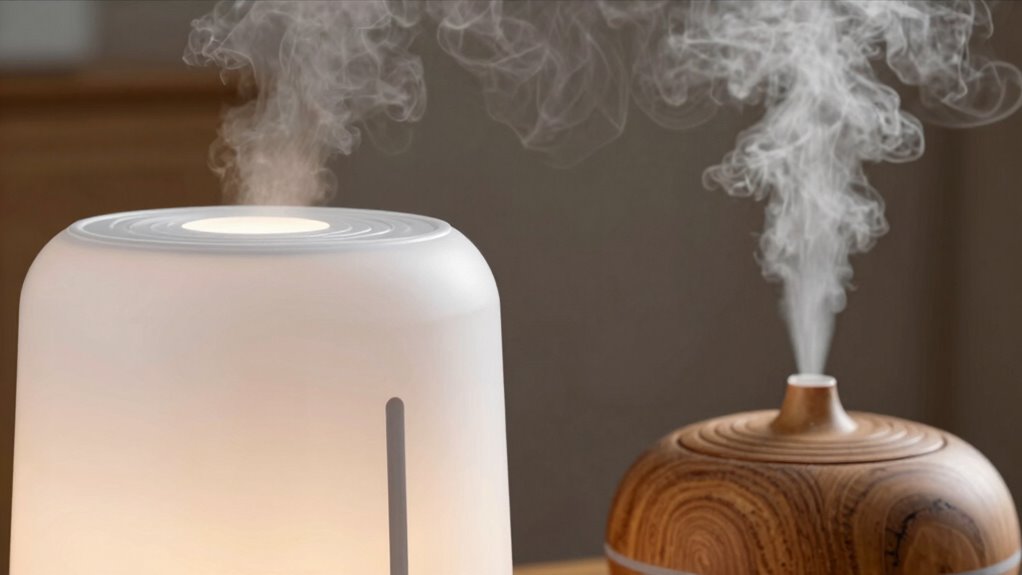
A humidifier adds moisture to dry air, helping with skin, breathing, and static electricity, making it ideal for cold seasons or dry environments. A diffuser disperses essential oils to create a calming atmosphere and promote relaxation, perfect for ambiance and stress relief. Knowing these differences helps you choose what suits your needs. Keep exploring to discover which device fits your space and wellness goals best.

Get oils, diffusers and self-care delivered free — and shop member deals
- Fast, free delivery on millions of items
- Access to Prime Big Deal Days deals on October 6–7
- Prime Video, Amazon Music and more included
Key Takeaways
- Humidifiers add moisture to dry air, improving comfort and health; diffusers disperse essential oils for scent and relaxation.
- Humidifiers are suitable for continuous use in larger spaces, while diffusers are ideal for short-term ambiance.
- Choose a humidifier if you want to alleviate dry skin, respiratory issues, or static; opt for a diffuser to enhance mood and reduce stress.
- Humidifiers focus on air quality and comfort through moisture; diffusers focus on emotional well-being via aromatherapy.
- Use a humidifier during cold or dry seasons; use a diffuser when seeking calming scents or mood enhancement.

When choosing between a humidifier and a diffuser, understanding their distinct functions can help you make the right decision for your needs. Although both devices release moisture into the air, they serve different purposes, and knowing the benefits comparison along with their usage differences can clarify which one is right for you.
A humidifier’s primary role is to add moisture to dry indoor air, which helps alleviate issues like dry skin, irritated sinuses, and respiratory discomfort. Its usage is straightforward: you fill it with water, turn it on, and it continuously releases a fine mist to increase humidity levels. This makes humidifiers particularly beneficial during cold seasons or in environments with low humidity, especially if you suffer from allergies or respiratory issues. The benefits comparison shows that humidifiers improve overall air quality by maintaining ideal moisture levels, reducing static electricity, and preventing the spread of airborne viruses. They are generally designed for larger spaces and run for extended periods, making them ideal if you want a consistent increase in air moisture throughout your home or office.
On the other hand, diffusers are designed primarily for scenting a space and creating a calming atmosphere. They work by dispersing essential oils into the air, which can offer aromatherapy benefits like stress relief, improved sleep, or mood enhancement. Usage differences are clear: diffusers require you to add a few drops of essential oil, and they often have features like timers or adjustable mist settings. Unlike humidifiers, they don’t considerably impact air moisture levels, so they’re not suitable for addressing dryness or respiratory discomfort caused by low humidity. Instead, their main advantage lies in their ability to deliver therapeutic scents and promote relaxation.
While both devices involve dispersing substances into the air, their core benefits differ. Humidifiers focus on improving air quality and comfort by increasing moisture, which is especially useful if you live in a dry climate or want relief from respiratory issues. Diffusers, however, concentrate on aromatherapy, offering emotional and mental benefits through scent. Their usage differences also mean that humidifiers often run in the background for hours, whereas diffusers are typically used for shorter periods to create a specific ambiance.
humidifier for dry skin and respiratory relief
As an affiliate, we earn on qualifying purchases.
As an affiliate, we earn on qualifying purchases.
Frequently Asked Questions
Can a Humidifier Also Function as a Diffuser?
A humidifier generally can’t double as a diffuser because they serve different purposes. Humidifiers add moisture to the air and require careful device maintenance to prevent mold, while diffusers disperse essential oils safely, ensuring essential oil safety. Using a humidifier to diffuse oils can damage the device and compromise air quality. For best results, use each device as intended, following manufacturer instructions for proper maintenance and safe essential oil use.
Which Device Is Better for Allergy Relief?
If you suffer from allergies, a humidifier is your best bet; studies show they can increase air humidity by up to 50%, improving air quality and reducing airborne allergens. Humidifiers add moisture, helping soothe irritated nasal passages and decrease dust mites. Diffusers, while aromatherapy-friendly, don’t considerably impact allergen reduction. So, for allergy relief, choose a humidifier to enhance air quality and ease allergy symptoms effectively.
Are Diffusers Safe Around Pets and Children?
Diffusers can be safe around pets and children if you choose the right ones and use them correctly. Look for diffusers with low noise levels to avoid disturbing sleep or causing stress. Keep essential oils out of reach, as some are toxic to animals and kids. Always follow manufacturer instructions and consult your vet or pediatrician if you’re unsure, ensuring pet safety and a peaceful environment.
How Often Should I Clean My Humidifier or Diffuser?
Imagine the gentle mist swirling in your space—now, think about keeping it pure. You should clean your humidifier or diffuser at least once a week, following maintenance schedules and cleaning tips. Regular cleaning prevents mold, bacteria, and mineral buildup, ensuring safe, fresh mist. Use mild soap and vinegar, and dry thoroughly. This keeps your device functioning well and your air clean, creating a healthier environment for you and your loved ones.
Do Both Devices Require Filters or Replacement Parts?
Both devices may require filter maintenance or replacement parts, depending on the model. Check your humidifier or diffuser’s user manual for specific replacement schedules; some need filters changed every 1-3 months, while others have permanent filters. Regularly inspect filters for dirt or mold, and replace them as recommended to guarantee peak performance and air quality. Staying on top of filter maintenance keeps your device running smoothly and safely.
Conclusion
Now that you understand the difference, choosing between a humidifier and a diffuser feels less confusing. Whether you want to add moisture to your air or enjoy calming aromas, knowing their unique benefits helps you decide. It’s funny how a simple choice can make your space more comfortable and your mood brighter. So, trust your instincts, pick what suits your needs, and enjoy the comfort that comes with making an informed decision. After all, relief is just a breath away.
Fall Picks
fall essentials
As an affiliate, we earn on qualifying purchases.