
Not all indoor air quality monitors measure the same pollutants or offer the same accuracy. Some detect common gases like CO2, formaldehyde, or carbon monoxide, while others also monitor dust, allergens, and VOCs. The quality of sensors impacts measurement reliability, so cheaper options might give rough or inaccurate results. To guarantee you get accurate information, you’ll want to know which pollutants each device covers and how well it performs—if you keep exploring, you’ll find out more.

Get oils, diffusers and self-care delivered free with Prime
- Fast, free delivery on millions of items
- Prime Video, Amazon Music and more included
- Member-only deals all year
Key Takeaways
- Different IAQ monitors detect various pollutants like VOCs, PM, CO2, and gases; not all measure the same substances.
- Sensor quality and calibration impact measurement accuracy and reliability of indoor air quality readings.
- Regular maintenance and sensor replacement are essential for precise long-term monitoring.
- Advanced sensors provide more comprehensive and accurate detection of multiple indoor pollutants.
- Understanding what pollutants a monitor measures helps select the right device for specific indoor air quality needs.

Indoor air quality monitors are essential tools for maintaining a healthy living environment. They help you keep tabs on the air you breathe, alerting you to potential pollutants and ensuring your space remains safe. When choosing a monitor, understanding what it measures is crucial because not all devices are created equal. The core components that determine their effectiveness are the air quality sensors they use and how well they’re calibrated. These sensors are the heart of the device, responsible for detecting pollutants like volatile organic compounds (VOCs), particulate matter (PM), carbon dioxide (CO2), and other harmful gases. The quality of these sensors directly impacts the accuracy of readings. Cheaper sensors may provide a rough estimate but can often be inaccurate or inconsistent over time. That’s why device calibration is vital; it ensures that the sensor’s readings remain precise and reliable. Regular calibration maintains the monitor’s accuracy, especially if you rely on it for critical health decisions. Many air quality sensors require periodic calibration, either manually or automatically, depending on the device. If calibration is neglected, the device might drift from actual conditions, leading you to make decisions based on false data. For example, a poorly calibrated sensor might underestimate pollutant levels, giving you a false sense of security, or overestimate them, causing unnecessary concern. When shopping for an indoor air quality monitor, check whether the device allows for easy calibration and whether it comes with clear instructions. Some advanced models come with self-calibrating features, which can save you time and ensure continuous accuracy. It’s also wise to consider how often the device’s sensors need recalibration and whether replacement parts are readily available. Proper maintenance of these sensors is essential for long-term performance. Besides calibration, pay attention to the types of sensors included. A comprehensive monitor should measure a variety of pollutants that affect indoor air quality, from dust and allergens to gases like formaldehyde and carbon monoxide. The more pollutants a device can detect, the better it is at providing a complete picture of your indoor environment. Remember, sensors are only as good as their calibration and maintenance. Regularly checking and calibrating your air quality sensors ensures you get precise data, which helps you take informed actions—like improving ventilation or reducing sources of pollution. Additionally, advancements in sensor technology, such as high-quality sensors, can significantly improve the overall performance of your monitor. Properly maintained sensors are crucial for accurate readings over time. Ultimately, investing in a monitor with high-quality sensors and easy calibration features means you’re better equipped to maintain a healthy, safe indoor space. Proper understanding and maintenance of your device will empower you to make smarter decisions, keep your family safe, and enjoy peace of mind knowing your indoor air is as clean as it can be.
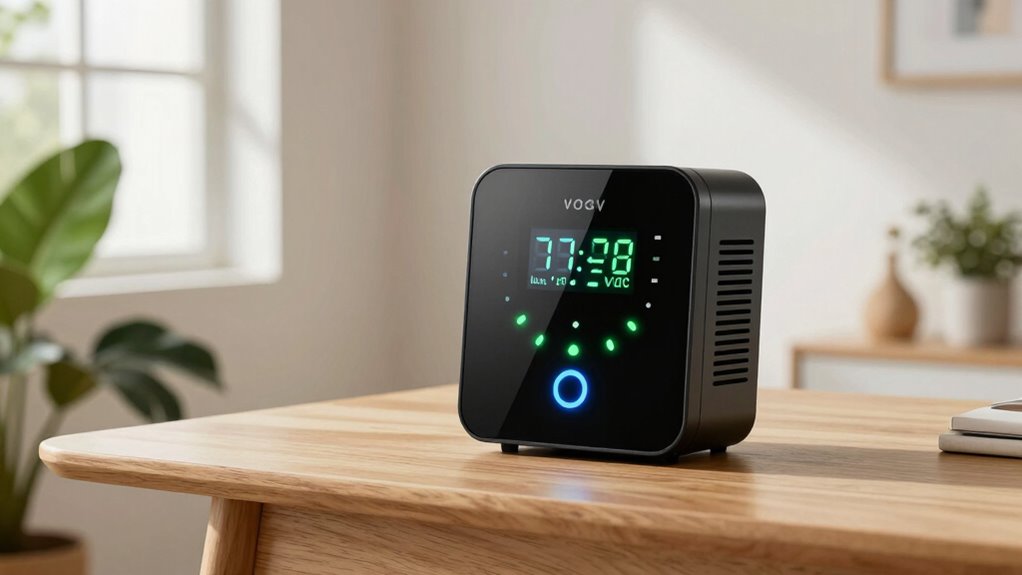
indoor air quality monitor with VOC detection
As an affiliate, we earn on qualifying purchases.
As an affiliate, we earn on qualifying purchases.
Frequently Asked Questions
How Often Should Indoor Air Quality Monitors Be Calibrated?
You should calibrate your indoor air quality monitor at least once every six months to ensure accurate readings. Regular calibration is essential for reliable data, so follow the manufacturer’s calibration frequency recommendations. Incorporate maintenance tips like keeping sensors clean and replacing parts as needed. If you notice inconsistent readings, calibrate it more often. Proper calibration and routine maintenance keep your monitor functioning properly and provide trustworthy indoor air quality measurements.
Can IAQ Monitors Detect Allergens Like Pollen or Pet Dander?
Did you know that over 30% of people with allergies react to pollen and pet dander? IAQ monitors can help with allergen detection by alerting you when these particles are high. While they don’t directly detect allergens like pollen or pet dander, they measure related indicators such as humidity and particulate matter, which influence allergen levels. Pollen monitoring isn’t common, but some advanced monitors can give you a good idea of indoor allergen presence.
Do All IAQ Monitors Connect to Smartphones via Bluetooth or Wi-Fi?
Not all IAQ monitors connect to smartphones via Bluetooth or Wi-Fi. Some models feature wireless connectivity for easy data synchronization, while others rely on wired connections or standalone displays. When choosing an IAQ monitor, check its wireless capabilities if you want seamless data transfer. Be aware that wireless features can vary, so verify the monitor you select offers the connectivity options that suit your needs for real-time updates and remote monitoring.
What Is the Average Lifespan of an Indoor Air Quality Monitor?
You can expect your indoor air quality monitor to last around 2 to 5 years, depending on sensor durability and usage. Regular calibration and maintenance help prolong its lifespan. Keep in mind, replacement costs for sensors or the entire device can vary, so investing in a high-quality monitor might save you money over time. Staying aware of these factors ensures your monitor remains accurate and reliable for years to come.
Are There IAQ Monitors Suitable for Monitoring Specific Rooms or Zones?
Yes, there are zone-specific monitors and room-focused devices designed to track air quality in specific areas. These monitors let you target particular rooms or zones, providing more precise data. You can place them in bedrooms, kitchens, or offices, and get real-time updates on pollutants, humidity, and other factors. This tailored approach helps you better manage air quality and address issues in individual spaces effectively.
Conclusion
Remember, not all indoor air quality monitors are created equal. As you choose one, consider what it measures—some track just dust, while others monitor mold or VOCs. Think of it like a trusty steampunk gadget from a bygone era, helping you detect unseen dangers in your home. With the right monitor, you’ll breathe easier, knowing you’re safeguarding your space just like a vigilant guardian of old. Make sure it measures what truly matters for your health.
Fall Picks
fall essentials
As an affiliate, we earn on qualifying purchases.