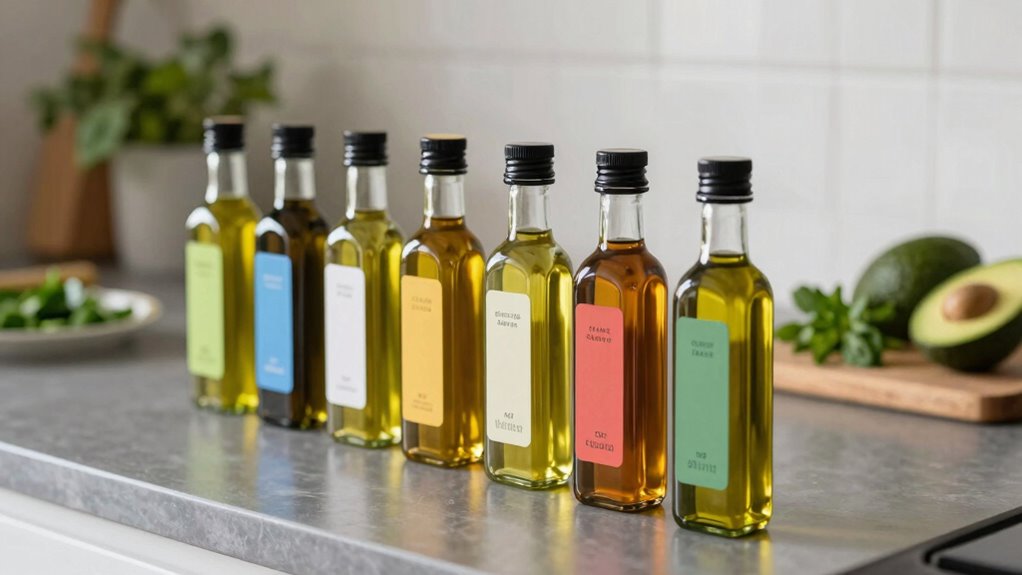

To avoid buying oils you’ll never use, assess your cooking habits first by identifying the methods you regularly use, like sauté or salad dressings. Focus on versatile oils with high smoke points, such as canola or grapeseed, and reserve delicate oils for finishing dishes. Make a shopping list based on your planned meals and stick to it. Keep track of what you already have to prevent duplicate purchases. If you’re interested in mastering these tips, you’ll find more helpful insights below.
Key Takeaways
- Assess your cooking habits and choose oils suitable for your common methods to prevent unnecessary purchases.
- Plan weekly meals and create a shopping list to buy only the oils needed for specific recipes.
- Store oils properly in cool, dark places to extend shelf life and avoid waste from spoilage.
- Use oils near their expiration date in upcoming meals to prevent waste and maximize usage.
- Avoid buying large quantities of oils you rarely use; opt for smaller bottles or bulk only if regularly needed.
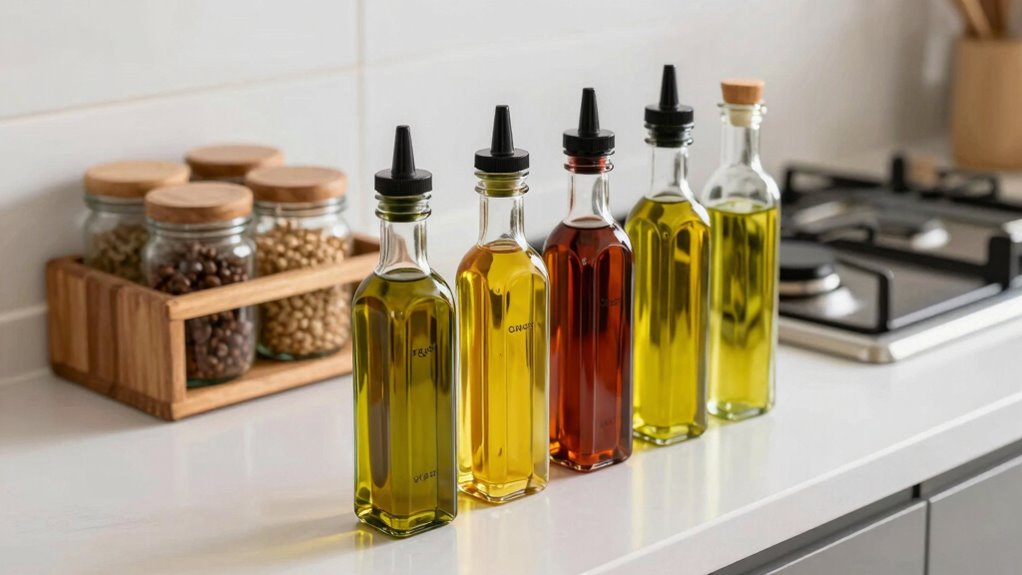
Buying oils you’ll never use can lead to unnecessary waste and clutter in your kitchen. It’s easy to fall into the trap of purchasing a variety of oils, thinking you’ll find the perfect one for every dish. But more often than not, these bottles sit unused, taking up space and eventually going bad. To avoid this, you need a clear plan that focuses on your actual cooking habits, and that includes understanding the right cooking techniques and oil storage tips.
Start by evaluating how you cook most often. If you mainly sauté vegetables or stir-fry, your best options are oils with high smoke points, like canola, peanut, or grapeseed oil. For baking or drizzling over salads, extra virgin olive oil or even avocado oil might be more suitable. Knowing the right cooking techniques for each type of oil helps you buy only what you’ll actually use. For example, using a delicate oil like flaxseed or walnut oil for high-heat cooking isn’t ideal, and you’ll end up wasting it. Instead, reserve those oils for finishing dishes or cold applications. Proper understanding of oil smoke points ensures you’re selecting appropriate oils for different cooking methods. Additionally, understanding the nutritional differences between oils can help you choose healthier options aligned with your dietary goals.
Use high smoke point oils for stir-frying and delicate oils for salads and finishing touches.
When shopping, buy oils in smaller bottles or in bulk if you’re confident you’ll use them regularly. This approach minimizes waste and ensures freshness. Remember, oils can go rancid over time, especially if exposed to heat, light, or air. Proper oil storage tips are vital here. Keep your oils in a cool, dark place—preferably in airtight containers—to extend their shelf life. Don’t store them near the stove or in direct sunlight, as this accelerates spoilage. Also, always reseal bottles tightly after use to prevent oxidation. Additionally, understanding the importance of oil preservation can help you maintain quality and prevent spoilage. Being aware of the shelf life of oils can further prevent waste and ensure you’re using fresh, healthy oils.
Another way to avoid buying unnecessary oils is to plan your meals ahead. Think about what dishes you’ll prepare during the week and what oils those recipes require. Stick to your shopping list to resist the temptation of adding oils you don’t need. If you’re trying a new cuisine or recipe, research which types of oils are best suited for that purpose and buy only those. This targeted approach keeps your pantry organized and prevents accumulating an assortment of oils you rarely use. Keeping an inventory of your pantry supplies can help you stay aware of what you already have and avoid duplicate purchases.
Finally, keep track of what oils you already have. If you notice certain oils are nearing their expiration, plan meals that incorporate them soon. This ensures you use what you buy and reduces waste. By understanding your cooking techniques, practicing good oil storage tips, and shopping intentionally, you can avoid buying oils you’ll never use, keeping your kitchen clutter-free and your cooking efficient.
As an affiliate, we earn on qualifying purchases.
Frequently Asked Questions
How Long Do Cooking Oils Typically Last Before Spoiling?
Cooking oils usually last about 6 months to a year before spoiling, but this varies with storage and type. Oil oxidation accelerates when exposed to light, heat, or air, shortening shelf life. To extend freshness, store oils in a cool, dark place and keep bottles tightly sealed. Proper storage helps prevent spoilage, so you can enjoy your oils longer without waste or health risks.
Can I Reuse Cooking Oil Safely?
Yes, you can reuse cooking oil, but only if you take proper precautions. Think of oil filtration as your superhero shield, removing food debris and impurities, and store it in airtight storage containers to prevent spoilage. Reusing oil is safe if it’s still clear, smells normal, and hasn’t been heated past its smoke point. Always check for rancidity before reuse to avoid health risks and guarantee your cooking stays tasty and safe.
Are There Oils Suitable for All Dietary Restrictions?
Yes, some oils suit various dietary restrictions, especially when you consider flavor infusions and oil blending. For example, extra virgin olive oil is great for gluten-free or vegetarian diets, while coconut oil suits vegan needs. You can also blend oils to customize flavor and nutritional profiles, making it easier to find versatile options that meet your dietary requirements. Always check labels and ingredient lists to guarantee they align with your restrictions.
How Do I Store Oils to Maximize Shelf Life?
Imagine opening your favorite oil, only to find it’s lost its vibrant flavor. To prevent this, store oils in cool, dark places, away from heat and light. Use airtight storage containers made of dark glass or stainless steel to shield them from oxidation. This careful storage maximizes shelf life, preserves flavor, and guarantees every drop stays fresh, so your dishes taste just as intended.
What Are Healthier Alternatives to Traditional Cooking Oils?
You can opt for healthier alternatives like olive oil, avocado oil, or coconut oil, which offer diverse flavor profiles and beneficial fats. Use these oils with various cooking techniques—drizzling, sautéing, or roasting—to maximize their health benefits. These options generally have a richer flavor and higher nutrient content, making your dishes tastier and more nutritious. Switching to them helps you enjoy flavorful meals without compromising your health.
Conclusion
So, next time you’re at the store, resist the urge to buy every fancy oil on the shelf. Think like a wise trader in the age of sail—only stock what you’ll truly use. Avoid cluttering your pantry with oils you’ll never touch, and save yourself from a dusty, forgotten treasure chest of bottles. Stick to your essentials, and you’ll avoid the culinary pirates’ trap, sailing smoothly toward flavor-filled meals without the chaos of unused bottles gathering dust.