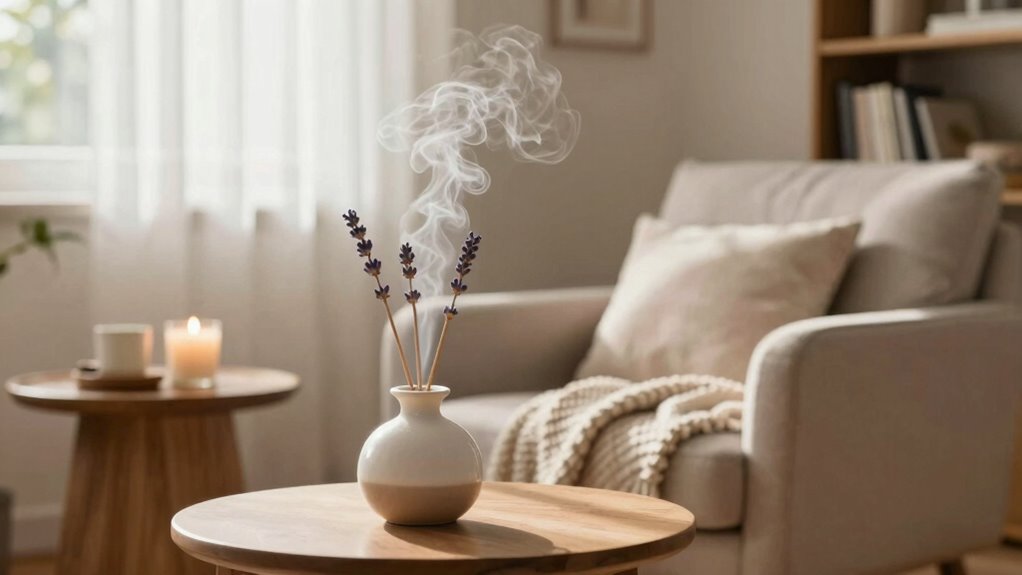

To use aroma as a cue for cleaning and resetting your room, diffuse energizing scents like lemon, eucalyptus, or peppermint during your routines. Make scent a part of your cleaning habit by diffusing the oils each time you tidy up, creating a mental association. Keep a scent nearby for quick refreshes, and incorporate candles or potpourri for variety. Over time, these aromas will naturally trigger your desire to reset and refresh. Discover how to make this technique more effective in the following tips.

Get oils, diffusers and self-care delivered free — and shop member deals
- Fast, free delivery on millions of items
- Access to Prime Big Deal Days deals on October 6–7
- Prime Video, Amazon Music and more included
Key Takeaways
- Diffuse energizing scents like lemon or eucalyptus during cleaning to create a mental association with freshness.
- Use the same essential oil scent consistently to build a strong scent-memory cue for resetting.
- Keep a small spray with your preferred scent nearby for quick refreshes and to trigger cleaning routines.
- Incorporate scented candles or potpourri to reinforce the aroma cue and make cleaning more enjoyable.
- Choose motivating scents to enhance your mood and establish a sensory trigger for regular cleaning.
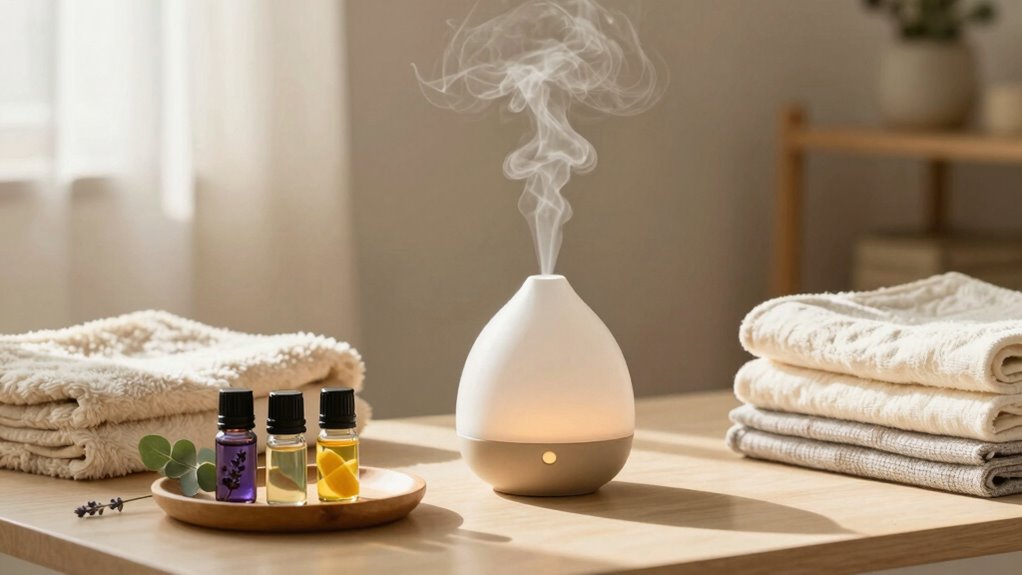
Have you ever noticed how a fresh scent can instantly make a room feel cleaner and more inviting? That’s because aroma isn’t just about smelling good—it’s a powerful tool to signal a fresh start. When you intentionally use certain scents, especially essential oils, you create a sensory cue that your space is ready for a reset. The key is to harness scent memory; over time, your brain associates specific smells with cleanliness and renewal. By doing so, you can give your room a mental and physical refresh with minimal effort.
Start by choosing essential oils that evoke a sense of freshness, such as lemon, eucalyptus, or peppermint. These scents have bright, clean aromas that instantly lift the atmosphere. When it’s time to clean or reset, diffuse these oils with a diffuser or add a few drops to a spray bottle with water. As you spray or diffuse, your brain begins to associate this particular scent with a clean environment. This association becomes your cue for future resets—every time you smell it, your mind recognizes that it’s time to tidy up or refresh.
Diffuse lemon, eucalyptus, or peppermint to signal cleanliness and inspire a refreshing reset.
Creating a scent memory is a deliberate process. You might start by diffusing your chosen essential oil whenever you clean, making it a regular part of your routine. Over time, just the scent will trigger your mental reset, reducing the effort needed to motivate yourself. It’s like training your brain to link the aroma with cleanliness, so that even the smallest whiff prompts you to tackle clutter or wipe down surfaces. This strategy transforms cleaning from a chore into a sensory experience that signals progress and renewal. Additionally, understanding the connection between scent and sensory cues can help you reinforce this habit more effectively. Exploring the science behind scent and memory can deepen your understanding of how aromas influence behavior and perception.
You can also incorporate aroma cues into your cleaning routine with scented candles or potpourri, but essential oils are more versatile and customizable. Keep a small bottle of your preferred scent nearby, and whenever you feel the need to reset your space, spritz it around the room or add it to your humidifier. The goal is to create an environment where the scent acts as a trigger—something your subconscious recognizes as the signal to tidy up, declutter, or simply breathe new life into your space. Using aroma as a cue can make your cleaning routine more automatic and effective over time. Additionally, understanding the psychological impact of scents can help you select aromas that motivate and energize you during your cleaning sessions.
As an affiliate, we earn on qualifying purchases.
Frequently Asked Questions
What Types of Aromas Are Best for Cleaning Cues?
You should choose fresh, clean scents like lemon, eucalyptus, or peppermint for cleaning cues. These aromas promote aromatherapy benefits like boosting energy and focus. Use scent layering techniques by combining these with subtle herbal or floral notes to create a balanced, inviting atmosphere. When you smell these aromas, your mind associates them with cleanliness, making it easier to reset and maintain a tidy space.
Can Specific Scents Influence My Cleaning Motivation?
Have you ever noticed how a certain scent instantly lifts your mood? Specific scents can notably boost your cleaning motivation by leveraging aromatherapy benefits and scent memory triggers. When you activate familiar, pleasant aromas, they create positive associations, making cleaning feel less like a chore. Using these scents as cues can motivate you to start and complete your tasks, turning cleaning into a more uplifting and rewarding experience.
How Long Should an Aroma Be Present to Reset a Room?
You should keep an aroma present for about 15 to 30 minutes to effectively reset a room. This duration allows the scent to establish a strong scent memory trigger and activate aromatherapy benefits, making your space feel refreshed and reset. During this time, your brain associates the aroma with cleanliness and relaxation, helping you mentally reset. Consistent exposure enhances the scent’s ability to serve as a reliable cue for cleaning.
Are There Any Scents That Should Be Avoided During Cleaning?
You should avoid using scents with toxic fragrances or that mask unpleasant odors during cleaning. These can trigger allergies, respiratory issues, or skin irritation. Stay away from overpowering or synthetic fragrances that might cause discomfort. Instead, opt for natural aromas like citrus or herbal scents, which refresh the space without risking health. Using safe, pleasant scents encourages a positive cleaning experience and helps reset the room effectively.
How Do Different Fragrances Affect Mood and Cleanliness Perception?
Think of fragrances as emotional keys—your scent memory influences how you perceive cleanliness and mood. Crisp citrus can invigorate and lift your spirits, while lavender fosters calmness, making spaces feel more inviting. Different fragrances create scent associations that shape your perception of a room’s tidiness. Choosing the right scent can turn cleaning into a sensory experience, making your environment feel more revitalizing and your mood more uplifted.
Conclusion
Using aroma as a cue makes cleaning and resetting your space feel less like a chore and more like a invigorating reset. By associating specific scents with tidying up, you create a mental link that motivates you to maintain a clean environment effortlessly. Next time you smell that familiar scent, will it remind you to refresh your space and clear your mind too? Embrace the power of aroma, and transform cleaning into a fragrant, uplifting ritual.
Fall Picks
fall essentials
As an affiliate, we earn on qualifying purchases.