
TL;DR

Get oils, diffusers and self-care delivered free with Prime
- Fast, free delivery on millions of items
- Prime Video, Amazon Music and more included
- Member-only deals all year
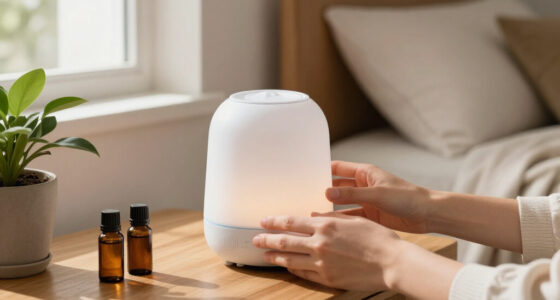
An ultrasonic essential oil diffuser uses a small vibrating membrane to disperse a fine mist of water mixed with essential oil; the visible plume is mostly water droplets, not pure oil vapor. Its scent depends on the device, room layout, airflow, and run time, while regular cleaning and cautious oil use help keep the experience pleasant. It is a fragrance device, not a substitute for an air purifier or humidifier.
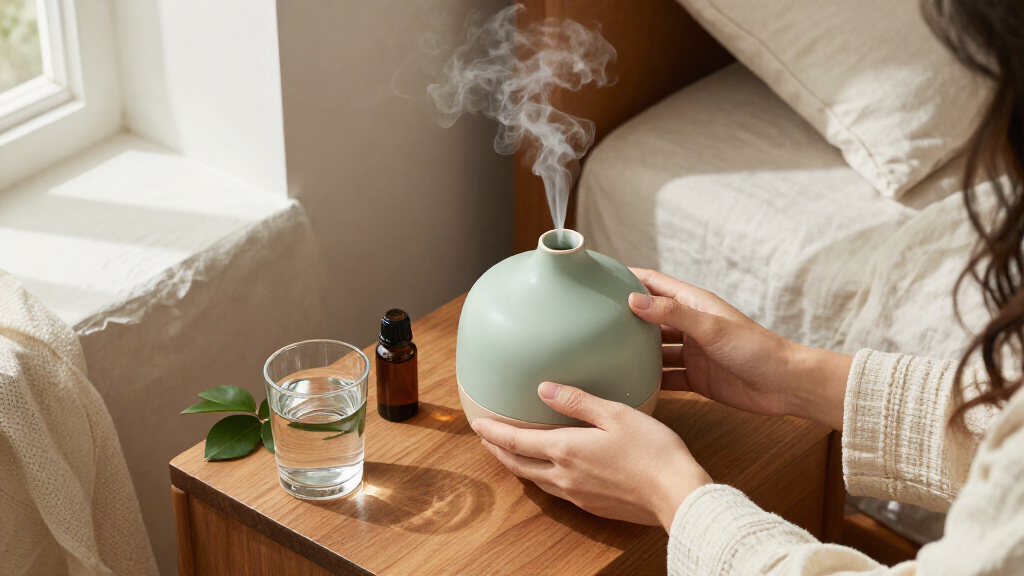
A cloud of mist curls above the little ceramic device on your desk, carrying a bright citrus scent across the room. That plume looks like scented steam, but an ultrasonic essential oil diffuser works without heating oil: it uses vibration to disperse tiny droplets of water mixed with a small amount of fragrance.
Knowing what comes out of the device helps you choose a sensible place for it and avoid expecting too much. This guide explains how they work, what affects their scent and upkeep, and why a diffuser is not an air purifier or a dedicated humidifier. You’ll also find practical buying and safety tips for a home shared with children, pets, or anyone sensitive to fragrance.
An ultrasonic diffuser uses a vibrating membrane to disperse water droplets mixed with essential oil; the visible mist is mostly water.
Room layout, ventilation, output, and run time all affect how noticeable the scent feels.
Start with a small amount of oil and use the maker’s timer guidance; stop if anyone develops irritation or a headache.
Empty and clean the reservoir as directed, since oil residue and hard-water minerals can build up.
Use a diffuser for fragrance, not as an air purifier, disinfection method, or replacement for a humidifier.
How an ultrasonic diffuser turns water and oil into mist
An ultrasonic essential oil diffuser uses a small vibrating membrane to break a mixture of water and essential oil into a fine mist. Airflow then carries the droplets into the room, spreading fragrance without heating the oil. The visible cloud is mostly water droplets, not pure essential oil vapor.
Inside the base, the membrane vibrates rapidly against the reservoir’s water. Add a few drops of oil, and the motion disperses that mixture into droplets that float briefly before settling or evaporating. For instance, if you run a citrus-scented unit on a kitchen counter, you may see a wispy plume and catch a fresh smell nearby, while the scent fades faster once a window is open.
Most models have a water reservoir, a fill line, and controls for mist or run time. Some add lighting, intermittent modes, and automatic shutoff when the water runs low. Those features change how you operate the device, but they do not change the basic process: vibration disperses water and oil together.
The mist is a carrier for diluted fragrance; it is not a stream of essential oil alone.
That distinction helps explain why an ultrasonic model differs from a nebulizing diffuser, which disperses oil without water. The two can produce different scent strengths and use their oils differently, so check the device manual before adding anything besides water and approved oil.
Products Worth Considering

Philips Sonicare ProtectiveClean 5300 Rechargeable Electric Toothbrush with 3 Brush Heads, Black

Oral-B iO5 Rechargeable Electric Toothbrush with 5 Cleaning Modes and Travel Case, White

Oral-B iO Series 3 Rechargeable Electric Toothbrush for Adults, Black, 3 Modes, 2 Brush Heads and Travel Case
As an affiliate, we earn on qualifying purchases.
What affects how far the scent travels
An ultrasonic essential oil diffuser’s practical reach depends on its mist output, room layout, airflow, and run time. A model’s advertised coverage does not guarantee the same scent strength in every home, because room sizes and ventilation differ. A small bedroom with its door closed may smell more strongly than an open living room with a ceiling fan.
Imagine placing a compact diffuser on a bookshelf in a drafty hallway. The moving air can carry its scent away before it reaches the seating area; place the same unit on a stable table in a quiet room, and the fragrance may feel more noticeable nearby. The scent can also seem stronger close to the diffuser than it does across the room.
Think of the mist like a light ribbon in the air: a breeze can scatter it, while still air lets it linger. For instance, if you want a gentle scent while reading, try the unit in the same room and start with its lowest mist setting. If you barely notice it, check placement and ventilation before adding more oil.
Room coverage claims are not standardized, so compare practical features such as timer settings and intermittent mode instead of relying on a single square-foot figure. If you share a space, ask whether anyone finds the fragrance overpowering. A pleasant scent for one person can feel sharp or irritating to someone else.
Use less oil and choose a run time that suits your room
An ultrasonic essential oil diffuser works with water, and starting with a small amount of oil gives you more control over scent strength. Follow the maker’s instructions for both the oil amount and operating time. A strong fragrance can become tiring quickly, especially in a small or poorly ventilated room.
If you set up a diffuser beside your desk for an afternoon of paperwork, begin with the smallest suggested number of drops and a short timer. Let the scent settle before deciding whether you want more. A friend arriving later may notice a scent that you have stopped noticing, simply because you have been in the room longer.
Use these steps to get started:
- Check the manual for the recommended water type, fill line, and compatible oils.
- Place the diffuser on a level surface, away from faces, electronics, and busy walkways.
- Add water first, then use a restrained amount of oil within the maker’s guidance.
- Choose a timer or intermittent setting and ventilate the room as needed.
- Stop the device if anyone develops coughing, irritation, or a headache.
A pleasant aroma may make a room feel more relaxing to some people, but the device should not be presented as treating or preventing illness. If you use oils on skin as well, check product guidance and patch test first. Anyone with a pre-existing condition or fragrance sensitivity can ask a qualified health professional for individual advice.
Keep residue and mineral deposits from building up
Regular cleaning helps an ultrasonic essential oil diffuser stay free of oily residue and stale smells. Unplug the unit, empty the reservoir after use, and wipe it dry as the manufacturer directs. Hard water can leave mineral deposits, so check the manual before choosing tap, filtered, or distilled water.
For example, if you leave water and a few drops of lavender in the tank all weekend, the next use may carry a faint old-oil smell instead of a clean fragrance. Emptying the reservoir after a session and wiping away residue takes little time, but it prevents buildup from becoming part of the scent.
Use only the cleaning method specified for your model. Some makers recommend a particular approach for the tank or membrane; others give different instructions. Avoid immersing the base or electrical parts in water, and do not scrape the vibrating surface with a hard object.
Water quality affects maintenance, but it does not change the device’s main purpose. If your kettle or taps often collect chalky white scale, your diffuser may also need more frequent attention. A quick look at the reservoir during routine cleaning can show whether deposits are forming before they affect performance.
Know what a diffuser can and cannot do for your home
An ultrasonic essential oil diffuser disperses fragrance; it is not a replacement for an air purifier, disinfection method, or dedicated humidifier. It may release some moisture into the air, but its main job is spreading a scented water mist. Use ventilation or suitable air-cleaning equipment when your goal is fresher air.
That difference matters on a dry winter evening. A diffuser may make the room smell like pine, but it usually will not add moisture at the rate a humidifier can. If you are choosing between one for fragrance and one for humidity, compare their intended purposes rather than assuming the diffuser can do both equally well.
Features such as app controls, voice commands, quieter operation, compact designs, and ambient lights appear on some newer models. They can make a device easier to schedule or blend into a bedside table. Still, a larger reservoir or a smart timer does not automatically make the scent stronger or the product safer.
When shopping, look for clear instructions, an easy-to-clean tank, a timer you will actually use, automatic shutoff, and replacement parts if available. For instance, a simple model with a short timer and accessible reservoir may suit a small office better than a connected unit with settings you will never touch.
Take extra care around children, pets, and sensitive noses
An ultrasonic essential oil diffuser is not automatically suitable for every household member. Some oils can irritate skin or airways and may harm pets; children may also be more sensitive to airborne fragrance. Keep oils and the device out of reach, ventilate the room, and seek medical or veterinary advice for specific concerns.
For instance, a cat that spends most of the day in a small bedroom has fewer ways to leave a scented space than a person who can open a door and walk out. Consider where household members rest, play, or sleep before running a diffuser, and stop if anyone shows signs of discomfort.
Use particular care if someone in the home already reacts to fragrances or has a pre-existing health condition. Ask a qualified professional about a specific oil and use case rather than assuming that a natural product is harmless. If you use oils on your skin, follow the label and patch test as directed.
Automatic shutoff can prevent the device from running once its water runs low, but it does not make prolonged fragrance exposure right for everyone. Use the recommended settings, keep the room ventilated, and let other household members decide whether the scent feels comfortable. A diffuser should make a space more pleasant, not harder to share.
Frequently Asked Questions
Can I run an ultrasonic diffuser without water?
Most ultrasonic models are designed to operate with water, so do not run one dry unless its manual explicitly allows it. The device uses water to disperse the oil as a fine mist.
How many drops of essential oil should I use?
Follow the device instructions and begin with a small amount. More oil can make a room’s scent overpowering and may increase the chance of irritation, especially in a small space.
Can I leave my diffuser running overnight?
Check the manual’s run-time guidance and use its timer or intermittent setting. Automatic shutoff helps when water runs low, but prolonged fragrance exposure may not suit everyone; stop if anyone feels discomfort.
Can I use tap water in an ultrasonic diffuser?
It depends on the model and how hard your tap water is. Mineral-heavy water can leave deposits, so check the manual for the recommended water type and clean the reservoir as directed.
Are ultrasonic diffusers safe around pets and children?
They are not automatically suitable for every child or pet, and some oils may cause harm or irritation. Keep the device and oils out of reach, ventilate the space, and ask a veterinarian or medical professional about a specific concern.
Does an ultrasonic diffuser purify the air or humidify a room?
It should not be relied on to purify or disinfect air. It releases some moisture, but its main purpose is dispersing fragrance; use a dedicated humidifier or appropriate air-cleaning method for those needs.
Conclusion
Start with the manual, a small amount of oil, and a short timer. That simple routine lets you learn how the scent behaves in your room while keeping cleanup manageable and giving everyone space to speak up if the fragrance feels too strong.
Think of the diffuser as a small brush of fragrance across the air, not a machine that changes what the air is. Use it gently, clean it regularly, and let comfort—not the size of the mist cloud—guide your next setting.