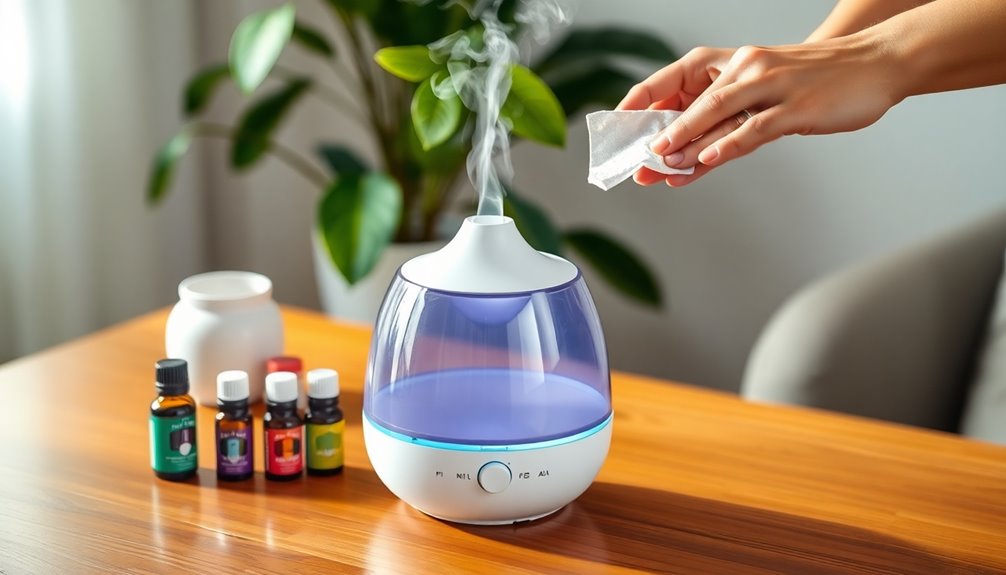
Choose an ultrasonic diffuser for a gentler scent, lower running costs, and a simple routine. Choose a nebulizing diffuser if you want undiluted oil and a stronger aroma, and accept higher oil use and more upkeep. Neither is a proven treatment for stress or a guarantee of better sleep. If you are unsure how much scent you prefer, ultrasonic is the lower-cost starting point; consider nebulizing only if you already know you want more intensity.

Get oils, diffusers and self-care delivered free with Prime
- Fast, free delivery on millions of items
- Prime Video, Amazon Music and more included
- Member-only deals all year

InnoGear Essential Oil Diffuser Ultrasonic Diffusers for Home, Basic White
- ✔ Capacity: 100 ml
- ✔ Coverage: 100–250 sq ft (manufacturer specification)
- ✔ Mist modes: Intermittent and continuous

GuruNanda Calm Aura Essential Oil Aromatheraphy Diffuser, 100 mL
- ✔ Capacity: 100 ml
- ✔ Coverage: Up to 250 sq ft (manufacturer specification)
- ✔ Modes: Five-minute Turbo boost; steady Mist mode

OUWEDW 4-in-1 Essential Oil Diffuser with Himalayan Salt Lamp
- ✔ Capacity: 200 ml
- ✔ Coverage: Up to 320 sq ft (manufacturer specification)
- ✔ Mist settings: Low and high
At a Glance
| Criteria | Ultrasonic diffuser | Nebulizing diffuser | Winner |
|---|---|---|---|
| Scent strength | Gentle to moderate scent; oil is diluted in water | Strong, concentrated scent from undiluted oil | B |
| Oil use and running cost | Uses a few drops per fill; generally lower ongoing cost | Consumes oil more quickly; higher ongoing cost | A |
| Ease of use | Add water and oil, then run | Fill the oil reservoir and manage shorter sessions | A |
| Cleaning and upkeep | Water reservoir needs regular cleaning | Oil residue and small parts may need regular attention | A |
| Noise and room suitability | Often a soft hum; mist can suit bedrooms and smaller rooms | Pump can be more noticeable; concentrated scent may overwhelm small rooms | A |
| Controls and session flexibility | Commonly offers timers, intermittent mode, and automatic shutoff | Models vary; some have timers or adjustable output | A |
| Purchase value | Typically lower upfront cost and broad availability | Higher upfront cost makes sense mainly for users who want strong aroma | A |
InnoGear Essential Oil Diffuser Ultrasonic Diffusers for Home, Basic White
For a routine that may stretch from a short reset to most of the night, the InnoGear diffuser offers the most useful mix of control and runtime in this group. Its intermittent mode alternates mist and pauses, with a stated 6–8 hours of operation; continuous mode is specified for 3–4 hours. That gives us a way to choose a lighter, paced release or a more immediate scent presence, instead of committing to one intensity for every session.Compared with the GuruNanda Calm Aura, which is aimed at a small room and lists up to 2.5 hours, InnoGear is better suited to longer use. Its listed coverage of 100–250 square feet overlaps GuruNanda at the upper end, though the figures are specifications rather than a promise of uniform scent throughout a room. The OUWEDW has greater listed coverage and a 200 ml reservoir, but it is more of a mood-light centerpiece. InnoGear keeps the focus on mist choices, with seven LED colors available separately from the mist function.The tradeoff is that its 100 ml reservoir is modest, and the colorful lighting may feel like an unnecessary distraction to someone who wants a completely dark bedroom. It also lacks the extra heat detector described for GuruNanda. For buyers who want flexibility without adding multiple decorative functions, its intermittent mode and independent light controls make it the strongest all-around fit. Those who want an aroma diffuser to serve as a lamp or statement object should consider OUWEDW instead.
Pros:
- Intermittent and continuous mist modes support different session lengths and scent preferences.
- Intermittent mode is specified for 6–8 hours of operation.
- Mist and seven-color LED lighting can be controlled independently.
- Automatic shutoff activates when the water runs out.
Cons:
- The 100 ml reservoir may need refilling for frequent or extended use.
- Its light options may not suit users who prefer a dark, visually quiet room.
- No heat detector is listed in the supplied product details.
Best for: People who want adjustable scent output and a longer intermittent session for a bedroom, office, or yoga space.
Not ideal for: Anyone seeking a larger reservoir, a very simple single-purpose design, or a device with no visible lighting options.
Bottom line: We rank InnoGear first for its combination of flexible mist patterns, longer intermittent runtime, and independently controlled light.
“We rank InnoGear first for its combination of flexible mist patterns, longer intermittent runtime, and independently controlled light.”
GuruNanda Calm Aura Essential Oil Aromatheraphy Diffuser, 100 mL
The GuruNanda Calm Aura is the most focused choice here for a compact room and a short, easy-to-understand scent session. Its Turbo mode runs continuously for five minutes before switching to Mist mode, while Mist mode provides a slow, steady aroma with no timer. That brief initial boost may appeal when we want a scent to become noticeable quickly, then settle into a gentler pattern.Its listed 250-square-foot coverage matches the upper end of InnoGear’s range, but GuruNanda’s stated runtime is only up to 2.5 hours in the supplied description. That makes it less flexible for long evening or overnight use than InnoGear’s intermittent setting. Compared with the OUWEDW 4-in-1, GuruNanda has a smaller reservoir and less listed coverage, but also avoids turning the diffuser into a flame-effect lamp and salt-lamp display. Its wood-finish ABS exterior is intended to blend into a room, while independent light and mist controls let us turn off the glow without stopping the scent.Safety features are a point of distinction: in addition to water-level shutoff, the description lists a heat detector that shuts the unit off if abnormal overheating is detected. The limitation is that essential oils are not included, and the manufacturer recommends using GuruNanda oils for performance and safety. Buyers who already have oils from another brand should check the product guidance before use. We see this as the small-room, straightforward-session pick, not the best option for all-night operation or broad coverage.
Pros:
- Turbo mode provides a five-minute continuous mist boost before switching modes.
- Mist mode is described as a slow, steady aroma without a timer.
- Independent light and mist controls allow the glow to be disabled.
- Water shortage and abnormal-overheating shutoffs are listed.
Cons:
- The listed runtime is up to 2.5 hours, shorter than InnoGear’s intermittent mode.
- Essential oils are not included.
- The manufacturer recommends its own oils, which may limit convenience for some buyers.
Best for: People who want a compact diffuser with a quick scent boost, a slower follow-on mist mode, and separate light controls.
Not ideal for: Buyers seeking long runtimes, a larger reservoir, or room coverage beyond the listed small-room use.
Bottom line: We recommend Calm Aura for small rooms and shorter rituals where simple controls and added heat protection matter more than extended runtime.
“We recommend Calm Aura for small rooms and shorter rituals where simple controls and added heat protection matter more than extended runtime.”
OUWEDW 4-in-1 Essential Oil Diffuser with Himalayan Salt Lamp
The OUWEDW 4-in-1 is for buyers who want a diffuser to contribute to the room’s look as well as its scent. It combines a diffuser, cool-mist humidifier, Himalayan salt lamp, and nine-color simulated flame-effect light. Its 200 ml reservoir is double the capacity of either 100 ml option here, and its stated coverage reaches 320 square feet. Those figures make it the most room-oriented pick in this lineup, although actual aroma strength will also depend on the space, oil, and ventilation.Compared with InnoGear, OUWEDW gives us a larger reservoir and more elaborate lighting, but InnoGear offers a longer stated intermittent runtime and quieter specified operation. Against GuruNanda, it has a wider stated coverage and four timer choices, while GuruNanda’s simpler controls and listed heat detector may suit buyers who prioritize a more restrained routine. OUWEDW’s low and high mist settings are easy to understand, and its timer choices range from one hour to always on, so we can tailor a session without relying on a single continuous setting.The extra functions come with practical compromises. The USB power connection means we need a suitable power source and cable placement, and the reservoir can still require refilling during extended use. The flame effect may feel soothing to some, but its visual presence is more prominent than a plain diffuser and may not help someone who wants a low-stimulation sleep environment. Its below-30 dB specification is also not as quiet as InnoGear’s listed below-23 dB level. We would choose this model for decorative, multi-function use, while scent-first buyers may find the more focused controls of the other two easier to live with.
Pros:
- The 200 ml reservoir is larger than the 100 ml tanks in the other two picks.
- Four timer settings, two mist levels, and nine LED colors provide varied setup options.
- The product combines diffuser, cool-mist humidifier, salt lamp, and flame-effect light.
- Automatic shutoff activates when the reservoir is empty.
Cons:
- USB power requires a suitable power source and careful cable placement.
- The reservoir may need refilling during extended use.
- The listed noise level is below 30 dB, higher than InnoGear’s stated below-23 dB level.
Best for: People furnishing a larger room who want scent, a humidifier function, and decorative light in one device.
Not ideal for: Those who prefer minimal lighting, want the quietest listed operation, or do not want to manage USB power and refills.
Bottom line: We choose OUWEDW when decorative lighting and larger stated coverage matter more than a quiet, scent-focused design.
“We choose OUWEDW when decorative lighting and larger stated coverage matter more than a quiet, scent-focused design.”
As an Amazon Associate we earn from qualifying purchases.
Key Differences
For scent strength, nebulizing is the clear choice: it disperses undiluted oil and can produce a pronounced aroma quickly. Ultrasonic mixes a few drops with water, so its scent is usually gentler. Pick ultrasonic for a lighter background aroma or a smaller room; pick nebulizing only if you prefer a strong scent and can control the session length.
Running costs and upkeep also favor ultrasonic for many frequent users. It generally uses less oil, but its water reservoir needs regular cleaning. A nebulizer has no water tank, but uses oil faster and may need attention to residue or narrow components. Check each model’s cleaning instructions before buying.
For an affordable daily routine, ultrasonic offers the stronger balance of cost and convenience. A nebulizer makes sense when undiluted intensity is your priority and you are comfortable with higher oil use and more maintenance. Neither type is established as a stress treatment. If fragrance triggers headaches, asthma symptoms, or irritation, avoid diffusing and consider a scent-free relaxation routine; consult a clinician about symptoms.
Detailed Comparison
Scent strength (Nebulizing diffuser wins — major)
Nebulizing is the clear choice if you want a prominent aroma: it disperses undiluted oil and can scent a space quickly. Ultrasonic output is usually milder because the oil is mixed with water. For a background scent, the gentler output may be the more comfortable fit.
Oil use and running cost (Ultrasonic diffuser wins — moderate)
Ultrasonic is usually less costly to run. It uses a few drops diluted in water, while a nebulizer disperses concentrated oil and may use it faster. If you diffuse often, compare oil consumption as well as the device price.
Ease of use (Ultrasonic diffuser wins — moderate)
Ultrasonic is easier to start with: add water and oil, choose a setting, and run it. A nebulizer needs no water, but its concentrated output may call for shorter sessions and careful placement. Choose ultrasonic for a straightforward daily routine.
Cleaning and upkeep (Ultrasonic diffuser wins — minor)
Ultrasonic has a small upkeep advantage for many owners. Empty and clean its reservoir regularly to prevent water and oil residue from building up. A nebulizer avoids the water tank, but oil can coat components and narrow parts may be fiddly to clean. Follow the manufacturer’s directions for either type.
Noise and room suitability (Ultrasonic diffuser wins — moderate)
Ultrasonic is often the better fit for bedrooms and small rooms: many models make a low hum, while a nebulizer’s pump may be more noticeable. Its concentrated scent can also feel overpowering in a compact or poorly ventilated space. Check the noise and output of the specific model.
Controls and session flexibility (Ultrasonic diffuser wins — minor)
Ultrasonic models commonly include intermittent mist, timers, or automatic shutoff when water runs low, making session length easier to manage. Nebulizer controls vary; some models offer timers or adjustable output. Compare the specific controls before choosing.
Purchase value (Ultrasonic diffuser wins — moderate)
Ultrasonic usually costs less upfront and uses oil more sparingly, so it suits most buyers seeking gentle, occasional scent. A nebulizer’s higher price is easier to justify when you specifically want a strong aroma and are prepared for higher oil use.
Ultrasonic diffuser: Pros and Cons
Pros:
- Usually affordable to buy and run
- Gentle scent suits a regular wind-down routine
- Many models offer timers and intermittent output
- Often a practical fit for smaller rooms
Cons:
- Water tank requires regular cleaning
- Scent may be too light for users who want a strong aroma
- Mist output and noise vary across models
Nebulizing diffuser: Pros and Cons
Pros:
- Produces a concentrated, undiluted aroma
- Can scent a room quickly
- No water reservoir to refill
Cons:
- Uses oil faster, raising ongoing costs
- Strong output can overwhelm small spaces or sensitive users
- May need more attention to residue and component cleaning
- Often costs more upfront
Who Should Choose What
Choose Ultrasonic diffuser if:
- You want a mild scent for regular relaxation or bedtime use.
- You are new to diffusers and want an affordable, simple routine.
- You prefer timers or intermittent output to limit how long the scent runs.
Choose Nebulizing diffuser if:
- You already know you prefer a strong, undiluted essential-oil aroma.
- You plan short sessions in a well-ventilated space where concentrated scent is comfortable.
- You are willing to spend more on the device and oil for stronger output.
Skip both if: Fragrance causes you breathing symptoms, headaches, or irritation, or you need a proven treatment for stress; consider a scent-free relaxation approach and ask a clinician about symptoms.
Value for Money
For lower purchase and running costs, choose ultrasonic: it suits frequent, gentle sessions and uses oil more sparingly. Pay more for a nebulizer when strong, undiluted scent is a specific preference. Include oil consumption in your cost comparison, since a nebulizer may use it faster. Neither type is a proven stress treatment; the value comes from whether its aroma improves your relaxation routine.
Final Verdict
Choose ultrasonic for an affordable, gentle scent and a simpler routine; it is the better starting point for most buyers. Choose nebulizing if you already want a strong, undiluted aroma and accept higher oil use and more upkeep. The deciding factor is scent intensity, not evidence of greater stress relief. If fragrance aggravates symptoms, skip both and consider scent-free relaxation.
Frequently Asked Questions
Which diffuser is better for stress relief?
Neither type has been established as a treatment for stress. If you find a gentle aroma relaxing, an ultrasonic diffuser is a practical place to start. A nebulizer is a better fit only if you prefer a stronger scent; intensity alone does not mean greater stress relief.
Does a nebulizing diffuser use more essential oil?
Generally, yes. It disperses undiluted oil, so it can use oil more quickly than an ultrasonic model that dilutes a few drops in water. The exact rate depends on the device and its output setting.
Can I run a diffuser all night?
Follow the device instructions and use a timer or intermittent setting if available. Continuous scent may be uncomfortable, especially in a small room or for someone sensitive to fragrance. Stop using it if it causes irritation or breathing symptoms.
Which type is quieter for a bedroom?
Ultrasonic models often make a soft hum, while nebulizing models may have a more noticeable pump sound. Noise differs between models, so check product specifications or listen before buying if quiet operation is a priority.
Is a diffuser safe for everyone at home?
No. Essential-oil aromas can bother people with asthma, allergies, migraines, or fragrance sensitivity, and some oils may pose risks around pets or young children. Check relevant health and pet guidance, ventilate the room, and stop if anyone feels unwell.