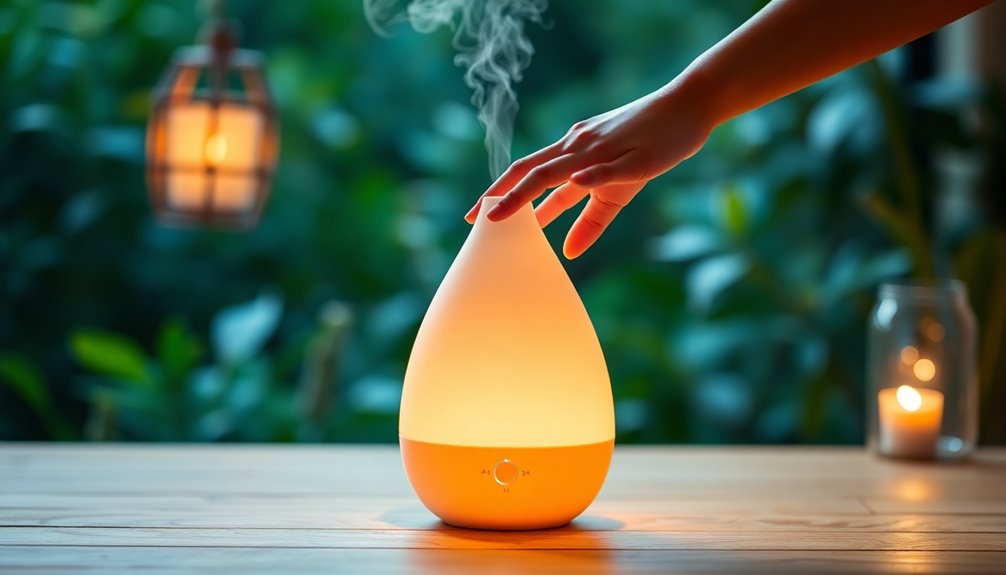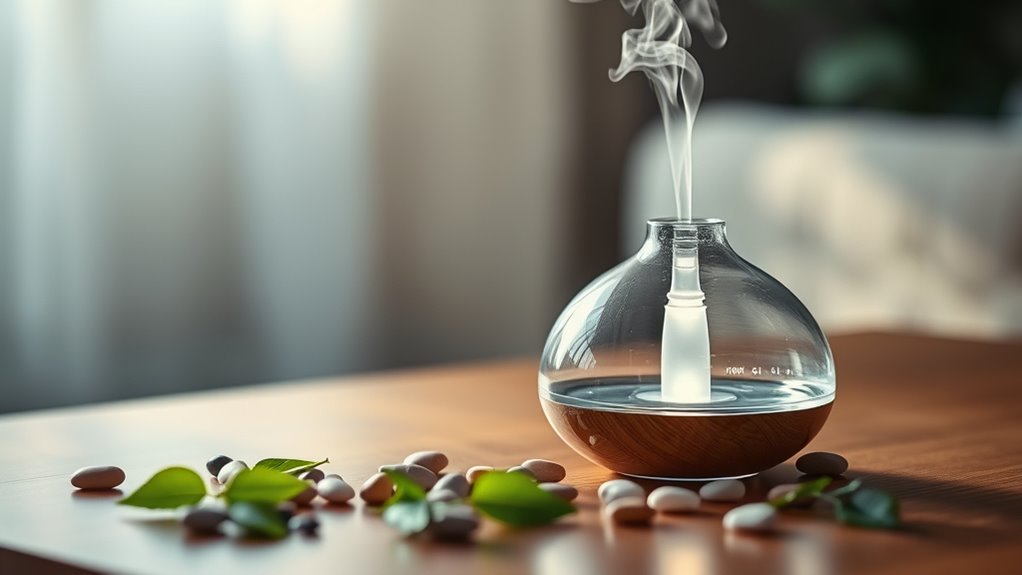

Nebulizing diffusers disperse essential oils by breaking them down into tiny particles, creating a fine mist of pure aroma. They use compressed air to guarantee effective and efficient diffusion, without diluting the oil with water, which means you get a stronger scent. This allows for immediate therapeutic benefits and a more potent aromatherapy experience. Keep in mind that oil type can affect dispersion, and there’s more to explore about enhancing your diffusion experience.

Get oils, diffusers and self-care delivered free with Prime
- Fast, free delivery on millions of items
- Prime Video, Amazon Music and more included
- Member-only deals all year
Key Takeaways
- Nebulizing diffusers use compressed air to create a fine mist of pure essential oils without dilution.
- They break down essential oils into tiny particles, ensuring optimal dispersion and absorption into the air.
- The absence of water allows for a stronger, more concentrated scent that delivers immediate aromatic benefits.
- Oil viscosity affects nebulization efficiency, with lighter oils dispersing better than thicker oils.
- Regular maintenance, including cleaning, is crucial to maintaining consistent performance and preventing residue buildup.
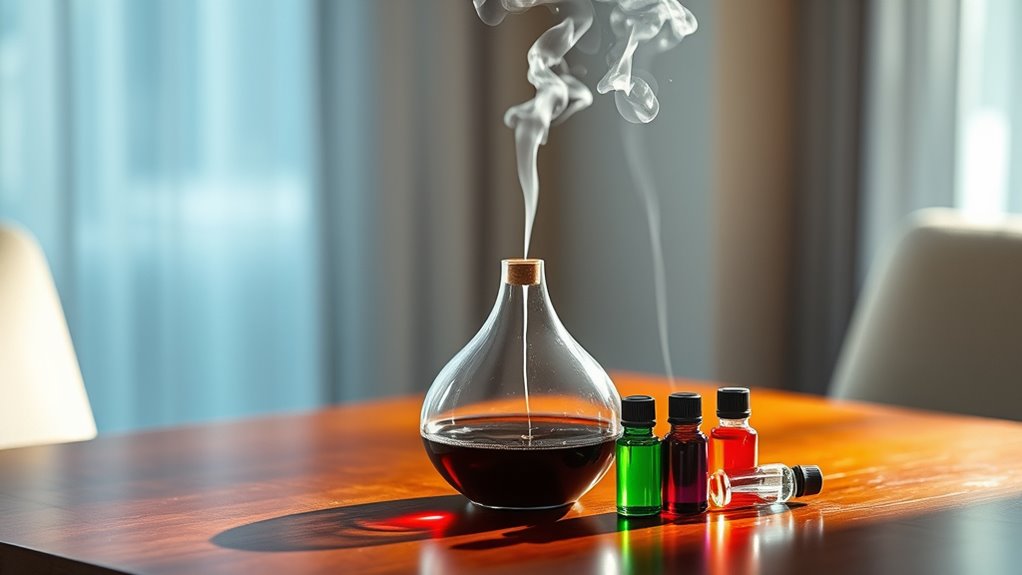
If you’re looking to elevate your aromatherapy experience, nebulizing diffusers are an excellent choice. These devices work by breaking down essential oils into tiny particles, allowing you to fully enjoy their therapeutic benefits. Unlike other diffusers that mix oils with water, nebulizers use compressed air to create a fine mist of pure oil. This method guarantees that the oil particle size is small enough to be easily absorbed into the air, filling your space with a potent and undiluted aroma.
One of the great things about nebulizing diffusers is their ability to disperse oils more effectively than traditional methods. Because they don’t dilute the oils, you get a stronger scent that can enhance your mood and promote relaxation. You might find that the immediate impact of the fragrance helps to clear your mind and create a calming atmosphere. To get the most from your nebulizer, it’s vital to choose high-quality essential oils that can stand up to this form of diffusion.
However, to keep your nebulizing diffuser in prime condition, diffuser maintenance is imperative. Oils can leave behind residues that, if not cleaned properly, can affect the performance of your device. Regular maintenance involves cleaning the nebulizer’s glass parts with warm water and a gentle soap solution. Some users even recommend using rubbing alcohol for a deeper clean. It’s a good idea to check the manufacturer’s guidelines for specific maintenance advice, as each model may have unique requirements.
You should also be aware that the oil particle size can be influenced by the type of oil you use. Thicker oils may not nebulize as effectively as lighter ones, so it’s wise to experiment with different types to see what works best for your diffuser. A blend of lighter and heavier oils can also create a more complex aroma while optimizing your diffuser’s functionality.
nebulizing essential oil diffuser
As an affiliate, we earn on qualifying purchases.
As an affiliate, we earn on qualifying purchases.
Frequently Asked Questions
Can Nebulizing Diffusers Be Used With All Essential Oils?
Yes, you can use nebulizing diffusers with most essential oils, but you should check for compatibility. Some oils, especially those that are thicker or have additives, may not work well. It’s also important to take into account the diffuser material options, as certain materials can react with specific oils. Always refer to the manufacturer’s guidelines to ensure you’re using oils that won’t damage your diffuser while getting the best aromatic experience.
How Often Should I Clean My Nebulizing Diffuser?
Think of your nebulizing diffuser as a prized garden; it flourishes with care. You should clean it at least once a week for ideal performance. Establish a cleaning schedule to keep the oils flowing smoothly, just like watering your plants regularly. Use simple maintenance tips: rinse the parts with warm water and a gentle soap, then let them dry completely. This routine ensures your diffuser stays vibrant and effective, enhancing your aromatherapy experience.
Do Nebulizing Diffusers Require Water to Operate?
Nebulizing diffusers don’t require water to operate. Instead, they utilize essential oils directly, creating a fine mist without any dilution. This operational mechanism allows for a pure aroma, delivering the full therapeutic benefits of the oils. You’ll appreciate how this method keeps the integrity of the oil intact, making each session more potent. Just remember to clean your diffuser regularly to maintain peak performance and aroma quality.
Are Nebulizing Diffusers Safe for Pets?
Absolutely, nebulizing diffusers can be safe for pets if you choose the right oils. However, keep in mind that some pets may have allergies or sensitivities. Just like the way a cat tiptoes around a hot stove, you’ll want to avoid oils that are toxic to pets, like tea tree or citrus. Always do your research and consult your vet to guarantee your furry friends stay happy and healthy while you enjoy your aromatherapy.
What Is the Lifespan of a Nebulizing Diffuser?
A nebulizing diffuser typically lasts three to five years with proper maintenance. To guarantee longevity, you should regularly clean it and use high-quality oils, as this impacts both the diffuser’s lifespan and the oils’ effectiveness. Neglecting maintenance can lead to clogs and decreased performance. By keeping up with these practices, you’ll maximize your diffuser’s life and enjoy the benefits of your essential oils longer.
Conclusion
In the world of aromatherapy, nebulizing diffusers are like magical wands, transforming pure essential oils into a fine mist that dances through the air. You’re not just filling your space with delightful scents; you’re creating a soothing atmosphere that wraps around you like a cozy blanket. So, whether you’re winding down after a long day or energizing your mornings, let these enchanting devices sprinkle a touch of serenity into your life. Breathe in, and let the magic begin!
Halloween Picks
halloween
As an affiliate, we earn on qualifying purchases.