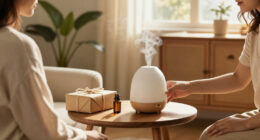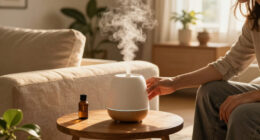
TL;DR
An aromatherapy diffuser disperses essential-oil compounds into the air, and a pleasant scent may help some people feel calmer. Research on aromatherapy for stress is mixed, so treat a diffuser as one small part of a relaxing routine, start with brief low-exposure sessions, and stop if anyone feels unwell.
The first hint of lavender reaches you as you close your laptop: soft, herbal, and almost like clean linen warming in the sun. A scent can make a room feel calmer, but an aromatherapy diffuser for stress relief is not a treatment, and it won’t work the same way for everyone.

Get oils, diffusers and self-care delivered free with Prime
- Fast, free delivery on millions of items
- Prime Video, Amazon Music and more included
- Member-only deals all year
This guide explains what a diffuser does, how common models differ, and how you can try scent as part of a comfortable evening routine. You’ll also get a simple way to start, practical safety points for shared spaces, and signs that the aroma is bothering you instead of helping.
The useful question isn’t whether a device promises calm. It’s whether a gentle, pleasant scent fits your life—and whether you can use it without creating discomfort for yourself, your family, or your pets.
A diffuser disperses fragrance; it is not a proven treatment for stress or anxiety.
Lavender is widely studied for relaxation, but the evidence does not guarantee an effect for you.
Start with a small amount, a brief session, and good ventilation; follow your device’s instructions.
Stop and air out the room if anyone develops a headache, cough, wheeze, nausea, or irritation.
Use extra caution around sensitive people, children, and pets, and seek professional guidance when relevant.
What a diffuser puts into the air—and what it can’t promise
An aromatherapy diffuser for stress relief releases fragrance from essential oils into the air; it does not deliver a proven medical treatment. A pleasant scent may help you feel more at ease, especially when you pair it with a familiar quiet routine, but evidence for stress relief is mixed and results vary from person to person.
An ultrasonic model uses water and vibration to create a fine mist, so it adds a little humidity as well as scent. A nebulizing model disperses oil without water and may create a stronger aroma. Evaporative designs rely on airflow or a passive surface, while heat models warm oil to encourage evaporation; heating may change some aromatic compounds.
Those differences affect how much fragrance reaches the room and how much attention the device needs. A stronger aroma may be noticeable sooner, but it can also become overwhelming more quickly, especially in a small or poorly ventilated space. A water based model takes cleaning and refilling; a passive design may need less setup, though its scent can be harder to control. The useful choice is the one whose strength and upkeep you can manage comfortably.
Think of the diffuser as a soundtrack for a room: it can shape the mood, but it can’t make a hard day disappear. If your shoulders loosen when you smell a favorite scent, that’s a real personal response. It still doesn’t show that the oil treats anxiety or stress related symptoms. The scent may work partly as a familiar cue that it is time to pause, which is different from treating the cause of stress.
A diffuser delivers fragrance, not guaranteed relief. Research often examines brief, supervised exposure, so it may not predict how everyday use at home will feel. Home exposure varies with room size, airflow, session length, and other people’s sensitivities.
For example, you might enjoy a faint lavender aroma while reading after work, yet find the same scent distracting when you’re trying to concentrate. The room, your preferences, and the moment all matter. That variability is why a short trial can tell you more about your comfort than a product claim can. And that leads to a practical question: which scent and device will feel comfortable in your space?
Products Worth Considering

Coway Airmega AP-1512HHS Smart Air Purifier, Black

Levoit EverestAir-P Smart Air Purifier for Large Rooms

LEVOIT Vital 200S-P Smart Air Purifier for Large Rooms up to 1875 sq ft
As an affiliate, we earn on qualifying purchases.
Choose a scent and diffuser that suit your room
Choose a diffuser and scent based on how strong an aroma you enjoy, how much setup you want, and who shares your room. Lavender is among the most studied oils for relaxation, but findings aren’t conclusive enough to promise stress relief. Bergamot, sweet orange, and chamomile are also popular, though evidence for specific stress effects is limited. Being studied more often does not mean lavender is proven to work for everyone; studies may involve different settings and exposure, so their findings may not transfer neatly to a home routine.
Your own reaction matters more than a label. Imagine testing a new scent in your living room: if it smells gentle and pleasant to you, that’s a better sign than a dramatic “calm” claim on the bottle. If it gives you a headache or feels cloying, there’s no need to push through. A scent you enjoy can make a routine easier to repeat, while an overpowering one can turn the routine into another source of discomfort.
| Diffuser type | How it works | What to keep in mind |
|---|---|---|
| Ultrasonic | Water and vibration create a fine mist | Adds humidity; follow device cleaning instructions |
| Nebulizing | Disperses oil without water | May make a more concentrated aroma |
| Evaporative | Airflow or a passive surface releases fragrance | Setup may be simple; scent strength can vary |
| Heat | Warming encourages evaporation | Heat may alter some aromatic compounds |
These choices involve practical tradeoffs. An ultrasonic model may spread scent through a room but needs regular cleaning, while a nebulizer avoids a water reservoir but can produce an intense aroma and use oil more quickly. Evaporative and passive designs are often simple to set up, though the scent may fade or vary with airflow. A heat model may be straightforward, but it warms the oil. Consider the room as well: the same device can feel subtle in a large, ventilated space and too strong in a closed bedroom.
For instance, a person working at a small desk may prefer a quiet model with a timer, while someone who dislikes cleaning a water reservoir may find that setup frustrating. Features such as intermittent mist, portability, and waterless operation can shape the experience, but none proves that an oil will reduce stress. Check the instructions for any aromatherapy diffusers for your intended room and use. A timer can limit exposure, but it doesn’t make an unsuitable scent comfortable for someone nearby.
Once you pick a device, start gently; the first session should feel more like opening a window onto a garden than filling the whole house with perfume.
Build a gentle routine in four simple steps
To try an aromatherapy diffuser for stress relief, use a small amount of oil, run a short session in a ventilated room, and pay attention to how everyone responds. This careful start helps you learn whether the scent feels comfortable without assuming that longer exposure brings more benefit. Each step reduces a different uncertainty: whether the device is set up correctly, whether the aroma is too strong, and whether anyone sharing the air reacts poorly.
- Read the device instructions. Check the recommended setup, cleaning method, and any session guidance. Models vary, so don’t assume one diffuser’s settings apply to another. Correct setup also helps avoid leaks or residue that could damage nearby surfaces.
- Start with a small amount. There is no universal number of drops; follow the manufacturer’s directions and begin conservatively. Keeping the amount low gives you room to adjust if the scent quickly becomes strong. Keep oils away from eyes, and don’t ingest them or apply undiluted oil to skin.
- Choose a short, ventilated session. Try the diffuser while you read or stretch, and let fresh air circulate. A timer or intermittent setting can help limit continuous exposure. Ventilation matters because fragrance can build up in an enclosed room; it also makes it easier for the scent to dissipate if it bothers someone.
- Notice the result and stop if needed. If the scent feels pleasant, you can decide whether it belongs in your routine. Stop, turn off the device, and ventilate the room if anyone feels irritation or discomfort. A comfortable first session is a reason to continue cautiously, not evidence that more or longer exposure will help more.
Picture a quiet Tuesday evening: you’ve made tea, lowered the lights, and run a diffuser while tidying the kitchen. The aroma becomes a cue that work is over, much like changing into soft clothes. That ritual may feel supportive even if the scent itself doesn’t reliably affect stress. If the aroma becomes the focus of the evening, or you feel pressure to use more to get the same effect, simplify the routine or skip the scent.
Keep the diffuser where mist won’t settle on electronics, fabrics, or surfaces that could be damaged. Clean it regularly as directed, since residue and standing water can make a device unpleasant to use. A simple routine is more useful when it remains pleasant and low effort; now consider who else might share the air.
Protect sensitive people, children, and pets
Use extra caution with diffused oils around anyone with asthma, allergies, migraines, or fragrance sensitivity, and around infants, young children, pregnant people, and pets. The risk depends on the oil, exposure, ventilation, and individual; a scent that seems mild to you may bother someone else in the room. Because a diffuser puts fragrance into shared air, a person or animal may be exposed without choosing to use the product themselves.
For example, if your cat rests in the same small bedroom where you plan to diffuse oil, don’t assume an open door makes the setup safe. Some oils can harm animals, particularly cats and birds. Give animals a way to leave the room and seek veterinary guidance before diffusing around them. Leaving is only helpful if they can actually reach a separate, well ventilated space; if that cannot be arranged, avoid diffusing around them.
Watch for signs that the fragrance isn’t agreeing with anyone: headache, coughing, wheezing, nausea, or eye and skin irritation. Stop the session and air out the space if these appear. These symptoms are a practical signal to reduce or end exposure, even if you can’t be sure the scent caused them. If someone has a health condition or a history of fragrance reactions, ask a qualified clinician before introducing a diffuser.
More scent isn’t automatically better. Short sessions, good ventilation, and an easy way to leave the room make it simpler to respond if the aroma feels uncomfortable. They reduce exposure, but they cannot guarantee that a particular oil is safe for every person or animal.
A shared home needs shared comfort. You might enjoy a light citrus scent in a roomy living area, while a housemate with migraines prefers a fragrance free space. In that case, skip the shared room diffuser or use it only when the sensitive person is elsewhere and can’t be exposed. This tradeoff may mean you use the device less often, but it avoids making someone else bear the cost of your relaxation routine.
Paying attention to these limits also helps you keep claims in perspective: a diffuser can support a comfortable routine, but it can’t replace help when stress becomes persistent or disruptive.
Know when a calming ritual needs more support
A diffuser can complement a calming routine, but persistent, severe, or disruptive stress deserves support from a qualified professional. No oil or device can promise to treat anxiety, and a pleasant smell should not be a reason to postpone care that you need. The distinction matters because a ritual may make an evening feel easier without addressing the problems that keep stress going.
Say you’ve tried a quiet evening routine for a few weeks, yet stress keeps interfering with sleep, work, or your relationships. You can keep the parts that feel comforting—perhaps a warm drink, a walk, or a scent you enjoy—while also speaking with a clinician or mental health professional. Those steps can sit side by side. A professional can help you consider what is contributing to the stress and what support fits your situation; a diffuser cannot make that assessment.
Use key points for deciding whether the diffuser is helping: Do you enjoy the smell? Can everyone in the room tolerate it? Does the routine feel easy and safe? If the answer is no, change the setup or stop using it. If the answer is yes, keep it in the role of a small comfort, not a cure. That standard leaves room for a personal benefit without asking the scent to do more than it can.
Product labels may use confident language, but the phrase “therapeutic grade” alone does not establish that an oil works for stress or is medically safer. Look for clear ingredient and sourcing information, follow the model’s instructions, and be wary of claims that promise treatment. Clear labeling helps you understand what you are buying; it does not establish that the product will produce a health effect.
For a blog article about wellness, that distinction matters: “may feel relaxing” is different from “treats stress.” The first describes a possible personal experience; the second is a medical claim. Keeping that difference clear helps you decide based on what you actually notice, while seeking appropriate care if stress is affecting your life.
Frequently Asked Questions
Can an aromatherapy diffuser actually relieve stress?
A pleasant aroma may help some people feel calmer, but the effect varies and research evidence is mixed. A diffuser is best treated as one small part of a relaxing routine, not a treatment.
Which essential oil is best for stress relief?
Lavender is among the oils most often studied for relaxation, but findings don’t guarantee a result. Your preference and sensitivity matter; stop using any scent that causes discomfort.
How long should I run a diffuser?
Follow the instructions for your particular device. A short, intermittent session in a ventilated room is a cautious way to start; longer exposure isn’t automatically better.
Are diffusers safe around pets or children?
They aren’t automatically safe for every child or animal. Risk depends on the oil, exposure, and individual, so keep pets able to leave and ask a veterinarian or pediatric clinician for situation-specific guidance.
Can diffused oils trigger asthma, allergies, or headaches?
Yes. Fragrance can bother people with asthma, allergies, migraines, or scent sensitivity. Stop the diffuser and ventilate the room if symptoms appear.
Can a diffuser replace therapy or other care for stress?
No. A diffuser may complement a comfortable routine, but persistent, severe, or disruptive stress deserves professional support.
Conclusion
Try a diffuser only if you enjoy the scent, and begin with a small amount in a ventilated room for a short session. Keep it as a gentle cue in a routine that already suits you, and stop if the aroma bothers anyone nearby.
Think of scent as a little lamp in the evening: it can soften the room, but it won’t light the whole way for you. If stress keeps disrupting your life, reach out for professional support.