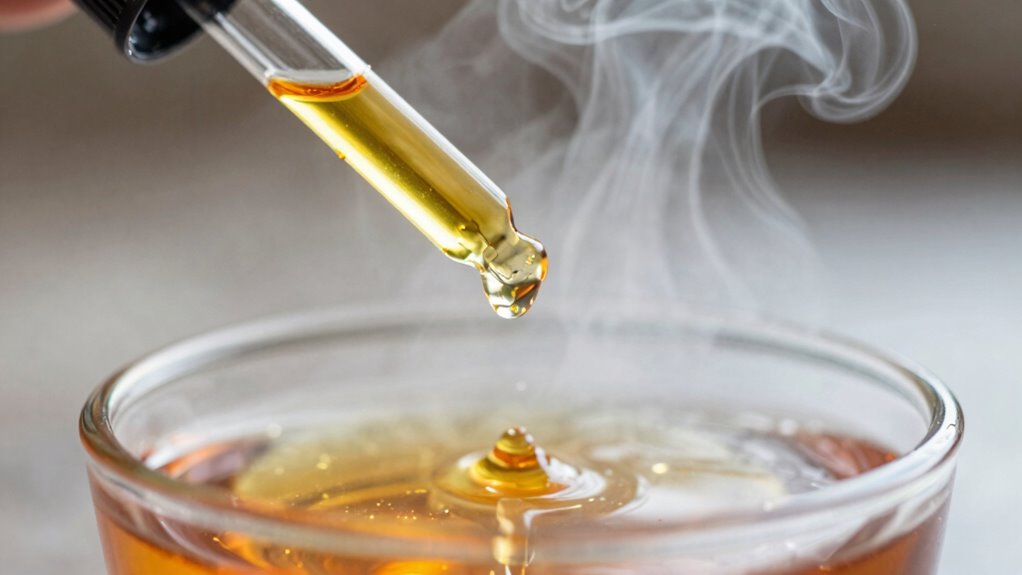
When you blend essential oils, the scent changes after about 10 minutes because the most volatile compounds evaporate first, revealing different notes. Initially, you smell bright, fresh top notes, but as they fade, the middle and base notes start to emerge, creating a natural scent evolution. This process is normal and reflects how scents develop over time. If you want to understand more about managing these changes, there’s plenty more to discover.
Key Takeaways
- Essential oils contain volatile compounds that evaporate over time, altering the scent profile.
- Top notes dissipate first, revealing middle and base notes, causing scent changes.
- Diffuser settings and container choice influence how long each scent component persists.
- Combining stable and volatile oils can either prolong or shift the aroma.
- Natural scent evolution enhances the aromatherapy experience, reflecting the changing composition of the blend.
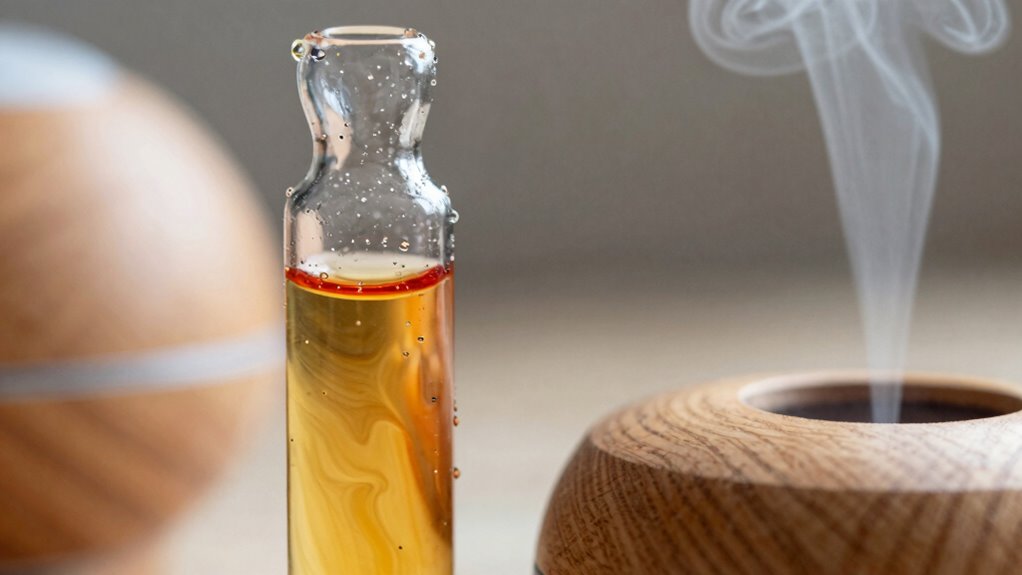
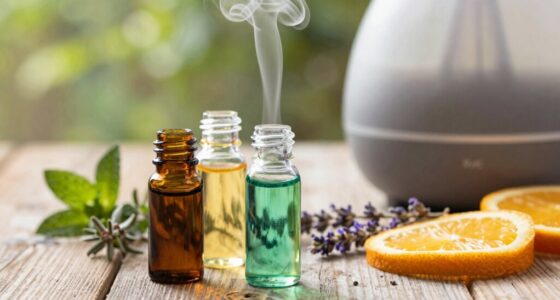
Have you ever noticed that your favorite essential oil blend smells different after just ten minutes? It’s a common experience, and it can be a bit confusing if you’re trying to create a specific mood or atmosphere. The reason behind this scent shift lies in how essential oils interact with your environment and your senses over time. When you first apply or diffuse an oil blend, your nose experiences the top notes—bright, fresh, and immediately noticeable scents. But as time passes, these top notes evaporate, making way for the middle and base notes, which often have deeper, richer aromas. This natural progression is part of why your essential oil blend smells different after a short while.
Understanding aromatherapy techniques can help you manage and even maximize scent longevity. For example, if you want your blend to maintain a consistent aroma, you might choose oils with more stable scent profiles or combine them strategically. Diluting your oils properly, using appropriate diffuser settings, and selecting the right containers also influence how long the scent lasts. If you’re diffusing, adjusting the fan speed or the amount of oil can extend the initial fragrance. When applying oils topically, layering with carrier oils or using specific application points can help preserve the scent longer. Additionally, selecting oils with more stable scent profiles can make a significant difference in how long the aroma persists. By experimenting with different aromatherapy techniques, you gain better control over how your blend evolves and how long it stays vibrant.
Adjust diffuser settings and layer oils to extend and maintain your desired scent.
The perception of scent change is also tied to how your olfactory system processes aromas. When you first smell an oil blend, your brain registers the more volatile compounds—these are responsible for the initial burst of scent. As these compounds dissipate, your nose begins to pick up the less volatile molecules, which tend to be subtler and last longer. This natural process ensures that your experience of the scent evolves, but it can also make it seem like the smell is fading too quickly. To counteract this, some people layer oils or refresh their diffuser to keep the aroma consistent. Others prefer to embrace the change, appreciating the complexity that develops over time. Recognizing that scent composition changes over time can help you better understand and enjoy your aromatherapy experience. Additionally, understanding the volatile compounds responsible for initial scent release can help you select oils that last longer.
Ultimately, the difference in scent after ten minutes isn’t a flaw but a feature of how essential oils work. With a few aromatherapy techniques, you can influence scent longevity and create a more consistent or dynamic aromatic experience. Whether you want a steady aroma or enjoy watching your blend transform, understanding these principles helps you get the most out of your essential oil collection. So next time your favorite scent shifts, remember—it’s all part of the natural and beautiful journey of aromatherapy.
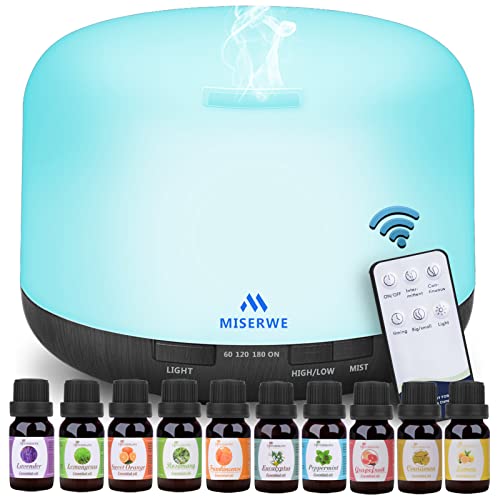
Miserwe Diffuser 500ML Essential Oil Diffuser with Adjustable Mist Mode and 4 Timer Setting Diffuser for Essential Oils Waterless Auto Shut-Off for Home Office Yoga Spa
- Quiet Operation: Deep Sleep mode ≤ 20dB for quietness
- Large Capacity: 500ml water capacity for up to 10 hours
- Remote Control: Easy control from bed or sofa
As an affiliate, we earn on qualifying purchases.
As an affiliate, we earn on qualifying purchases.
Frequently Asked Questions
Do Different Essential Oils Change Scent at Different Rates?
Yes, different essential oils change scent at different rates. This is due to their unique fragrance evolution and aroma stability. Some oils, like citrus, tend to evaporate quickly, causing their scent to fade fast. Others, like patchouli or sandalwood, have more stable aromas that last longer. You’ll notice the aroma shift as the volatile components evaporate or settle, making some blends smell different over time.
How Does Temperature Affect Essential Oil Scent Changes?
Surprisingly, temperature fluctuations are your scent’s worst enemy. When it gets warmer, essential oil scent evaporation speeds up, making the aroma fade faster. Cold temperatures slow down this process, keeping your blend fragrant longer. So, if you want that lovely scent to last, store your oils in a cool, stable environment. Ironically, the very warmth we often seek can cause your essential oil scent to vanish quicker than expected.
Can Storage Containers Alter How Essential Oils Smell Over Time?
Yes, storage containers can alter how your essential oils smell over time. If you use containers made of certain materials like plastic, they can sometimes interact with the oils, changing their scent. Additionally, light exposure through clear containers can degrade the oils, causing scent changes. To preserve the original aroma, store your essential oils in dark glass bottles and avoid prolonged exposure to light.
Do Essential Oil Blends Smell Different Based on Skin Chemistry?
You’ll notice essential oil blends smell different on your skin because of your skin’s pH and oil absorption levels. Studies show that skin pH varies between 4.5 and 5.5, influencing how scents develop over time. When your skin absorbs oils differently, it alters how essential oils interact with your skin’s chemistry, making the scent evolve. So, your unique skin chemistry considerably impacts the way essential oil blends smell on you.
Are Scent Changes Noticeable Immediately or Gradually?
You’ll notice scent changes in essential oil blends gradually, not immediately. When using aromatherapy techniques, your scent perception evolves as the oils interact with your skin and environment. The initial aroma might be strong, but over time, it softens or shifts, revealing different notes. This gradual change enhances your experience, making aromatherapy more dynamic and personalized as your nose perceives subtle variations in the blend’s scent profile.
Conclusion
So, next time your essential oil blend shifts in scent after a few minutes, don’t be surprised. It’s not a mistake—it’s nature’s secret at play. Those initial top notes fade, revealing hidden layers you never noticed before. Keep exploring, and you might just discover your own aromatic surprises hiding beneath the surface. The real question is, are you ready to uncover what’s next in your fragrant journey? The scent’s story isn’t over yet—there’s more waiting just beneath the surface.