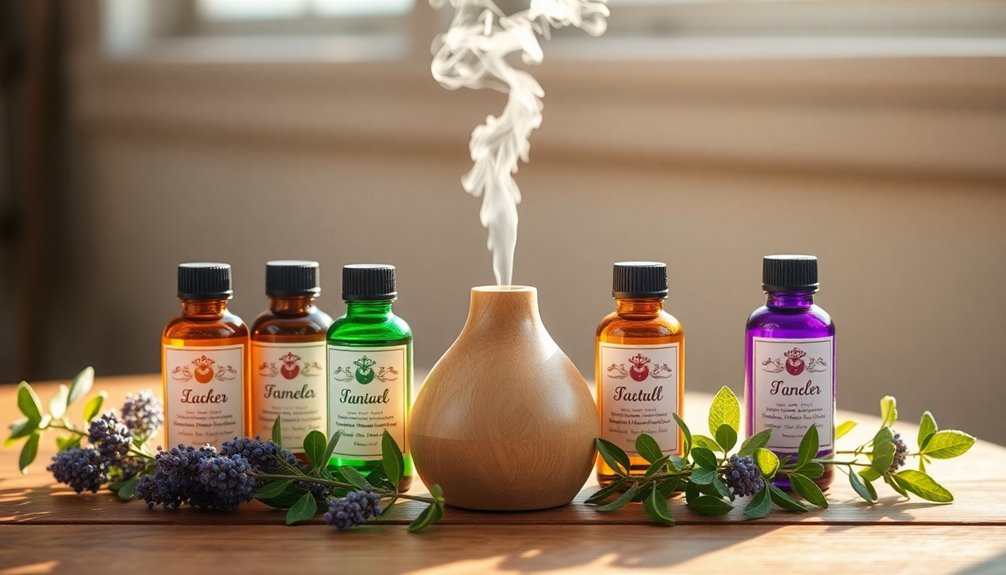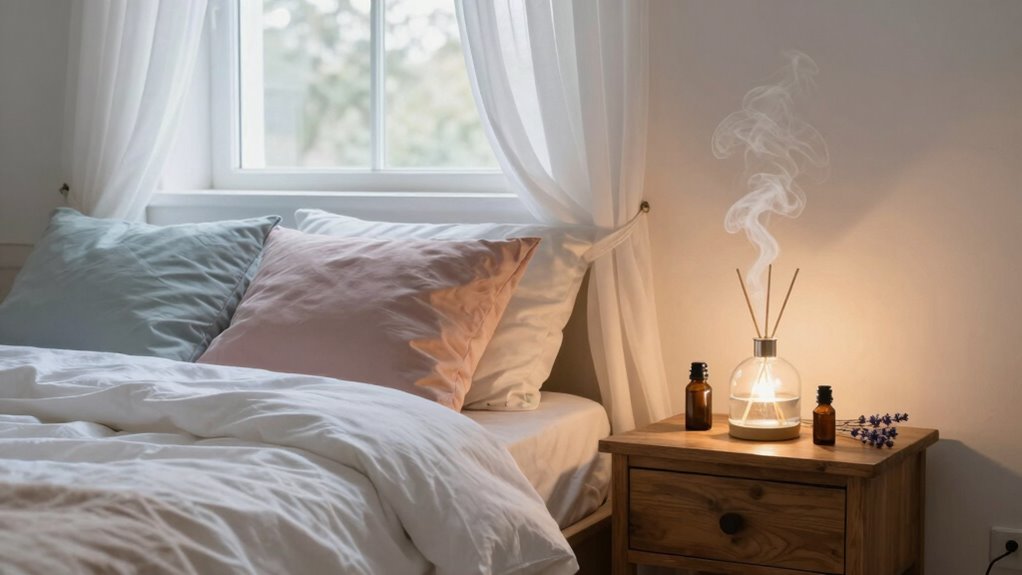

Using essential oils can definitely support a better bedtime routine by creating a calming atmosphere that helps you relax and unwind. Scents like lavender, chamomile, and bergamot can soothe your mind and relax your body, making it easier to fall asleep. Combining oils with gentle application methods or diffusing them in your room can strengthen your sleep cues. To discover more ways to improve your sleep with aromatherapy, keep exploring how these soothing scents can work for you.

Get oils, diffusers and self-care delivered free with Prime
- Fast, free delivery on millions of items
- Prime Video, Amazon Music and more included
- Member-only deals all year
Key Takeaways
- Essential oils like lavender and chamomile promote relaxation and create a calming environment for better sleep.
- Diffusing or topical application of oils helps signal the brain to wind down and prepare for rest.
- Personal blends tailored to preferences enhance the effectiveness of bedtime aromatherapy routines.
- Consistent use of high-quality oils can reinforce sleep cues and improve sleep quality over time.
- Ethical sourcing ensures sustainability, supporting eco-friendly practices that align with wellness goals.
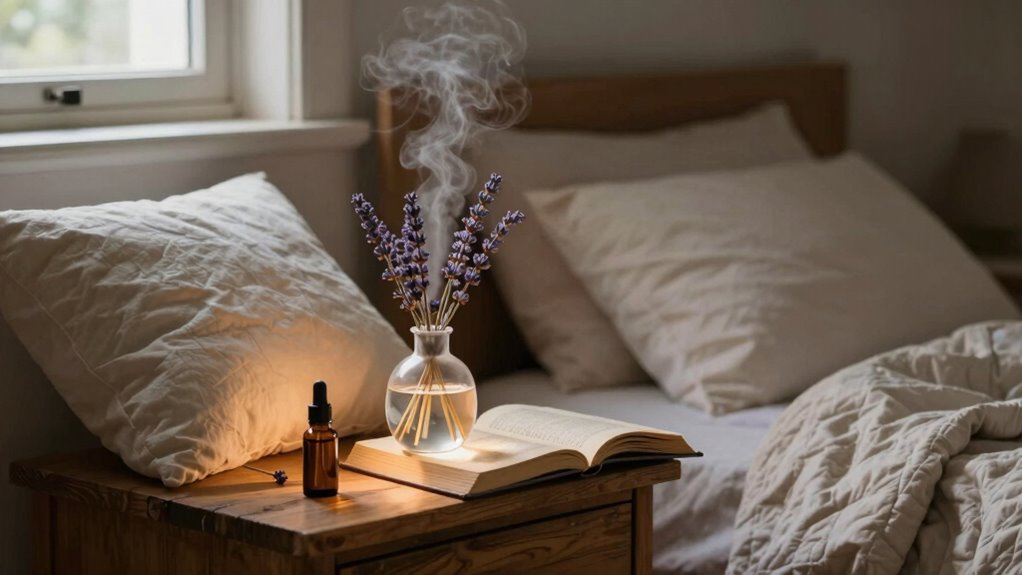
If you struggle to fall asleep or stay asleep through the night, incorporating essential oils into your bedtime routine can make a significant difference. Many people find that aromatherapy benefits, such as calming the mind and relaxing the body, help create an environment conducive to restful sleep. Essential oils like lavender, chamomile, and bergamot are popular choices because of their soothing properties. When used consistently, they can signal to your brain that it’s time to wind down, encouraging a quicker shift into sleep.
Incorporate essential oils into your bedtime routine for calmer, more restful sleep.
To maximize these benefits, you can explore oil blending techniques that enhance the overall calming effect. Combining certain oils allows you to create personalized blends tailored to your preferences and needs. For example, mixing lavender with a hint of frankincense can deepen relaxation, while adding a few drops of ylang-ylang might elevate mood and reduce anxiety. When blending oils, aim for a balanced mixture—usually three to five drops of each oil—so the scent isn’t overpowering. Use a carrier oil like jojoba or coconut oil if you plan to apply the blend directly to your skin, or add the mixture to a diffuser for a gentle, consistent aroma in your bedroom.
Applying essential oils in various ways supports a better bedtime routine. Diffusing the scent in your room about 30 minutes before bed helps establish a calming atmosphere. You can also add a few drops to a warm bath, allowing the aroma to permeate the air while relaxing your muscles. For direct application, dilute the oils in a carrier oil and gently massage them onto your wrists, temples, or the soles of your feet. These methods allow you to enjoy the aromatherapy benefits while creating a sensory cue that it’s time to sleep. Additionally, understanding the benefits of biodiversity in the environment can inspire sustainable choices in your wellness routines, such as selecting eco-friendly essential oils. Incorporating mindfulness practices alongside aromatherapy can further enhance your relaxation and sleep quality. Recognizing the importance of sustainable sourcing can also help support environmental health while improving your sleep environment. Choosing oils sourced from ethically farmed plants ensures that your wellness routine supports conservation efforts, which can contribute to a healthier ecosystem that sustains the plants used in essential oil production.
Consistency is key. Incorporate your chosen essential oils into your nightly routine so that your brain begins to associate the scent with rest and relaxation. Over time, this association can make falling asleep easier and improve sleep quality. Furthermore, the quality of the essential oils you select can influence their effectiveness, so investing in high-quality, pure oils is worthwhile. Keep in mind that individual responses to essential oils vary, so experiment with different blends and methods to find what works best for you. With mindful oil blending techniques and regular use, essential oils can become a simple yet powerful tool in supporting a more restful, peaceful sleep cycle.
Lavender essential oil for sleep
As an affiliate, we earn on qualifying purchases.
As an affiliate, we earn on qualifying purchases.
Frequently Asked Questions
Are Essential Oils Safe for Children at Bedtime?
Yes, essential oils can be safe for children at bedtime when used correctly. You should avoid aromatherapy myths that suggest undiluted oils are safe; always dilute essential oils properly to prevent skin irritation. Use child-safe oils like lavender or chamomile and diffuse them in a well-ventilated area. Always consult a pediatrician before use, especially for younger children, to guarantee safety and appropriate application.
How Long Do the Calming Effects of Essential Oils Last?
Imagine a gentle wave washing over you—that’s how long the calming effects of essential oils can last, typically between 30 minutes to a few hours. By using aromatherapy techniques and optimizing your sleep environment, you can extend this tranquil tide. Reapplying or diffusing essential oils during the night helps maintain that serene atmosphere, ensuring your mind and body stay wrapped in peaceful comfort throughout your rest.
Can Essential Oils Cause Allergic Reactions During Sleep?
Yes, essential oils can cause allergic reactions during sleep, especially if you have skin sensitivities or are prone to allergenic reactions. You might experience symptoms like skin irritation, sneezing, or difficulty breathing. To minimize risks, always do a patch test before use and dilute oils properly. If you notice any adverse reactions while sleeping, remove the diffuser or oil source and consult a healthcare professional.
Are There Any Essential Oils to Avoid Before Bedtime?
You should avoid essential oils like peppermint if you have peppermint sensitivity, as it can cause irritation or headaches. If you’re prone to lavender allergies, steer clear of lavender oil, which might trigger allergic reactions. Always patch-test new oils before use, especially before bedtime, to prevent any adverse effects. Being cautious helps guarantee your bedtime routine remains relaxing and safe without unexpected allergic or sensitivity issues.
How Should I Store Essential Oils for Bedtime Use?
You should store your essential oils in dark, glass storage containers to protect them from light and heat, which can degrade quality. Keep them in a cool, dry place away from direct sunlight. When using diffusion techniques for bedtime, make certain the diffuser is clean and placed in a safe spot. Proper storage preserves their potency, so your bedtime routine remains calming and effective.
Conclusion
So, next time you’re lying awake, desperately counting sheep, just spritz some lavender and hope for the best. Who needs therapy or a good night’s sleep when a few drops of essential oil can solve all your problems? Maybe it’s time to ditch the mattress and just drown your worries in a fragrant cloud. After all, what’s more soothing than pretending a tiny bottle holds the secret to eternal rest? Sleep tight, or at least smell nice doing it.
Halloween Picks
halloween
As an affiliate, we earn on qualifying purchases.