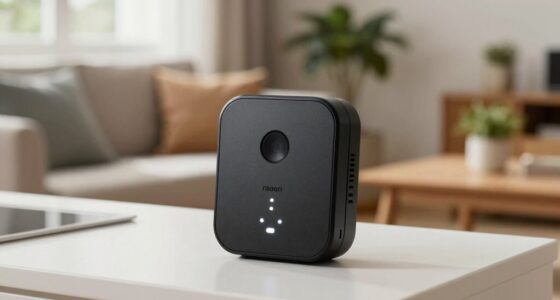

A smart air quality monitor helps you see how your daily activities affect indoor air by providing real-time data. It alerts you to pollutants, allergens, and patterns, prompting you to adjust habits like opening windows or using air purifiers. This immediate feedback encourages proactive changes that improve your environment and health over time. Staying informed makes it easier to build healthier routines, and if you keep exploring, you’ll discover more ways to enhance your indoor air quality.

Get oils, diffusers and self-care delivered free — and shop member deals
- Fast, free delivery on millions of items
- Access to Prime Big Deal Days deals on October 6–7
- Prime Video, Amazon Music and more included
Key Takeaways
- Provides real-time, accurate data to inform and adjust daily habits for healthier indoor air.
- Reveals patterns and sources of pollutants, encouraging targeted behavioral changes.
- Sends alerts for pollution spikes, prompting immediate actions like ventilation or filtration.
- Integrates with smart systems to automate air quality management, fostering consistent routines.
- Educates users on activity impacts, supporting long-term lifestyle improvements for better health.
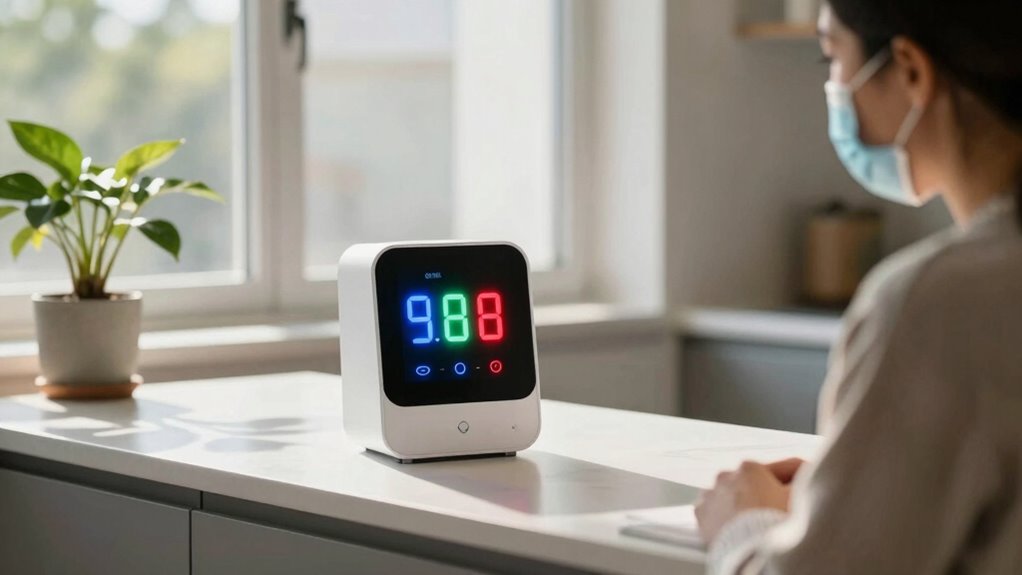
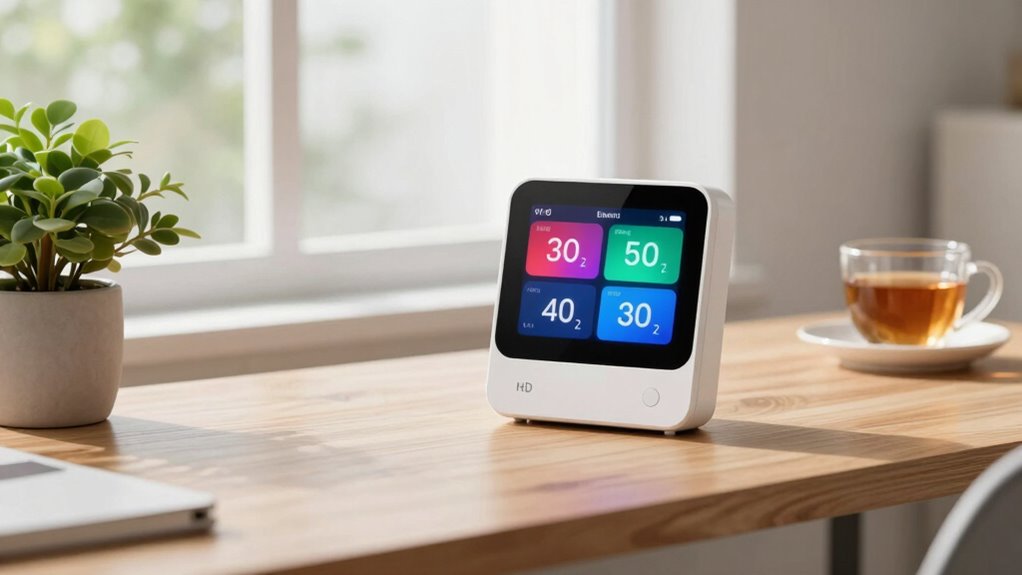
Air quality monitors offer a simple yet powerful way to keep track of the air you breathe, providing real-time data on pollutants and allergens. When you use a smart air quality monitor, you’re directly addressing indoor pollutants that can silently impact your health. These devices measure things like particulate matter, volatile organic compounds (VOCs), and humidity levels, giving you a clear picture of your indoor environment. Knowing what’s in the air around you allows you to make informed decisions about ventilation, cleaning, and overall air quality management.
Smart air quality monitors provide real-time data on pollutants and allergens for healthier indoor environments.
One of the key benefits of a smart monitor is data accuracy. Unlike guesswork or relying on outdated information, these devices deliver precise, real-time readings that help you understand how different activities or products affect your indoor air. For example, cooking, cleaning, or even certain furniture can release pollutants that you might not notice without proper monitoring. With accurate data, you can pinpoint sources of indoor pollutants and take targeted actions to reduce exposure. This level of detail ensures you’re not just reacting blindly but actively improving your environment based on trustworthy information.
Having access to reliable data encourages better habits. When you see high levels of pollutants, you’re more likely to turn on ventilation fans, open windows, or use air purifiers. Over time, these small adjustments become routines that significantly improve your air quality and, consequently, your health. A smart monitor also provides insights over days and weeks, revealing patterns you might not have realized before. Maybe you notice that your allergen levels spike when you’re cleaning or during certain seasons, prompting you to adjust your habits accordingly.
Furthermore, the integration capabilities of modern smart monitors mean you can connect them with your smartphone or smart home system. This makes it easier to track trends and receive alerts if air quality drops suddenly. When you’re alerted to dangerous levels of indoor pollutants, you can act immediately—ventilating the space or adjusting your air filtration systems—without needing to be physically present in the room. This proactive approach helps protect your family’s health and creates a safer living environment. Additionally, understanding indoor air pollution can help you implement targeted improvements that have a lasting impact on your home’s air quality. Being aware of air quality data allows you to make smarter choices about your environment and habits. Regular monitoring also encourages you to stay proactive about ventilation practices, ensuring your indoor air remains healthy over time. Recognizing how various household activities contribute to indoor pollution further empowers you to create a healthier home environment.
As an affiliate, we earn on qualifying purchases.
Frequently Asked Questions
How Accurate Are Smart Air Quality Monitors Compared to Professional Assessments?
Smart air quality monitors are quite accurate, especially when they undergo regular sensor calibration. They provide reliable data accuracy for everyday use, but may not match professional assessments in precision. You should calibrate your device periodically to maintain accuracy. While they may not replace expert evaluations, they give you real-time insights into your environment, helping you make better decisions about air quality and your habits.
Can These Monitors Detect Specific Allergens or Pollutants?
This monitor’s allergen detection and pollutant specificity are truly mind-blowing, like having a tiny detective in your home. It can identify specific allergens such as pollen and pet dander, as well as pollutants like VOCs and carbon monoxide. While it doesn’t offer detailed chemical analysis, it provides valuable insights into common indoor allergens and pollutants, empowering you to make smarter decisions for a healthier environment.
How Often Should I Calibrate or Maintain My Air Quality Monitor?
You should calibrate your air quality monitor regularly, typically every 6 to 12 months, depending on usage and manufacturer recommendations. Follow your device’s maintenance schedule closely to guarantee sensor calibration stays accurate. Regular maintenance, like cleaning sensors and replacing filters if applicable, helps keep readings reliable. Staying consistent with these steps ensures your monitor provides precise data, allowing you to make informed decisions about your indoor air quality.
Do Smart Monitors Integrate With Other Home Automation Systems?
Did you know over 50% of smart homes now feature integrated devices? Yes, smart monitors easily connect with other home automation systems, boosting your convenience. They often support smart home connectivity and voice assistant integration, allowing you to check air quality, control settings, or receive alerts through voice commands. This seamless integration helps you maintain a healthier environment effortlessly, making your smart home smarter and more responsive to your needs.
What Is the Typical Cost Range for a Reliable Smart Air Quality Monitor?
A reliable smart air quality monitor typically costs between $50 and $200. For budget options, you can find models around $50 to $80 that still provide essential features like air quality sensors and app integration. Higher-end devices, costing $150 to $200, often offer more detailed data, faster updates, and additional features like VOC detection. Do your cost comparison to find the best fit for your needs and budget.
Conclusion
A smart air quality monitor acts like a helpful friend, always keeping you informed and motivated to breathe better. It’s easy to overlook pollution, but with real-time updates, you’ll start making smarter choices—like opening windows or using air purifiers—just like adjusting sails to catch the wind. By paying attention to your environment, you’re taking control of your health, turning your space into a sanctuary of fresh air. Embrace this device, and watch your habits transform effortlessly.
Fall Picks
fall essentials
As an affiliate, we earn on qualifying purchases.