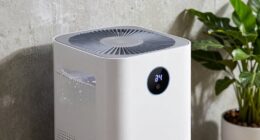
If your basement has a straightforward setup with a drain nearby, a gravity drain dehumidifier might be enough and saves you money upfront. It’s easy to install and requires less maintenance, but you’ll need to manually empty or monitor the hose. On the other hand, a dehumidifier with a pump offers automatic drainage, ideal for hard-to-reach spaces or where gravity isn’t an option, though it comes at a higher cost and complexity. Continue exploring for more details to find what suits your needs best.
Key Takeaways
- Gravity drain units are more affordable initially but may require manual setup and ongoing maintenance.
- Pump models offer automatic drainage, ideal for hard-to-reach or complex basement setups.
- Pumps involve higher upfront costs and potential maintenance due to mechanical parts.
- Simpler drainage setups favor gravity drains, while challenging locations benefit from pump systems.
- Consider long-term effort and budget when choosing between manual gravity drainage and automatic pump options.
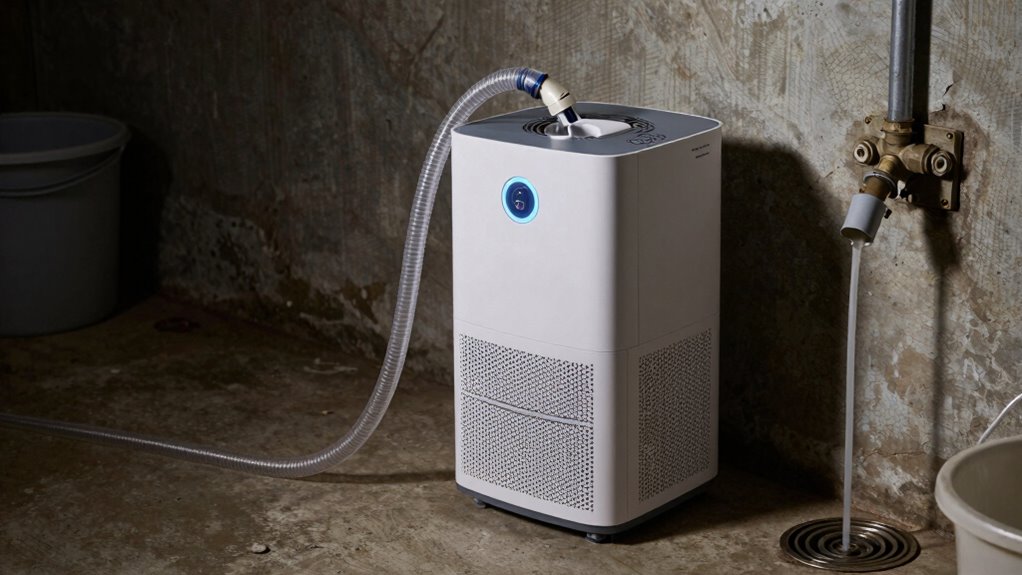
When choosing a dehumidifier, understanding the differences between models with a pump and those with a gravity drain can make a big impact on your convenience and maintenance. One of the first aspects to consider is the cost comparison. Dehumidifiers with a pump tend to be more expensive upfront, often costing several hundred dollars more than gravity drain models. This higher price reflects the added complexity of the pump mechanism, which allows for greater flexibility in drainage options. On the other hand, gravity drain units are generally more affordable, making them attractive if your budget is tight. However, the initial savings might be offset by the potential need for more manual intervention or additional accessories, like hoses or extensions, depending on your setup.
Installation requirements are another critical factor to weigh. With a gravity drain dehumidifier, the setup is usually straightforward. You simply need to position the unit near a drain or a drain pipe, ensuring the hose is angled downward to allow water to flow naturally by gravity. This simplicity means you can often install it yourself without professional help, saving on installation costs and time. Conversely, dehumidifiers with a pump require a more involved installation process. You’ll need to connect the pump to a power source and ensure it’s positioned correctly for efficient operation. Some models may require additional plumbing or electrical work, especially if you want to pump water vertically or over a significant distance. This often means hiring a professional, which adds to the overall cost and complexity.
The choice between a pump and gravity drain also impacts your long-term maintenance. Gravity drain units are typically easier to maintain since they have fewer moving parts. You’ll mainly need to check and clean the drain hose and ensure there’s no blockage. Pump models, while more convenient for complex drainage scenarios, may require periodic maintenance of the pump itself, including cleaning or replacing parts to prevent clogs or mechanical failure. Additionally, advancements in pump technology have made some models more reliable and quieter, which can influence your decision.
Ultimately, your decision should balance your budget, drainage setup, and how much effort you’re willing to spend on maintenance. If your space allows for a simple gravity drain setup and you’re looking to minimize initial costs, a gravity drain dehumidifier is usually sufficient. But if you need to drain water from a difficult location or want the convenience of automatic pumping without manual intervention, investing in a pump model might be worth the extra cost and installation effort.
Frequently Asked Questions
How Long Does a Dehumidifier With a Pump Typically Last?
A dehumidifier with a pump typically lasts around 5 to 10 years, depending on maintenance frequency and usage. Regularly cleaning filters and checking the pump guarantees ideal performance and extends its replacement cycle. If you notice reduced efficiency or frequent breakdowns, it might be time to contemplate replacement. Proper upkeep helps you get the most out of your unit, saving you money and hassle in the long run.
Is Professional Installation Required for Dehumidifiers With Pumps?
A stitch in time saves nine, so you should know that professional installation is usually recommended for dehumidifiers with pumps. The installation complexity involves plumbing and electrical work that can be tricky if you’re not experienced. While some models might be easier to set up, hiring a pro guarantees proper placement and safety. Don’t risk water damage or inefficiency—trust an expert to handle the job right the first time.
Can I Move a Dehumidifier With a Pump Easily?
You can move a dehumidifier with a pump easily thanks to its portable convenience. Most models are lightweight and designed for simple relocation, so you won’t need to worry about installation complexity when changing spots. Just guarantee the drain hose remains properly connected and the unit stays level. This flexibility allows you to optimize moisture control in different areas without fuss, making maintenance straightforward and hassle-free.
What Is the Energy Consumption Difference Between the Two Systems?
You’ll find that dehumidifiers with pumps tend to consume slightly more power, but the difference is minimal thanks to their energy efficiency. Pumps use extra energy to operate, especially if they need to lift water vertically, but advanced models optimize power consumption. Gravity drain systems generally use less energy because they rely solely on gravity, making them slightly more cost-effective over time. So, your choice depends on convenience versus long-term energy savings.
Are There Specific Basement Conditions Better Suited for One Type?
If your basement has high moisture levels and a sump pump, a dehumidifier with a pump works best, as it can automatically drain water even from lower areas. For basements with less moisture or easy access to a drain, a gravity drain system suffices. Consider your sump pump’s capacity and basement layout to choose the most efficient system, ensuring continuous moisture control without extra hassle.
Conclusion
In the end, choosing between a dehumidifier with a pump or gravity drain depends on your space and needs. If you want hassle-free, don’t put all your eggs in one basket—consider what fits best in your basement’s layout. Remember, sometimes you have to roll with the punches and adapt. Whether you go pump or gravity, keeping your basement dry is the name of the game—just find what works for you and stick to it.