If your diffuser won’t mist, start by checking the water level—make sure it’s at the recommended mark and use clean, room-temperature water. Clean the ultrasonic plate with a soft cloth dipped in rubbing alcohol to remove buildup. Avoid overloading with essential oils; stick to 3-5 drops. Make certain the power is connected properly, and settings are correct. For more tips to fix your diffuser quickly, keep going to uncover essential troubleshooting tricks.

Get oils, diffusers and self-care delivered free with Prime
- Fast, free delivery on millions of items
- Prime Video, Amazon Music and more included
- Member-only deals all year
Key Takeaways
- Ensure the water level is at the recommended minimum and the ultrasonic plate is clean from debris or buildup.
- Use only 3-5 drops of high-quality essential oil per session to prevent clogging or performance issues.
- Check that the diffuser is properly plugged in, turned on, and set to the correct mist mode.
- Avoid overfilling the water tank or using harsh chemicals during cleaning to prevent internal damage.
- Reset the device by turning it off, unplugging, then turning it back on after cleaning and refilling.
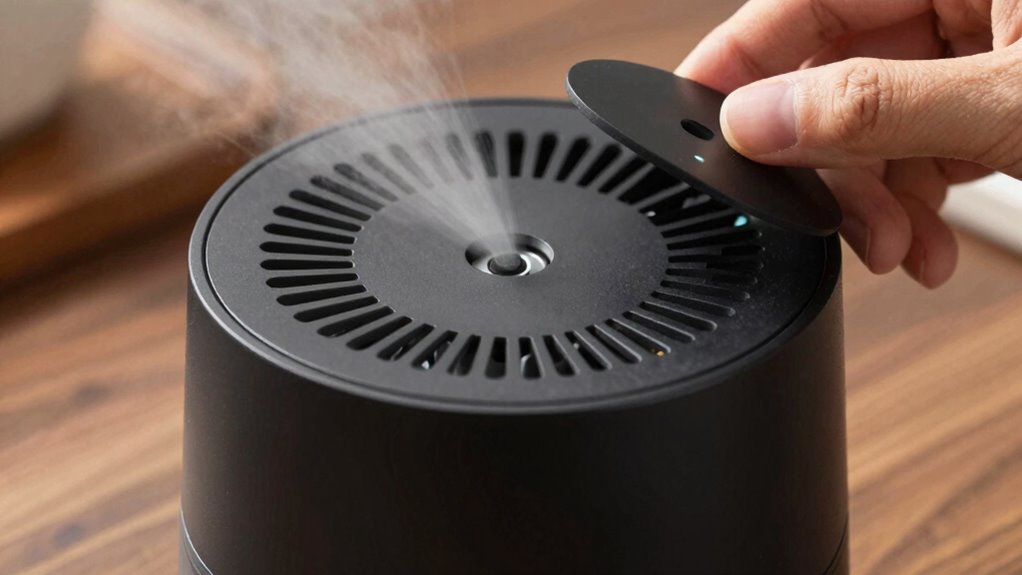
If your diffuser isn’t working properly, troubleshooting can help you identify and fix the issue quickly. One common problem is that your diffuser won’t mist, which can be frustrating, especially when you’re enthusiastic to enjoy the calming effects of your essential oils. To start, check that you’re using the right amount of essential oils. Using too much or too little can interfere with the ultrasonic mechanism that creates the mist. Typically, only a few drops—about 3 to 5—are needed. Overloading the diffuser can clog the ultrasonic plate, preventing it from vibrating properly and producing mist. Also, ensure you’re using high-quality essential oils, as cheap or thick oils can cause buildup and impair performance.
Next, examine the water level. Most diffusers require water to generate mist, and if the water is below the minimum fill line, the ultrasonic mechanism might not activate. Conversely, overfilling can cause leaks or prevent the diffuser from sealing correctly. Fill the water tank with clean, room-temperature water up to the recommended level, then add your essential oils. Before turning it on, make sure the water isn’t stagnant or dirty, as debris can clog the ultrasonic plate. If you notice mineral deposits or buildup, clean the device carefully, following the manufacturer’s instructions. Using distilled or filtered water can help prevent mineral buildup over time, ensuring your diffuser continues to mist properly. Additionally, understanding the importance of filtration can help maintain your diffuser’s performance over time.
If your diffuser still isn’t misting, check the power source. Sometimes, a loose plug or faulty outlet can interrupt the ultrasonic mechanism’s operation. Make sure the power cord is securely connected and try plugging it into a different outlet to rule out electrical issues. If your diffuser has multiple settings, ensure you’ve selected the correct mist mode. Sometimes, the device may be turned on but set to a timer or a setting that disables misting. Resetting the diffuser or turning it off and on again can sometimes resolve minor glitches.
Finally, if none of these steps work, it’s likely that the ultrasonic plate or internal components are dirty or damaged. Carefully clean the ultrasonic plate using a soft cloth or cotton swab dipped in rubbing alcohol. Avoid using harsh chemicals, as they can damage the delicate mechanism. If cleaning doesn’t restore misting, and your diffuser is still under warranty, consider contacting the manufacturer for repairs or replacement. Regular maintenance, including cleaning and proper use of essential oils, can profoundly extend the life of your diffuser and keep it misting smoothly.
ultrasonic diffuser troubleshooting
As an affiliate, we earn on qualifying purchases.
As an affiliate, we earn on qualifying purchases.
Frequently Asked Questions
Can a Diffuser Still Work Without Water?
No, a diffuser generally won’t work without water because waterless operation can damage the unit and prevent diffuser functionality. Most diffusers rely on water to generate mist, dispersing essential oils into the air. Running it without water might cause overheating or malfunction. To keep your diffuser working properly, always make sure there’s enough water in the tank, and never operate it dry. This preserves its effectiveness and longevity.
How Long Should I Run My Diffuser Before It Stops?
Ever wonder how long you should run your diffuser? Usually, you should set the diffuser timer for 3 to 4 hours or check the mist duration settings. Most diffusers automatically stop when the mist duration ends, but some have continuous modes. Keep an eye on your diffuser’s timer and mist duration to prevent overuse. Once it stops, give it a short break before restarting for peak performance.
Is It Safe to Use Essential Oils in a Broken Diffuser?
It’s not safe to use essential oils in a broken diffuser because of safety concerns and potential essential oil risks. A damaged diffuser might leak or malfunction, which could cause harmful fumes or even fire hazards. To protect yourself, always repair or replace a broken diffuser before adding essential oils. Using damaged devices can lead to unpredictable safety issues, so prioritize safety and avoid risking damage or harm.
Why Does My Diffuser Make a Buzzing Noise?
You notice a buzzing noise from your diffuser, which is often caused by diffuser vibration issues or loose components. The buzzing can also stem from motor problems or debris interfering with the fan or internal parts. To fix it, unplug the device and check for loose screws or parts. Gently clean the fan and motor area, and make certain everything is securely assembled. This should reduce the buzzing and restore smooth operation.
Can I Clean My Diffuser With Household Cleaning Products?
You can’t use household cleaning products on your diffuser because they might damage the device or leave harmful residues. Instead, focus on diffuser maintenance by using a damp cloth or a mixture of water and vinegar to clean the tank. Always unplug your diffuser before cleaning, and avoid harsh chemicals. Regular cleaning helps prevent clogs and keeps your diffuser working smoothly, ensuring it mists properly every time.
Conclusion
Don’t let a non-misting diffuser dampen your mood. With these quick troubleshooting tips, you’ll have your diffuser working smoothly in no time. Even if you think it’s beyond repair, most issues are simple fixes that you can handle yourself. Give these steps a try—they’re easy, effective, and cost-saving. Before you consider replacing it, troubleshoot first—you might be surprised how simple the solution can be. Your calming scents are just a quick fix away!
Halloween Picks
halloween
As an affiliate, we earn on qualifying purchases.