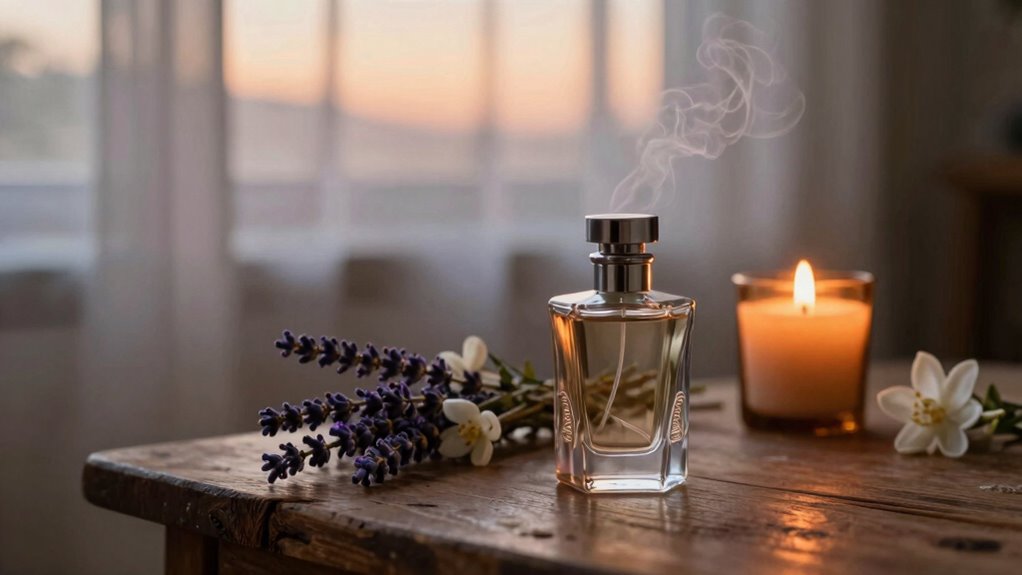

To create an early-evening scent cue, choose calming scents like lavender, chamomile, or sandalwood, and use them consistently at the same time each evening. Diffuse essential oils for about 30 minutes before winding down or add them to a warm bath. Make this part of a calming routine by keeping your environment clutter-free and serene, helping your brain associate the scent with relaxation. Keep going to discover more ways to deepen this calming shift.

Get oils, diffusers and self-care delivered free with Prime
- Fast, free delivery on millions of items
- Prime Video, Amazon Music and more included
- Member-only deals all year
Key Takeaways
- Diffuse calming essential oils like lavender or chamomile for 30 minutes before dinner to signal relaxation.
- Establish a consistent scent routine after work or in early evening to reinforce the calming association.
- Use the same scent in a diffuser, pillow spray, or bath to create a reliable sensory cue.
- Keep the environment clutter-free and soothing to enhance the scent’s calming effect.
- Pair the scent cue with relaxing activities, such as gentle stretching or mindful breathing, to deepen relaxation.
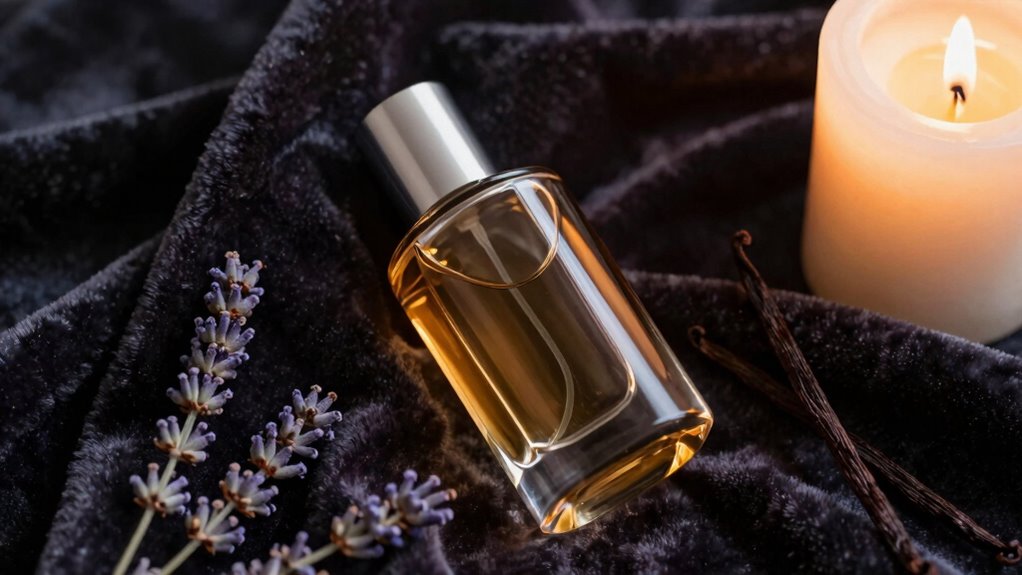
As your day winds down, establishing an evening scent cue can help signal to your mind and body that it’s time to relax and shift into a restful state. Using aromatherapy techniques, you can craft a sensory signal that naturally encourages slowing down and unwinding. The goal is to create a consistent scent environment that becomes a scent memory trigger, helping you segue smoothly from activity to calmness each evening.
Start by choosing a specific scent or combination of scents that you associate with relaxation. Popular options include lavender, chamomile, or sandalwood because of their calming properties. When you use these scents consistently at the same time each evening, your brain begins to connect the aroma with relaxation, reinforcing your evening routine. This association is the essence of scent memory triggers—powerful cues that prompt your body to enter a restful state without conscious effort.
Next, incorporate aromatherapy techniques that enhance this process. Diffusing essential oils is one of the most effective methods because it disperses a gentle, continuous scent into the air. Use a diffuser in your living space or bedroom, and run it for about 30 minutes before you intend to wind down. You can also add a few drops of your chosen essential oil to a warm bath or create a scented pillow spray. These methods deepen the sensory experience and strengthen the scent-memory link. Additionally, ensuring proper diffusion techniques can optimize the calming effect and prevent overwhelming the senses. Incorporating scent environment considerations, such as avoiding strong competing odors, can further improve the effectiveness of your scent cue. Creating a calm atmosphere is also essential to reinforce the relaxing impact of your chosen scents.
Consistency is key. Make it a habit to engage with your chosen scent every evening, perhaps after dinner or right before bed. Over time, your brain will begin to associate the smell with relaxation, making it easier for you to segue into a restful state even on days when your mind is restless or your body feels tense. Repeating this routine daily or nightly helps solidify the scent as your personal cue to slow down.
Pay attention to the environment where you implement your scent cue. Keep your space calm and clutter-free, minimizing distractions that might interfere with the scent’s calming effect. The more consistent and focused your environment, the more effective your scent memory triggers become. Being mindful of environmental cues like lighting, noise levels, and cleanliness can further enhance the calming impact of your routine. As you continue this routine, you’ll notice that just a whiff of your chosen aroma starts to relax your muscles and quiet your thoughts, making the segue into sleep smoother and more natural. Maintaining a serene environment also supports the mind-body connection, reinforcing your relaxation routine.
As an affiliate, we earn on qualifying purchases.
Frequently Asked Questions
Can I Use Any Scent for My Evening Cue?
You can choose any scent for your evening cue, but for the best aromatherapy benefits, opt for calming scents like lavender or chamomile. These help foster a scent memory association with relaxation and winding down. Avoid strong or energizing fragrances that might interfere with your evening mindset. Using a consistent scent helps your brain associate it with relaxation, making it easier to shift into a peaceful evening routine.
How Long Does the Scent Last as a Cue?
The scent lasts anywhere from a few hours to several hours, depending on scent longevity and fragrance stability. Typically, lighter fragrances fade faster, while more stable, concentrated scents linger longer. To maximize scent duration, choose high-quality oils or essential oils with strong fragrance stability, and consider applying it on pulse points. Reapplying in the early evening can help maintain your scent cue, reinforcing your calming ritual as the day winds down.
Is It Better to Use Natural or Synthetic Fragrances?
You might think synthetic fragrances are the easy choice for aroma therapy, but natural scents often create richer, more authentic calming cues. Synthetic options can be convenient and consistent, perfect for scent layering, yet they lack the subtle complexity of natural aromas. If you want a genuine, soothing experience, opt for natural fragrances; they inspire a deeper, more genuine connection to slowing down and unwinding.
Can I Combine Multiple Scents for a Stronger Cue?
Yes, you can combine multiple scents for a stronger cue by using essential oils and scent layering. Start with complementary essential oils that evoke relaxation, like lavender and chamomile. Mix a few drops of each in a diffuser or create a personalized scent blend. Layer these aromas in your space to reinforce the calming effect, making it easier for your brain to associate the scent with winding down in the early evening.
How Often Should I Refresh the Scent?
Think of your scent as a delicate garden that needs tending. You should refresh it every 4-6 hours to maintain ideal fragrance longevity and guarantee your scent layering stays effective. Regularly updating your scent helps keep the cue fresh and recognizable, especially in the early evening. By doing so, you create a consistent sensory signal that encourages relaxation, making your scent a reliable anchor for slowing down your day.
Conclusion
As you start noticing that familiar scent each evening, it naturally signals your mind to slow down and unwind. Maybe it’s the gentle whiff of lavender or a cozy cinnamon blend—coincidences that turn into comforting routines. Before you know it, this scent becomes your personal cue to pause, relax, and shift into a peaceful evening. Embrace these small coincidences—they’re quietly guiding you toward a calmer, more mindful nightly routine.
Halloween Picks
halloween
As an affiliate, we earn on qualifying purchases.