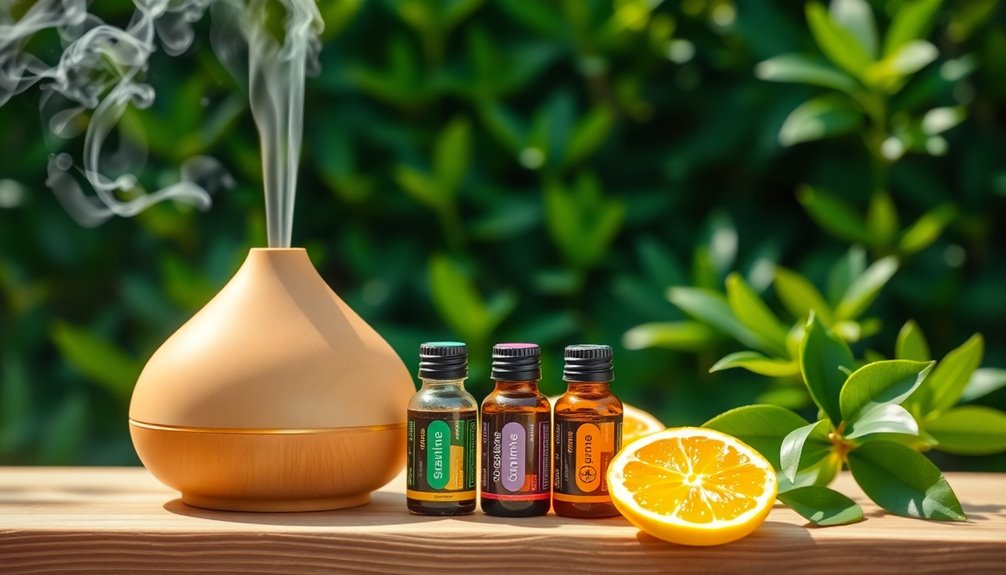
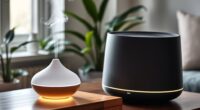
Aroma diffusers use innovative technology to disperse essential oils into the air as a fine mist, creating a pleasant scent and offering therapeutic benefits. Ultrasonic diffusers, for example, vibrate at high frequencies to turn water and oils into tiny particles, releasing a cool, aromatic mist without heat. This method preserves the oils’ properties and enhances relaxation. If you want to understand how these systems work and why they’re effective, there’s more to explore below.
Key Takeaways
- Ultrasonic diffusers use high-frequency vibrations to create a fine mist of water and essential oils, dispersing aromatic molecules into the air.
- They operate quietly and preserve the chemical integrity of oils, making them suitable for therapeutic and relaxation purposes.
- The ultrasonic plate vibrates at ultrasonic frequencies, breaking water and oil into tiny particles for even dispersion.
- Diffuser effectiveness depends on oil quality, diffusion method, and understanding how oils interact with the environment.
- Essential oils are inhaled and absorbed through nasal passages, influencing mood and physiological states via the limbic system.
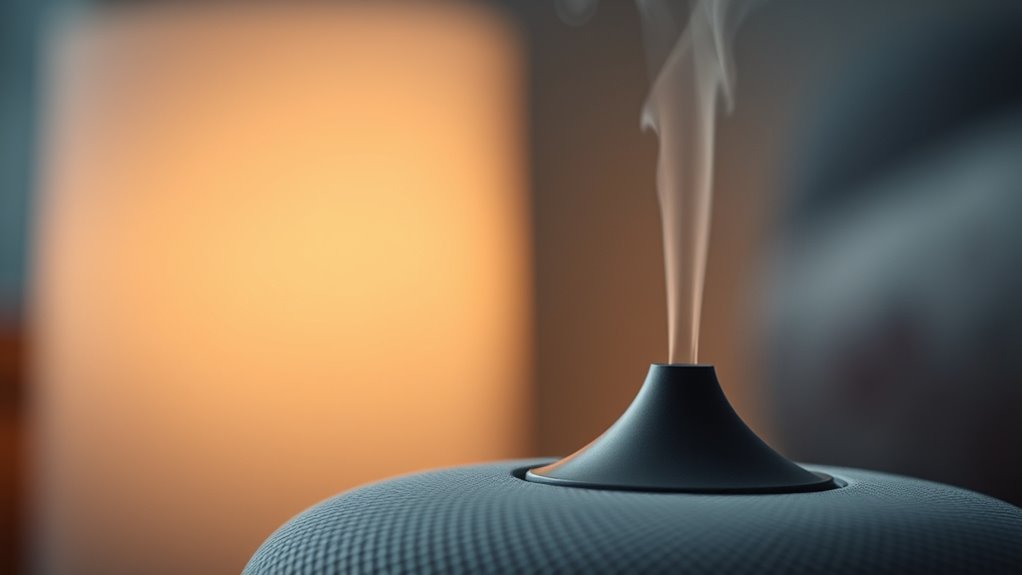
Aroma diffusers are popular devices that disperse essential oils into the air, creating a calming and fragrant environment. When you use a diffuser, you’re engaging in aromatherapy techniques that can influence your mood, stress levels, and overall well-being. The key to understanding how these devices work lies in the properties of essential oils and the mechanisms they employ to release these oils into your space.
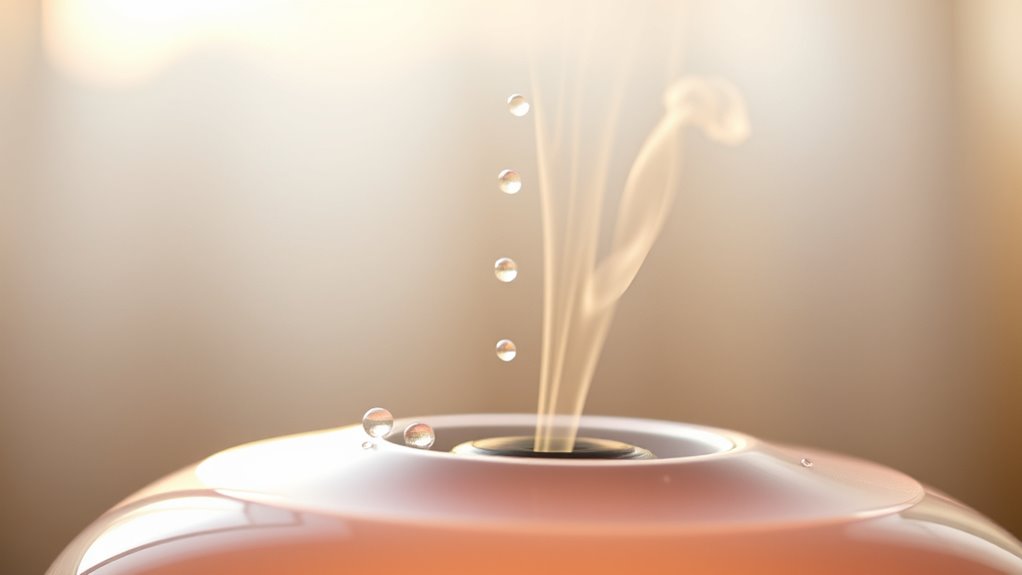
Most aroma diffusers rely on different methods to disperse essential oils, but ultrasonic diffusers are among the most common. They use high-frequency vibrations to create a fine mist of water and essential oils. When you add a few drops of your favorite essential oils to the water tank, the ultrasonic plate vibrates at an ultrasonic frequency, breaking the mixture into tiny particles. This process produces a cool mist that releases aromatic molecules into the air, filling your surroundings with the scent and therapeutic benefits of the oils. This method is particularly popular because it preserves the integrity of the essential oils, maintains humidity, and operates quietly.
Ultrasonic diffusers create a fine mist by vibrating water and oils, preserving their properties and operating quietly.
Another type of diffuser, vapor or heat diffusers, uses heat to evaporate essential oils. These devices warm the oils, causing them to vaporize and disperse into the environment. While this method is simple and effective, it can sometimes alter the chemical composition of the oils due to heat exposure. As a result, some aromatherapy techniques prefer ultrasonic diffusers for their ability to preserve the therapeutic properties of essential oils. Additionally, understanding the diffusion mechanisms can help users select the most suitable diffuser for their needs. Recognizing the properties of essential oils can also influence the choice of diffuser, as different methods may better preserve specific compounds.
You might also encounter evaporative diffusers, which use a fan to blow air through a pad or filter soaked in essential oils. As air flows over the oils, the aromatic molecules evaporate and are carried into the room. These diffusers tend to be more portable and affordable but may not produce as fine or consistent a mist as ultrasonic models. Knowing about diffusion efficiency can help you choose a diffuser that maximizes the dispersion of essential oils.
Understanding the science behind diffusers helps you see how they enhance your aromatherapy experience. The essential oils you choose contain active compounds that can promote relaxation, focus, or invigoration. When dispersed into the air via a diffuser, these compounds are inhaled and absorbed through your nasal passages, interacting with your limbic system to influence your emotional state. By selecting specific essential oils and employing various aromatherapy techniques, you can tailor your environment to support your mood, sleep, or energy levels.
In essence, aroma diffusers work by transforming essential oils into a fragrant mist that seamlessly integrates into your space, providing both sensory pleasure and potential health benefits. Their effectiveness hinges on both the quality of the oils and the diffusion method used, making it worthwhile to choose a diffuser that suits your preferences and goals. Additionally, understanding cultural associations with certain scents can help you select oils that resonate with your personal or cultural preferences, enhancing the overall experience.
Frequently Asked Questions
Are Aroma Diffusers Safe for Pets and Children?
When asking if aroma diffusers are safe for pets and children, consider pet safety and child safety first. You should always use high-quality, pet-safe essential oils, and keep diffusers out of reach of kids and animals. Properly ventilate the room and monitor reactions. While diffusers can be safe if used responsibly, always consult a veterinarian or pediatrician if you’re unsure about specific oils or safety concerns to protect your loved ones.
How Long Do Aroma Diffuser Essential Oils Last?
You might wonder how long aroma diffuser essential oils last. Oil longevity varies depending on the type of oil and diffuser settings, but typically, the scent duration ranges from a few hours to several days with continuous use. To maximize scent duration, use fewer drops and adjust the diffuser’s settings. Keep in mind, higher-quality oils often have better oil longevity, ensuring your space stays fragrant longer.
Can Aroma Diffusers Help With Allergies or Respiratory Issues?
Did you know that over 20% of people suffer from allergies worldwide? Aroma diffusers can provide allergy relief and respiratory support by dispersing essential oils like eucalyptus or peppermint, which may help clear nasal passages and soothe irritated airways. Using a diffuser regularly can create a calming environment, potentially easing allergy symptoms and supporting your respiratory health naturally. Just remember to choose pure oils and use them safely.
What’S the Best Placement for an Aroma Diffuser?
When deciding on room placement for your aroma diffuser, you should consider ideal scent dispersal. Place it in a central spot, like a living room or bedroom, away from direct sunlight and drafts. Keep it on a flat, stable surface to prevent spills. Avoid placing it near electronics or vents, as these can interfere with scent dispersal. Proper placement ensures you enjoy a balanced, soothing aroma throughout your space.
Do Different Essential Oils Emit Different Health Benefits?
Yes, different essential oils offer varying health benefits because of plant synergy and scent variability. For example, lavender promotes relaxation, while eucalyptus can boost your immunity. You’ll notice that each oil’s unique composition influences its effects, so choosing the right one depends on your needs. Experiment with different oils to find what works best for you, and enjoy the diverse benefits that come from their distinct plant synergy and scent variability.
Conclusion
Now that you understand the science behind aroma diffusers, you can appreciate how they subtly enhance your space. By dispersing essential oils into the air, they create an ambiance that calms and revitalizes, much like a fine elixir from a bygone era. Whether you seek relaxation or focus, these devices offer a simple yet elegant solution. Embrace the magic of diffusion, and let your environment be transformed as effortlessly as if by the touch of a wizard’s wand.