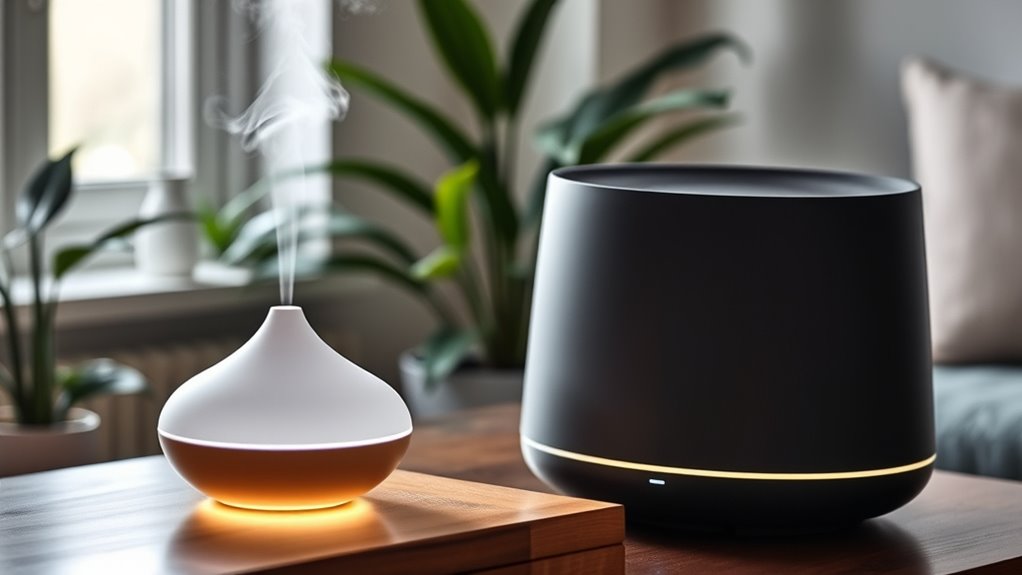

If you’re choosing between an aroma diffuser and a humidifier, consider your primary needs. If you want to enjoy calming scents, reduce stress, or support air purification, an aroma diffuser is your best choice. Conversely, if dry air causes discomfort, skin dryness, or damage to furniture, a humidifier will improve moisture levels. Sometimes, using both can provide the best overall air quality and comfort—exploring which suits your space better can make a big difference.

Get oils, diffusers and self-care delivered free with Prime
- Fast, free delivery on millions of items
- Prime Video, Amazon Music and more included
- Member-only deals all year
Key Takeaways
- Choose an aroma diffuser for mood enhancement, relaxation, and air purification with essential oils.
- Opt for a humidifier if you need to increase indoor moisture and prevent dry skin or respiratory issues.
- Use both devices together for comprehensive air quality, scent, and humidity benefits.
- Avoid adding essential oils to humidifiers to prevent damage; use diffusers specifically for aromatherapy.
- Decide based on your primary goal: scent and air purification (diffuser) or moisture and comfort (humidifier).
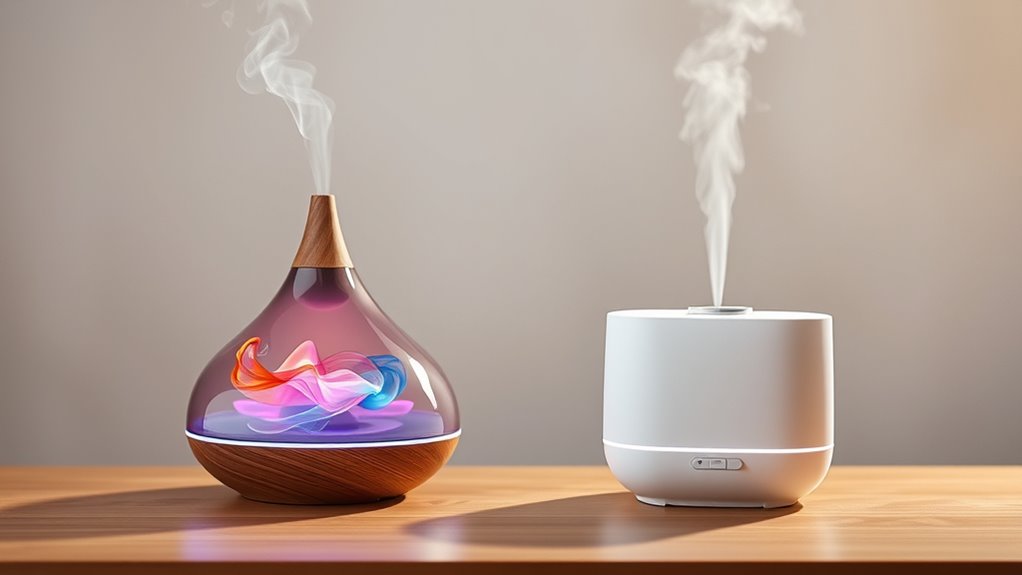
When choosing between an aroma diffuser and a humidifier, it’s important to understand their distinct functions and benefits. An aroma diffuser primarily disperses essential oils into the air, offering aromatic benefits that can enhance your mood, promote relaxation, or boost focus. In contrast, a humidifier adds moisture to the air, which can be essential during dry seasons or in environments with low humidity. Both devices contribute to your overall well-being but serve different purposes.
Choosing between an aroma diffuser and a humidifier depends on whether you seek aromatherapy benefits or moisture for comfort.
If you’re interested in the therapeutic qualities of essential oils, an aroma diffuser is your go-to. The essential oil benefits are significant: they can help reduce stress, improve sleep quality, and even support respiratory health. When diffusing oils like eucalyptus or lavender, you experience a calming atmosphere that can ease anxiety. Additionally, essential oils are known for their antimicrobial properties, which can help purify the air to some extent. This air quality improvement can be crucial if you suffer from allergies or respiratory issues, as a diffuser can disperse natural, chemical-free compounds that may help clear nasal passages and reduce airborne bacteria.
However, it’s essential to note that while diffusers enhance air quality through the therapeutic properties of essential oils, they don’t add moisture to the environment. If your skin feels dry, your lips crack frequently, or you notice static in your home, a humidifier might be the better choice. By increasing humidity levels, a humidifier can prevent dry skin, soothe irritated sinuses, and protect wooden furniture and musical instruments from cracking. It creates a more comfortable indoor environment, especially during winter months or in arid climates.
Some people combine both devices to enjoy the benefits of each. You can run a humidifier to maintain ideal moisture levels while using an aroma diffuser to add pleasant scents and essential oils. This combination can elevate your space’s comfort and air quality, creating a healthier, more relaxing environment. Keep in mind that essential oils should never be used directly in a humidifier, as they can damage the device or cause unwanted respiratory reactions.
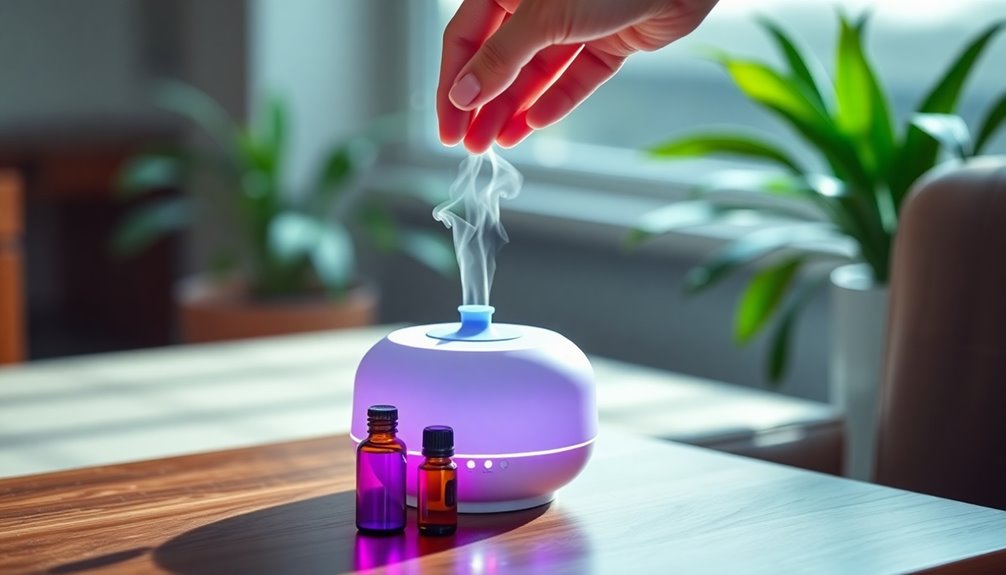
aroma diffuser with essential oils
As an affiliate, we earn on qualifying purchases.
As an affiliate, we earn on qualifying purchases.
Frequently Asked Questions
Can Aroma Diffusers Help With Allergies?
Aroma diffusers can help with allergy relief through scent therapy, but they aren’t a cure. When you use essential oils like eucalyptus or lavender, they may help open nasal passages and reduce congestion temporarily. However, keep in mind that some oils might irritate sensitive allergies. For lasting relief, it’s best to combine scent therapy with other allergy management strategies. Always consult a doctor if you’re unsure about using essential oils.
Are Humidifiers Safe for Children and Pets?
Think of a humidifier as a gentle rain that nurtures your home, but you must consider its safety. When it comes to child safety and pet safety, use models with cool mist, auto shut-off, and secure tanks to prevent accidents. Always keep it out of reach and clean it regularly. With proper precautions, a humidifier can be a safe addition, soothing everyone in your home without harm.
How Often Should I Clean My Diffuser or Humidifier?
You should clean your diffuser or humidifier regularly to maintain proper hygiene and performance. Follow the recommended maintenance routines, typically cleaning once a week or after every use if used frequently. To prevent mold and bacteria buildup, empty the water, scrub with mild soap, and dry thoroughly. Adjust your cleaning frequency based on usage and water quality to guarantee your device stays safe and effective.
Do Essential Oils Damage Humidifiers?
You wonder if essential oils damage humidifiers, and the answer depends on compatibility. Using oils not designed for your device can clog filters, diminish performance, and reduce lifespan. Always check if your humidifier is essential oil compatible before use. Proper use guarantees your device works efficiently and lasts longer. Avoid damage by following manufacturer guidelines, cleaning regularly, and choosing oils suitable for humidifiers.
Which Device Is More Energy-Efficient?
When considering energy consumption and power efficiency, humidifiers generally use more electricity than aroma diffusers. Humidifiers run continuously to maintain moisture levels, consuming more power, while aroma diffusers operate intermittently, using less energy. If you want a device that’s more energy-efficient, an aroma diffuser is the better choice. It consumes less power and helps you enjoy essential oils without considerably increasing your energy bills.
Conclusion
In the end, choosing between an aroma diffuser and a humidifier is like selecting the right brush for your painting—each adds a unique touch to your space. If you crave calming scents and ambiance, the diffuser is your best bet. But if dry air leaves you feeling parched, a humidifier is your oasis. Think of it as customizing your sanctuary—pick the tool that turns your room into a soothing haven, just as a painter brings life to a blank canvas.
Evergreen bestsellers Picks
bestsellers
As an affiliate, we earn on qualifying purchases.