When diffusing essential oils around pets, you must prioritize their safety. Many oils, like tea tree, citrus, and eucalyptus, are toxic to cats and dogs, even in small amounts, so it’s best to avoid these altogether. Use safe oils like lavender or chamomile sparingly and guarantee good ventilation, limiting diffusion to 15-30 minutes. Watch your pets closely for reactions, and if any signs of distress appear, stop immediately. Keep details coming to ensure a safe environment for your furry friends.

Get oils, diffusers and self-care delivered free — and shop member deals
- Fast, free delivery on millions of items
- Access to Prime Big Deal Days deals on October 6–7
- Prime Video, Amazon Music and more included
Key Takeaways
- Research and confirm which essential oils are safe or toxic for pets before diffusing.
- Limit diffusion time to 15-30 minutes and ensure good ventilation in pet areas.
- Place diffusers out of pets’ reach and observe for any signs of respiratory or behavioral distress.
- Use proper dilution to prevent overwhelming your pet’s sensitive sense of smell and respiratory system.
- Always prioritize your pet’s comfort, and consult a veterinarian if any adverse reactions occur.
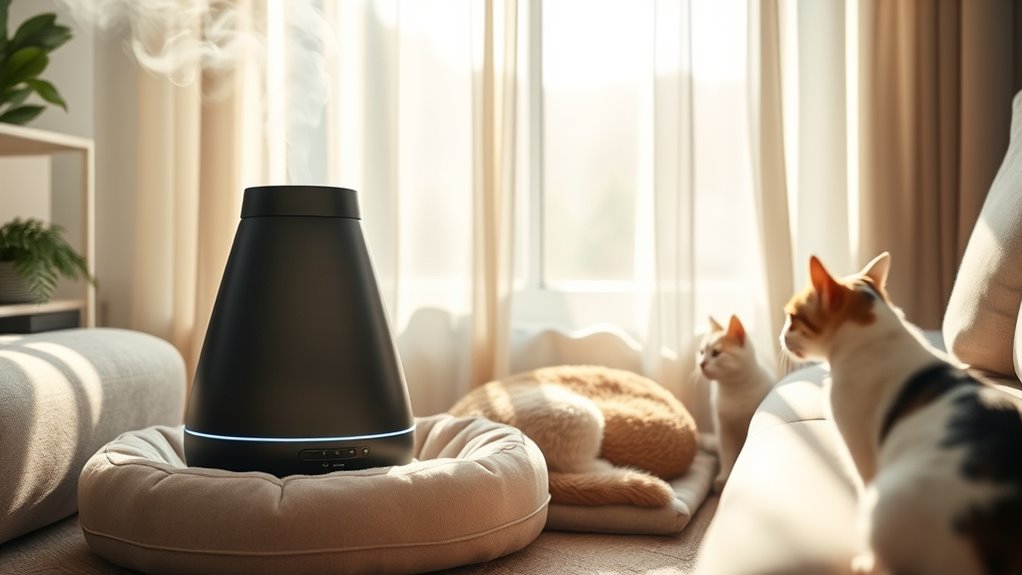
Diffusing essential oils around pets can be soothing and beneficial when done carefully, but it also poses potential risks if not managed properly. As a pet owner, your primary concern should be pet safety, especially considering the unique sensitivities animals have to certain substances. Many essential oils contain compounds that can be toxic to pets, even in small amounts. Oil toxicity is a serious concern, and understanding which oils are safe and which are harmful is critical before using a diffuser in a pet-friendly environment.
When you decide to diffuse essential oils, always research each oil thoroughly. Some popular oils like lavender and chamomile are generally considered safe in small, diluted amounts, but even these can cause reactions if used excessively or improperly. Conversely, oils such as tea tree, cinnamon, citrus, and eucalyptus are known to be highly toxic to cats and dogs. These oils can cause symptoms ranging from respiratory distress and drooling to more severe reactions like liver damage or neurological issues. It’s essential to keep the diffuser in a well-ventilated area, away from your pets’ direct reach, and to monitor their behavior closely when diffusing any essential oil.
Another key point is to use the right dilution. Essential oils are potent, and concentrated vapors can quickly affect your pet’s respiratory system. Running the diffuser for limited periods—say, 15 to 30 minutes—can minimize risks while still providing the calming benefits of aromatherapy. Always observe your pet for signs of distress, such as coughing, sneezing, lethargy, or unusual behavior. If you notice any adverse reactions, turn off the diffuser immediately and consult your veterinarian.
It’s also wise to consider the environment when diffusing oils. Keep the diffuser in a room your pet can leave if they feel uncomfortable. Never force your pet to stay in a space with diffused oils if they seem distressed. Remember, pets have a more sensitive sense of smell than humans, so what seems mild to you could be overwhelming or irritating to them.
As an affiliate, we earn on qualifying purchases.
Frequently Asked Questions
Can Essential Oils Harm Cats More Than Dogs?
You might wonder if essential oils harm cats more than dogs. The truth is, cats are generally more sensitive to pet toxicity from certain oils due to their unique metabolism. Their oil sensitivity makes them more vulnerable to adverse effects, so diffusing essential oils can pose a higher risk to cats. Always check for pet-specific toxicity guidelines and keep diffusers out of reach to protect your furry friends.
Which Essential Oils Are Safest for Small Pets?
Sure, you’re wondering which essential oils are safest for small pets—because pet safety is obviously an afterthought in your diffuser routine. Stick to pet-safe blends like lavender, chamomile, and frankincense, but always verify essential oil safety guidelines first. Remember, even “safe” oils can cause issues if overused. So, be cautious, keep pets in well-ventilated areas, and consult a vet to ensure your aromatic experiments don’t turn into pet peril.
How Long Should I Diffuse Oils Around Pets Daily?
You should limit diffusing duration around your pets to prevent issues related to pet sensitivity. Generally, aim for 15-30 minutes a few times a day, monitoring their behavior closely. Avoid continuous diffusion, as prolonged exposure can cause discomfort or health problems. Always observe your pets for signs of distress, and alter the diffusing duration accordingly. This helps ensure a safe environment while enjoying the benefits of essential oils.
Are There Natural Alternatives to Diffusing Essential Oils?
Imagine walking into a room filled with calming herbal room sprays instead of diffused oils. You can use aromatherapy alternatives like herbal sprays, candles, or potpourri to create a soothing environment naturally. These options are safer for pets and still offer calming effects. You don’t need diffusing essential oils to enjoy aromatherapy; natural alternatives provide gentle, pet-friendly ways to bring tranquility into your space.
How Do I Know if My Pet Is Reacting Negatively?
You’ll want to watch for pet allergy symptoms like sneezing, coughing, or watery eyes, which indicate a negative reaction. Behavioral changes such as increased agitation, lethargy, or difficulty breathing also signal trouble. If you notice any of these signs after diffusing essential oils, immediately remove the source and consult your vet. Staying alert helps protect your pet’s health and well-being.
Conclusion
In short, diffusing essential oils around your pets isn’t just a simple choice—it’s a decision that could shape their entire well-being. One sniff of the wrong oil could turn your cozy sanctuary into a chaotic nightmare, so don’t take chances. Stay informed, choose wisely, and prioritize their safety above all. Because when it comes to your beloved companions, even the slightest mistake can escalate into a catastrophe of epic proportions.
Halloween Picks
halloween
As an affiliate, we earn on qualifying purchases.