TL;DR

Get oils, diffusers and self-care delivered free with Prime
- Fast, free delivery on millions of items
- Prime Video, Amazon Music and more included
- Member-only deals all year
A Fit&Well writer said a daily standing stretch coincided with longer pain-free runs during a two-week return-to-running experiment. The pain returned at 4.5 miles, and physical therapist Zaki Afzal said the stretch works on hip muscles rather than lengthening the IT band; the account does not establish that the stretch caused the change.
A Fit&Well writer reported running farther before knee pain began after doing a standing stretch daily for two weeks, but the discomfort returned during a final attempt at 4.5 miles. The account is a personal test, not evidence that the stretch treats IT band syndrome, and a physical therapist quoted in the report said the move acts on muscles around the hip rather than stretching the IT band itself.
The writer said postpartum recovery had interrupted her running and that knee pain associated with a prior episode of IT band syndrome limited her return to the sport. Before the experiment, she said pain typically began at about three miles, despite rest and recovery. She ran twice a week and performed the stretch every day during the test.
For the first seven days, she held the position for 30 seconds on each side, then increased the hold to 45 seconds for the second week. On running days, she did the stretch before and after her run. She reported reaching 3.25 miles before pain on her first run, 3.5 miles on her second and four miles by the second week. On her final run, pain began at 4.5 miles, so she stopped before reaching her five-mile goal.
Dr. Zaki Afzal, a physical therapist and founder of Optimize Physical Therapy and Performance, told Fit&Well that the term “IT band stretch” is not anatomically exact. He said the IT band is firmly attached along the thigh and cannot be meaningfully lengthened through a conventional stretch; the movement instead affects the tensor fasciae latae (TFL) and other muscles around the outer hip. Afzal also said hip strength can matter to how the body absorbs forces while running.
A Shorter Pain-Free Run Is Not Proof
The account may interest runners returning after a break who are looking for ways to manage discomfort, but its results should be read as one person’s experience. The writer’s reported distance improved during the two-week period, yet the test did not compare stretching with no stretching, control other training factors or establish why her symptoms changed. It cannot show that the stretch caused the improvement or that it will work for other runners.
The ending also illustrates a practical limit: the writer’s knee pain returned when she increased the distance toward a previous five-mile routine. Afzal’s comments point to a broader approach involving hip strength and training demands, rather than relying on one stretch. Readers with knee pain should not assume the cause is IT band syndrome; the source advises checking with a clinician before trying the move, particularly because similar symptoms can have other causes.
Products Worth Considering

Garmin Forerunner 70 GPS Running Smartwatch, 43 mm, Black
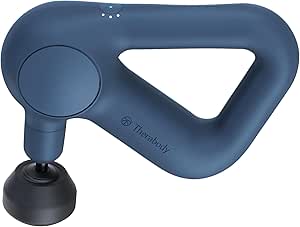
Therabody Theragun Relief Massage Gun, 3-Speed, Navy

Garmin Forerunner 55 GPS Running Smartwatch, Black
As an affiliate, we earn on qualifying purchases.
What the Stretch Actually Targets
The iliotibial band is a dense strip of connective tissue running along the outside of the thigh from the hip area toward the knee. Afzal described IT band syndrome as lateral knee pain linked to irritation and compression around the outer knee, with contributing mechanics involving muscles at the hip. In his explanation, the standing move’s perceived effect comes from influencing those muscles, not physically lengthening the band.
The writer performed the stretch standing with one leg crossed behind the other, then bent forward toward the toes and held the position before switching sides. She said she leaned toward the side of the rear leg during week two to deepen the sensation. The source says beginners may want guidance from a certified trainer or physical therapist on form and possible modifications. It also cautions that people should consult a doctor to determine whether knee pain has another cause.
What the Two Weeks Cannot Show
The report does not establish that stretching caused the writer’s longer pain-free runs. It provides no comparison group, clinical assessment of the writer’s symptoms, or measurements of training load and other changes that might have affected her running. The source also does not give a publication date, so the experiment’s calendar timing is not specified.
It remains unclear whether the writer’s knee pain was clinically confirmed as IT band syndrome during this episode, how her symptoms developed after the experiment, or whether a modified training plan and hip-strengthening work changed the outcome. The account gives no basis for treating the reported distances as a typical result or a forecast for other runners.
The Writer Plans to Adjust Training
The writer said she planned to reduce her running progression after recognizing that she may have increased distance too quickly. She also intended to keep the stretch and add hip-strengthening exercises to her routine. The source does not report a later follow-up, a clinician’s treatment plan or whether those changes helped her return to five miles.
For readers, the next step is not to push through pain based on this personal account. Anyone with persistent or recurring knee symptoms can seek advice from a doctor or physical therapist, who can assess the cause and suggest suitable activity adjustments. The source recommends professional guidance for beginners who are unsure about the stretch’s form or need an alternative.
Key Questions
Did the stretch prevent the writer’s knee pain?
No. The writer reported longer distances before pain began during the experiment, but pain returned at 4.5 miles. The personal account does not prove the stretch caused the change.
Does the standing move stretch the IT band?
Afzal told Fit&Well that the IT band is not meaningfully lengthened by a conventional stretch. He said the move instead affects the TFL and other muscles around the outer hip.
How did the writer do the stretch?
She crossed one leg behind the other, bent forward toward her toes and held the position for 30 seconds per side in week one and 45 seconds in week two. She performed it daily and repeated it before and after runs.
Should runners try the stretch for knee pain?
The source advises consulting a doctor because knee pain may have another cause. Beginners may also seek help from a certified trainer or physical therapist to check form and discuss modifications.
Source: rss