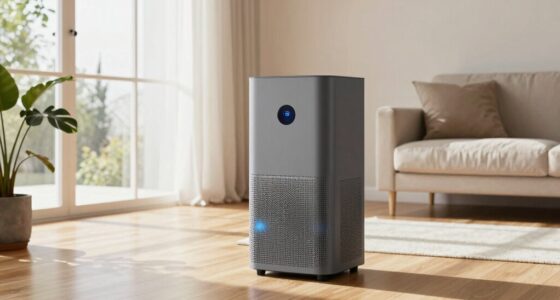
Choose to diffuse essential oils when you want to boost your mood or create a calming atmosphere, but do so in moderation and guarantee proper ventilation. Open a window instead if you need to quickly eliminate strong odors, improve air quality, or if anyone in your space has sensitivities, allergies, or respiratory issues. Monitoring air quality and how you feel will guide the best choice; keep exploring to discover more helpful tips.
Key Takeaways
- Diffuse essential oils when aiming to improve mood or mask odors, ensuring proper ventilation to prevent buildup.
- Open windows to refresh indoor air, especially during allergy seasons or to eliminate strong cooking or smoke odors.
- Use ventilation if anyone shows signs of headaches, dizziness, or respiratory discomfort from diffusing.
- Diffuse only with high-quality oils and controlled settings, avoiding continuous use around sensitive individuals or pets.
- Prioritize opening windows during outdoor air quality issues or when natural airflow effectively removes indoor pollutants.

Deciding whether to diffuse essential oils or open a window often depends on the situation and your goals. If you’re seeking to create a calming atmosphere or boost your mood, diffusing essential oils can be effective. However, you need to evaluate aromatherapy safety and potential fragrance allergies. Some people are sensitive to certain oils, experiencing headaches, respiratory issues, or skin irritation. If you or anyone in your household has fragrance allergies, diffusing oils might do more harm than good. In such cases, opening a window to let fresh air circulate can be a safer alternative, especially if your goal is simply to improve indoor air quality or ventilate the space.
Diffusing oils can boost mood, but consider allergies and safety; opening windows is safer for sensitive individuals.
When you choose to diffuse essential oils, it’s crucial to follow safety guidelines. Use high-quality oils, keep diffuser settings moderate, and avoid overuse. Overdiffusing can lead to overwhelming scents that may trigger allergies or respiratory discomfort. If you’re unsure whether an oil is safe for your environment, start with small amounts and observe how you feel. Be aware of aromatherapy safety, especially if you have young children, pets, or respiratory conditions, as certain oils can be harmful or irritating. Additionally, ensuring proper ventilation during diffusion can help prevent the buildup of concentrated scents that might cause adverse effects. Proper ventilation also helps to dilute any potentially harmful compounds released into the air.
On the other hand, opening a window is a straightforward way to refresh your space without introducing potential allergens or sensitivities. It’s especially effective during allergy seasons or if you’re trying to eliminate strong odors, such as cooking smells or smoke. Ventilation can improve indoor air quality naturally by bringing in fresh air and removing stale, indoor pollutants. If someone in your household has fragrance allergies or asthma, opening a window might be the best option to avoid exposing them to potentially irritating scents. Additionally, natural ventilation can help maintain a healthier environment overall.
Sometimes, the decision isn’t either-or but depends on the timing. For instance, if you’ve been diffusing oils and notice symptoms like headaches, dizziness, or respiratory discomfort, it’s wise to turn off the diffuser and open a window instead. This approach helps dissipate the scent quickly and reduces the risk of adverse reactions. Conversely, if outdoor air quality is poor—due to pollution, pollen, or allergens—diffusing might be preferable, provided you select oils that are safe for your environment and don’t trigger allergies. Being aware of indoor air quality can help you make the best choice for your space. Regularly monitoring indoor conditions can guide your decisions on whether to diffuse or ventilate.

Lagunamoon Essential Oils Set, Top 20 Gift Set Oils for Diffusers, Humidifiers, Aromatherapy, Candle Making Scents, Cars & Home Products, Peppermint, Tea Tree, Lavender, Eucalyptus, Lemongrass (10mL)
Top selling essential oils set: We create our essential oils using rigorously tested ingredients. Make pampering a luxurious…
As an affiliate, we earn on qualifying purchases.
As an affiliate, we earn on qualifying purchases.
Frequently Asked Questions
How Long Should I Diffuse Essential Oils Each Day?
You should diffuse essential oils for about 30 to 60 minutes per session, a few times daily, to maximize their benefits without overexposure. This helps preserve essential oil longevity and prevents diffuser fatigue. Remember to clean and maintain your diffuser regularly, as diffuser maintenance guarantees consistent scent dispersion and prevents buildup. Adjust diffusion time based on your space size and personal sensitivity, always listening to your body’s response.
Can Opening Windows Reduce Indoor Air Pollution Effectively?
Opening windows can greatly improve your indoor air quality by allowing fresh air to circulate and reduce pollutants. It’s a simple yet effective ventilation strategy that helps clear out indoor toxins and allergens. Coincidentally, on days with good outdoor air, opening windows now becomes your best move to refresh your space naturally. Regularly using this technique can keep your home healthier, especially when combined with other ventilation methods.
Are There Specific Scents Better Suited for Diffusing?
Certain scents are better suited for diffusing because of their aromatherapy benefits and scent compatibility with your environment. For example, lavender promotes relaxation, while eucalyptus can boost focus and clear nasal passages. Use mild, natural fragrances like chamomile or citrus to create a calming atmosphere. Always consider scent intensity to avoid overwhelming your space. Choose scents that complement your mood and guarantee proper ventilation to maximize benefits without causing irritation.
What Safety Precautions Should I Take When Diffusing Essential Oils?
You should follow safety guidelines when diffusing essential oils to avoid allergic reactions and other risks. Always dilute oils properly, keep the diffuser in a well-ventilated area, and limit diffusion time to avoid overwhelming your senses. Check for any allergies beforehand, and consult a healthcare professional if you’re unsure. Remember, even natural scents can trigger reactions, so stay attentive to how your body responds.
How Do Outdoor Weather Conditions Affect Opening Windows?
Outdoor weather conditions considerably impact opening windows. You should consider outdoor airflow; strong winds or heavy rain can bring in pollutants or dampness. Temperature fluctuations matter too—you might feel uncomfortable if it gets too cold or hot outside. Always check the weather forecast before opening windows, especially during storms or extreme temperatures, to guarantee a comfortable and safe indoor environment.

shinic 2026 9 Inch Twin Window Fan – Quiet, Reversible Airflow, with Removable Cover and Bug Screen, 3 Speeds, Adjustable Width 23.5"-37", ETL Certified for Bathroom/Kitchen, ETL Certified
Packing List: 1* Reversible Window Fan, 2* Removable Cover, 1* Bug Cover, 2* Standing Feet, 1* User's Manual,…
As an affiliate, we earn on qualifying purchases.
As an affiliate, we earn on qualifying purchases.
Conclusion
So, next time you’re faced with a stuffy room, remember—diffusing might seem like the quick fix, but sometimes, just opening a window does the trick. Ironically, the simplest solution often outperforms the fancy diffuser, yet we tend to overthink it. Whether you choose scent or fresh air, just be aware that sometimes, the most straightforward approach is the most effective—if only we’d trust it more often. After all, nature rarely needs a boost.

Amazon Smart Air Quality Monitor – Know your air, Works with Alexa
Know your air – An Alexa air quality monitor that makes it easy to understand what’s in your…
As an affiliate, we earn on qualifying purchases.
As an affiliate, we earn on qualifying purchases.

Broan-Nutone® Bathroom Exhaust Fan, 50 CFM Modern Grille, Energy Star Fan, 2.0 Sones
50 CFM BATHROOM EXHAUST FAN: 50 CFM is sufficient ventilation to remove, moisture, odor and pollutants from your…
As an affiliate, we earn on qualifying purchases.
As an affiliate, we earn on qualifying purchases.