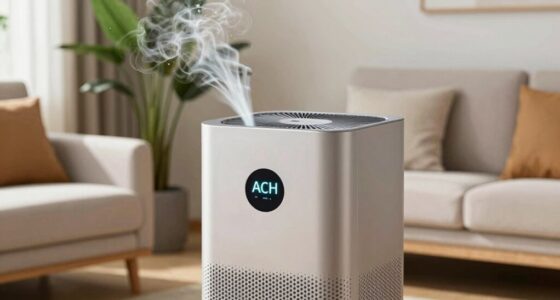
Removing VOCs isn’t automatic with just an air purifier. HEPA filters mainly trap particles but don’t remove gases, while activated carbon filters adsorb VOCs effectively, especially when replaced regularly. Proper ventilation, like opening windows or using exhaust fans, also helps dilute chemical emissions. Avoid relying on UV-C or ionizers for VOC removal, as they are ineffective or can emit ozone. To truly improve indoor air quality, combine filtration, ventilation, and source control—more insights await if you keep going.
Key Takeaways
- HEPA filters do not remove VOCs; activated carbon filters are necessary for chemical emissions.
- UV-C and ionizers do not effectively eliminate VOCs and may produce harmful ozone.
- Combining activated carbon filters with proper ventilation enhances VOC reduction.
- Source control, such as using low-VOC products and good storage, is essential for effective removal.
- Relying solely on air purifiers without targeted filtration or ventilation won’t automatically remove VOCs.
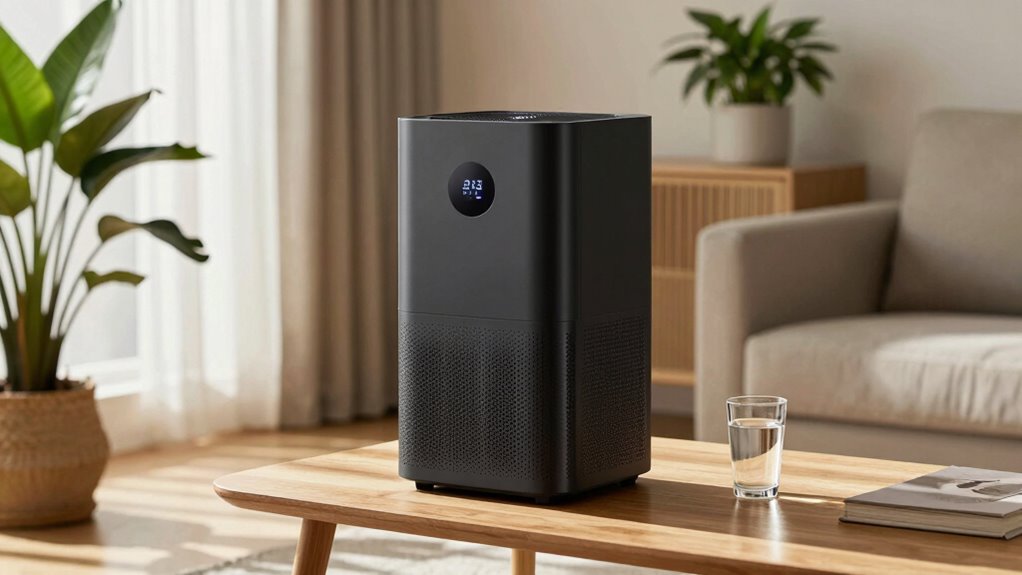
Have you ever wondered which methods effectively remove volatile organic compounds (VOCs) from indoor air? Improving air quality means more than just opening windows or relying on basic air purifiers. VOCs are emitted from everyday products like paints, cleaning supplies, and furniture, and they can linger in your home, impacting your health. Simply turning on an air purifier isn’t enough if it doesn’t specifically target chemical emissions. To truly reduce VOC levels, you need to understand what works and what doesn’t.
Air purifiers with HEPA filters are excellent for capturing airborne particles such as dust, pollen, and pet dander. However, they do little to eliminate gaseous pollutants like VOCs. That’s because HEPA filters are designed to trap particles, not gases. If your goal is to improve indoor air quality by removing chemical emissions, you’ll need an air purifier equipped with activated carbon or charcoal filters. These filters adsorb VOCs effectively, trapping them before they can circulate in your living space. Keep in mind, though, that the adsorptive capacity of carbon filters is limited and they need regular replacement to maintain effectiveness.
Another common misconception is that UV-C light air purifiers can eliminate VOCs. While UV-C technology can inactivate bacteria and viruses, it doesn’t remove gases or chemical emissions. In fact, some UV-based purifiers may produce ozone as a byproduct, which can further degrade air quality and exacerbate respiratory issues. So, if VOC removal is your priority, UV-C purifiers are not the ideal choice.
You might also hear about air ionizers as a solution. These devices generate charged particles that attach to airborne pollutants, causing them to settle out of the air. However, ionizers are generally ineffective against VOCs because they primarily target particles, not gases. Plus, some ionizers emit ozone, which can worsen indoor air quality and increase chemical emissions.
Finally, the best approach combines multiple strategies. Ventilation is essential—opening windows, using exhaust fans, and increasing airflow help dilute VOC concentrations. Using air purifiers with activated carbon filters in conjunction with proper ventilation creates a synergistic effect, greatly improving air quality. Additionally, choosing low-VOC products and maintaining good indoor air circulation can significantly reduce chemical emissions at their source. Avoid relying solely on gadgets that claim to eliminate VOCs without proper filtration. Instead, focus on reducing chemical emissions at the source—opt for low-VOC products, store chemicals carefully, and maintain good indoor air circulation. Remember, effective VOC removal isn’t automatic; it requires targeted solutions and consistent effort to keep your indoor air safe and healthy.

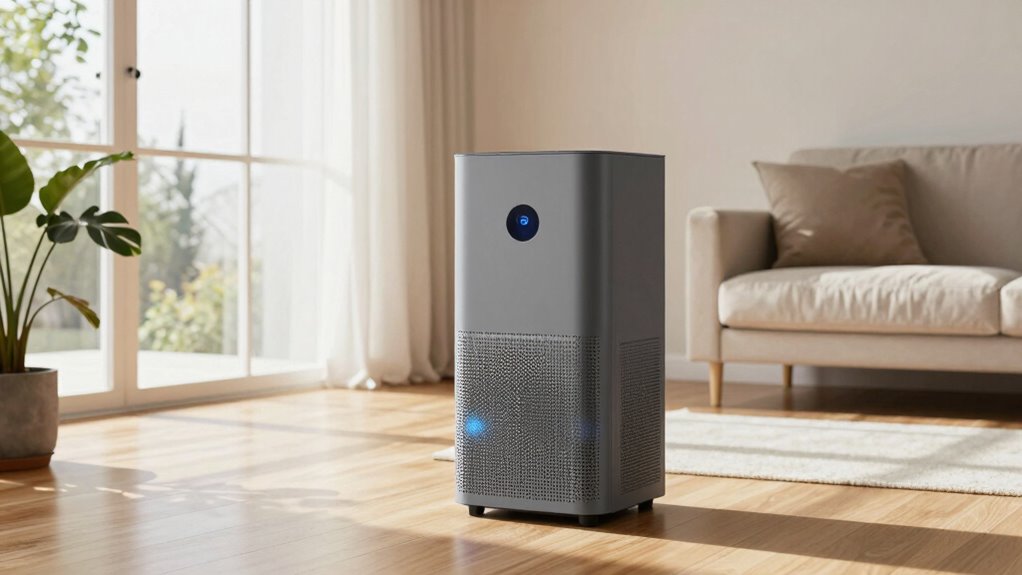
MOOKA Air Purifiers for Home Large Room up to 1076ft², H13 True HEPA Air Filter Cleaner, Odor Eliminator, Remove Smoke Dust Pollen Pet Dander, Night Light, B-D02L White
- Large Coverage Area: Covers up to 1076 ft² with 6 air changes/hr
- Effective Filtration System: Captures pet dander, smoke, dust, pollen, odors
- True HEPA Filter: Removes airborne particles as small as 0.3 microns
As an affiliate, we earn on qualifying purchases.
As an affiliate, we earn on qualifying purchases.
Frequently Asked Questions
How Often Should I Replace My Air Purifier’s Filters for VOC Removal?
You should replace your air purifier’s filters every 6 to 12 months, depending on the filter lifespan and your usage. Check the manufacturer’s recommended replacement schedule for maximum VOC removal. If you notice decreased airflow or odors lingering, it’s time for a change. Regularly replacing filters ensures your purifier continues to effectively reduce VOCs and maintain good indoor air quality.
Can Natural Remedies Effectively Eliminate VOCS From Indoor Air?
Imagine your indoor air as a swirling cloud of unseen toxins. Natural remedies like houseplants and ventilation can help improve indoor air quality, but they don’t fully eliminate VOCs. While plants absorb some pollutants, they won’t replace an air purifier. Relying solely on natural remedies isn’t enough; for healthier air, combine them with proper filtration and ventilation to truly reduce VOC levels.
What Are the Signs That My Air Purifier Isn’T Effectively Removing VOCS?
If your air purifier isn’t effectively removing VOCs, you’ll notice increased odors or persistent indoor smells. Check your filter maintenance—if filters are dirty or clogged, they can’t trap VOCs properly. Also, pay attention to air quality indicators, like a rise in airborne pollutants or a decrease in air freshness. Regularly replacing filters and monitoring these signals will help guarantee your purifier functions at its best, keeping your air clean.
Are There Specific Brands Known for Better VOC Removal Capabilities?
Some brands stand out for better VOC removal, thanks to their strong reputation and advanced filter technology. Look for air purifiers from brands like Dyson, Blueair, and Austin Air, which are known for effective VOC filtration. Keep in mind, their filter lifespan varies, so regular replacement is vital to maintaining performance. Trust these brands for reliable VOC removal, but always check product specifications to make sure they meet your specific needs.
How Long Does It Typically Take to Notice VOC Reduction After Using an Air Purifier?
You might notice VOC reduction within a few days to a week, but it depends on your air quality and filter maintenance. Regularly replacing or cleaning filters ensures peak performance. Using air quality monitoring can help track progress, showing clearer improvements over time. Keep in mind, patience is key, as some VOCs take longer to diminish, and maintaining your purifier maximizes its effectiveness in improving your indoor air.
Conclusion
Think of VOC removal like tending a garden—you can’t just plant seeds and hope for blooms. You need the right tools and consistent care. Air purifiers aren’t magic wands; they’re like diligent gardeners, filtering out the weeds (VOC gases) but only if equipped with the right features. So, choose wisely and maintain your purifier. With patience and proper care, your indoor air will flourish, free of harmful VOCs, turning your space into a fresh, healthy oasis.