
To verify if your essential oils are pure at home, start by smelling them closely—pure oils have a strong, natural scent, while synthetic fragrances may seem overly sweet or off. Next, pour a small amount onto a white paper; genuine oils usually evaporate cleanly without leaving oily residue. You can also mix a bit with alcohol or carrier oil—pure oils blend smoothly without separation. For more simple tests to ensure your oils’ quality, keep exploring these easy methods.

Get oils, diffusers and self-care delivered free — and shop member deals
- Fast, free delivery on millions of items
- Access to Prime Big Deal Days deals on October 6–7
- Prime Video, Amazon Music and more included
Key Takeaways
- Smell the oil for a natural, strong aroma; synthetic or adulterated oils often smell sweet, off, or artificial.
- Pour a small amount onto a white paper or test strip; pure oils evaporate cleanly, leaving minimal residue.
- Mix a few drops with alcohol or carrier oil; good oils blend smoothly, while separation indicates adulteration.
- Store oils properly and monitor for color or scent changes over time; unexpected shifts suggest contamination.
- Use combined sensory tests—smell, visual, and solubility—to effectively assess oil purity at home.
Are you confident that your essential oils are pure and free from contaminants? Many people assume that purchasing from reputable brands guarantees quality, but without proper testing, you might be unknowingly using oils that contain synthetic additives or are adulterated. These adulterations can diminish the therapeutic benefits and even pose health risks. Fortunately, you don’t need a lab to perform simple at-home purity checks to help detect adulteration and ensure your oils are authentic.
One straightforward way to start is by examining the scent. Pure essential oils typically have a strong, natural aroma that aligns with the plant they come from. If your oil smells overly sweet, synthetic, or off, it could be a sign of adulteration. Some adulterated oils contain synthetic fragrances or diluted components, which can alter the scent profile. Trust your nose—if it smells “off,” it’s worth investigating further. Keep in mind, though, that scent alone isn’t foolproof, especially with highly refined or blended oils.
Pure oils have a natural, strong aroma; synthetic or adulterated oils may smell overly sweet or off.
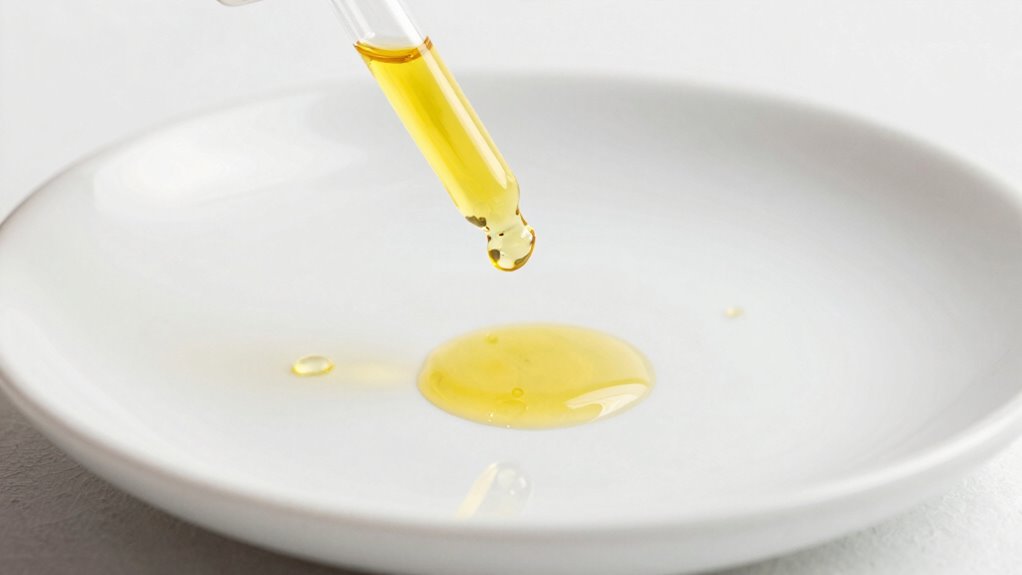
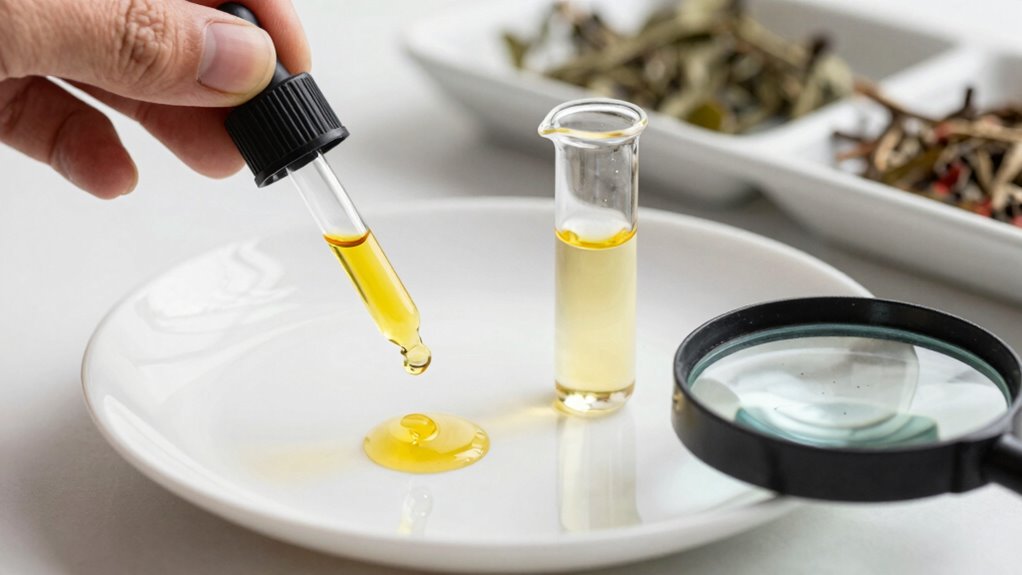
Next, consider the oil’s appearance. Pour some of your oil onto a clear glass test strip or a piece of white paper. Pure oils tend to evaporate cleanly, leaving minimal residue and no oily spots. If you notice a greasy film or persistent residue after the oil has dried, it might indicate the presence of synthetic additives or carrier oils that shouldn’t be there. This simple visual test can help you detect adulteration that might not be obvious through scent alone.
Another at-home test involves the solubility of your oil. Take a small amount and mix it with a carrier like alcohol or carrier oil. Pure essential oils usually dissolve or mix evenly without leaving cloudiness or separation. If the oil refuses to blend smoothly or leaves a layer on top, it could suggest the presence of diluents or synthetic substances designed to mimic natural oils but don’t mix well.
Additionally, understanding the Free Floating nature of some adulterants can help you interpret your results, as certain synthetic additives may cause unexpected reactions during testing. Pay attention to how the oil reacts to light and heat. Store your oils in dark, airtight bottles away from direct sunlight. Pure oils tend to be stable if stored properly, but adulterated oils with synthetic additives might degrade more quickly or develop an unusual color. If you notice your oil changing color or scent over a short period, it might have been compromised.
While these simple tests aren’t foolproof, they provide valuable clues about your oils’ purity. Combining sensory observations with small, controlled experiments helps you detect adulteration and synthetic additives without the need for laboratory analysis. Staying vigilant ensures you’re using genuine, high-quality essential oils that deliver the intended benefits—safely and effectively.
As an affiliate, we earn on qualifying purchases.
Frequently Asked Questions
How Long Do Homemade Essential Oil Purity Tests Typically Take?
Homemade essential oil purity tests using chemical indicators usually take around 10 to 30 minutes, depending on the specific test and the indicators used. You’ll mix small amounts of oil with the chemical indicators and observe color changes. Test durations vary, but most results are visible within this time frame. Be patient and careful to guarantee accurate results, and always follow the instructions for each chemical indicator.
Can Household Items Reliably Detect Synthetic Additives in Essential Oils?
Household testing isn’t reliable for detecting synthetic additives in essential oils. While some methods like smell tests or basic visual checks might hint at adulteration, they can’t definitively confirm synthetic detection. For accurate results, professional lab testing remains essential. Relying solely on household testing risks missing adulterants, so if purity matters, consider investing in certified pure oils or professional analysis rather than depending on at-home methods.
Are There Risks Involved in Conducting At-Home Purity Tests?
Be cautious, because conducting at-home purity tests can carry risks. While testing is tempting, you might mishandle potent oils or misinterpret results, risking skin irritation or allergic reactions. Always follow safety precautions, such as wearing gloves and working in well-ventilated areas. Remember, improper testing methods can lead to false assurances or overlooked adulterants, so it’s best to consult professionals for accurate analysis and safeguard your health.
What Is the Most Affordable Method to Check Essential Oil Purity?
The most affordable method for cost-effective testing of essential oil purity is using homemade purity methods. You can perform simple tests like the water test, where you add a few drops to water to observe if it disperses or sinks, indicating purity. Additionally, smell and visual checks help identify adulteration. These DIY tests are inexpensive, quick, and easy, giving you a basic idea of your essential oil’s authenticity without expensive lab procedures.
How Often Should I Perform Purity Checks on My Essential Oils?
You should perform purity checks on your essential oils every few months, especially if your oils have a long shelf life or if storage conditions change. Proper storage in a cool, dark place helps maintain quality, reducing the need for frequent testing. Regular checks ensure the oils haven’t degraded, so you can confidently enjoy their benefits. Keep an eye on scent and appearance as simple indicators of potential purity issues.
Conclusion
Remember, you don’t have to be a scientist to spot a fake. Trust your senses and perform simple at-home checks to guarantee your essential oils are pure. When it comes to health and wellness, “a penny saved is a penny earned,” so don’t settle for less than genuine quality. By staying vigilant, you protect yourself and get the most out of your oils. After all, honesty is the best policy, especially with something so close to your well-being.
Fall Picks
fall essentials
As an affiliate, we earn on qualifying purchases.