For premium hiking boots for rugged trails, I’d start with the Kenetrek Men’s Bridger High for demanding routes where ankle coverage and support matter, then compare it with the ASOLO FUGITIVE GTX for a more structured, technical feel and the Danner Mountain 600 EVO for waterproof protection with a lighter hiking-boot profile. The main tradeoff is between support and durability for heavy loads and rough terrain, versus lower weight and easier break-in for long days on less severe trails. Waterproof membranes can help in wet conditions, but they may hold heat and dry slowly if water gets inside. Fit, pack weight, and terrain should guide the choice more than the word premium. Read on for the full comparison and a breakdown of which boot suits each kind of rugged hike.

Get oils, diffusers and self-care delivered free with Prime
- Fast, free delivery on millions of items
- Prime Video, Amazon Music and more included
- Member-only deals all year
Key Takeaways
The Kenetrek Bridger High is the support-led pick: it makes more sense for rough terrain and heavier packs than lighter options such as the Merrell Moab 3 Mid or Columbia Transverse.
Premium does not always mean a heavy, stiff boot: the Danner Mountain 600 models offer a different direction for hikers who want waterproof protection and a more flexible walking feel.
Kenetrek’s lineup spans distinct use cases: the Corrie II Mid is a hiker-oriented alternative, while the Mountain Extreme is the more specialized choice for demanding backcountry use.
Waterproofing is not a substitute for fit or drying strategy: membrane boots across this roundup can help with wet trails, but poor fit and trapped moisture can still undermine a long hike.
Value-oriented options may suit many trail days: the Timberland White Ledge, Timberland Flume, and Merrell Moab 3 Mid have a different appeal from the more structured premium models, but buyers should weigh support needs carefully.
| KEEN Men’s Pyrenees Mid Waterproof Hiking Boots |  | Best for Roomy Fit and All-Day Support | Upper material: 100% leather | Sole material: Rubber | Waterproofing: KEEN.DRY waterproof, breathable membrane | VIEW ON AMAZON | See Our Full Breakdown |
| Kenetrek Men’s Corrie II Mid Hiker Boots |  | Best for Toe and Heel Protection | Upper: Leather and nylon | Origin: Imported | Sole material: Rubber | VIEW ON AMAZON | See Our Full Breakdown |
| Kenetrek Men’s Bridger High Hiking Boots |  | Best for Lightweight Ankle Support | Upper: Leather | Shaft height: 7 inches | Shaft circumference: 9 inches | VIEW ON AMAZON | See Our Full Breakdown |
| Merrell Men’s Moab 3 Mid Waterproof Hiking Boots |  | Best for Cushioned Trail Comfort | Shaft height: Mid | Shaft circumference: 4 inches | Waterproofing: Yes | VIEW ON AMAZON | See Our Full Breakdown |
| Oboz Men’s Bridger Mid B-DRY Waterproof Hiking Boots |  | Best for Rugged-Trail Grip in a Mid Cut | Fabric type: 100% leather | Origin: Made in the USA or imported | Sole material: Rubber | VIEW ON AMAZON | See Our Full Breakdown |
| Kenetrek Men’s Mountain Extreme Non-Insulated Hiking Boots |  | Best for Heavy Loads and Rugged Terrain | Upper fabric: 100% leather | Leather thickness: 2.8 mm | Shaft height: 10 inches | VIEW ON AMAZON | See Our Full Breakdown |
| Columbia Men’s Transverse Hike Waterproof Hiking Boots | 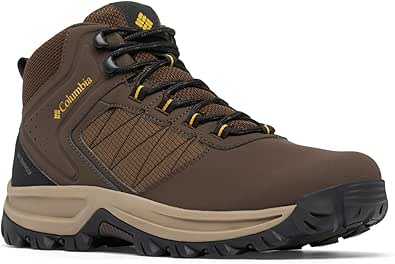 | Best for Lightweight Cushioning | Upper material: Leather and mesh | Shaft height: Ankle | Waterproof technology: OMNI-TECH | VIEW ON AMAZON | See Our Full Breakdown |
| Timberland Men’s White Ledge Mid Waterproof Hiking Boots |  | Best for Everyday Trail Versatility | Upper material: Waterproof premium leather | Lining: ReBOTL fabric | Shaft height: Mid | VIEW ON AMAZON | See Our Full Breakdown |
| Danner Men’s Mountain 600 ID Gore-Tex Hiking Boots |  | Best for Lightweight Waterproof Comfort | Outer material: Nylon | Inner material: GORE-TEX | Water resistance: Waterproof | VIEW ON AMAZON | See Our Full Breakdown |
| Timberland Men’s Flume Mid Waterproof Hiking Boot |  | Best for Simple Waterproof Trail Protection | Upper material: Waterproof Premium Timberland Leather | Shaft height: Ankle | Shaft circumference: 9.25 inches | VIEW ON AMAZON | See Our Full Breakdown |
| Danner Men’s Mountain 600 EVO 4.5″ Hiking Boot – Waterproof GORE-TEX Leather, Vibram Megagrip Traction, OrthoLite Footbed |  | Best for Wet, Technical Trails | Shaft height: 4.5 inches | Shaft circumference: 12 inches | Upper material: Full-grain leather | VIEW ON AMAZON | See Our Full Breakdown |
| ASOLO Men’s FUGITIVE GTX Hiking Boots |  | Best for Ankle Coverage and Secure Fit | Upper material: Water-resistant suede leather and nylon | Lining: GORE-TEX Performance Comfort membrane | Shaft height: Ankle | VIEW ON AMAZON | See Our Full Breakdown |
| KEEN Men’s Targhee 4 Mid Height Waterproof Hiking Boots | 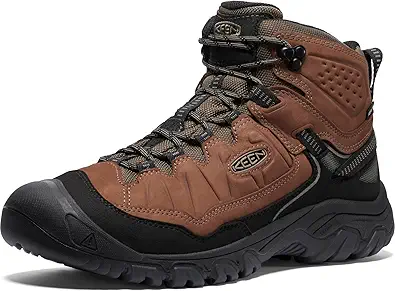 | Best for Wide-Fit Comfort | Waterproofing: KEEN.DRY lining | Construction: Direct-attach | Outsole: KEEN.ALL-TERRAIN rubber | VIEW ON AMAZON | See Our Full Breakdown |
| premium hiking boots for rugged trail | Shaft height | Outsole | Midsole | Shaft circumference |
|---|---|---|---|---|
| KEEN Men’s Pyrenees Mid Waterp | 13 | — | — | — |
| Kenetrek Men’s Corrie II Mid H | 7 inches | Grapon | 5 mm nylon | — |
| Kenetrek Men’s Bridger High Hi | 7 inches | KT-Light | Full-length nylon | 9 inches |
| Merrell Men’s Moab 3 Mid Water | Mid | Vibram TC5+ | Super Rebound Compound | 4 inches |
| Oboz Men’s Bridger Mid B-DRY W | 4.5 inches | — | — | — |
| Kenetrek Men’s Mountain Extrem | 10 inches | K-Talon | 7 mm nylon | — |
| Columbia Men’s Transverse Hike | Ankle | — | — | — |
| Timberland Men’s White Ledge M | Mid | Rubber with multi-directional lugs | EVA | 9.75 inches |
| Danner Men’s Mountain 600 ID G | — | Danner Plyolite | Vibram SPE | — |
| Timberland Men’s Flume Mid Wat | Ankle | — | Compression-molded EVA | 9.25 inches |
| Danner Men’s Mountain 600 EVO | 4.5 inches | Vibram Megagrip | — | 12 inches |
| ASOLO Men’s FUGITIVE GTX Hikin | Ankle | ASOLO rubber with self-cleaning lug design | PU with shock absorption | 13 inches |
| KEEN Men’s Targhee 4 Mid Heigh | Mid | KEEN.ALL-TERRAIN rubber | — | 8.66 inches |
More Details on Our Top Picks
KEEN Men’s Pyrenees Mid Waterproof Hiking Boots
The Pyrenees Mid pairs a waterproof, breathable KEEN.DRY membrane with a stability shank and shock-dissipating heel, giving it a comfort-first setup for uneven, wet trails. Its generous toe space sets it apart from the more close-fitting, supportive feel suggested by the Kenetrek Bridger High’s K-Straps and lace-to-toe design. Multidirectional lugs and a removable arch-support footbed add useful footing and fit adjustment for long days outside. The tradeoff is its 20.2-ounce weight per boot, which may feel cumbersome to hikers prioritizing a light stride. The all-leather upper also calls for care and conditioning. Choose it for support and space rather than a nimble, low-maintenance boot.
Pros:- KEEN.DRY membrane combines waterproof protection with breathability
- Generous toe space suits hikers who dislike a cramped forefoot
- Stability shank and shock-dissipating heel support comfort on uneven ground
- 4 mm multidirectional lugs and removable arch-support footbed aid traction and fit adjustment
Cons:- At 20.2 ounces per boot, it may feel heavy on faster or longer hikes
- Leather upper needs care and conditioning
- Roomy fit may feel too broad to hikers seeking a close, precise fit
Best for: Hikers with wider-feeling forefeet who want waterproof leather boots, underfoot support, and a removable arch-support footbed for long days on rough trails.
Not ideal for: Ultralight hikers and buyers who want an easy-care upper, since this boot weighs 20.2 ounces per boot and its leather needs conditioning.
- Upper material:100% leather
- Sole material:Rubber
- Waterproofing:KEEN.DRY waterproof, breathable membrane
- Weight:20.2 oz (573.8 g) per boot
- Traction:4 mm multidirectional lugs
- Fit:KEEN Original Fit with generous toe space
- Footbed:Removable with arch support
- Shaft height:13
Our verdict“Pick the Pyrenees Mid if toe room and supportive comfort matter more to you than low weight or minimal leather upkeep.”
Kenetrek Men’s Corrie II Mid Hiker Boots
The Corrie II Mid is the protection-focused choice in this group: reinforced toe and heel guards help shield the boot on rocky, brushy trails, while its 5 mm nylon midsole and supportive footbed add structure underfoot. The Windtex membrane targets wet conditions, and the Grapon outsole is built for traction on uneven ground. Compared with the KEEN Pyrenees Mid, the Corrie II’s listed 7-inch shaft and protective reinforcements emphasize a more guarded, trail-ready build, while KEEN provides more specific fit and cushioning details. The tradeoff is that the available specifications give little guidance on weight, fit, or lug design, making a confident fit comparison harder. This is a sensible pick for hikers who value protective construction over a clearly documented fit profile.
Pros:- Windtex membrane offers waterproof, breathable coverage
- Reinforced toe and heel guards add protection on rough trails
- 5 mm nylon midsole and supportive footbed provide underfoot structure
- Grapon outsole is designed for traction on uneven terrain
Cons:- Weight and fit details are not provided, complicating comparisons for buyers with specific needs
- The 7-inch shaft may feel more boot-like and restrictive than a lower-cut option
- The listed specs do not specify lug depth or outsole pattern
Best for: Hikers on rocky or brush-lined trails who want reinforced toe and heel areas, a waterproof membrane, and a structured midsole.
Not ideal for: Buyers who need detailed weight and fit information before choosing, or who prefer a lighter, more flexible boot for fast day hikes.
- Upper:Leather and nylon
- Origin:Imported
- Sole material:Rubber
- Shaft height:7 inches
- Waterproof membrane:Windtex waterproof, breathable
- Midsole:5 mm nylon
- Outsole:Grapon
Our verdict“Choose the Corrie II if trail protection and a supportive build matter more than a documented weight or fit profile.”
Kenetrek Men’s Bridger High Hiking Boots
The Bridger High targets hikers who want ankle support without moving to a heavier, more protective-feeling boot. Its K-Straps, padded collar, and lace-to-toe design help secure the foot, while a full-length nylon midsole adds stability across uneven ground. At 2.9 pounds per pair, it is lighter than the KEEN Pyrenees Mid’s stated 20.2 ounces per boot, though the figures come in different units and should not be treated as a direct fit or performance comparison. Windtex waterproofing and the KT-Light outsole suit wet, rugged routes. Its main limitation is fit choice: only medium and wide widths are listed. Compared with the Corrie II, the Bridger High provides more detail on support and sizing, but its narrower width selection may rule it out for some hikers.
Pros:- K-Straps, padded collar, and lace-to-toe design support a secure fit
- Full-length nylon midsole adds stability on rough trails
- Windtex membrane provides waterproof, breathable protection
- Medium and wide width options accommodate different foot shapes
Cons:- Only medium and wide widths are listed
- High-cut construction may feel restrictive to hikers who prefer greater ankle freedom
- Weight is listed per pair, making direct comparison with per-boot figures less straightforward
Best for: Hikers who want a supportive, waterproof leather boot with ankle-holding features and a choice of medium or wide widths.
Not ideal for: Hikers who need narrow widths or a lighter shoe-like feel, since only medium and wide widths are listed and this is a high-cut boot.
- Upper:Leather
- Shaft height:7 inches
- Shaft circumference:9 inches
- Weight:2.9 pounds per pair
- Waterproof membrane:Windtex waterproof, breathable, flexible membrane
- Midsole:Full-length nylon
- Outsole:KT-Light
- Widths:Medium or wide
- Design:Lace-to-toe
Our verdict“Choose the Bridger High if you want a waterproof boot with a secure, supportive fit and your foot suits one of its listed widths.”
Merrell Men’s Moab 3 Mid Waterproof Hiking Boots
The Moab 3 Mid Waterproof is the comfort-led pick, combining a cushioned insole with a Super Rebound Compound midsole to soften repeated impacts on long stretches of rough trail. Its Vibram TC5+ outsole gives it a clear traction-focused distinction from the KEEN Pyrenees Mid, whose listing instead highlights 4 mm multidirectional lugs and a stability shank. A pig suede leather and breathable mesh upper pairs with waterproofing, offering a less all-leather construction than the Pyrenees. The compromise is that the supplied data gives no weight figure, while the product information flags it as heavier than lightweight hiking shoes. It makes more sense for hikers who value cushioning and outsole grip than for those chasing the lightest possible setup or a fully leather upper.
Pros:- Waterproof construction paired with breathable mesh
- Vibram TC5+ outsole is designed for traction on outdoor terrain
- Super Rebound Compound midsole helps cushion impact
- Supportive, cushioned insole adds comfort on extended hikes
Cons:- May feel heavier than lightweight hiking shoes
- Mesh in the upper offers less of a fully leather build
- The supplied specifications do not include a weight figure
Best for: Day hikers who want a waterproof mid boot with cushioning underfoot and a named Vibram outsole for mixed, rugged terrain.
Not ideal for: Ultralight hikers or buyers who want a fully leather upper, since this boot includes mesh and may feel heavier than lightweight hiking shoes.
- Shaft height:Mid
- Shaft circumference:4 inches
- Waterproofing:Yes
- Upper:Pig suede leather and breathable mesh
- Outsole:Vibram TC5+
- Midsole:Super Rebound Compound
- Insole:Supportive, cushioned
Our verdict“Pick the Moab 3 Mid if cushioned comfort and a Vibram outsole take priority over a lighter build or all-leather construction.”
Oboz Men’s Bridger Mid B-DRY Waterproof Hiking Boots
The Oboz Bridger Mid B-DRY suits hikers who want a durable leather boot with waterproof, breathable coverage and multidirectional traction for challenging ground. Its cushioned insole supports longer outings, while the listed 4.5-inch shaft gives it a lower profile than the 7-inch Kenetrek Bridger High. That shorter cut may appeal to hikers who want less upper coverage, though it will not provide the same shaft height. Oboz lists a weight of 19 ounces per half pair, a more compact measure than the KEEN Pyrenees Mid’s 20.2 ounces per boot; the different units prevent a direct weight comparison. The tradeoffs are that the mid-cut height may feel restrictive to some and the boot may still feel heavy to ultralight hikers.
Pros:- Waterproof, breathable design helps keep feet dry
- Cushioned insoles support comfort on extended hikes
- Heavy-duty rubber outsole provides multidirectional traction
- Reinforced upper and leather construction are suited to durable trail use
Cons:- Mid-cut height may feel restrictive to some hikers
- Weight may be too high for ultralight hiking
- Weight is listed per half pair, limiting direct comparison with per-boot figures
Best for: Rugged-trail hikers who want a waterproof leather mid boot with a cushioned insole and traction-focused rubber outsole.
Not ideal for: Ultralight hikers or buyers who want either a very low-cut shoe or the taller shaft coverage of a 7-inch boot.
- Fabric type:100% leather
- Origin:Made in the USA or imported
- Sole material:Rubber
- Shaft height:4.5 inches
- Weight:19.0 oz per half pair
Our verdict“Choose the Oboz Bridger Mid if you want a durable, grippy waterproof boot with a shorter shaft than the Kenetrek Bridger High.”
Kenetrek Men’s Mountain Extreme Non-Insulated Hiking Boots
For steep, rough routes and heavy packs, the Kenetrek Mountain Extreme prioritizes support and protection over a quick, flexible feel. Its 2.8 mm full-grain leather one-piece vamp limits seams that could become weak points, while the rigid 7 mm nylon midsole and aggressive K-Talon outsole suit uneven ground where a softer boot may feel less stable. Compared with the lighter, cushioned Danner Mountain 600 ID, this Kenetrek is the more supportive choice for demanding loads, but its stiff platform may take more adjustment and feel cumbersome on casual walks. The waterproof-breathable membrane adds wet-weather coverage, though the non-insulated build is a poor match for extended outings in severe cold. Choose it for rugged terrain and load support, not softness or warmth.
Pros:- Thick full-grain leather and a one-piece vamp are built for demanding use.
- Rigid 7 mm nylon midsole supports loaded hiking on uneven ground.
- K-Talon outsole provides aggressive traction for rugged terrain.
- Waterproof-breathable Windtex membrane adds protection in wet conditions.
Cons:- Stiff construction may feel uncomfortable to hikers who prefer a flexible boot.
- Non-insulated design offers limited warmth during extended cold-weather trips.
- More substantial construction is less suited to casual walks than the lighter Danner Mountain 600 ID.
Best for: Hikers carrying heavy packs over steep, rocky trails who want a rigid platform and substantial leather protection.
Not ideal for: Day hikers seeking a flexible, cushioned boot, or winter hikers who need insulation for prolonged exposure to very cold conditions.
- Upper fabric:100% leather
- Leather thickness:2.8 mm
- Shaft height:10 inches
- Insulation:Non-insulated
- Waterproof membrane:Windtex waterproof breathable
- Midsole:7 mm nylon
- Outsole:K-Talon
- Sole material:Rubber
Our verdict“Choose the Mountain Extreme if load support and rugged leather protection matter more than flexibility or insulation.”
Columbia Men’s Transverse Hike Waterproof Hiking Boots
The Columbia Transverse Hike makes the most sense for hikers who want waterproof trail coverage without the stiff, heavy feel of a more supportive boot. Its leather-and-mesh upper pairs with OMNI-TECH waterproof-breathable construction, while TECHLITE cushioning is intended to soften impact over long days. OMNI-GRIP traction adds versatility across varied surfaces, though the supplied details do not point to the particularly rigid platform or thick leather of the Kenetrek Mountain Extreme. That makes the Columbia a more approachable pick for day hikes, but a less compelling choice for carrying heavy loads over sustained, severe terrain. Its ankle-height shaft also offers less coverage than the taller Kenetrek. Pick this model for cushioned, lighter-feeling hikes; look elsewhere if maximum support or extended lower-leg protection is your priority.
Pros:- OMNI-TECH construction combines waterproof protection with breathability.
- TECHLITE cushioning is designed to soften impact on long hikes.
- OMNI-GRIP outsole technology supports traction across varied terrain.
- Leather-and-mesh upper balances durable materials with a less bulky design.
Cons:- Ankle-height shaft provides less coverage than the taller Kenetrek Mountain Extreme.
- The listed details do not indicate the rigid midsole support suited to heavy loads.
- Buyers seeking a substantial leather boot may prefer a more robust construction.
Best for: Day hikers who want a waterproof, cushioned boot with multi-terrain traction and a lighter-feeling build.
Not ideal for: Backpackers carrying heavy loads on severe terrain who need the rigid support and taller coverage of the Kenetrek Mountain Extreme.
- Upper material:Leather and mesh
- Shaft height:Ankle
- Waterproof technology:OMNI-TECH
- Impact absorption technology:TECHLITE
- Traction technology:OMNI-GRIP
- Sole material:Rubber
- Hardware:Metal
- Cushioned collar:Yes
Our verdict“Pick the Transverse Hike for cushioned day hikes on varied trails, rather than heavy-pack trips that demand a rigid platform.”
Timberland Men’s White Ledge Mid Waterproof Hiking Boots
The Timberland White Ledge Mid is a practical crossover for hikers who want waterproof leather and trail-ready lugs without the highly rigid feel of the Kenetrek Mountain Extreme. Its seam-sealed premium leather upper helps shield feet from wet conditions, and the EVA footbed and midsole favor cushioning over the Kenetrek’s load-focused nylon platform. Multi-directional lugs provide grip for general trail use, while rustproof speed lace hooks make lacing adjustments straightforward. The tradeoff is that its mid-height profile and EVA cushioning do not suggest the same emphasis on heavy-load support or severe, technical terrain as the Kenetrek. It may also feel heavier than a non-waterproof hiking shoe. This is a sensible option for mixed outdoor use and ordinary rugged trails, but not my pick for repeated, loaded hikes where maximum stiffness matters.
Pros:- Seam-sealed premium leather upper helps keep water out.
- EVA footbed and midsole offer cushioning for everyday hiking.
- Multi-directional rubber lugs provide practical trail traction.
- Rustproof speed lace hooks allow straightforward lace adjustment.
Cons:- Mid-height shaft provides less coverage than the Kenetrek Mountain Extreme.
- EVA cushioning is a less load-focused setup than the Kenetrek’s rigid nylon midsole.
- Waterproof leather construction may feel heavier than a non-waterproof hiking shoe.
Best for: Hikers who want a waterproof leather boot for day trips and mixed outdoor use, with cushioned underfoot comfort.
Not ideal for: Backpackers tackling steep, technical routes with heavy loads who need a rigid platform like the Kenetrek Mountain Extreme.
- Upper material:Waterproof premium leather
- Lining:ReBOTL fabric
- Shaft height:Mid
- Shaft circumference:9.75 inches
- Insole:EVA footbed
- Midsole:EVA
- Outsole:Rubber with multi-directional lugs
- Lace hardware:Rustproof speed lace hooks
Our verdict“Choose the White Ledge Mid for waterproof leather protection and cushioned everyday trails, not maximum support under a heavy pack.”
Danner Men’s Mountain 600 ID Gore-Tex Hiking Boots
The Danner Mountain 600 ID suits hikers who want waterproof protection and cushioning without the weight and stiffness associated with more substantial boots. A GORE-TEX lining addresses wet-weather protection, while the Vibram SPE midsole and OrthoLite footbed focus on underfoot comfort. Its lightweight design is a clear contrast with the Kenetrek Mountain Extreme, whose rigid 7 mm nylon midsole and thick leather better fit heavy loads and rough, demanding routes. The Danner’s outsole is described as rugged, but the provided specifications identify it as Danner Plyolite rather than a named Vibram outsole, so buyers should not assume it shares the Mountain 600 EVO’s Vibram Megagrip setup. A possible break-in period is another tradeoff. This is the comfort-minded choice for wet day hikes, not the lineup’s strongest option for load-bearing support.
Pros:- GORE-TEX lining provides waterproof protection.
- Vibram SPE midsole and OrthoLite footbed focus on cushioning and comfort.
- Lightweight design is better suited to agile day hiking than the stiffer Kenetrek Mountain Extreme.
- Rugged outsole is intended to provide traction on challenging terrain.
Cons:- May need a break-in period before reaching a comfortable fit.
- Lightweight comfort-focused construction is less suited to heavy-load support than the Kenetrek Mountain Extreme.
- The listed Danner Plyolite outsole does not establish the same Megagrip specification as the Mountain 600 EVO.
Best for: Hikers prioritizing a lighter waterproof boot and cushioned footbed for long day hikes in changeable weather.
Not ideal for: Backpackers who need a rigid, load-supporting boot or want the thick leather construction of the Kenetrek Mountain Extreme.
- Outer material:Nylon
- Inner material:GORE-TEX
- Water resistance:Waterproof
- Midsole:Vibram SPE
- Footbed:OrthoLite
- Outsole:Danner Plyolite
Our verdict“Choose the Mountain 600 ID for cushioned, lightweight waterproof day hikes, but favor the Kenetrek for heavy loads and rigid support.”
Timberland Men’s Flume Mid Waterproof Hiking Boot
The Timberland Flume Mid keeps its appeal straightforward: waterproof leather, seam-sealed construction, EVA cushioning and multi-directional rubber lugs. A gusseted tongue helps limit trail debris entering around the laces, a useful detail on dusty or loose paths. Compared with the White Ledge Mid, it shares the waterproof leather-and-EVA approach, while the White Ledge listing specifies a ReBOTL lining and a 9.75-inch shaft circumference. The Flume instead lists mesh lining and a 9.25-inch circumference, so those details may help buyers compare fit and lining preferences. Neither Timberland listing establishes the rigid, heavy-load support described for the Kenetrek Mountain Extreme. The Flume is better suited to day hikes and general outdoor use than demanding backpacking. Its ankle-height shaft gives less coverage, and lace hardware needs care to limit corrosion.
Pros:- Waterproof premium leather upper and seam-sealed construction help protect against wet conditions.
- Compression-molded EVA midsole and EVA footbed add cushioning.
- Multi-directional rubber lugs are suited to general trail traction.
- Gusseted tongue helps keep debris from entering around the laces.
Cons:- Ankle-height shaft offers less coverage than the 10-inch Kenetrek Mountain Extreme.
- The listed features do not suggest the rigid support needed for heavy loads on severe terrain.
- Lace hardware may corrode if it is not maintained.
Best for: Day hikers seeking a waterproof leather boot with EVA cushioning, debris protection and straightforward trail traction.
Not ideal for: Backpackers needing a tall, rigid boot for heavy loads, or hikers who want greater shaft coverage than an ankle-height design provides.
- Upper material:Waterproof Premium Timberland Leather
- Shaft height:Ankle
- Shaft circumference:9.25 inches
- Lining:Mesh
- Insole:EVA footbed
- Midsole:Compression-molded EVA
- Sole material:Rubber
- Hardware:Rustproof speed lace hardware with lace hooks
Our verdict“Choose the Flume Mid for cushioned, waterproof day hikes and debris protection, not for heavy-pack routes that call for a rigid high-cut boot.”
Danner Men’s Mountain 600 EVO 4.5″ Hiking Boot – Waterproof GORE-TEX Leather, Vibram Megagrip Traction, OrthoLite Footbed
The Mountain 600 EVO makes the most sense for hikers who want full-grain leather protection and dependable grip when trails turn slick. Its GORE-TEX lining helps block water while allowing moisture to escape, and the Vibram Megagrip outsole is a clear traction-focused choice for uneven or wet ground. Compared with the KEEN Targhee 4 Mid, this Danner emphasizes leather construction and a named high-grip outsole rather than a wide fit and toe-room-first design. The OrthoLite footbed adds cushioning for long days, but the supplied details do not specify weight, so hikers prioritizing a light boot have less to go on. Its 4.5-inch shaft offers some coverage, though hikers seeking more ankle coverage may prefer the taller ASOLO FUGITIVE GTX.
Pros:- Full-grain leather upper is suited to repeated trail use
- GORE-TEX lining provides waterproof, breathable protection
- Vibram Megagrip outsole prioritizes traction on varied terrain
- OrthoLite footbed supplies cushioning for extended hikes
Cons:- Weight is not specified, making it harder to judge for weight-conscious hikers
- The 4.5-inch shaft may offer less coverage than taller boots such as the ASOLO FUGITIVE GTX
Best for: Hikers tackling wet, uneven day-hike trails who want a leather upper, waterproof lining, and traction-focused outsole.
Not ideal for: Ultralight hikers or buyers who need a taller boot for extra ankle coverage; the weight is unspecified and the shaft is 4.5 inches.
- Shaft height:4.5 inches
- Shaft circumference:12 inches
- Upper material:Full-grain leather
- Waterproofing:GORE-TEX lining
- Outsole:Vibram Megagrip
- Footbed:OrthoLite
Our verdict“Choose the Mountain 600 EVO for wet, rugged day hikes where leather durability and strong outsole grip matter more than low weight or extra-high coverage.”
ASOLO Men’s FUGITIVE GTX Hiking Boots
The FUGITIVE GTX is the more structured choice here for hikers who want ankle coverage and a close, adjustable fit on rugged routes. Its suede-and-nylon upper pairs with a GORE-TEX Performance Comfort lining, while the PU midsole is designed to absorb shock underfoot. Metal eyelets and speed hooks let hikers tune the lacing securely, and the self-cleaning lug design is intended to shed packed debris. Compared with the Danner Mountain 600 EVO, the ASOLO leans more toward a supportive, securely laced build than full-grain leather and Vibram Megagrip. That construction may suit rougher outings, but the boot may feel heavy to some hikers. Buyers who want a wide, naturally roomy fit may find the KEEN Targhee 4 Mid a better match.
Pros:- GORE-TEX Performance Comfort lining combines waterproofing with breathability
- Suede-and-nylon upper balances water resistance with a durable build
- PU midsole is designed to absorb impact on rough ground
- Metal eyelets and speed hooks support a secure, adjustable lacing fit
Cons:- May feel heavy on long hikes or for hikers used to lighter footwear
- The structured fit may not suit buyers seeking the KEEN Targhee 4 Mid’s explicitly wide fit
- Limited color options narrow the available styling choices
Best for: Hikers on rugged routes who want ankle-height coverage, adjustable lacing, and a shock-absorbing midsole.
Not ideal for: Hikers who prioritize a lightweight feel or a wide toe box; the boot may feel heavy, and no wide-fit feature is specified.
- Upper material:Water-resistant suede leather and nylon
- Lining:GORE-TEX Performance Comfort membrane
- Shaft height:Ankle
- Shaft circumference:13 inches
- Midsole:PU with shock absorption
- Outsole:ASOLO rubber with self-cleaning lug design
- Toe protection:Reinforced toe cap
- Lacing system:Metal eyelets and speed hooks
Our verdict“Pick the FUGITIVE GTX if secure lacing and ankle-height support matter more to you than a lightweight feel or roomy fit.”
KEEN Men’s Targhee 4 Mid Height Waterproof Hiking Boots
The Targhee 4 Mid is the standout for hikers who need generous toe room without giving up trail protection. KEEN’s Original Fit leaves space for natural toe movement, while the bruise plate and high-abrasion rubber toe guard add protection when the route is rocky. Its KEEN.DRY waterproof lining and KEEN.ALL-TERRAIN rubber outsole make it a practical pick for mixed conditions, and the removable Luftcell footbed lets hikers adjust the insole setup. Compared with the Danner Mountain 600 EVO, the KEEN puts more emphasis on a wide fit and protective toe features than leather construction and Vibram Megagrip. The tradeoff is a boot that may feel heavier than lightweight footwear, and its comfort-first shape may not suit hikers who prefer a narrow, precise fit.
Pros:- KEEN Original Fit provides room for natural toe movement
- KEEN.DRY lining offers waterproof protection
- Bruise plate and high-abrasion rubber toe guard add protection on rocky trails
- Removable Luftcell footbed allows insole replacement or adjustment
Cons:- May feel heavier than lightweight hiking shoes or boots
- The wide fit can feel too roomy for hikers who prefer a narrow, precise fit
- The rugged design is less suited to buyers seeking a casual, fashion-focused boot
Best for: Hikers with wider feet or toes who want a waterproof mid boot with underfoot cushioning and added toe protection.
Not ideal for: Hikers who prefer a narrow, close-fitting boot, or those seeking lightweight footwear for fast, low-bulk outings.
- Waterproofing:KEEN.DRY lining
- Construction:Direct-attach
- Outsole:KEEN.ALL-TERRAIN rubber
- Shaft height:Mid
- Shaft circumference:8.66 inches
- Insole:Removable Luftcell footbed
- Fit:KEEN Original Fit (wide)
- Protection features:Bruise plate and high-abrasion rubber toe guard
- Laces:Recycled PET
Our verdict“Choose the Targhee 4 Mid if your priority is a roomy fit with waterproofing and toe protection, rather than a narrow or lightweight feel.”
How We Picked
I ranked these boots for rugged-trail use, not for casual wear or pavement comfort alone. The main criteria were the kind of support and underfoot protection each model is positioned to provide, its construction and intended durability, waterproofing approach, traction relevance, and the likely tradeoff in weight or flexibility. I also considered whether a boot’s design makes sense for long days, uneven ground, and the added strain of a loaded pack.
The order favors boots with a clearer fit for rough terrain and demanding hikes, while lighter or more accessible models rank better for hikers who value easier walking and broader everyday use. Specialized, stiffer boots are not automatically higher for every buyer: they can be excessive for moderate trails or hikers carrying little weight. Since fit varies by foot shape and these products are not interchangeable, I treat comfort as a reason to try boots on with hiking socks rather than assume one model will suit everyone.
Factors to Consider When Choosing Premium Hiking Boots For Rugged Trails
A boot’s reputation matters less than whether its support, fit, and weather protection match the way you hike. I’d use these factors to narrow the field before comparing individual models.
Match Support to Pack Weight and Terrain
Rough ground and a heavy pack place different demands on a boot than a day hike on maintained paths. A stiffer, more supportive boot can feel steadier under load, but it may also feel tiring and restrictive when the trail is moderate. Many buyers overestimate how much ankle height alone prevents a twist; secure fit, stable footing, and controlled steps matter too. If you hike with a loaded pack, prioritize a platform that feels composed on uneven ground rather than choosing solely by boot height. For lighter loads, a more flexible model may let your foot move naturally over long distances. Try the boot on a slope or ramp if possible, and check whether your heel lifts or your toes hit the front.
Treat Fit as a System, Not a Size Number
Hiking boots should leave room for toes to spread and move downhill without allowing the heel to slide. Foot volume, arch shape, sock thickness, and swelling over a full day can all change the fit you experience in a store. A common mistake is buying a snug fit that feels secure on level ground but crowds the toes on descents. Test both boots with the socks you plan to hike in, and lace them firmly without creating pressure across the instep. If one foot is longer or wider, fit the larger foot first. A premium construction cannot compensate for persistent rubbing, numbness, or a heel that lifts with each step.
Choose Waterproofing for Your Climate
A waterproof membrane can help when you cross wet grass, shallow puddles, or muddy trails, but it does not make a boot immune to water entering over the cuff. Membranes can also feel warmer than non-waterproof footwear and may slow drying after a soak. In a cool, rainy climate, that protection may be worth the tradeoff; in hot, dry conditions, ventilation and quick drying may matter more. Buyers sometimes focus on membrane branding while overlooking gaiters, cuff height, and how often their routes stay wet. Consider the water you actually encounter, not just the worst conditions you might face once. Whatever you choose, plan how to dry boots between consecutive hiking days.
Balance Weight Against Structure
Every extra ounce is carried through thousands of steps, yet reducing weight can mean giving up some structure or protection. A lighter boot can feel less cumbersome on long hikes, while a more substantial build may feel reassuring on rocky, uneven trails. The mistake is treating either quality as universally better. Think about how often you carry a heavy pack, how technical your routes are, and whether your feet fatigue from rigid footwear. If you rarely hike off-trail, a highly structured boot may add weight without a useful payoff. If your routes are rough and remote, a light feel should not come at the expense of a stable platform that suits your needs.
Pay for the Features You Will Use
Higher-end boots can make sense when their construction, support, or weather protection addresses a recurring need. Paying more for a rugged build is harder to justify if most of your hikes are short and maintained, where a less specialized boot may be easier to wear. Compare the boot’s intended use with your actual routes instead of assuming premium materials guarantee comfort or longevity. Also account for upkeep: leather may need cleaning and treatment, while all boots benefit from drying and inspection after muddy hikes. A boot that fits well and suits your terrain can be a better purchase than a more technical model that stays in the closet. Decide which limitation you are trying to solve before paying for extra structure or features.
Frequently Asked Questions
Should I choose the stiffest boot if I hike on rocky trails?
Not automatically. More stiffness can help a boot feel composed under a heavy pack or on uneven ground, but an overly rigid sole may feel awkward on long stretches of smoother trail. Match the level of support to both your terrain and the load you carry. If possible, walk on an incline and uneven surfaces before deciding. Pay attention to whether the boot bends where your foot naturally moves and whether the sole feels stable without causing pressure.
Are waterproof hiking boots a good choice for hot-weather trails?
They can work in warm weather, but a waterproof membrane may feel hotter and can retain moisture after water gets inside. If your routes are dry, a non-waterproof boot may offer a more comfortable balance of airflow and drying speed. For warm, rainy conditions, think about how often you encounter water and whether you can tolerate less ventilation. Socks and pace also affect comfort, so try the boot during a short outing before committing to a long hike. A waterproof label alone does not make a boot the right climate choice.
How much room should I leave in hiking boots for descents?
Your toes should have enough room to move without striking the front when you walk downhill, while your heel remains held in place. There is no single gap that works for every foot, since foot shape and sock thickness vary. Test the fit with your hiking socks and walk down an incline if the shop or fitting area allows it. If your toes touch the front or feel compressed, changing lacing alone may not fix the fit. A boot that feels secure on level ground can still be too short for steep descents.
Do I need a high-cut boot for a heavy backpack?
A high cuff may add a feeling of coverage and support, but it does not guarantee protection from ankle injuries. A stable fit, suitable sole, good lacing, and careful foot placement remain important. For a heavy pack on rugged terrain, a more supportive boot may be worth trying, but comfort and control should decide the matter. If the cuff rubs or restricts your ankle, the added height may work against you. Compare how the boot feels under load rather than choosing by cuff height alone.
How can I tell whether a premium boot is worth the added cost?
Start with the problem you need the boot to solve: repeated wet hikes, rough terrain, a heavy pack, or wear from frequent use. A more specialized construction can be worthwhile when it addresses that need and fits your foot well. It is less compelling if your hikes are mostly short, dry, and on maintained paths. Compare support, materials, weight, fit, and care requirements rather than relying on premium labeling. If you cannot identify a practical benefit for your routes, a simpler boot may be the better match.
Conclusion
For the strongest all-around fit for rough, demanding routes, I’d begin with the Kenetrek Bridger High; it has the clearest support-led role in this lineup. For a best value direction, compare the Merrell Moab 3 Mid and Timberland White Ledge, especially if you want a more accessible boot and do not need a highly specialized build. The Kenetrek Mountain Extreme is my best premium, specialized pick for hikers whose backcountry demands justify its more focused design, while the Columbia Transverse is a sensible beginner-friendly starting point for buyers who want a less technical option. For a lighter-feeling waterproof alternative, look at the Danner Mountain 600 EVO; for a more structured technical choice, compare the ASOLO FUGITIVE GTX. Pick the boot that fits your foot and the difficulty of your usual routes—not simply the most rugged-looking model.
Fall Picks
fall essentials
As an affiliate, we earn on qualifying purchases.