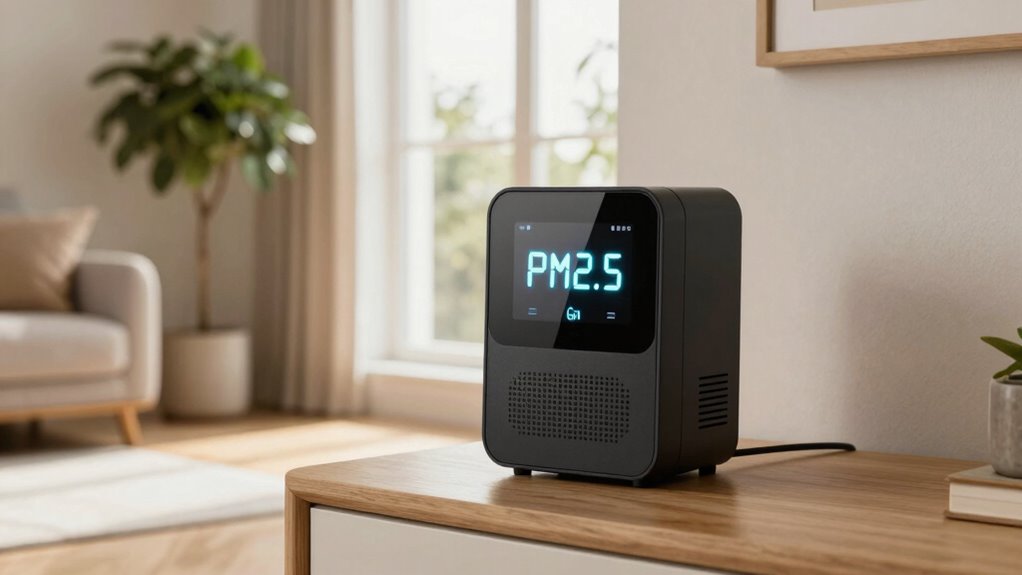
For a home particulate monitor, I’d start with the Temtop M2000C 2ND as the best overall pick because its PM2.5 and PM10 readings are joined by CO2, temperature, humidity, alarms, and data export. The Ambient Weather PM2.5 Wireless Indoor Monitor is a more focused choice for straightforward indoor particle tracking, while the Temtop M10+ combines several air-quality readings in a simpler package. The main tradeoff is between a dedicated monitor that keeps the focus on particles and a broader analyzer that adds context but may offer more than some households need. DIY options such as the PMS5003 sensors also require electronics and integration, unlike ready-to-use monitors. Read on for the full comparison and help matching a monitor to your rooms and routines.

Get oils, diffusers and self-care delivered free with Prime
- Fast, free delivery on millions of items
- Prime Video, Amazon Music and more included
- Member-only deals all year
Key Takeaways
- The Temtop M2000C 2ND earns my best-overall spot for pairing PM2.5 and PM10 with CO2, temperature, humidity, alarms, and data export.
- Simple indoor tracking favors the Ambient Weather wireless monitor; it focuses on PM2.5 rather than bundling many other measurements.
- The Temtop M10+ stands out for broader everyday coverage with its 6-in-1 design, while the Temtop Professional Analyzer is the more specialized option for buyers seeking a particle-counter format.
- Multi-pollutant monitors can answer different questions: the EG unit names formaldehyde and TVOC detection, and the white all-in-one monitor lists PM, CO2, TVOC, and HCHO alongside temperature and humidity.
- The two PMS5003 listings are sensor components, not obvious plug-and-play home monitors; Arduino users may value them, but most households should favor a complete display or monitoring system.
| Ambient Weather PM2.5 Wireless Indoor Particulate Monitor |  | Best Overall for Smart Home Integration | Sensor Type: Sensirion Particle Sensor | Power Source: AC Adapter + Battery Backup | Dimensions: 2.8 x 4.0 x 2.7 inches | VIEW ON AMAZON | See Our Full Breakdown |
| Temtop M10+ 6-in-1 CO2 Meter & Indoor Air Quality Monitor |  | Best for Beginners and Multi-Parameter Monitoring | Measurement Range: PM2.5, CO2, TVOCs | Battery Life: Up to 60 days | Connectivity: Bluetooth | VIEW ON AMAZON | See Our Full Breakdown |
| PMS5003 PM2.5 PM10 Air Quality Detection Sensor for Arduino |  | Best for DIY Enthusiasts and Technical Users | Measurement Range: 0.3~10 micrometers | Supply Voltage: 4.5V – 5.5V | Working Current: ≤ 100mA | VIEW ON AMAZON | See Our Full Breakdown |
| Temtop Professional Air Quality Analyzer & CO2 Monitor Particle Counter |  | Best for Professional-Grade Monitoring & Data Export | Parameters: PM2.5, PM10, CO2, HCHO, VOC | Display: Color TFT | Data Export: USB | VIEW ON AMAZON | See Our Full Breakdown |
| Ambient Weather PM2.5 Wireless Outdoor Particulate Monitor |  | Best for Outdoor & Environmental Monitoring | Sensor Technology: Sensirion Particle Sensor | Power Source: Solar Power | Water Resistance: IPX3 | VIEW ON AMAZON | See Our Full Breakdown |
| Temtop Advanced Air Quality Monitor for CO2, PM2.5, PM10, with Audio Alarm, Temp & Humidity Insights, Plus Data Export for in-Depth Analysis, M2000C 2ND |  | Best for Data-Driven Home Monitoring and Educational Use | Power Source: Rechargeable battery | Display: Color TFT | Measurement Range: N/A | VIEW ON AMAZON | See Our Full Breakdown |
| EG Air Quality Monitor, Formaldehyde Detector, Pollution Meter, Sensor, Tester; Detect & Test Indoor Pollution, TVOC Volatile Organic Compound Gas, PM2.5 2.5 Micron Particulate Matter Dust; eBook |  | Best for Multi-Contaminant Detection and Portability | Measurement Range: N/A | Size: 49.5 × 37 × 11.8 mm | Batteries: 2200mAh rechargeable | VIEW ON AMAZON | See Our Full Breakdown |
| Temtop P600 PM2.5 Monitor, Air Quality Monitor & Particle Counter |  | Best for Professional-Grade Air Quality Tracking | Measurement Range: N/A | Sensor Lifespan: 20,000+ hours | Data Storage: 12 hours | VIEW ON AMAZON | See Our Full Breakdown |
| Air Quality Monitor pm2.5 pm10 pm1.0 Detector Indoor air Quality Test kit for Cars ,Home,Office,Hotel etc (PM2.5,AQI) |  | Best for Simple, Visual Indoor Air Quality Checks | Display: Color screen | Field of View: 180° | Measurement Parameters: PM2.5, PM10, AQI | VIEW ON AMAZON | See Our Full Breakdown |
| DEVMO Digital Particle Concentration Laser Sensor PMS5003 PM2.5 PM10 with Cable for Arduino |  | Best for DIY Integration | Sensor type: PMS5003 digital laser particle sensor | Measured particulate types: PM2.5 and PM10 | Particle size ranges: 0.3–1.0 μm; 1.0–2.5 μm; 2.5–10 μm | VIEW ON AMAZON | See Our Full Breakdown |
| Air Quality Monitor Indoor, Smart Air Quality Tester with PM 2.5, CO2, TVOC, HCHO, PM1, AQI, PM10, Temperature & Humidity, Real Time Display, Battery Powered, for Home & Office (White) |  | Best for Broad Indoor Readings | Listed air-quality readings: PM1, PM2.5, PM10, CO2, TVOC, HCHO, AQI, temperature, and humidity | Display: Color screen | Alerts: Buzzer alerts | VIEW ON AMAZON | See Our Full Breakdown |
| particulate monitor laser pm25 for home | Display | Measurement Range |
|---|---|---|
| Ambient Weather PM2.5 Wireless | — | — |
| Temtop M10+ 6-in-1 CO2 Meter & | E-Ink | PM2.5, CO2, TVOCs |
| PMS5003 PM2.5 PM10 Air Quality | — | 0.3~10 micrometers |
| Temtop Professional Air Qualit | Color TFT | — |
| Ambient Weather PM2.5 Wireless | — | PM2.5 |
| Temtop Advanced Air Quality Mo | Color TFT | N/A |
| EG Air Quality Monitor | 2.8” color LCD | N/A |
| Temtop P600 PM2.5 Monitor | Color indicators | N/A |
| Air Quality Monitor pm2.5 pm10 | Color screen | — |
| DEVMO Digital Particle Concent | — | — |
| Air Quality Monitor Indoor | Color screen | — |
More Details on Our Top Picks
Ambient Weather PM2.5 Wireless Indoor Particulate Monitor
This monitor stands out for its high-quality Sensirion particle sensor and seamless connectivity with smart home systems like Google Home and Amazon Alexa. Compared to the Temtop M10+, it offers more comprehensive smart features, making it ideal for users who want automated alerts and voice control within their existing ecosystem. The main tradeoff is its size and the need for an AC power source, which can limit placement options. Its ability to send data to the Ambient Weather Network and create customized alerts makes it suited for tech-savvy homeowners seeking detailed air quality management. However, those wanting a purely portable or battery-powered device might find it less flexible. Best for homeowners who prioritize smart home integration and detailed monitoring.
Pros:- High-quality Sensirion particle sensor for accurate readings
- Supports integration with Google Home and Amazon Alexa
- Ability to create custom alerts and send data to cloud networks
Cons:- Requires constant AC power, limiting portability
- Relatively larger size for tight spaces
Best for: Tech-savvy homeowners wanting smart automation and integration with voice assistants.
Not ideal for: People needing a portable, battery-powered sensor for outdoor or mobile use.
- Sensor Type:Sensirion Particle Sensor
- Power Source:AC Adapter + Battery Backup
- Dimensions:2.8 x 4.0 x 2.7 inches
- Wireless Connectivity:Wi-Fi, Alexa, Google Assistant
- Compatibility:Ambient Weather Network
- Sensor Measurement Range:PM2.5
Our verdict“This pick suits users seeking a smart, connected indoor particulate monitor with comprehensive features.”
Temtop M10+ 6-in-1 CO2 Meter & Indoor Air Quality Monitor
The Temtop M10+ excels in providing a broad range of indoor air quality data within a compact, user-friendly device. Compared to the PMS5003 sensor, it offers real-time app connectivity, temperature, humidity, and VOC measurements, making it perfect for users new to air quality monitoring or those wanting a simple, all-in-one device. Its long battery life of up to 60 days and quiet operation make it suitable for bedrooms and personal spaces. The main drawback is its reliance on Bluetooth for some functions, which limits remote access compared to Wi-Fi models like the Ambient Weather B087QPLKHM. While it’s less precise for detailed particulate analysis than dedicated sensors, its ease of use and multi-parameter readings make it a versatile starter option. Best for beginners and users seeking all-in-one air quality data.
Pros:- All-in-one device measuring PM2.5, CO2, TVOCs, temperature, and humidity
- Up to 60 days of battery life with low power consumption
- Quiet operation suitable for bedrooms and offices
Cons:- Limited remote access due to Bluetooth connectivity
- Less detailed particulate measurement compared to dedicated sensors like PMS5003
Best for: Homeowners new to air quality monitoring who want a simple, multi-parameter device.
Not ideal for: Advanced users needing highly detailed particulate data or professional-grade calibration.
- Measurement Range:PM2.5, CO2, TVOCs
- Battery Life:Up to 60 days
- Connectivity:Bluetooth
- Display:E-Ink
- Dimensions:3.2 x 1.2 x 3.2 inches
- Sensor Technology:Multiple sensors including NDIR for CO2
Our verdict“This monitor makes the most sense for users seeking a straightforward, multi-parameter indoor air quality device with easy app access.”
PMS5003 PM2.5 PM10 Air Quality Detection Sensor for Arduino
The PMS5003 sensor is designed for technical users who want to integrate particulate detection into custom projects. Its real-time, accurate PM2.5 and PM10 measurements make it ideal for DIY air quality monitors or smart home integrations using microcontrollers like Arduino. Compared to the Ambient Weather or Temtop units, it offers more flexibility for custom setups but requires a stable 5V power supply and calibration for precise results. Its limited particle size range (0.3 to 10 microns) and lack of direct connectivity or display mean it’s best suited for those comfortable with electronics and coding. This sensor is less user-friendly for casual consumers but perfect for hobbyists seeking detailed data in custom applications. Best for DIYers and engineers building tailored air quality solutions.
Pros:- Supports real-time, accurate PM2.5 and PM10 measurement
- Supports continuous operation with anti-jamming features
- Flexible for integration into custom DIY projects
Cons:- Requires stable 5V power supply and calibration
- Limited particle size range (0.3 to 10 microns)
- No built-in display or connectivity options
Best for: Hobbyists and developers creating custom air quality measurement projects.
Not ideal for: Home users needing plug-and-play devices with easy-to-read displays.
- Measurement Range:0.3~10 micrometers
- Supply Voltage:4.5V – 5.5V
- Working Current:≤ 100mA
- Operating Temperature:-10°C to +60°C
- Material:Silver with blue protective film
Our verdict“This sensor is ideal for technical users designing custom air quality monitoring solutions with microcontrollers.”
Temtop Professional Air Quality Analyzer & CO2 Monitor Particle Counter
This device offers a comprehensive suite of air quality metrics, including PM2.5, PM10, formaldehyde, CO2, and VOCs, packaged in a professional-grade monitor with data export capabilities. Compared to the simpler Temtop M10+, it adds formaldehyde detection and more advanced data logging, making it suitable for environments that demand detailed analysis. The large TFT display and color-coded air quality indicators provide quick, at-a-glance assessments, while USB data export simplifies analysis. Its built-in calibration and long-term data logging suit labs or serious hobbyists. The main drawback is its size and cost, which might be overkill for casual users or those only needing basic particulate readings. Ideal for professionals or dedicated hobbyists requiring detailed, exportable air quality data.
Pros:- Supports multiple parameters including PM, CO2, HCHO, and VOCs
- USB data export for in-depth analysis
- Colorful TFT display with clear air quality indicators
Cons:- Larger and heavier, less portable
- More expensive than basic consumer monitors
- Complex setup for calibration and data management
Best for: Environmental professionals or serious hobbyists needing detailed data and export options.
Not ideal for: Casual homeowners seeking simple, portable air quality monitors.
- Parameters:PM2.5, PM10, CO2, HCHO, VOC
- Display:Color TFT
- Data Export:USB
- Calibration:Built-in
- Battery:Rechargeable
- Dimensions:11.18 x 5.35 x 7.64 inches
Our verdict“Best suited for users needing comprehensive, data-rich air quality monitoring with professional features.”
Ambient Weather PM2.5 Wireless Outdoor Particulate Monitor
This outdoor monitor extends particulate detection to outdoor environments with its high-quality Sensirion sensor and solar power capability. Compared to indoor models like the Temtop M10+, its solar-powered operation makes it ideal for continuous outdoor deployment without frequent battery changes. Its wireless data transfer to Ambient Weather Network allows for outdoor air quality tracking and alerts, making it perfect for environmental monitoring around your property. The key tradeoff is that it’s designed specifically for outdoor use, so it lacks indoor sensors or multi-parameter features. Its IPX3 water resistance adds durability but limits exposure to heavy rain or extreme weather. This device suits those who want outdoor particulate data integrated into their smart weather systems. Best for outdoor air quality tracking and environmental monitoring.
Pros:- Solar-powered for low-maintenance outdoor use
- Wireless data transmission to ambient weather networks
- IPX3 water resistance for outdoor durability
Cons:- Limited to outdoor particulate measurement only
- No indoor air quality parameters or display
Best for: Homeowners or environmental enthusiasts seeking outdoor particulate monitoring.
Not ideal for: Indoor-focused users wanting multi-parameter air quality data or portable indoor sensors.
- Sensor Technology:Sensirion Particle Sensor
- Power Source:Solar Power
- Water Resistance:IPX3
- Connectivity:Wireless
- Dimensions:2.8 x 4.0 x 2.7 inches
- Measurement Range:PM2.5
Our verdict“This outdoor monitor is ideal for environmental monitoring of particulate levels around your home or property.”
Temtop Advanced Air Quality Monitor for CO2, PM2.5, PM10, with Audio Alarm, Temp & Humidity Insights, Plus Data Export for in-Depth Analysis, M2000C 2ND
This model stands out for its comprehensive monitoring capabilities, including CO2, PM2.5, and PM10, making it ideal for those who want a detailed picture of indoor air quality. Compared with simpler devices like the Air Quality Monitor pm2.5 pm10 pm1.0 Detector, the Temtop M2000C offers data export functions and a color display, facilitating long-term tracking and analysis. Its multi-sensor approach provides a broader understanding of air conditions, though it comes with a higher price and slightly larger size. This pick suits families or small businesses focused on environmental education or detailed health insights, but those seeking a straightforward, budget-friendly device may find it more complex than necessary.
Pros:- Comprehensive multi-parameter monitoring including CO2, PM2.5, and PM10
- Data export functionality supports long-term environmental analysis
- Color TFT display provides clear, real-time info
Cons:- Relatively bulky and heavier than basic monitors
- Higher cost compared to simpler devices
Best for: Environmentally conscious households, schools, and small businesses needing detailed data and analysis capabilities
Not ideal for: Users seeking a simple plug-and-play PM2.5 device or budget-conscious buyers who prefer minimal features
- Power Source:Rechargeable battery
- Display:Color TFT
- Measurement Range:N/A
- Connectivity:USB data export
- Sensors:CO2, PM2.5, PM10
- Size:N/A
Our verdict“This device is best for users who prioritize detailed data and analysis over simplicity or affordability.”
EG Air Quality Monitor, Formaldehyde Detector, Pollution Meter, Sensor, Tester; Detect & Test Indoor Pollution, TVOC Volatile Organic Compound Gas, PM2.5 2.5 Micron Particulate Matter Dust; eBook
This monitor excels at assessing various indoor pollutants including formaldehyde, TVOC, and PM2.5, making it suitable for users concerned about multiple chemical and particulate hazards. Unlike the Temtop P600, which focuses mainly on PM2.5, the EG device incorporates sensors for formaldehyde and VOCs, providing a broader spectrum of indoor air quality insights. Its portable design with a rechargeable battery is a major plus for spot checks in different locations, though it lacks the detailed data logging features of higher-end models. It’s ideal for families or health-conscious individuals wanting a versatile, portable tester, but may fall short for those needing continuous long-term monitoring or advanced data analysis.
Pros:- Detects formaldehyde, TVOC, and PM2.5 simultaneously
- Portable, battery-powered for on-the-move testing
- Includes an informative eBook on air hazards
Cons:- Limited data storage and analysis features
- Requires separate purchase of compatible monitor for full use
Best for: Homeowners and travelers who want quick, multi-pollutant detection on the go
Not ideal for: Users requiring continuous long-term data logging or integration with smart home systems
- Measurement Range:N/A
- Size:49.5 × 37 × 11.8 mm
- Batteries:2200mAh rechargeable
- Sensors:Laser dust, electrochemical formaldehyde, TVOC
- Display:2.8” color LCD
- Operating Humidity:95%
Our verdict“This device is ideal for those needing quick, multi-pollutant detection during spot checks or travel.”
Temtop P600 PM2.5 Monitor, Air Quality Monitor & Particle Counter
Compared with more basic monitors, the Temtop P600 offers an upgraded sensor with over 20,000 hours lifespan and colorful health indicators that make understanding air quality straightforward. Its large data storage for 12 hours of history and trend visualization appeals to users wanting to track fluctuations over time, unlike the simpler Air Quality Monitor pm2.5 pm10 pm1.0 Detector, which provides only current readings. The P600’s industrial-grade sensor and particle swarm optimization algorithm deliver more accurate results, but its bulk and higher price may deter casual users. It’s best suited for health-conscious families or small facilities wanting professional-level monitoring without complex setups.
Pros:- Industrial-grade sensor with extended lifespan
- Colorful health level indicators for easy understanding
- 12-hour data storage and trend tracking
Cons:- Bulkier and less portable than handheld devices
- Higher price point
Best for: Families or small facilities needing accurate, long-term indoor air quality tracking
Not ideal for: Casual users or those seeking a compact, budget-friendly device for quick checks
- Measurement Range:N/A
- Sensor Lifespan:20,000+ hours
- Data Storage:12 hours
- Display:Color indicators
- Connectivity:Internal memory
- Size:N/A
Our verdict“This monitor is suited for users demanding precise, long-term air quality data without the complexity of professional equipment.”
Air Quality Monitor pm2.5 pm10 pm1.0 Detector Indoor air Quality Test kit for Cars ,Home,Office,Hotel etc (PM2.5,AQI)
Designed for quick, visual assessments, this monitor features a color screen and wide field of view, making it easy for non-experts to interpret PM2.5 and PM10 levels at a glance. Unlike the Temtop Advanced model, which offers detailed data export and multi-parameter readings, this device emphasizes simplicity and immediate visual alerts, perfect for casual users or quick spot checks. Its semi-closed design and temperature/humidity display add convenience, but it lacks long-term data storage or in-depth analysis features. It’s best for homeowners needing easy, real-time visual feedback rather than detailed environmental tracking.
Pros:- Colorful display with visual alerts
- Wide field of view for easy readings
- Compact and portable design
Cons:- Limited to immediate visual feedback, no long-term data storage
- Less suitable for detailed analysis or trend tracking
Best for: Homeowners or travelers wanting quick, visual air quality checks without complex setup
Not ideal for: Users who need ongoing data logging or detailed pollutant breakdowns
- Display:Color screen
- Field of View:180°
- Measurement Parameters:PM2.5, PM10, AQI
- Power Source:AC/DC
- Operating Humidity:100%
- Size:1.46″D x 3.35″W x 2.56″H
Our verdict“This device is a good pick for users who want simple, quick visual assessments of indoor air quality.”
DEVMO Digital Particle Concentration Laser Sensor PMS5003 PM2.5 PM10 with Cable for Arduino
The DEVMO PMS5003 is a sensor component, not a ready-to-use home monitor: it measures particulate concentrations and sends data to a compatible controller, so you can build a custom display or monitoring setup. Its included cable and Arduino compatibility make it a more straightforward starting point than the similarly named PMS5003 PM2.5 PM10 Air Quality Detection Sensor for Arduino, though both still call for electronics know-how. Compared with the Temtop P600, this DEVMO pick offers less out-of-the-box convenience but more flexibility for a project you want to shape yourself. The 5 V supply and 120 mA maximum operating current are useful planning details; the tradeoff is that no display or data logging is built in, and the listed particle size ranges are limited to 0.3–10 μm.
Pros:- Measures particulate concentrations across the listed 0.3–10 μm size ranges
- Compatible with Arduino and other microcontrollers
- Cable is included for project integration
- 5 V supply and maximum current are specified for system planning
Cons:- Requires a separate controller and display for a usable home monitoring setup
- No built-in data logging is listed
- Requires a 5 V power supply and draws up to 120 mA
Best for: Makers and home air-quality hobbyists who can connect a sensor to an Arduino or another microcontroller and want to build their own PM2.5/PM10 readout.
Not ideal for: Households seeking a standalone monitor with a screen, alerts, or built-in data logging; this sensor needs a compatible controller and a separate way to view readings.
- Sensor type:PMS5003 digital laser particle sensor
- Measured particulate types:PM2.5 and PM10
- Particle size ranges:0.3–1.0 μm; 1.0–2.5 μm; 2.5–10 μm
- DC supply voltage:5.0 V
- Maximum operating current:120 mA
- Controller compatibility:Arduino and other microcontrollers
- Cable:Included
- Display and data logging:No built-in display or data logging listed
Our verdict“Choose the DEVMO PMS5003 if you want to build a custom PM monitor around a microcontroller, not if you need a ready-made household device.”
Air Quality Monitor Indoor, Smart Air Quality Tester with PM 2.5, CO2, TVOC, HCHO, PM1, AQI, PM10, Temperature & Humidity, Real Time Display, Battery Powered, for Home & Office (White)
This monitor suits buyers who want more than particulate readings on one screen: its listed measurements include PM1, PM2.5, PM10, CO2, TVOC, HCHO, temperature, humidity, and AQI. That breadth makes it more useful for checking several indoor air indicators at once than the DEVMO PMS5003, which is a sensor component focused on particles and needs a separate controller. The color display, buzzer alerts, and wall-hanging option make routine room checks easier, while battery power lets you move it between rooms. The tradeoff is about seven hours of stated battery life, so it may need frequent charging for portable use. The listing gives no calibration details or data-export feature, so buyers who need documented trends may prefer a monitor such as the Temtop M2000C 2ND.
Pros:- Displays PM1, PM2.5, PM10, CO2, TVOC, HCHO, temperature, humidity, and AQI
- Color screen presents readings directly without a separate controller
- Buzzer alerts provide an audible indication when conditions trigger an alert
- Rechargeable battery and wall-hanging hole support portable or fixed placement
Cons:- Stated continuous battery use is about seven hours, limiting extended use away from power
- No calibration details or data-export function are listed
- The listing does not specify the particulate sensing method
Best for: Households or small offices that want a portable, screen-based check of particulate matter alongside CO2, gases, temperature, and humidity.
Not ideal for: Buyers who need long untethered operation, documented calibration details, or data export for tracking readings over time.
- Listed air-quality readings:PM1, PM2.5, PM10, CO2, TVOC, HCHO, AQI, temperature, and humidity
- Display:Color screen
- Alerts:Buzzer alerts
- Battery capacity:2000 mAh
- Stated continuous battery use:About 7 hours
- Charging port:USB Type-C
- Energy-saving mode:Automatically enters after 30 minutes of operation
- Mounting option:Hanging hole on the back
Our verdict“Pick this monitor for a portable, broad snapshot of indoor air readings, but choose a logging-focused model if you need to study trends over time.”

How We Picked
I compared the 12 listings by how directly they serve someone monitoring PM2.5 at home: whether they appear to be complete monitors or sensor components, what other readings they provide, and whether their listed features help with routine use. I gave more weight to clear PM2.5 relevance and useful home context than to a long list of measurements by itself. That puts the Temtop M2000C 2ND first for its mix of particle readings, indoor context, alarm, and data export, while the Ambient Weather indoor unit ranks higher for buyers who want a narrower, wireless PM2.5 focus.
I also considered ease of setup, the likely learning curve, and how well each listing suits a specific use. The multi-pollutant Temtop, EG, and white all-in-one models serve buyers who want more than particles, while the Ambient Weather outdoor monitor has a distinct placement use. The PMS5003 and DEVMO listings rank lower for ordinary home use because they are Arduino-oriented sensors rather than clearly finished consumer monitors. Product names and listed features guide these recommendations; I do not treat them as proof of measurement accuracy or independent lab validation.
Factors to Consider When Choosing Particulate Monitor Laser Pm25 For Home
Choosing a home PM2.5 monitor is not only about how many readings appear on its display. I’d match the device to the question you want answered: whether particle levels change in a room, whether ventilation may be an issue, or whether you need readings you can export and examine later. These factors can help separate a focused monitor from a multi-sensor device or a component meant for a DIY project.
Decide Whether You Need PM2.5 Alone or More Context
A PM2.5 reading can show changes in fine particle levels, but it does not identify the source by itself. A monitor that also measures CO2 can add a clue about ventilation, while temperature and humidity help explain the room conditions around a reading. That extra context is useful if you are comparing rooms or changing ventilation habits, but it does not make the PM2.5 measurement inherently more accurate. If particles are your sole concern, a focused option such as the Ambient Weather indoor monitor may be easier to interpret than a device with many pollutant labels. Choose extra sensors only when you expect to use those readings to make decisions.
Check What the Listing Means by Laser or Particle Counter
Terms such as laser sensor and particle counter describe a measurement approach, not a guarantee that every device will agree with a reference instrument. Optical particle readings can respond to humidity, particle composition, and how air reaches the sensor. Different devices may also present raw or estimated values in different ways, so avoid treating small changes across separate monitors as a precise comparison. Look for documentation that explains the measurement method, stated range, and any maintenance or calibration guidance. If those details are missing, treat the device as a tool for tracking patterns in one location rather than certifying air quality.
Choose a Finished Monitor or a DIY Sensor
A ready-to-use monitor is generally the simpler path if you want to place a device in a room and read its output without building a system. The PMS5003 and DEVMO listings are Arduino-oriented sensors, so buyers may need compatible electronics, code, a power plan, and a way to display or log readings. That flexibility can suit a hobby project, but it adds setup and troubleshooting that a household may not want. Before buying a sensor component, confirm what is included and whether your existing board and software support it. For a shared family space, favor a complete unit with a clear display or a clearly described monitoring workflow.
Think Through Placement and Indoor Versus Outdoor Use
A monitor only describes the air reaching its sensor, so placement can shape what its readings tell you. A single unit near a kitchen, open window, or air cleaner may capture local changes rather than represent the whole home. For a room-to-room comparison, keep the device away from direct drafts and repeat measurements under similar conditions. The Ambient Weather outdoor monitor has a different role from its indoor counterpart, so match the unit to the location instead of assuming the two are interchangeable. If you want to compare indoor and outdoor readings, check that both devices provide readings in a compatible format and that their placement instructions support that use.
Pay for Useful Data, Not Just a Longer Sensor List
More measurements can help when you have a specific reason to track them, such as comparing PM readings with CO2 or checking for listed gases such as TVOC and HCHO. A long feature list can also make interpretation harder if the device does not explain what each reading means or how it is measured. Data export, like the feature listed for the Temtop M2000C 2ND, is valuable when you plan to review patterns over time rather than glance at a screen. An audio alarm may suit someone who wants an immediate alert, but it can be distracting if thresholds are not adjustable or clearly explained. Decide which readings and records you will actually use before choosing a more elaborate analyzer.
Frequently Asked Questions
Should I buy a complete monitor or a PMS5003 sensor for my home?
I’d choose a complete monitor if you want readings without building a separate system. The PMS5003 listings are Arduino-oriented components, so a sensor alone may not provide the display, logging, enclosure, or setup a household expects. A DIY build can make sense if you already work with compatible electronics and want control over how readings are shown. Check the included parts and software requirements before ordering. If you do not want to configure hardware, start with a finished monitor such as the Ambient Weather indoor unit or a Temtop model.
Is a monitor with CO2 and other sensors better than a PM2.5-only model?
Not automatically; the better choice depends on what you want to learn. A PM2.5-focused monitor can keep particle trends easy to follow, while CO2, temperature, and humidity can add context about room conditions. Models such as the Temtop M2000C 2ND and M10+ list broader measurements, and the EG unit lists TVOC and formaldehyde detection. Each added reading is useful only if you understand what it measures and how you will act on it. If you mainly want to track particle changes, extra sensors may add complexity without changing your decision.
Can I compare PM2.5 readings from two different monitors?
You can compare broad patterns, but I would be cautious about expecting identical numbers from different devices. Sensor methods, device settings, placement, humidity, and the particles in the air can all affect readings. Put monitors near each other for a period and compare whether their readings rise and fall together, rather than treating a small numerical gap as proof that one is wrong. Check each maker’s documentation for measurement range and any calibration guidance. For a fair room comparison, use the same monitor in each location under similar conditions.
Should I choose the indoor or outdoor Ambient Weather PM2.5 monitor?
Choose based on where you need the reading, since the indoor and outdoor listings serve different placement roles. The indoor model is the more direct match for tracking particles inside a home, while the outdoor unit suits someone who specifically wants an outdoor reading. Do not assume that an outdoor-rated device is interchangeable with an indoor model or that their readings can be compared without checking their specifications. If you want to study how outdoor air relates to indoor levels, confirm that both models support the locations and data format you need. Placement guidance matters as much as the product label.
When is it worth choosing a monitor with data export or an alarm?
Data export is most useful when you plan to review changes over hours or days, compare events, or keep records beyond what a screen shows. An alarm can help if you want a prompt when readings cross a set level, but check whether its thresholds can be adjusted and how alerts are presented. The Temtop M2000C 2ND lists both data export and an audio alarm, making those features relevant for buyers who will use them. If you only want a quick check from time to time, those extras may add little to your routine. Prioritize a feature when you can name the decision it will help you make.
Conclusion
For most buyers seeking a capable home setup, I recommend the Temtop M2000C 2ND as best overall because it combines PM2.5 and PM10 with CO2, temperature, humidity, an alarm, and data export. The Temtop M10+ is my best value pick for buyers who want several types of air-quality information in one monitor, while the Ambient Weather indoor monitor is my best choice for beginners who prefer a focused wireless PM2.5 option. Buyers who want a more specialized analyzer can look at the Temtop Professional Air Quality Analyzer, and those who need outdoor readings should compare the Ambient Weather outdoor monitor. For an Arduino project, the PMS5003 or DEVMO sensor may fit; for a ready-to-use household device, I’d choose a complete monitor instead.
Halloween Picks
halloween
As an affiliate, we earn on qualifying purchases.