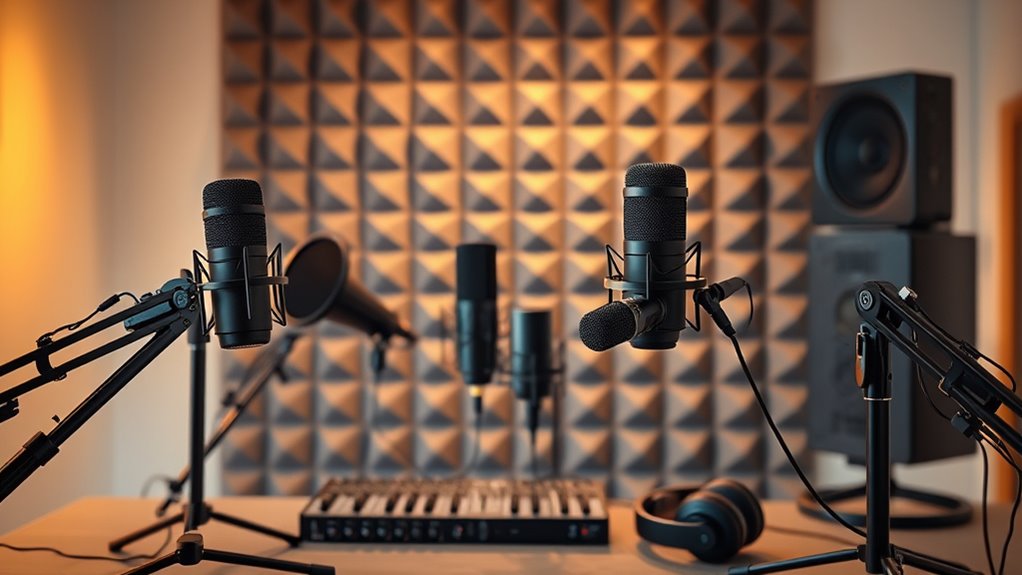

Choosing the right microphone is essential for producing professional-sounding podcasts. The best options balance audio clarity, ease of use, and affordability. The RØDE PodMic stands out as the top overall pick for its durability and broadcast quality, while the Shure MV7 USB offers excellent versatility for both beginners and seasoned podcasters. Budget-friendly options like the FIFINE T669 provide solid sound without breaking the bank, though they may lack some advanced features. Tradeoffs typically involve balancing sound quality, connectivity options, and ease of setup. Keep reading for a detailed breakdown of these microphones and what makes each one suitable for different podcaster needs.

Get oils, diffusers and self-care delivered free with Prime
- Fast, free delivery on millions of items
- Prime Video, Amazon Music and more included
- Member-only deals all year
Complete the kit


Key Takeaways
- Sound quality and build robustness are the main factors that differentiate the top picks from more affordable options.
- USB microphones tend to be more beginner-friendly, while XLR mics offer higher audio fidelity for advanced users willing to invest in audio interfaces.
- Podcasters often face a tradeoff between ease of setup and audio quality; premium models usually require more equipment but deliver better sound.
- Versatile microphones that support multiple connectivity options appeal to creators who want flexibility across different recording setups.
- Bundled packages with accessories like arms, headphones, and stands provide better value for new podcasters building their setup.
| RØDE PodMic Cardioid Dynamic Broadcast Microphone, XLR |  | Best Overall for Professional Podcasters | Connectivity Technology: XLR | Polar Pattern: Unidirectional | Impedance: 150 ohm | VIEW ON AMAZON | See Our Full Breakdown |
| Shure MV7 USB Podcast Microphone and Stand |  | Best for Versatile Connectivity and Onboard Processing | Type: USB Dynamic Microphone | Features: Onboard DSP | Color: Black | VIEW ON AMAZON | See Our Full Breakdown |
| Maono A04 USB Microphone Condenser Kit for PC Podcast |  | Best for Studio-Quality Recording and Streaming | Sampling Rate: 192kHz | Bit Depth: 24Bit | Microphone Type: Condenser | VIEW ON AMAZON | See Our Full Breakdown |
| Logitech Blue Yeti USB Microphone for PC, Mac, Gaming, Recording, Streaming, Podcasting, Studio, and Computer – Blackout |  | Best for Versatile Use & Broadcast-Quality Sound | Pickup Patterns: Cardioid, omni, bidirectional, stereo | Connectivity: USB | Controls: Gain, mute, pattern selection | VIEW ON AMAZON | See Our Full Breakdown |
| Shure MV6 USB Gaming Microphone for Streaming & Recording |  | Best for Gaming, Streaming & Multi-Purpose Use | Connectivity: USB-C | Microphone Type: Dynamic cardioid | Features: Voice Isolation, Auto Level Mode | VIEW ON AMAZON | See Our Full Breakdown |
| FIFINE AmpliGame AM8T XLR/USB Gaming Microphone Set |  | Best Versatile Setup for Streamers and Podcasters | Connectivity Technology: USB, XLR | Polar Pattern: Unidirectional | Frequency Response: 20 KHz | VIEW ON AMAZON | See Our Full Breakdown |
| RØDE NT-USB Mini Studio-Quality USB Condenser Microphone |  | Best Compact Studio-Quality USB Mic for Streamers | Connectivity Technology: USB | Polar Pattern: Unidirectional | Frequency Response: 20 Hz – 20 kHz | VIEW ON AMAZON | See Our Full Breakdown |
| FIFINE T669 Studio Condenser USB Microphone for Recording and Podcasting |  | Best Budget-Friendly, All-in-One Podcast Kit | Output: USB | Frequency Response: Wide | Included Accessories: Boom arm, pop filter, shock mount, USB cable | VIEW ON AMAZON | See Our Full Breakdown |
| Zoom ZDM-1 Podcast Mic Pack |  | Best Complete Starter Kit for Professional Podcasters | Microphone Type: Dynamic | Includes: Microphone, headphones, tripod, windscreen, XLR cable | Headphone Type: Closed-back | VIEW ON AMAZON | See Our Full Breakdown |
| MAONO PD200W Hybrid Wireless Podcast Microphone |  | Best Wireless and Multi-Connection Flexibility for Advanced Podcasters | Connectivity Technology: USB, Wireless, XLR | Polar Pattern: Unidirectional | Frequency Response: 16 KHz | VIEW ON AMAZON | See Our Full Breakdown |
| FIFINE AmpliTank K688CT Podcast Microphone Kit, USB/XLR Dynamic Vocal Mic | 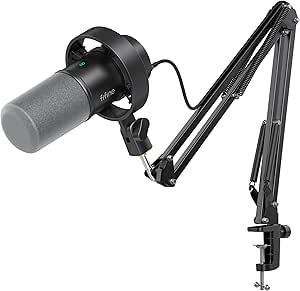 | Best Versatile All-in-One Podcast Microphone Kit | Connectivity Technology: USB, XLR | Connector Type: USB, XLR | Special Features: Mute Function, Noise Reduction, Stand, Volume Control | VIEW ON AMAZON | See Our Full Breakdown |
| FIFINE AmpliGame AM8 USB/XLR Dynamic Microphone for Gaming and Streaming |  | Best Gaming & Streaming Microphone with RGB Flair | Frequency Response: 50Hz-16KHz | Connection Types: USB, XLR | RGB Lighting: Yes | VIEW ON AMAZON | See Our Full Breakdown |
| ZealSound Podcast Microphone for PC, Noise Cancellation USB Mic with Gain, Volume Adjustment & Mute Button, Monitoring & Echo, for YouTube, TikTok, Podcasting, Streaming, iPhone, iPad, Android, Mac |  | Best All-Around USB Microphone with Professional Features | Frequency Response: 40Hz–18kHz | Sampling Rate: 46kHz | Sensitivity: –45dB ±3dB | VIEW ON AMAZON | See Our Full Breakdown |
| Rode PodMic Dynamic Podcasting Microphone Bundle with Broadcast Arms and Headphones (Pair) |  | Best Professional XLR Podcasting Bundle | Microphone Type: Dynamic cardioid | Number of Microphones: 2 | Included Cables: 2 x 10′ XLR | VIEW ON AMAZON | See Our Full Breakdown |
| microphones for podcaster | Frequency Response | Compatibility |
|---|---|---|
| RØDE PodMic Cardioid Dynamic B | 20Hz – 20kHz | — |
| Shure MV7 USB Podcast Micropho | — | PC, Mac |
| Maono A04 USB Microphone Conde | — | PC, PS4, PS5, Mobile |
| Logitech Blue Yeti USB Microph | — | PC, Mac |
| Shure MV6 USB Gaming Microphon | — | PC, Mac |
| FIFINE AmpliGame AM8T XLR/USB | 20 KHz | — |
| RØDE NT-USB Mini Studio-Qualit | 20 Hz – 20 kHz | — |
| FIFINE T669 Studio Condenser U | Wide | PC and laptop |
| Zoom ZDM-1 Podcast Mic Pack | — | — |
| MAONO PD200W Hybrid Wireless P | 16 KHz | — |
| FIFINE AmpliTank K688CT Podcas | 16 KHz | — |
| FIFINE AmpliGame AM8 USB/XLR D | 50Hz-16KHz | PC, Mac, PS5 |
| ZealSound Podcast Microphone f | 40Hz–18kHz | Windows, Mac, iPhone, iPad, Android |
| Rode PodMic Dynamic Podcasting | — | — |
More Details on Our Top Picks
RØDE PodMic Cardioid Dynamic Broadcast Microphone, XLR
The RØDE PodMic stands out as the top pick for serious podcasters who prioritize sound quality and durability. Its broadcast-quality dynamic capsule offers a warm, clear voice that easily surpasses many USB options like the Blue Yeti, especially in noise rejection and consistency. The internal pop filter and shock mount mitigate plosives and handling noise effectively, making it ideal for podcasting in less-than-ideal acoustic environments. However, this model’s reliance on an external audio interface and its heavier weight can be drawbacks for those seeking a simple, portable setup. Compared to USB microphones, it sacrifices convenience for audio fidelity and robustness. Best suited for podcasters who want professional-grade sound and are comfortable with XLR gear.
Pros:- Excellent sound clarity tailored for speech and podcasting
- Built-in pop filter and shock mounting reduce disruptive noise
- All-metal construction ensures durability for long-term use
- Compatible with any XLR interface or mixer
Cons:- Requires an external audio interface, adding cost and complexity
- Not USB compatible, limiting immediate, plug-and-play use
- Heavier than many desktop microphones, less portable
Best for: Experienced podcasters with existing audio interfaces seeking high-quality, durable equipment
Not ideal for: Beginners or mobile streamers who need plug-and-play simplicity without extra gear
- Connectivity Technology:XLR
- Polar Pattern:Unidirectional
- Impedance:150 ohm
- Frequency Response:20Hz – 20kHz
- Weight:937 g
- Enclosure Material:Metal
Our verdict“This mic is perfect for podcasters who prioritize sound quality and durability over convenience.”
Shure MV7 USB Podcast Microphone and Stand
The Shure MV7 offers the flexibility of both USB and XLR connections, making it suitable for a range of setups—from simple desk microphones to more advanced studio configurations. Its onboard DSP processing enhances voice clarity and reduces background noise, comparable to the Maono A04 but with the added convenience of digital controls. The included stand simplifies initial setup, and the microphone’s build quality is robust for daily use. Still, this dual-mode capability comes at a higher price, and the lack of advanced broadcast features limits it compared to dedicated broadcast mics. For users who want a versatile, all-in-one option that can grow with their needs, the MV7 makes a compelling choice. Best for podcasters who want flexible connectivity and onboard processing in a single package.
Pros:- Dual USB and XLR connectivity for maximum flexibility
- Built-in DSP for enhanced sound and noise reduction
- Includes a sturdy stand for immediate use
- Solid construction with professional feel
Cons:- Higher price point compared to single-mode microphones
- Potentially more complex setup for beginners
- Limited advanced broadcast features
Best for: Podcasters looking for a versatile mic that can switch between USB and XLR without changing hardware
Not ideal for: Podcasters seeking a dedicated, high-end broadcast microphone with studio-grade features
- Type:USB Dynamic Microphone
- Features:Onboard DSP
- Color:Black
- Connectivity:USB and XLR
- Included Accessories:Stand
- Compatibility:PC, Mac
Our verdict“This mic suits podcasters who need adaptability without sacrificing sound quality or onboard processing.”
Maono A04 USB Microphone Condenser Kit for PC Podcast
The Maono A04 excels in delivering professional studio sound with a 192kHz/24Bit sampling rate, ideal for voice-overs, streaming, and high-fidelity podcasting. Its condenser capsule captures detailed audio, surpassing many typical USB mics like the Blue Yeti in clarity and depth. The included accessories—pop filter, shock mount, adjustable arm—offer a complete setup right out of the box, making it accessible for newcomers and experienced users alike. The downside? It’s incompatible with Xbox and requires a desktop or laptop. Its software limitations may also hinder advanced customization, but for those seeking high-resolution audio, the Maono A04 provides considerable value. Best for users who want studio-quality sound and a comprehensive setup bundle.
Pros:- High-resolution 192kHz/24Bit audio quality
- Complete accessories package for versatile use
- Plug-and-play setup simplifies installation
- Ideal for professional voice recording
Cons:- Not compatible with Xbox consoles
- Requires a USB port on desktop or laptop
- Limited compatibility with Maono Link software
Best for: Podcasters and streamers who prioritize high-resolution audio and a ready-to-go kit
Not ideal for: Casual users or console gamers needing console compatibility or ultra-portability
- Sampling Rate:192kHz
- Bit Depth:24Bit
- Microphone Type:Condenser
- Included Accessories:Pop filter, shock mount, boom arm
- Compatibility:PC, PS4, PS5, Mobile
- Form Factor:Desktop
Our verdict“This microphone is perfect for those seeking high-fidelity recording with an all-in-one kit for studio-quality production.”
Logitech Blue Yeti USB Microphone for PC, Mac, Gaming, Recording, Streaming, Podcasting, Studio, and Computer – Blackout
The Blue Yeti remains a favorite for its multi-pattern pickup options and user-friendly controls. It can switch from cardioid for solo recordings to omni or bidirectional for interviews or group setups, making it highly adaptable—especially compared to the Shure MV6, which excels mainly in single-mode operation. The onboard Blue VO!CE effects and adjustable gain give users creative control, though the bulkier size and reliance on USB limit portability. The software can be complex for newcomers, but its broad feature set makes it suitable for streaming, gaming, and podcasting alike. If portability isn’t a concern, the Yeti offers a flexible, high-quality solution for various recording needs. Best for users who want a versatile, all-in-one USB microphone with multiple pickup patterns.
Pros:- Multiple pickup patterns for diverse recording scenarios
- Customizable onboard controls and effects
- Plug-and-play setup with good sound quality
- Adjustable desktop stand included
Cons:- Bulkier design takes up desk space
- Software effects and controls can be complex for beginners
- Limited portability compared to smaller mics
Best for: Streamers and content creators needing flexible recording modes in a single device
Not ideal for: Those seeking ultra-compact, portable mics or dedicated broadcast-grade hardware
- Pickup Patterns:Cardioid, omni, bidirectional, stereo
- Connectivity:USB
- Controls:Gain, mute, pattern selection
- Included Accessories:Desktop stand
- Compatibility:PC, Mac
- Software Features:Blue VO!CE effects
Our verdict“This mic offers versatile recording options ideal for creators who need flexibility at their desk.”
Shure MV6 USB Gaming Microphone for Streaming & Recording
The Shure MV6 is tailored for gamers and streamers who want clear vocal capture with noise isolation technology. Its dynamic cardioid capsule minimizes background noise, similar in spirit to the RØDE PodMic but with USB convenience. The built-in Auto Level Mode and real-time Denoiser simplify mixing and improve clarity without extra equipment, making it ideal for fast-paced streaming environments. However, its exclusive USB-C connection may require adapters for some devices, and it lacks the advanced features found in dedicated broadcast microphones like the PodMic. For users who prioritize ease of use combined with solid audio quality, the MV6 strikes a good balance. Best suited for gamers and streamers who need straightforward, high-quality vocal capture.
Pros:- Excellent vocal clarity with noise isolation
- USB-C connectivity for simple setup
- Auto Level Mode and real-time Denoiser improve audio instantly
- Compact and easy to position
Cons:- Limited to USB-C, may need adapters for some devices
- No built-in battery, relies on connected device power
- Less customizable than studio-grade mics
Best for: Gamers and streamers who need a plug-and-play, noise-isolating microphone with real-time processing
Not ideal for: Podcasters or studio professionals seeking broadcast-level sound or XLR connectivity
- Connectivity:USB-C
- Microphone Type:Dynamic cardioid
- Features:Voice Isolation, Auto Level Mode
- Compatibility:PC, Mac
- Additional Features:Real-Time Denoiser
- Design:Compact
Our verdict“This microphone is ideal for gamers and streamers needing clear, noise-isolated vocals with minimal fuss.”
FIFINE AmpliGame AM8T XLR/USB Gaming Microphone Set
The FIFINE AmpliGame AM8T stands out for its dual USB and XLR connectivity, offering flexibility that RØDE NT-USB Mini can’t match due to its sole USB interface. This makes it ideal for those who want to upgrade from simple USB mics or use multiple devices, though the need for an additional XLR cable can add cost and complexity. Its included boom arm and customizable RGB lighting appeal to gamers and streamers seeking a visually engaging setup, but beginners may find the setup process intimidating. The controls for mute, gain, and headphones are straightforward, providing quick access during recordings or live sessions. Compared to the Zoom ZDM-1, which is more streamlined but less versatile, this kit offers a broader range of options at the expense of a slightly more involved connection process.
Pros:- Flexible USB and XLR connectivity for different recording environments
- Includes a sturdy adjustable boom arm for easy positioning
- Customizable RGB lighting enhances gaming or streaming setups
- Built-in mute, gain, and headphone controls for quick adjustments
Cons:- XLR cable not included, requiring an extra purchase
- Setup can be complex for users unfamiliar with XLR connections
- Clamp requires a desktop less than 2 inches thick, limiting compatibility
Best for: Podcasters and streamers who want a flexible setup with both USB and XLR options and enjoy customizing their aesthetic.
Not ideal for: Beginners seeking a plug-and-play solution, since the XLR setup requires additional cables and some technical know-how.
- Connectivity Technology:USB, XLR
- Polar Pattern:Unidirectional
- Frequency Response:20 KHz
- Item Dimensions:12.6 x 4.72 x 1.97 inches
- Item Weight:1 kg
- Special Features:Controllable RGB, Headphone Jack, Volume Control, Mute Function
Our verdict“This mic suits podcasters and streamers who need versatility and aesthetic flair but are comfortable with a more involved setup.”
RØDE NT-USB Mini Studio-Quality USB Condenser Microphone
The RØDE NT-USB Mini offers exceptional studio sound quality in a compact form factor, making it a better choice than larger desktop mics like the Zoom ZDM-1 for users prioritizing space and simplicity. Its plug-and-play USB connection simplifies setup, appealing to those who want quick results without fuss. The built-in pop filter and magnetic desk stand make it versatile for various environments, whether at a desk or on the go. However, its single USB connection limits flexibility, unlike the FIFINE AmpliGame AM8T, which offers both USB and XLR options. This mic is ideal for podcasters and content creators who value high-quality audio and a sleek, minimal setup, but it might disappoint those needing multiple connection types or professional-grade XLR features.
Pros:- Excellent studio-quality sound in a small, portable design
- Plug-and-play USB connectivity for quick setup
- Includes a magnetic desk stand and built-in pop filter
- Zero-latency headphone monitoring
Cons:- Limited to USB connection, no XLR option
- Requires external power via USB-C, which may not suit all setups
- Less expandable for future professional upgrades
Best for: Podcasters and streamers looking for high-quality, studio-grade sound in a compact, easy-to-use USB microphone.
Not ideal for: Users who need XLR connectivity or plan to expand to a professional audio interface, as this mic is strictly USB-based.
- Connectivity Technology:USB
- Polar Pattern:Unidirectional
- Frequency Response:20 Hz – 20 kHz
- Item Dimensions:7.28 x 2.36 x 1.97 inches
- Item Weight:585 g
- Special Features:Magnetic Desk Stand, Pop Filter, Zero-Latency Monitoring
Our verdict“This mic is perfect for podcasters who want an easy-to-use, high-quality USB microphone with a compact footprint.”
FIFINE T669 Studio Condenser USB Microphone for Recording and Podcasting
The FIFINE T669 provides a complete package for those starting in podcasting or streaming, with excellent sound quality and a sturdy build. Compared to the RØDE NT-USB Mini, it includes more accessories like a boom arm, pop filter, shock mount, and tripod, making it ideal for beginners who want everything in one box. Its cardioid capsule ensures focused voice capture, and the included accessories support professional-quality recordings. The setup is straightforward, but the size of the arm and stand may require extra space and stability considerations. While it’s not suitable for Xbox users or those seeking multi-connection options, its affordability and all-in-one design make it a compelling choice for new podcasters and online content creators.
Pros:- All-in-one kit with boom arm, pop filter, and shock mount
- Easy plug-and-play USB setup with good sound quality
- Focused cardioid capsule minimizes background noise
- Affordable entry point for new creators
Cons:- Not compatible with Xbox consoles
- Bulkier arm setup may require more space
- Accessories may be excessive for basic needs
Best for: Beginner podcasters and streamers who want a comprehensive, budget-friendly setup without sacrificing sound quality.
Not ideal for: Advanced users or those needing XLR or multi-mic configurations, as this is primarily a USB-only starter kit.
- Output:USB
- Frequency Response:Wide
- Included Accessories:Boom arm, pop filter, shock mount, USB cable
- Compatibility:PC and laptop
- Handling High SPLs:Yes
- Color:Black
Our verdict“Ideal for newcomers seeking a complete, user-friendly podcasting setup on a budget.”
Zoom ZDM-1 Podcast Mic Pack
The Zoom ZDM-1 offers a straightforward, all-in-one package designed for podcasters and streamers who want professional-level audio without complex setup. Its dynamic microphone is tailored for voice and reduces background noise effectively, making it a step above basic USB mics like the FIFINE T669. The included headphones, tripod, and windscreen form a portable, ready-to-record kit that’s perfect for home studios or mobile use. However, the absence of USB connectivity limits its versatility for those who prefer simple USB plug-and-play, as the FIFINE AmpliGame AM8T offers. The tripod might not withstand heavy use, and XLR users will find it suitable, but those looking for a USB option may want to consider other models. It’s best suited for those focused on voice and podcasting with a professional sound profile.
Pros:- Complete starter kit with microphone, headphones, and accessories
- Dynamic mic reduces background noise effectively
- Portable and easy to set up for home or mobile recording
- Good for voice-focused podcasts and streaming
Cons:- No USB connectivity, requiring XLR interface
- Tripod may not be durable for heavy use
- Limited versatility for multi-purpose setups
Best for: Podcasters seeking a portable, XLR-based setup with professional sound tailored for voice recording.
Not ideal for: Casual streamers or beginners who want a simple USB microphone, as this pack is more suited to semi-professional or professional use.
- Microphone Type:Dynamic
- Includes:Microphone, headphones, tripod, windscreen, XLR cable
- Headphone Type:Closed-back
- Color:Black
- Stand:Tabletop tripod
- Microphone Compatibility:XLR
Our verdict“This pack is ideal for podcasters who prefer a professional XLR setup and are ready to invest in quality hardware.”
MAONO PD200W Hybrid Wireless Podcast Microphone
The MAONO PD200W offers a unique combination of wireless, USB, and XLR connectivity, making it stand out for podcasters who need mobility and flexibility. Unlike the FIFINE AmpliGame AM8T, which relies on traditional wired setups, this microphone’s wireless feature supports on-the-go recording and dynamic environments, while its USB and XLR options make it suitable for studio use. The noise cancellation and high signal-to-noise ratio help produce broadcast-quality sound, but the inclusion of batteries means ongoing replacement costs, and the setup can be complex for less experienced users. This mic fits well with content creators who want a versatile, future-proof solution capable of adapting to different recording scenarios, but it might be overkill for those with simple, stationary needs.
Pros:- Supports wireless, USB, and XLR for maximum versatility
- Delivers studio-quality sound with noise reduction
- Includes a companion app for sound customization
- Supports dual wireless microphones for interview-style recording
Cons:- Requires batteries, increasing ongoing costs
- Setup can be complicated for less technical users
- Additional accessories like camera or lighting may be needed for video use
Best for: Experienced podcasters and streamers who need a flexible, wireless microphone with multiple connection options for varied environments.
Not ideal for: Casual users or those who prefer straightforward plug-and-play setups, as the multiple connection modes and battery management add complexity.
- Connectivity Technology:USB, Wireless, XLR
- Polar Pattern:Unidirectional
- Frequency Response:16 KHz
- Batteries:1 C battery (included)
- Signal-to-Noise Ratio:82 dB
- Special Features:MAONO Link Software, Noise Reduction, Dual Wireless Microphones
Our verdict“This mic is best suited for advanced podcasters who value multi-mode connectivity and mobility in their recording setup.”
FIFINE AmpliTank K688CT Podcast Microphone Kit, USB/XLR Dynamic Vocal Mic
The FIFINE AmpliTank K688CT stands out for combining both USB and XLR connectivity in a single package, offering flexibility for beginners and pros alike. Compared with the RØDE PodMic, it provides more versatile connection options, making it suitable for varied setups. However, its setup can be complex for newcomers due to manual gain adjustments and the need to configure both connections. The included boom arm and shock mount enhance stability, while noise reduction features improve recording clarity. Yet, using XLR disables some function keys, and manual input control may be daunting for those new to audio gear. This pick makes the most sense for podcasters who want a flexible, upgradeable solution without sacrificing audio quality.Pros:- Flexible connectivity with both USB and XLR options
- Includes a sturdy boom arm and shock mount for stable setup
- Features intuitive controls like mute and gain adjustment
- Excellent noise reduction for clear recordings
Cons:- Function keys are disabled when using XLR connection
- Requires manual adjustment of input volume, which can be confusing for beginners
Best for: Podcasters who need a versatile, all-in-one setup with both USB and XLR options, suitable for home studio and professional environments.
Not ideal for: Beginners seeking a plug-and-play microphone with minimal setup; the complexity of dual connectivity may be overwhelming.
- Connectivity Technology:USB, XLR
- Connector Type:USB, XLR
- Special Features:Mute Function, Noise Reduction, Stand, Volume Control
- Frequency Response:16 KHz
- Polar Pattern:Unidirectional
- Enclosure Material:Metal
Our verdict“This microphone is ideal for podcasters who want a flexible, high-quality solution that can grow with their setup.”
FIFINE AmpliGame AM8 USB/XLR Dynamic Microphone for Gaming and Streaming
The FIFINE AmpliGame AM8 is tailored for streamers and gamers who want a dynamic microphone with style and solid audio performance. Its dual USB and XLR compatibility offers flexibility, but like the AmpliTank, the XLR connection requires an additional audio interface—adding complexity and cost. The built-in RGB lighting and mute control make it appealing for a lively streaming environment, though the RGB features are only active in USB mode. Its noise-canceling windscreen helps produce cleaner audio in noisy settings, but users must remember that the RGB lighting isn’t usable via XLR. Compared to the ZealSound, this model emphasizes visual flair and gaming compatibility, making it better suited for casual streaming and gaming environments.Pros:- Dual USB and XLR connectivity for versatile use
- Includes RGB lighting and mute button for customization
- Built-in noise-canceling windscreen improves audio clarity
- Compatible with most mic stands
Cons:- RGB lighting is only active in USB mode
- XLR connection requires additional equipment (not included)
Best for: Streamers and gamers who value aesthetics and versatility in a microphone designed for live, energetic environments.
Not ideal for: Podcasters seeking a more subdued, professional studio microphone; RGB lighting and gaming features may feel unnecessary for pure podcasting.
- Frequency Response:50Hz-16KHz
- Connection Types:USB, XLR
- RGB Lighting:Yes
- Mute Control:Yes
- Built-in Headphone Jack:Yes
- Compatibility:PC, Mac, PS5
Our verdict“This microphone is well-suited for streamers wanting a stylish, flexible mic with good audio quality for gaming and casual content creation.”
- The ZealSound K66 offers impressive studio-quality sound in a USB format, making it ideal for podcasters who need quality and convenience. Its noise cancellation and wide device compatibility make it stand out for content creators working from various environments, including mobile and gaming setups. The physical controls for gain, monitoring, and echo provide a professional touch, especially with zero-latency monitoring. However, it demands manual adjustments to optimize sound levels, which could challenge less experienced users. The noise reduction mode, while effective, can be tricky to operate correctly. Unlike the FIFINE models, ZealSound doesn’t support XLR, limiting future upgrade potential for those seeking more advanced setups.Pros:
- Studio-quality sound with effective noise reduction
- Wide device compatibility including mobile devices
- Intuitive controls for gain, monitoring, and echo
- Zero-latency monitoring for accurate audio feedback
Cons:- Requires manual adjustment for optimal levels
- Limited to USB; no XLR output for future upgrades
Best for: Podcasters and streamers who prioritize sound quality and need a versatile, all-in-one USB microphone suitable across multiple devices and environments.
Not ideal for: Users who want a microphone with XLR connectivity for future professional upgrades, or those seeking a plug-and-play device with minimal setup.
- Frequency Response:40Hz–18kHz
- Sampling Rate:46kHz
- Sensitivity:–45dB ±3dB
- Connectivity:USB-C, Lightning adapters included
- Compatibility:Windows, Mac, iPhone, iPad, Android
- Features:Noise cancellation, gain, volume, echo controls
Our verdict“This USB microphone is perfect for podcasters who want a high-quality, versatile device that works across various platforms with professional features.”
Rode PodMic Dynamic Podcasting Microphone Bundle with Broadcast Arms and Headphones (Pair)
The Rode PodMic bundle delivers a comprehensive, professional-grade podcasting setup, ideal for serious creators and small studios. The dual microphones paired with broadcast arms and high-fidelity headphones offer precise control over audio quality and placement. Compared with the FIFINE AmpliTank, this bundle sacrifices versatility for durability and studio-level sound, but it requires familiarity with XLR connections and space for a larger setup. The included broadcast arms facilitate mic positioning, critical for clean recordings, though they add bulk. The absence of an individual microphone price makes it a significant investment, but it’s a solid choice for those committed to professional sound.Pros:- Complete professional-grade podcasting bundle
- Durable construction with high-quality components
- Adjustable broadcast arms for optimal mic placement
- Includes high-fidelity headphones for accurate monitoring
Cons:- Bulky setup requiring significant desk space
- Requires familiarity with XLR connections for setup
Best for: Professional podcasters or small studio operators who value durability, high fidelity, and a complete setup for high-quality content creation.
Not ideal for: Beginners or casual content creators who prefer simple, plug-and-play solutions without the need for XLR setup or bulky equipment.
- Microphone Type:Dynamic cardioid
- Number of Microphones:2
- Included Cables:2 x 10′ XLR
- Headphones:2 Closed-back studio monitor
- Broadcast Arms:2 with internal springs, 35″ reach
- Warranty:1-year standard + 1-year extension
Our verdict“This bundle is best suited for serious podcasters seeking a durable, professional setup with excellent audio fidelity, ready for studio use.”
How We Picked
In selecting these microphones, I evaluated key factors like audio performance, build quality, connectivity options, and user-friendliness. I prioritized microphones that offer clear voice reproduction, as this is critical for engaging podcasts. Durability and ease of maintenance also influenced rankings, especially for equipment that will see regular use. Additionally, I considered value for money by comparing features relative to price, ensuring options are accessible for different budgets. The final list balances professional-grade options with budget-friendly choices, catering to both newcomers and experienced podcasters.| microphones for podcaster | Compatibility |
|---|---|
| RØDE PodMic Cardioid Dynamic B | — |
| Shure MV7 USB Podcast Micropho | PC, Mac |
| Maono A04 USB Microphone Conde | PC, PS4, PS5, Mobile |
| Logitech Blue Yeti USB Microph | PC, Mac |
| Shure MV6 USB Gaming Microphon | PC, Mac |
| FIFINE AmpliGame AM8T XLR/USB | — |
| RØDE NT-USB Mini Studio-Qualit | — |
| FIFINE T669 Studio Condenser U | PC and laptop |
| Zoom ZDM-1 Podcast Mic Pack | — |
| MAONO PD200W Hybrid Wireless P | — |
| FIFINE AmpliTank K688CT Podcas | — |
| FIFINE AmpliGame AM8 USB/XLR D | PC, Mac, PS5 |
| ZealSound Podcast Microphone f | Windows, Mac, iPhone, iPad, Android |
| Rode PodMic Dynamic Podcasting | — |
Factors to Consider When Choosing Microphones For Podcasters
When choosing a microphone for podcasting, several factors come into play. Understanding your recording environment, budget, and technical needs will help narrow down the best options. Whether you prioritize ease of use or audio fidelity, making an informed decision ensures your podcast sounds professional and resonates with your audience. Here are key considerations to keep in mind.Connectivity Type
Microphones generally come in USB and XLR formats. USB mics are plug-and-play, making them ideal for beginners or those with limited setup space. XLR microphones, however, require an audio interface but typically deliver higher sound quality and more control. Choose based on your current setup and future plans; beginners may prefer USB, while more serious podcasters might invest in XLR for better sound fidelity.
Sound Quality and Voice Clarity
Clear, natural voice reproduction is essential for engaging podcasts. Look for microphones with cardioid patterns that focus on voice while rejecting background noise. Condenser mics tend to capture more detail but can pick up unwanted room sounds, so consider your environment. Dynamic mics like the PodMic excel in noisy settings, making them a popular choice for home studios and mobile setups.
Build Quality and Durability
Podcasts often involve long recording sessions, so a sturdy, well-built microphone can withstand frequent use. Metal constructions and quality components increase longevity and reduce the risk of damage. While premium models may be more durable, even budget options should feel solid and reliable for consistent performance.
Additional Features
Features like headphone monitoring, mute buttons, gain control, and shock mounts can enhance your recording experience. These features improve usability and sound quality, especially during long sessions. However, each added feature can increase the price, so weigh their importance against your budget and needs.
Value and Bundle Inclusions
Some microphones come as part of bundles with accessories like stands, arms, pop filters, or headphones. Bundled options can be cost-effective and save time, but ensure that included accessories meet your quality standards. Always compare the overall value rather than just the sticker price to make a well-rounded decision.
Frequently Asked Questions
Is a USB microphone sufficient for professional podcasting?
For most beginner and intermediate podcasters, a high-quality USB microphone provides excellent sound without the complexity of XLR setups. They are easy to connect and require minimal additional equipment, making them ideal for home studios. However, for high-end professional production, an XLR microphone paired with an audio interface can deliver superior audio quality and more control over sound shaping.
Should I prioritize a microphone with noise cancellation features?
Yes, especially if you record in a noisy environment or want to minimize background sounds. Microphones with built-in noise cancellation or directional patterns like cardioid or hypercardioid help focus on your voice and reduce ambient noise. This results in cleaner audio and a more professional-sounding podcast, particularly in less-than-ideal recording spaces.
How important is the microphone’s frequency response for podcasters?
Frequency response impacts how natural and full-bodied your voice sounds. A microphone with a tailored frequency response for vocals will capture your voice more accurately, making it sound clearer and warmer. For podcasting, a response that emphasizes midrange frequencies is usually preferred, as it enhances speech intelligibility.
Can I use a gaming microphone for podcasting?
Many gaming microphones are suitable for podcasting because they are often designed to capture voice clearly. However, their primary design might favor broadcast quality over studio fidelity. If you choose a gaming mic, look for models with good cardioid patterns and decent frequency response. Upgrading to a dedicated podcast mic can yield more professional results, but gaming mics are a viable budget option for beginners.
Is it worth investing in a microphone bundle with accessories?
Bundles can offer significant savings and streamline setup, especially for new podcasters lacking existing equipment. Ensure the included accessories, like stands or pop filters, are of good quality and suit your needs. However, sometimes investing in higher-quality individual components may deliver better long-term value if you already own compatible accessories or want more customization.
Conclusion
For most beginners, the Shure MV7 USB strikes a balance between quality and ease of use, making it the best overall choice. Budget-conscious podcasters should consider the FIFINE T669 for reliable sound at a lower price point. Those seeking a premium setup will appreciate the RØDE PodMic paired with a quality audio interface for studio-grade audio. Creators with specific needs, like streaming or mobile recording, might prefer models like the ZealSound USB Mic or wireless options. Ultimately, your choice depends on your recording environment, technical comfort, and budget — but this list covers the best options for every type of podcaster in 2026.