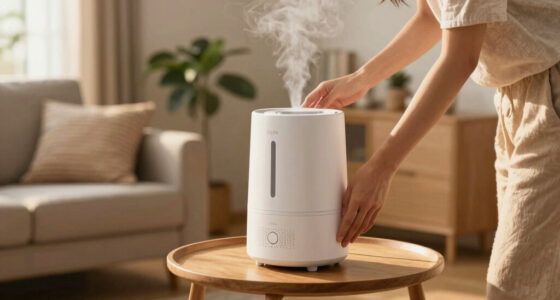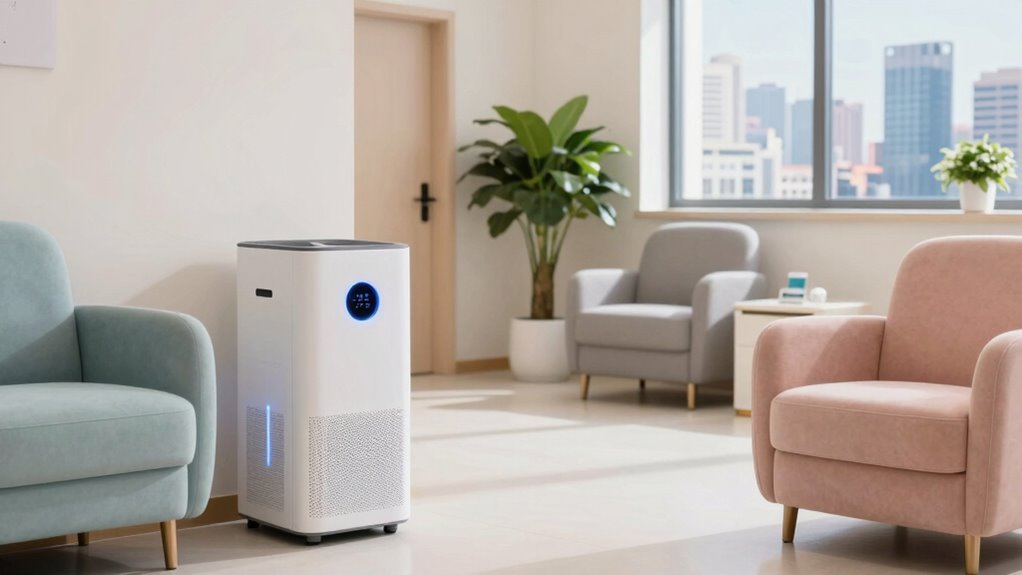

Choosing the right air purifier for a clinic waiting room involves balancing coverage, filtration efficiency, noise levels, and ease of maintenance. For 2026, the Levoit Core 400S-P stands out for its large coverage and smart features, ideal for busy spaces with high foot traffic. Meanwhile, the MOOKA B-D02L offers quieter operation and user-friendly modes, perfect for settings where comfort and simplicity matter most. Both options have their strengths and tradeoffs, making it essential to consider your specific needs, such as room size, noise sensitivity, and maintenance willingness.

Get oils, diffusers and self-care delivered free with Prime
- Fast, free delivery on millions of items
- Prime Video, Amazon Music and more included
- Member-only deals all year
Complete the kit



Key Takeaways
- The Levoit Core 400S-P covers the largest area, making it best for big waiting rooms, but can be loud at high speeds.
- The MOOKA B-D02L operates quietly and offers multiple modes, ideal for patient comfort and night-time use.
- Both models feature high-efficiency filters, but the Levoit excels in real-time air quality monitoring, while MOOKA emphasizes quiet operation.
- Maintenance frequency varies: Levoit filters need regular replacement, while MOOKA’s are less frequent but require access to the bottom panel.
- Choosing between these depends on room size, noise tolerance, and preference for smart features or simplicity.
| Levoit Smart Air Purifier for Large Rooms up to 1733 sq ft, Core 400S-P |  | Best Overall for Large, Smart Waiting Rooms | Coverage Area: 1733 sq ft | CADR Smoke: 231 CFM | CADR Dust: 240 CFM | VIEW ON AMAZON | See Our Full Breakdown |
| MOOKA Air Purifier for Large Rooms up to 1076 sq ft, True HEPA Filter, B-D02L |  | Best Quiet Operation and Ease of Use | Coverage Area: up to 1076 sq ft | Filtration: True HEPA and activated carbon | Noise Level: 20dB | VIEW ON AMAZON | See Our Full Breakdown |
| air purifier for clinic waiting room | Coverage Area | CADR Smoke | CADR Dust | CADR Pollen |
|---|---|---|---|---|
| Levoit Smart Air Purifier for | 1733 sq ft | 231 CFM | 240 CFM | 259 CFM |
| MOOKA Air Purifier for Large R | up to 1076 sq ft | — | — | — |
More Details on Our Top Picks
Levoit Smart Air Purifier for Large Rooms up to 1733 sq ft, Core 400S-P
The Levoit Core 400S-P stands out for its ability to clean large spaces up to 1733 sq ft in just one hour, making it highly effective in busy waiting areas. Its 3-stage filtration system captures 99.97% of airborne particles, including dust, pollen, and pet dander. What sets it apart is the integration of real-time air quality monitoring with the AirSight Plus laser dust sensor, providing instant feedback on indoor air conditions. Compared to the MOOKA, it offers more coverage and smarter controls, but it can be louder at maximum fan speeds and has a higher maintenance requirement with filter changes. This model is best suited for large clinics where managing air quality proactively is critical.
Pros:- Covers up to 1733 sq ft efficiently
- Real-time air quality monitoring
- High-efficiency 3-stage filtration
- Certified by AHAM for safety and energy efficiency
Cons:- Potentially loud at maximum fan speed
- Filters require regular replacement
- Price info is not specified, might be costly
Best for: Large, high-traffic waiting rooms with a need for smart monitoring
Not ideal for: Smaller rooms or settings where noise must be minimized at all costs
- Coverage Area:1733 sq ft
- CADR Smoke:231 CFM
- CADR Dust:240 CFM
- CADR Pollen:259 CFM
- Filtration Efficiency:99.97% for 0.1-0.3 μm
- Technology:AirSight Plus laser dust sensor
Our verdict“The Levoit Core 400S-P offers unmatched coverage and smart features, making it ideal for large, busy clinics that prioritize real-time air quality management.”
MOOKA Air Purifier for Large Rooms up to 1076 sq ft, True HEPA Filter, B-D02L
The MOOKA B-D02L is tailored for larger spaces up to 1076 sq ft, with a focus on quiet, comfortable operation. Its True HEPA filter efficiently captures pet dander, smoke, and odors, making it suitable for waiting rooms where noise levels and patient comfort are priorities. The device features multiple fan modes, including a sleep mode operating at just 20dB, and timer settings for flexible scheduling. While it offers less coverage than the Levoit, it compensates with quieter performance and user-friendly controls. However, filter replacements every 3-6 months and the slightly complex setup might be drawbacks for busy clinics seeking quick, straightforward solutions.
Pros:- Quiet operation at 20dB
- Multiple modes and timers for customization
- Child lock enhances safety
- Effective up to 1076 sq ft
Cons:- Filter intervals every 3-6 months
- Setup can be somewhat complex
- Requires access to bottom panel for power connection
Best for: Medium to large waiting rooms where quiet operation is essential
Not ideal for: Very large spaces exceeding 1076 sq ft or clinics needing advanced smart features
- Coverage Area:up to 1076 sq ft
- Filtration:True HEPA and activated carbon
- Noise Level:20dB
- Timer Settings:1H, 2H, 4H, 8H
- Fan Modes:Sleep, Low, Med, High
- Child Lock:Yes
Our verdict“The MOOKA B-D02L excels in quiet, adaptable operation for medium-large waiting areas where comfort and simplicity are valued over extensive coverage.”

How We Picked
To select the best air purifiers for clinic waiting rooms, I prioritized models that combine large coverage areas with proven filtration efficiency, particularly HEPA and multi-stage filters. I looked for devices with reliable CADR ratings to ensure effective particle removal and checked for features like quiet operation and ease of maintenance. Smart capabilities, such as real-time air quality monitoring, were considered a bonus for managing busy spaces. Cost and energy efficiency also played roles, but the main focus remained on performance suited for high-traffic medical environments.
Factors to Consider When Choosing Air Purifier For Clinic Waiting Room
Selecting an air purifier for a clinic waiting room requires considering several key factors to ensure it effectively improves air quality without disrupting comfort. The ideal model should cover the entire space, efficiently remove airborne contaminants, operate quietly, and be easy to maintain. In this guide, I’ll outline the critical features to look for and what tradeoffs to expect based on different priorities.Coverage Area and Filtration Efficiency
For a waiting room, coverage is paramount. You want a purifier that can handle the entire space without overworking. Models like the Levoit Core 400S-P excel here, covering over 1700 sq ft, but are generally louder at higher speeds. Filtration quality also matters — HEPA filters are standard for removing particles, but multi-stage systems with activated carbon help address odors and chemical vapors often present in clinics. Balance your room size with the filter’s rated coverage to avoid under- or over-specifying your needs.
Noise Levels and Comfort
Waiting rooms are spaces where patients and staff should experience minimal noise disturbance. Quiet operation, like that of the MOOKA B-D02L operating at 20dB, makes a significant difference, especially in settings where patients might be resting or reading. Larger units tend to be louder at maximum speeds, so consider whether you need full power or can compromise slightly on speed for quieter operation. Adjustable fan modes and sleep settings enhance comfort without sacrificing air quality.
Ease of Maintenance and Smart Features
Regular filter replacement is unavoidable, but ease of access can save staff time. The MOOKA requires opening a bottom panel, which might be inconvenient during busy hours. The Levoit’s filter replacement process is straightforward but requires routine attention. Smart features like real-time air quality monitoring, mobile app control, and timers are valuable for proactive management, especially in larger facilities. Decide if you prefer hands-on simplicity or integrated smart capabilities based on your staff’s tech comfort level.
Frequently Asked Questions
How often should filters be replaced in these air purifiers?
The Levoit Core 400S-P generally requires filter replacements every 6-12 months, depending on usage and air quality. The MOOKA B-D02L’s filters should be replaced roughly every 3-6 months, especially in high-pollution environments. Regular maintenance is necessary to ensure optimal filtration, but the frequency varies based on how heavily the units are used and the level of airborne contaminants in your waiting area.
Are these units energy-efficient?
Both models are designed with energy efficiency in mind. The Levoit Core 400S-P is AHAM-certified, meaning it meets strict energy standards, and it has an auto mode that adjusts fan speed based on air quality, saving power. The MOOKA B-D02L also offers energy-saving modes and is rated to operate efficiently during prolonged use. However, larger units with higher coverage will naturally consume more power, so consider your total operational costs when choosing.
Can these purifiers handle odors and chemical vapors?
Yes, both models include activated carbon filters that help reduce odors, chemical vapors, and VOCs, which are common in medical environments. The Levoit’s multi-stage filtration excels at capturing a wide range of airborne particles and gases, making it suitable for clinics that deal with disinfectants or chemical smells. The MOOKA’s activated carbon filter provides effective odor removal, but the overall performance depends on how heavily the space is polluted with chemical vapors.
Are these units safe for use around children and patients?
Both purifiers are designed with safety in mind. The MOOKA B-D02L features a child lock to prevent accidental adjustments, making it safe for environments with children or sensitive patients. The Levoit Core 400S-P is AHAM-certified, ensuring safety standards are met, and it has no unshielded parts or hazardous components. Still, regular maintenance and proper placement are essential to avoid any safety risks in busy waiting rooms.
What is the typical lifespan of these devices?
With proper maintenance, the main units of both the Levoit and MOOKA can last 5-10 years. The filters, however, require replacement every few months to maintain effectiveness. Regular cleaning and timely filter changes extend the lifespan and ensure the units continue performing well. Investing in a model with easy filter access can make ongoing upkeep more manageable, especially in a high-traffic clinic setting.
Conclusion
For clinics with large waiting rooms and a focus on comprehensive air quality management, the Levoit Core 400S-P offers the coverage, real-time monitoring, and smart features needed to keep air clean proactively. Smaller clinics or those prioritizing patient comfort and quiet operation should consider the MOOKA B-D02L, which provides effective filtration with minimal noise and simpler controls. Ultimately, your choice should align with your room size, noise tolerance, maintenance capacity, and whether smart features are a priority.