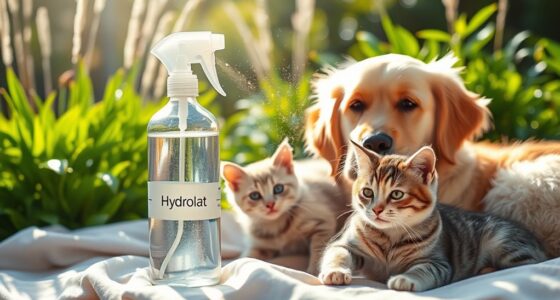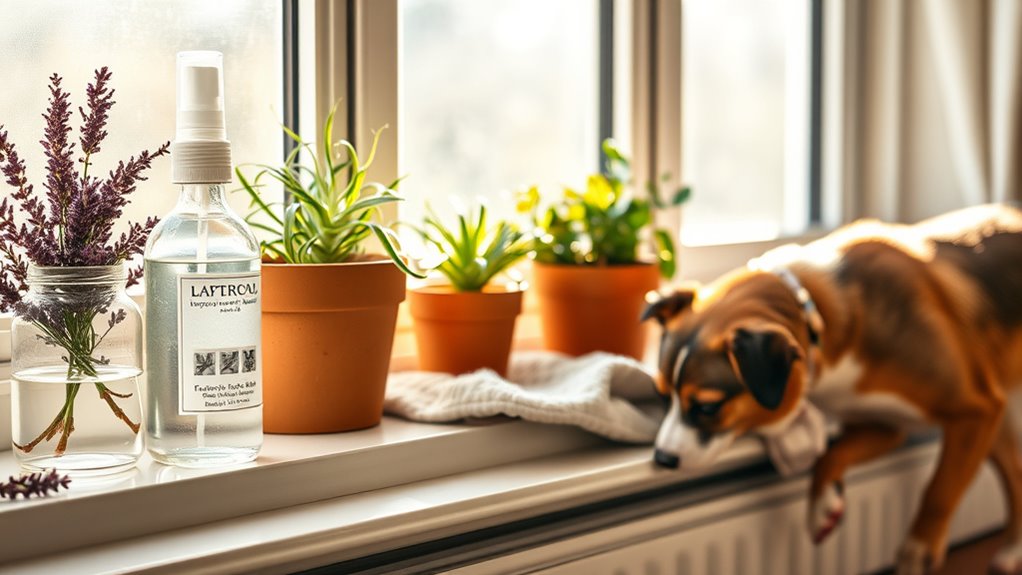

Hydrosols offer a gentle, natural way to support your pet’s relaxation and reduce stress. When used properly, they’re a safe alternative to essential oils, especially for anxiety relief. Diffuse or lightly spray high-quality hydrosols like lavender around your pet’s space, avoiding direct contact with their face or eyes. Always consult your vet and watch for reactions. Want to discover more about safe application techniques and choosing the right hydrosols for your pet?
Key Takeaways
- Hydrosols offer a safe, natural way to promote relaxation and reduce anxiety in pets when used properly.
- Always choose high-quality, pure hydrosols without additives or synthetic fragrances for pet safety.
- Diffusing or lightly spraying hydrosols creates a calming environment without overwhelming senses.
- Consult with a veterinarian before introducing hydrosols into your pet’s care routine.
- Patch test and observe your pet for any signs of irritation or allergic reactions during use.
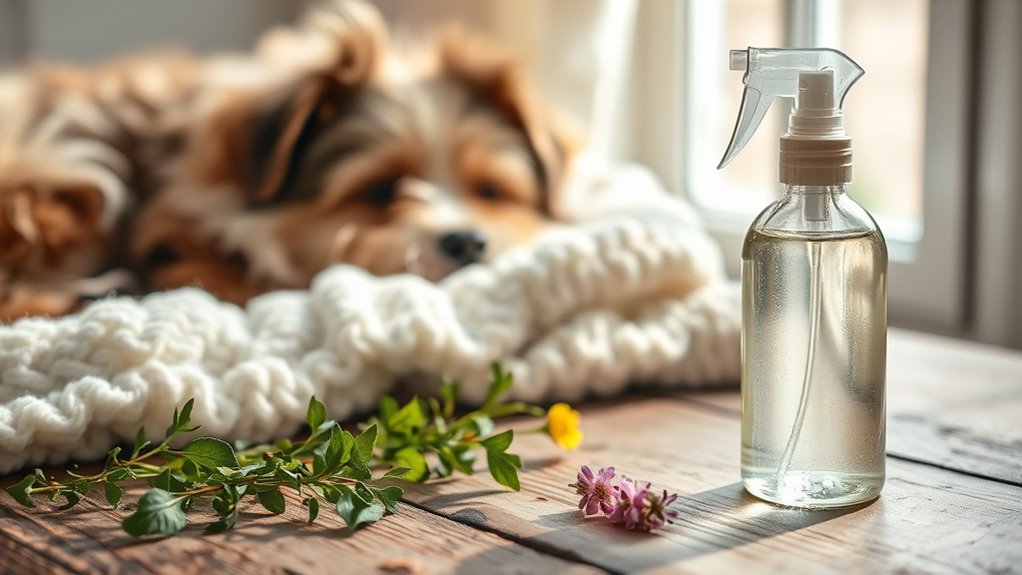
If you’re looking for natural ways to care for your pets, hydrosols offer a gentle and effective option. These botanical waters are distilled from plants and contain tiny amounts of the plant’s active compounds, making them safer than concentrated essential oils. When used correctly, hydrosols can support your pet’s well-being without risking adverse reactions. One of the key benefits is their ability to promote pet anxiety relief. Many animals experience stress from loud noises, separation, or unfamiliar environments, and hydrosols can help calm these nerves in a gentle way.
Hydrosols offer a gentle, natural way to support your pet’s well-being and ease anxiety safely.
However, it’s crucial to prioritize essential oil safety when considering hydrosols for your pet. Although they are milder, some plants can still cause reactions if used improperly. Always choose high-quality, pure hydrosols from reputable sources, and avoid those with additives or synthetic fragrances. Before applying any hydrosol, it’s best to do a patch test by lightly spraying a small area of your pet’s fur or skin, checking for signs of irritation over the next 24 hours. If your pet shows signs of discomfort or allergic reaction, discontinue use immediately.
When administering hydrosols for pet anxiety relief, keep the method simple. You can diffuse the hydrosol in the room where your pet spends most of its time, creating a calming environment without overwhelming their senses. Alternatively, dilute the hydrosol with water and lightly spritz around their bedding or in the air near them. Always avoid spraying directly into your pet’s face or eyes to prevent any discomfort. Remember, hydrosols are meant to support your pet’s natural relaxation, not to replace medical treatment if your pet has severe anxiety or health issues. Using proper application techniques can help maximize their effectiveness while maintaining safety.
Using hydrosols responsibly means understanding your pet’s specific needs and sensitivities. For example, lavender hydrosol is popular for its soothing properties, but some animals may be sensitive to certain scents. Consulting with a veterinarian can help ensure appropriate aromatherapy use for your pet. It’s also beneficial to educate yourself about high-quality hydrosols to ensure you provide a safe and effective remedy. Being aware of pet sensitivities can help you select the best options for your pet’s unique needs. With proper guidance, hydrosols can become a safe addition to your pet care routine, offering a natural way to ease anxiety and promote calmness. Additionally, understanding the benefits of gentle aromatherapy can help you make informed decisions about your pet’s comfort and health. Their gentle nature makes them an appealing option for pet owners who want to avoid harsh chemicals or synthetic remedies, providing peace of mind that you’re nurturing your pet in a safe, holistic manner.
Frequently Asked Questions
Are Hydrosols Safe for All Pet Species and Breeds?
You might wonder if hydrosols are safe for all pet species and breeds. While they’re generally gentle, species considerations and breed sensitivities vary widely. Always research each pet’s needs and consult your veterinarian before using hydrosols. Some breeds or species could react differently, so what’s safe for one may not be for another. Being cautious guarantees your pet’s safety and well-being when exploring aromatherapy options.
How Often Should Hydrosols Be Applied to Pets?
Imagine you’re using lavender hydrosol on your dog for calming. For application frequency, you should start with once daily or every other day, observing your pet’s response. Pet-specific considerations are vital, as some animals may need less frequent use or diluted solutions. Always monitor for any reactions, and consult your vet for personalized advice. Proper application guarantees safety and effectiveness without overwhelming your furry friend.
Can Hydrosols Be Used Alongside Traditional Veterinary Treatments?
You can often use hydrosols alongside traditional veterinary treatments as part of complementary therapies. They work well with herbal synergy, enhancing your pet’s well-being without interfering with medications. However, it’s important to consult your veterinarian first to guarantee safety and proper integration. When used correctly, hydrosols support your pet’s health naturally and gently, making them a valuable addition to your holistic care approach.
What Are Signs of Allergic Reactions in Pets to Hydrosols?
Oh, so your pet’s allergic reactions are just a mystery? Not quite. Watch for rash symptoms, like redness, swelling, or itching, and respiratory issues such as sneezing or coughing. If your pet displays any of these signs after exposure to hydrosols, it’s time to act. Discontinue use immediately, consult your veterinarian, and keep a close eye on those pesky symptoms—you don’t want allergies to turn into a bigger problem.
How Should Hydrosols Be Stored to Ensure Pet Safety?
To keep your pets safe, follow proper storage guidelines for hydrosols. Store them in pet-proof containers, ensuring they’re tightly sealed and kept out of reach of curious animals. Keep hydrosols in a cool, dark place away from sunlight and heat, which can degrade their quality. Label each container clearly to prevent accidental misuse. Regularly check for leaks or spoilage, and always store hydrosols separately from household chemicals.
Conclusion
As you embrace hydrosols for your pet’s well-being, imagine each spray as a gentle whisper of nature’s care—a calming breeze guiding your furry friend through life’s storms. With every delicate mist, you’re nurturing a bond rooted in trust and love, like a soft lullaby that soothes both body and spirit. Let these natural droplets be the gentle rain that nurtures your pet’s health, creating a peaceful garden of harmony where wellness blossoms.