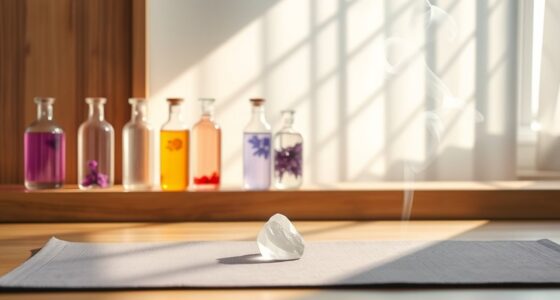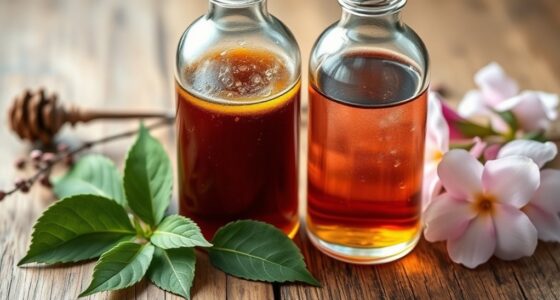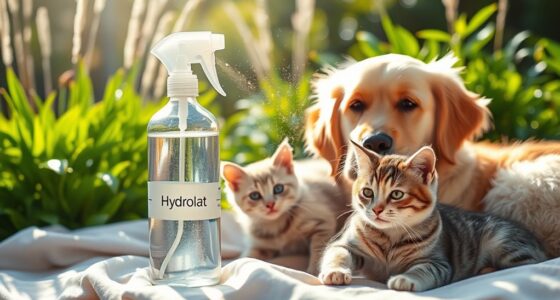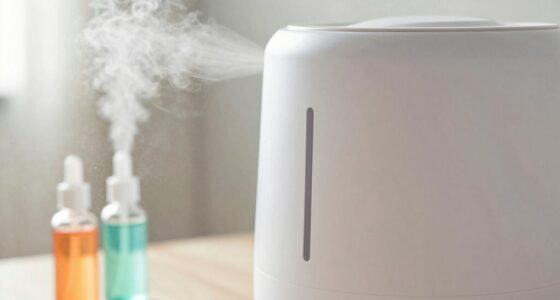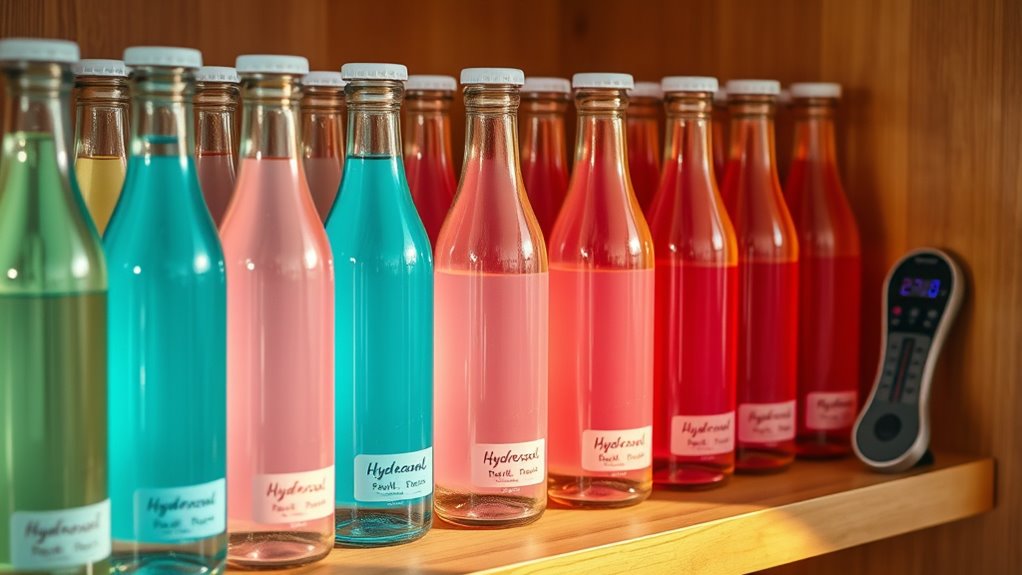
To maximize your hydrosols’ shelf life, store them in airtight dark glass bottles, like amber or cobalt blue, away from light, heat, and humidity. Keep them in a cool, dark place between 50-70°F, and refrigerate during warm weather. Use tools like droppers to minimize air exposure and regularly inspect for spoilage signs. Proper storage can prolong their freshness for up to two years—continue exploring for more expert tips to preserve their potency longer.

Get oils, diffusers and self-care delivered free with Prime
- Fast, free delivery on millions of items
- Prime Video, Amazon Music and more included
- Member-only deals all year
Key Takeaways
- Store hydrosols in airtight, dark glass bottles (amber or cobalt blue) to protect from light and air exposure.
- Keep bottles in a cool, dark place at 50-70°F, refrigerate in warm climates to extend freshness.
- Minimize air contact during use with spray caps or droppers to prevent oxidation.
- Regularly check for spoilage signs like cloudiness, off smell, or mold, and discard if detected.
- Use hydrosols within 1-2 years, adhering to proper storage practices to maintain aromatic and therapeutic properties.
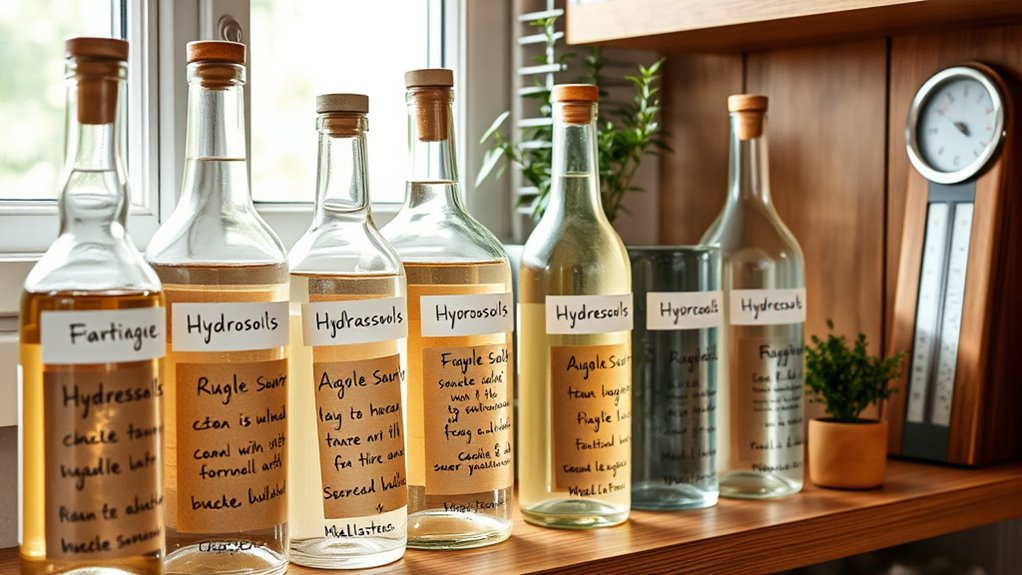
Hydrosols, also known as floral waters, are delicate extracts that can lose their potency and aroma over time. To guarantee you get the most out of your hydrosols, proper storage is essential. Botanical preservation plays a key role in maintaining their freshness, and choosing the right storage containers helps protect their delicate nature. When storing hydrosols, it’s best to keep them in airtight, dark glass bottles. These containers prevent exposure to light and air, which can accelerate degradation and diminish their therapeutic qualities. Avoid plastic bottles, as they may interact with the aromatic compounds in hydrosols, potentially contaminating the product or reducing its effectiveness over time. Dark glass, such as amber or cobalt blue, filters out harmful UV rays, further preserving the integrity of the floral water. Proper storage methods are crucial for extending shelf life and maintaining quality. Temperature control is another critical factor. Hydrosols should be stored in a cool, dark place, ideally between 50-70°F (10-21°C). Excessive heat or fluctuations in temperature can cause chemical changes that weaken the scent and reduce shelf life. If you live in a warm climate, consider refrigerating your hydrosols to prolong their freshness. Just make sure to keep the bottles tightly sealed to prevent condensation from affecting the product. Proper botanical preservation also involves avoiding exposure to air each time you use it. Use a spray cap or a dropper to minimize air contact, which can oxidize the hydrosol and compromise its quality. Label your storage containers with the date of purchase or opening. This helps you keep track of their age and ensures you use the hydrosols within their ideal period. While most hydrosols last between 1 to 2 years, some may lose their aromatic properties sooner if not stored correctly. Environmental factors, such as humidity and light exposure, can also impact their longevity. Additionally, employing appropriate preservation techniques can further extend their shelf life and preserve their therapeutic properties. Implementing proper storage practices can also prevent contamination and ensure the hydrosol remains safe and effective for use. Regularly inspect the hydrosol for signs of spoilage, such as cloudiness, an off smell, or mold growth. If any of these appear, discard it immediately. Proper botanical preservation and using suitable storage containers are your best defenses against premature spoilage. These simple steps help maintain the delicate scent, therapeutic benefits, and overall quality of your hydrosols, guaranteeing you enjoy their full benefits over time. Employing advanced preservation methods can also help maintain the integrity of the aromatic compounds for a longer period.
As an affiliate, we earn on qualifying purchases.
Frequently Asked Questions
Can Hydrosols Be Frozen for Longer Storage?
You might wonder if hydrosol freezing extends its shelf life. While hydrosol freezing can slow down spoilage, it’s not always recommended because it may alter the scent and quality. Hydrosol refrigeration is a better option for short-term storage, keeping it fresh without changing its properties. If you choose to freeze, use airtight containers and thaw slowly. Just remember, freezing isn’t a guaranteed long-term solution and could affect its delicate aroma.
How Does Sunlight Exposure Affect Hydrosol Preservation?
Sunlight exposure is like shining a spotlight on your hydrosols, revealing their vulnerabilities. UV degradation quickly breaks down light-sensitive compounds, diminishing their quality and potency. You might notice a change in scent or color, signaling spoilage. To keep your hydrosols fresh and effective, store them in dark, airtight bottles away from direct sunlight. This prevents UV damage and preserves their delicate properties for longer use.
Are There Natural Preservatives Suitable for Hydrosols?
You might wonder if natural preservatives can keep your hydrosols fresh. Yes, botanical additives like rose water, rosemary extract, or vitamin E serve as natural preservatives, helping extend shelf life without synthetic chemicals. Adding these to your hydrosols can help prevent microbial growth and spoilage. Just make certain you use the right amount and store them properly in a cool, dark place to maximize their effectiveness and preserve your hydrosols’ quality.
Do Hydrosols Lose Potency Over Time Even if Unopened?
Yes, hydrosols can lose potency over time even if unopened. You might notice signs of hydrosol degradation, like changes in aroma or color, indicating potency decline. While unopened bottles help slow this process, natural factors like light and temperature can still cause gradual deterioration. To maintain freshness, store hydrosols in a cool, dark place, and use them within a recommended time frame, usually 1-2 years.
What Signs Indicate a Hydrosol Has Gone Bad?
Spotting spoiled hydrosols starts with noting notable nuances. If you notice a foul smell, cloudy appearance, or a change in color, it’s a sign of botanicals degradation. Mold growth or a slimy film is a clear cue something’s gone wrong. These signs indicate your hydrosol has likely surpassed its prime, making it unsafe to use. Always trust your senses; when in doubt, discard to avoid any health hazards.
Conclusion
Did you know that properly stored hydrosols can last up to two years? Just remember to keep them in dark, airtight containers away from heat and sunlight. By following these simple tips, you’re extending their benefits and ensuring their freshness. Proper storage isn’t just about preserving their fragrance—it’s about maximizing their therapeutic properties too. So, take care of your hydrosols, and they’ll continue to enhance your wellness routine for months to come!
Halloween Picks
halloween
As an affiliate, we earn on qualifying purchases.