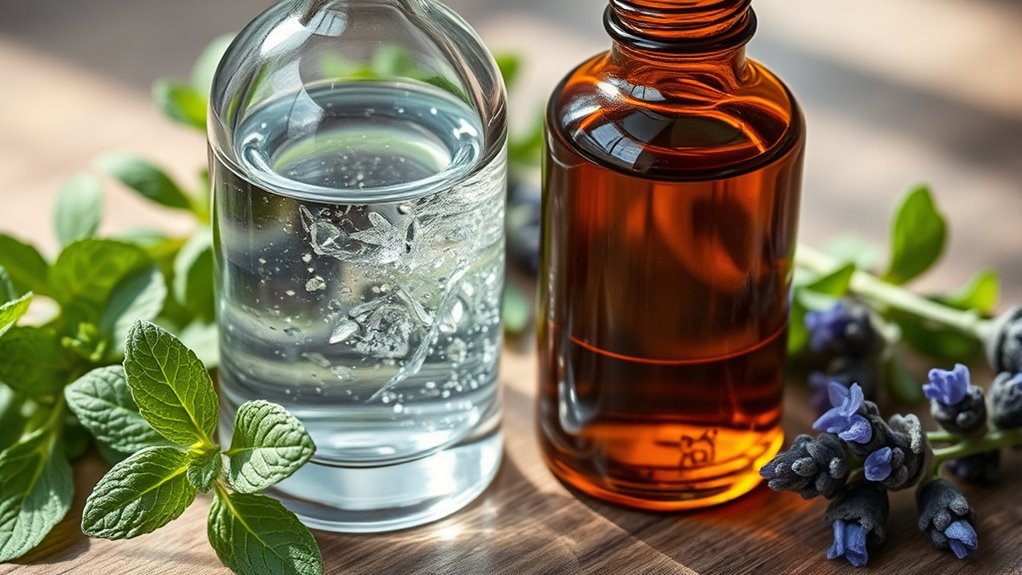

Hydrolats and essential oils are both aromatic plant extracts, but they cater to different needs. Hydrolats are milder, capturing the water-soluble components during steam distillation, making them perfect for sensitive skin and gentle scents. On the other hand, essential oils are potent and fragrant, needing dilution due to their strength. Depending on your desired effect, you can choose the right one for your application. Keep exploring to uncover more about their unique uses and benefits.
Key Takeaways
- Hydrolats are gentle, water-soluble plant extracts from steam distillation, while essential oils are concentrated volatile compounds extracted similarly.
- Hydrolats offer subtle aromas suitable for sensitive skin, whereas essential oils have intense fragrances and require dilution for safe use.
- Both hydrolats and essential oils serve different purposes: hydrolats for mild applications and essential oils for powerful therapeutic benefits.
- Hydrolats can be used in skincare, cooking, and room sprays, while essential oils are often used in aromatherapy and must be handled cautiously.
- Understanding the differences in concentration and aroma profiles helps in selecting the appropriate product for desired effects.
Have you ever wondered what sets hydrolats apart from essential oils? Both are derived from plants and boast their unique benefits, but they differ markedly in their extraction methods and aroma profiles. Understanding these differences can help you choose the right product for your needs.
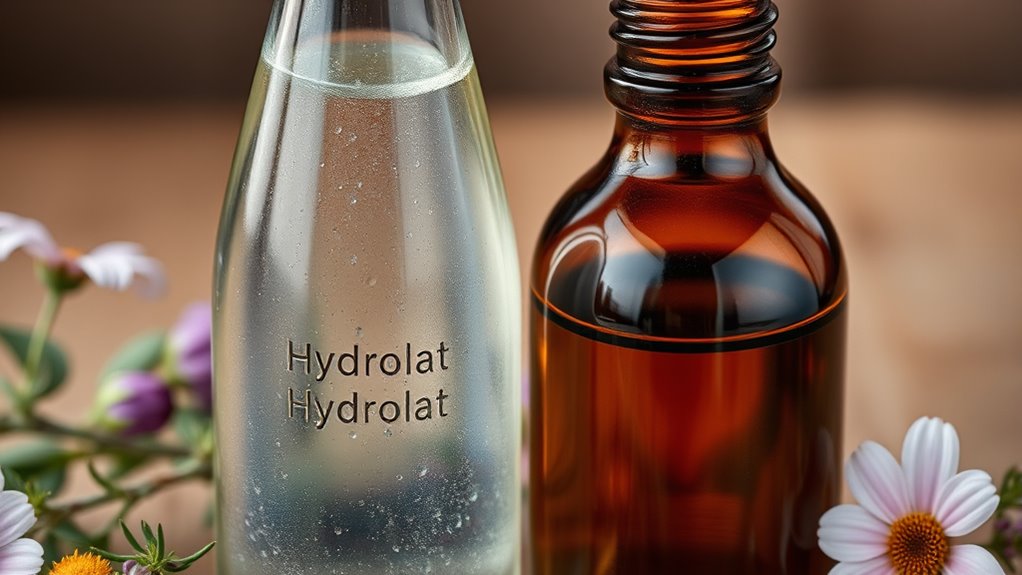
Hydrolats, also known as floral waters or plant waters, are created during the steam distillation process of essential oils. When you steam distill plant materials, the essential oil separates from the water, leaving behind a hydrolat that contains the water-soluble components of the plant. This means hydrolats are gentler and often more diluted than essential oils. They capture the essence of the plant, offering subtle aroma profiles that can be revitalizing and soothing. You might find lavender hydrolat to have a light, floral scent, perfect for a calming facial mist or a natural deodorizer.
Hydrolats are gentle floral waters derived from steam distillation, capturing the plant’s essence with soothing, subtle aromas.
On the other hand, essential oils are concentrated extracts that contain a higher percentage of volatile compounds. These oils are obtained directly from the plant’s leaves, flowers, bark, or roots, often using steam distillation or cold pressing. The extraction methods greatly influence the aroma profiles of essential oils, resulting in bold and intense fragrances. For example, the aroma of peppermint essential oil is sharp and invigorating, making it ideal for uplifting your mood or enhancing concentration.
When you compare hydrolats and essential oils, consider how you’ll be using them. Hydrolats are fantastic for those with sensitive skin, as they provide a gentle touch without overwhelming your senses. You can use them in skincare routines, as room sprays, or even in cooking, where a hint of flavor is desired. In contrast, essential oils require more caution. Due to their high potency, they’re often diluted in carrier oils before application on the skin. Essential oils typically contain a higher percentage of volatile compounds, which contribute to their powerful therapeutic benefits.
Ultimately, both hydrolats and essential oils have their unique charm and purpose. If you’re looking for something versatile and mild, hydrolats are your go-to option. However, if you want a powerful burst of aroma and therapeutic benefits, essential oils may suit you better. By understanding the distinctions between these two, you can harness the full potential of nature’s offerings in your daily life.
Frequently Asked Questions
Can Hydrolats Be Used in Cooking or Food Preparations?
Yes, you can definitely use hydrolats in cooking applications! They’re great for flavor enhancements, adding a subtle twist to your dishes. For instance, you could incorporate floral hydrolats like rose or lavender into desserts or beverages. Just remember to start with small amounts, as their flavors can be potent. Experimenting with hydrolats can elevate your culinary creations and offer unique tastes that traditional ingredients might not provide. Happy cooking!
Are Essential Oils Safe for Children and Pets?
Essential oils aren’t always safe for children and pets, so it’s crucial to approach their use cautiously. For child safety, avoid using oils with strong scents or potential irritants. When it comes to pet safety, some oils can be toxic to animals, especially cats and dogs. Always dilute essential oils properly and consult a healthcare professional or veterinarian before use. Prioritizing safety ensures a healthy environment for your loved ones.
How Should Hydrolats Be Stored for Maximum Shelf Life?
If you think hydrolats can survive in your sun-soaked kitchen like a resilient houseplant, think again! For maximum shelf life, store your hydrolats in a cool, dark place, away from heat and light. Use dark glass bottles to keep them safe from UV rays. And just like you wouldn’t let essential oils party with your kids or pets, don’t let your hydrolats mingle with moisture; keep the caps tight!
Can Essential Oils Cause Allergic Reactions or Skin Irritations?
Yes, essential oils can cause allergic sensitivities or skin reactions in some individuals. You should always do a patch test before using a new oil to see how your skin reacts. If you notice redness, itching, or irritation, discontinue use immediately. It’s vital to dilute essential oils with a carrier oil to minimize risks. Always choose high-quality oils and consult a healthcare professional if you have concerns about allergies or skin sensitivities.
What Is the Shelf Life of Hydrolats Compared to Essential Oils?
Hydrolats generally have a shorter shelf life than essential oils, usually lasting about 1 to 3 years, depending on storage duration and preservation methods. In contrast, essential oils can last 2 to 5 years or even longer with proper care. To extend the life of hydrolats, store them in a cool, dark place and consider using preservatives. Always check for changes in smell or color to guarantee they’re still good to use.
Conclusion
So, you’ve learned that hydrolats and essential oils are like siblings—both amazing but totally different. While essential oils boast their potent aromas and countless uses, hydrolats quietly shine with their gentler nature and versatility. Isn’t it ironic? You might think the flashy one would be the winner, but sometimes, it’s the subtle charm of hydrolats that steals the show. So, why not embrace both? After all, who says you can’t have your cake and smell it too?