
Hydrolats are made through a careful steam distillation process that extracts the plant’s aromatic and therapeutic qualities. First, you select and prepare the desired herbs or flowers. Then, steam passes through the plant materials, causing essential oils to evaporate. As the steam cools in a condenser, it transforms back into liquid, separating essential oils from hydrolats. The result is a fragrant water infused with beneficial properties. There’s much more to discover about their uses and benefits, so keep exploring!

Get oils, diffusers and self-care delivered free with Prime
- Fast, free delivery on millions of items
- Prime Video, Amazon Music and more included
- Member-only deals all year
Key Takeaways
- Hydrolats are created through steam distillation, where steam extracts essential oils and aromatic compounds from selected plant materials.
- The process begins with careful selection and preparation of herbs and botanicals to ensure desired scents and therapeutic properties.
- During distillation, steam carries aromatic molecules, and a controlled environment optimizes the yield of oil and hydrolat.
- After cooling, the vapor condenses into liquid, separating essential oil from hydrolat based on their density differences.
- Hydrolats contain water-soluble plant components, retaining beneficial properties like antioxidants and vitamins for skincare and aromatherapy.
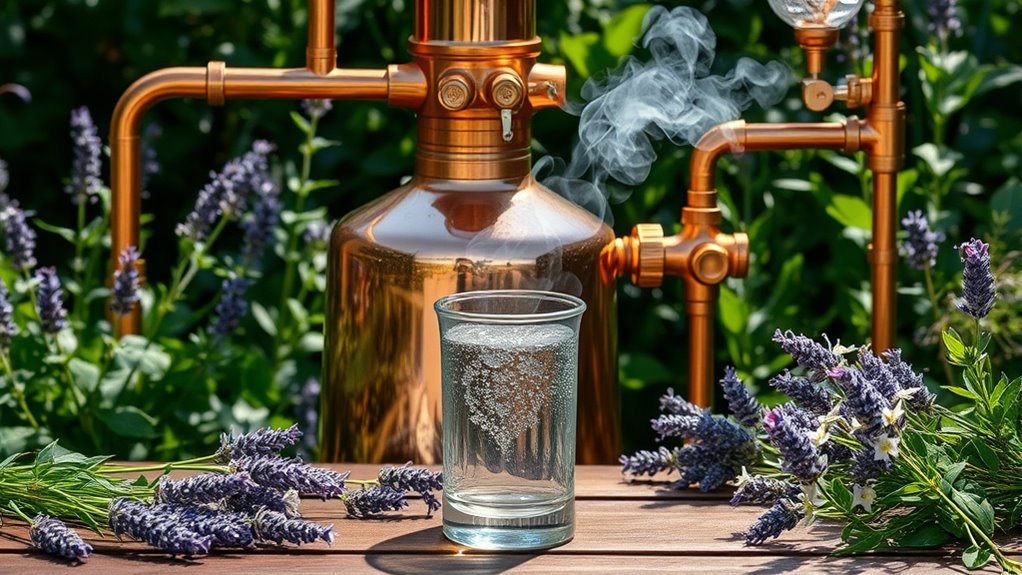
Have you ever wondered how those fragrant hydrolats are made? The process is fascinating and involves a technique known as steam distillation, which has been used for centuries to extract essential oils and other aromatic compounds from plants. When you think about hydrolats, or floral waters, you’re actually looking at the byproduct of this extraction process.
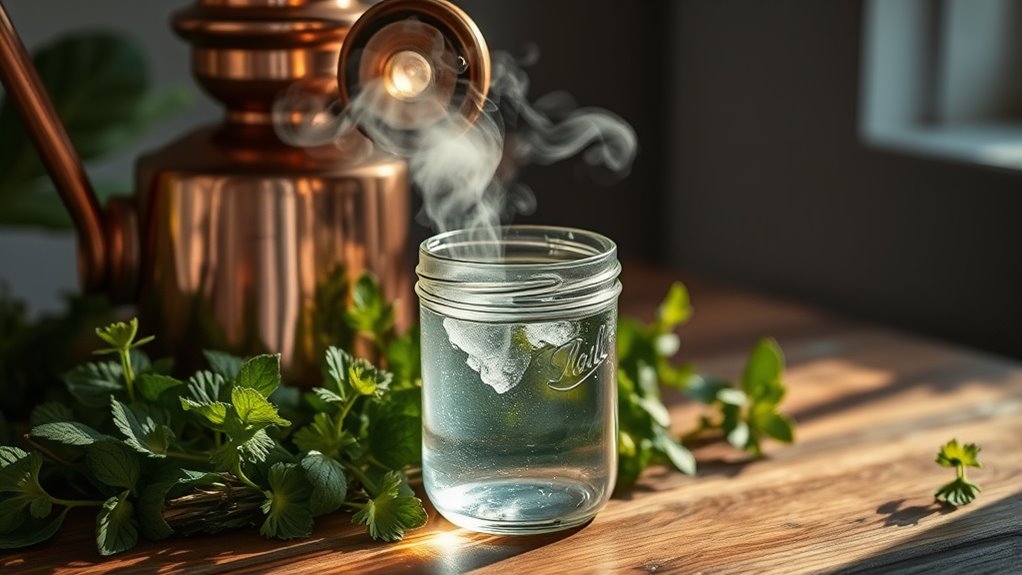
To start, the journey of hydrolat production begins with the careful selection of plants. You’ll find that various herbs, flowers, and other botanicals are chosen based on the desired scent and therapeutic properties. Once the plants are selected, they’re prepared for steam distillation. This is where the magic happens. During steam distillation, steam passes through the plant material, causing the essential oils to evaporate. As the steam rises, it carries the aromatic compounds with it.
The journey of hydrolat production begins with selecting fragrant botanicals for their unique scents and therapeutic benefits.
After the steam passes through the plant, it goes through a cooling process. As the steam cools, it condenses back into liquid form. This liquid then separates into two main components: the essential oil and the hydrolat. The essential oil, being lighter, typically rises to the top, while the hydrolat settles at the bottom. You could easily think of hydrolats as the ‘water’ part of the essential oil extraction, infused with the essence of the plant used.
What’s exciting about hydrolats is that they contain the water-soluble components of the plant, which often include beneficial properties like antioxidants, vitamins, and minerals. This makes them not just aromatic but also useful in various applications, such as skincare and aromatherapy. You can use hydrolats in facial mists, toners, or simply as a revitalizing splash during your day. Smart tips for cozy living can also incorporate hydrolats for a more inviting atmosphere in your home.
The steam distillation process not only ensures that the hydrolats retain the plant’s essence but also allows you to enjoy the subtle nuances of the plant’s fragrance. It’s a delicate balance of science and art, where the careful extraction process leads to a product that’s both functional and delightful.
hydrolat floral water for skincare
As an affiliate, we earn on qualifying purchases.
As an affiliate, we earn on qualifying purchases.
Frequently Asked Questions
Can Hydrolats Be Used in Cooking or Baking?
Yes, you can definitely use hydrolats in cooking or baking! They’re great for flavor enhancement, adding a unique twist to your dishes. Just a splash of floral hydrolats like rose or lavender can elevate desserts, while herbal options like rosemary or basil can enhance savory recipes. Experiment with different culinary applications; you’ll discover exciting flavors that make your meals stand out. Just remember to use them sparingly, as their scents can be potent!
Are Hydrolats Safe for Children and Pets?
Yes, hydrolats are generally safe for children and pets when used properly. However, you should always check for any specific allergies or sensitivities your child or pet might have. It’s best to start with a small amount to observe any reactions. For child safety, avoid using strong concentrations, and for pet safety, make sure the hydrolat is suitable for animals. Always consult with a healthcare professional if you’re unsure.
How Long Do Hydrolats Last Once Opened?
Once opened, hydrolats typically last about six months to a year, depending on their storage conditions. To maximize their shelf life, keep them in a cool, dark place and tightly sealed. Avoid exposing them to direct sunlight or heat, as this can degrade their quality. Always check for any changes in smell or appearance before use, and if you notice anything off, it’s best to toss it for safety.
Can Hydrolats Cause Skin Irritation or Allergic Reactions?
Yes, hydrolats can cause skin irritation or allergic responses in some individuals, especially if you have skin sensitivity. It’s essential to do a patch test before widespread use. Apply a small amount to your skin and wait for 24 hours to see if any irritation occurs. If you notice redness, itching, or discomfort, discontinue use immediately. Always choose high-quality hydrolats and consult a dermatologist if you’re unsure about their effects on your skin.
What Is the Difference Between Hydrolats and Essential Oils?
Hydrolats and essential oils are like two siblings in the botanical family. While both come from plant extraction, their aromatic differences set them apart. Hydrolats, often lighter and floral, capture the essence of a plant’s water-soluble compounds, providing gentle benefits. Essential oils, on the other hand, are concentrated and potent, containing the plant’s volatile oils. Understanding these distinctions can help you choose the right product for your skincare or aromatic needs.
Conclusion
In conclusion, making hydrolats is a fascinating blend of art and science. By distilling plant materials, you’re capturing their essence in a gentle way, much like an alchemist turning lead into gold. These fragrant waters are not just byproducts; they offer unique benefits and aromas that can enhance your daily life. So, whether you’re using them in skincare or as natural remedies, remember that each drop holds the magic of nature’s true potential.
Halloween Picks
halloween
As an affiliate, we earn on qualifying purchases.