You need to store hydrolats more carefully than oils because their high water content makes them prone to microbial growth and spoilage. They require airtight, opaque bottles and should be kept away from direct sunlight and heat. Refrigeration can help extend their shelf life. In contrast, oils are more stable, stored in dark, airtight containers, and less vulnerable to microbial contamination. To guarantee your products stay fresh longer, understanding these differences is essential—there’s more to learn about proper storage techniques.

Get oils, diffusers and self-care delivered free with Prime
- Fast, free delivery on millions of items
- Prime Video, Amazon Music and more included
- Member-only deals all year
Key Takeaways
- Hydrolats are more sensitive to light, heat, and air, requiring airtight, opaque containers, whereas oils are more stable and less prone to microbial growth.
- Hydrolats must often be refrigerated to slow microbial activity, while oils are stored in cool, dark environments to prevent oxidation.
- Hydrolats contain water, increasing contamination and spoilage risks, unlike oils which lack water and are less susceptible to microbial growth.
- Hydrolats have a shorter shelf life (months to a year) and require vigilant storage checks, while oils generally last longer with proper storage.
- Extraction methods and chemical composition influence the specific storage needs of hydrolats versus oils.
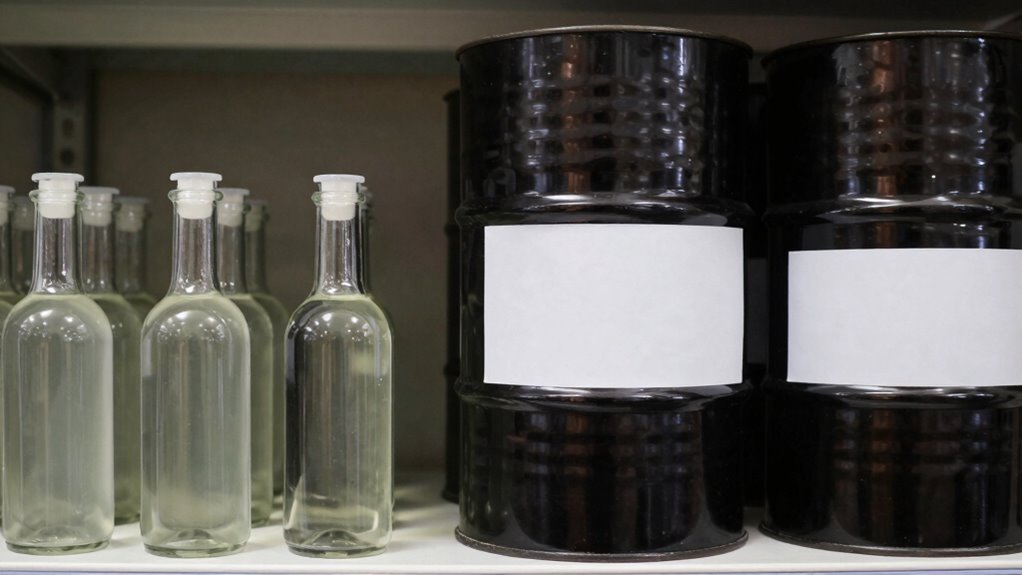
Hydrolats are more sensitive to light, heat, and air exposure. They’re prone to microbial growth if not stored properly. To maximize their shelf life, you should keep hydrolats in airtight, opaque bottles away from direct sunlight and heat sources. Because they contain water, they’re more susceptible to contamination and spoilage, so refrigeration is often recommended. Proper storage slows down microbial activity and preserves their subtle aromatic and therapeutic qualities. Their shelf life can range from several months to a year, but this depends heavily on storage conditions. Regularly checking for changes in smell, appearance, or clarity helps you determine if they’ve gone bad. Additionally, understanding the extraction techniques used to produce hydrolats can help inform the best storage practices to maintain their quality. Knowing the chemical composition of hydrolats can also guide optimal storage conditions to prevent degradation. It’s important to recognize that microbial growth poses a significant risk for hydrolats, making vigilant storage crucial. Oils are generally more stable due to their lack of water content. Their shelf life depends on factors like extraction techniques, storage conditions, and the oil’s chemical makeup. For example, cold-pressed oils tend to be more sensitive to oxidation and should be kept in dark, airtight containers to prevent exposure to light and oxygen. Many oils benefit from refrigeration, especially those with higher unsaturated fat content, to slow oxidation and prolong freshness. Oils are less prone to microbial growth, but they can become rancid if exposed to heat, light, or air for too long. This makes choosing the right storage container and environment crucial for maintaining their potency over time. While both hydrolats and oils require careful storage, the key difference lies in their susceptibility to spoilage. Hydrolats demand more vigilant storage practices due to their water content and potential for microbial growth. Oils, though more resilient, still benefit from proper sealing and cool, dark environments to prevent oxidation. Understanding your products’ extraction techniques and shelf life considerations helps you make informed choices, ensuring you get the most out of your hydrolats and oils. Proper storage isn’t just about keeping them safe; it’s about preserving their efficacy, aroma, and overall quality for as long as possible.
As an affiliate, we earn on qualifying purchases.
Frequently Asked Questions
Can Hydrolats Expire Faster Than Essential Oils?
Yes, hydrolats can expire faster than essential oils. Their shelf life is generally shorter because they contain more water, making preservation more challenging. To extend their freshness, you should store hydrolats in cool, dark places and use preservation methods like refrigeration or adding natural preservatives. Proper storage helps prevent microbial growth and maintains their beneficial properties, ensuring you get the most out of your hydrolats before they expire.
Are Hydrolats More Prone to Microbial Contamination?
Hydrolats are more prone to microbial contamination because their water content creates preservation challenges. You need to maintain microbial stability by storing hydrolats in sterilized, airtight containers and keeping them in cool, dark places. Unlike oils, which resist microbes, hydrolats’ moist nature invites bacteria and fungi. Proper preservation practices prevent microbial growth, ensuring your hydrolats stay fresh and safe longer, avoiding spoilage and contamination.
Do Storage Temperatures Affect Hydrolats Differently?
Storage temperatures critically impact hydrolats due to their temperature sensitivity. You should keep them in cool, dark places to prevent degradation of their aromatic compounds and microbial growth. Packaging considerations are essential; dark glass bottles help protect against light, and airtight caps prevent oxidation. Avoid temperature fluctuations, as they can cause condensation and spoilage. Proper storage guarantees hydrolats maintain their quality, aroma, and therapeutic properties over time.
Is Light Exposure More Damaging to Hydrolats?
Light exposure is more damaging to hydrolats because they are highly light-sensitive, which substantially impacts their storage durability. Studies show that exposure to light can degrade hydrolats within just a few weeks, reducing their aromatic and therapeutic properties. To preserve their quality, you should store hydrolats in dark, opaque bottles away from direct light. Proper storage guarantees they maintain their freshness and effectiveness longer, safeguarding their benefits.
Can Hydrolats Be Stored in the Same Containers as Oils?
You can store hydrolats in the same containers as oils, but it’s not preferable. Hydrolats are more sensitive to container material and light exposure, so choose dark glass bottles to protect them. For ideal storage duration, avoid plastic containers that can interact with the hydrolat’s properties. Using the right container material helps maintain freshness, but hydrolats generally have a shorter storage life compared to oils.
Conclusion
Think of hydrolats as delicate whispers of nature, needing gentle handling and cool, dark storage to keep their essence alive. Oils, on the other hand, are like sturdy guardians, more forgiving but still best kept in a cool, dark place. Treat hydrolats like fragile glass, and oils like trusted companions, to guarantee both stay potent and fresh. Proper storage is your secret potion for preserving their magic—don’t let it slip through your fingers.
Halloween Picks
halloween
As an affiliate, we earn on qualifying purchases.