
TL;DR
Pilates Pros founder Nicole Hernandez told Fit&Well she would choose the pelvic curl if she could do only one Pilates move for the rest of her life. She cited its combination of spinal movement and glute, hamstring and core strength, and recommended beginners start with the exercise one to three times a week.
Nicole Hernandez, founder of Pilates Pros, told Fit&Well she would choose the pelvic curl if she could do just one Pilates exercise for the rest of her life. Hernandez said the move combines spinal mobility with work for the glutes, hamstrings and core, and shared instructions for performing it at home.

Get oils, diffusers and self-care delivered free with Prime
- Fast, free delivery on millions of items
- Prime Video, Amazon Music and more included
- Member-only deals all year
Hernandez described the pelvic curl as a relatively simple, foundational movement. She said its appeal lies in bringing controlled spinal motion together with muscle-strengthening work, rather than relying on a more demanding exercise. Her choice is a personal preference, not a finding that the pelvic curl is the best exercise for every person or goal.
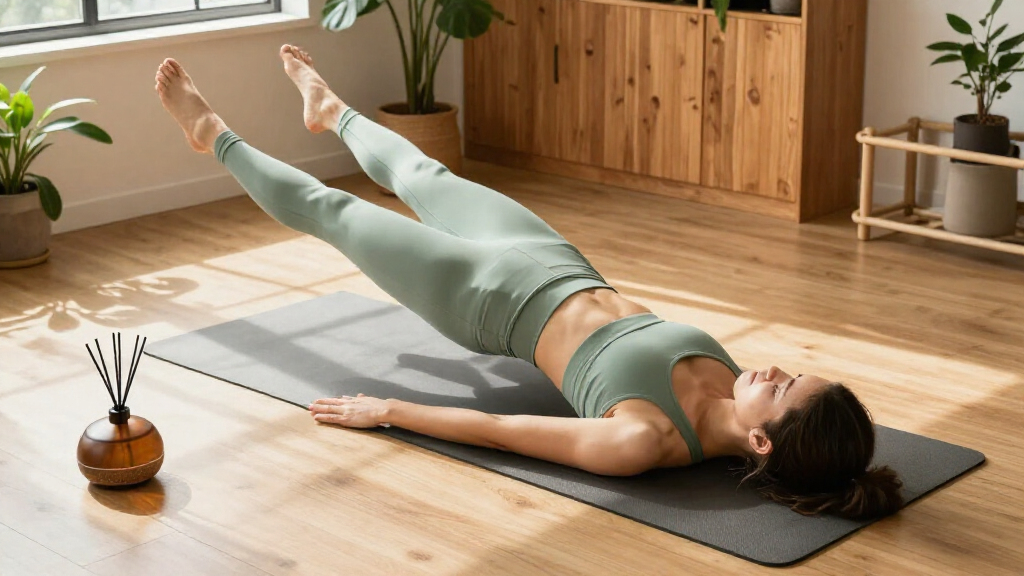
To perform the move, lie on your back with your knees bent, feet flat and about hip-width apart, and arms resting at your sides. Begin with a neutral spine. Inhale to prepare, then exhale and gently tilt the pelvis so the lower back meets the mat. Press through the feet and slowly lift the hips and spine, moving one section at a time. Stop before the shoulder blades leave the mat, keep the neck relaxed, and aim to align the shoulders, hips and knees at the top.
Inhale while holding the lifted position, then exhale as you slowly lower the spine back to the mat. Hernandez advised starting with pelvic curls one to three times per week. She said people can adjust how often they do them as they become more comfortable and pay attention to how their bodies feel. The source does not give a recommended number of repetitions or a target hold time.
A Simple Move With Several Aims
Hernandez’s answer highlights why a basic exercise can have a place in a Pilates routine: it asks the practitioner to coordinate breathing, controlled movement and body position while lifting and lowering the pelvis. That combination may make it useful for people seeking a straightforward movement that engages several areas at once, though the report does not provide research comparing it with other exercises.
The recommendation also offers readers a specific starting point rather than a broad promise about results. Hernandez’s suggested frequency is modest, but it is her guidance as an instructor, not a universal prescription. People should stop if the movement causes pain and seek advice from a qualified health professional or instructor if they have an injury, existing condition or uncertainty about proper form.
Products Worth Considering

Oral-B iO3 Rechargeable Electric Toothbrush with 3 Cleaning Modes, Pressure Sensor, 2 Brush Heads and Travel Case, White

Coway Airmega AP-1512HHS Smart Air Purifier, Black

Levoit EverestAir-P Smart Air Purifier for Large Rooms
As an affiliate, we earn on qualifying purchases.
How the Pelvic Curl Works
The pelvic curl is presented in the Fit&Well report as a foundational Pilates exercise. Its sequence begins with a small pelvic tilt and continues into a gradual lift of the hips and spine. The instruction to move one vertebra at a time emphasizes a slow, controlled motion; the suggested endpoint is before the shoulder blades rise from the mat.
Hernandez connected the exercise to her broader view of Pilates, describing the practice as mindful movement performed with control and intention while building strength. The source report provides her explanation and technique guidance, but does not cite clinical studies, comparative fitness data or independent testing of the exercise’s effects.
Limits of the Recommendation
The report does not specify when it was published, nor does it provide supporting research showing how the pelvic curl compares with other Pilates exercises. Hernandez’s selection is an instructor’s personal answer to a hypothetical question, not an evidence-based ranking or medical recommendation.
It is also unclear how many repetitions or how long a hold readers should use, since the source gives no such prescription. Individual suitability can depend on a person’s mobility, experience and health; the report does not discuss modifications for injuries or specific conditions.
Starting With Controlled Repetitions
The source offers no announced follow-up or further milestone. Readers who want to try Hernandez’s suggestion can begin with the described technique and her proposed one-to-three-times-weekly starting frequency, adjusting based on comfort rather than treating that schedule as a requirement. A Pilates instructor can help check form, while people with pre-existing conditions or pain should seek appropriate professional guidance before starting or changing an exercise routine.
Key Questions
Which Pilates exercise did Nicole Hernandez choose?
She chose the pelvic curl, telling Fit&Well it would be her pick if she could do only one Pilates move for the rest of her life.
What does Hernandez say the pelvic curl works on?
Hernandez said the movement combines spinal mobility with strength work for the glutes, hamstrings and core. The report does not present comparative research on those effects.
How often did she recommend doing pelvic curls?
Hernandez suggested starting with one to three times per week. She said frequency can be adjusted as someone becomes more comfortable and pays attention to how their body feels.
How do you perform a pelvic curl?
Lie on your back with knees bent and feet flat. Gently tilt the pelvis, then press through the feet to lift the hips and spine gradually, stopping before the shoulder blades rise. Lower slowly and keep the neck relaxed, following Hernandez’s instructions.
Is the pelvic curl suitable for everyone?
The report does not establish that the move is suitable for everyone. Stop if it causes pain, and consult a qualified professional if you have an injury, a pre-existing condition or questions about safe technique.
Source: fitandwell.com