TL;DR

Get oils, diffusers and self-care delivered free with Prime
- Fast, free delivery on millions of items
- Prime Video, Amazon Music and more included
- Member-only deals all year
Yoga teacher Alina Boyett has shared a four-pose recovery flow designed for beginners and intended to be done at home without equipment. The sequence targets the legs, hips, back and shoulders; Boyett advises moving within a comfortable range and seeking professional guidance when injury or a medical condition is involved.
Fit&Well has published a four-movement recovery yoga flow created by Alina Boyett, founder of UK-based Yogalina Studios, for people seeking a gentle stretch after exercise or prolonged sitting. The equipment-free sequence is presented as beginner-friendly, with Boyett advising practitioners to move slowly, stay within a comfortable range and stop rather than force a stretch.
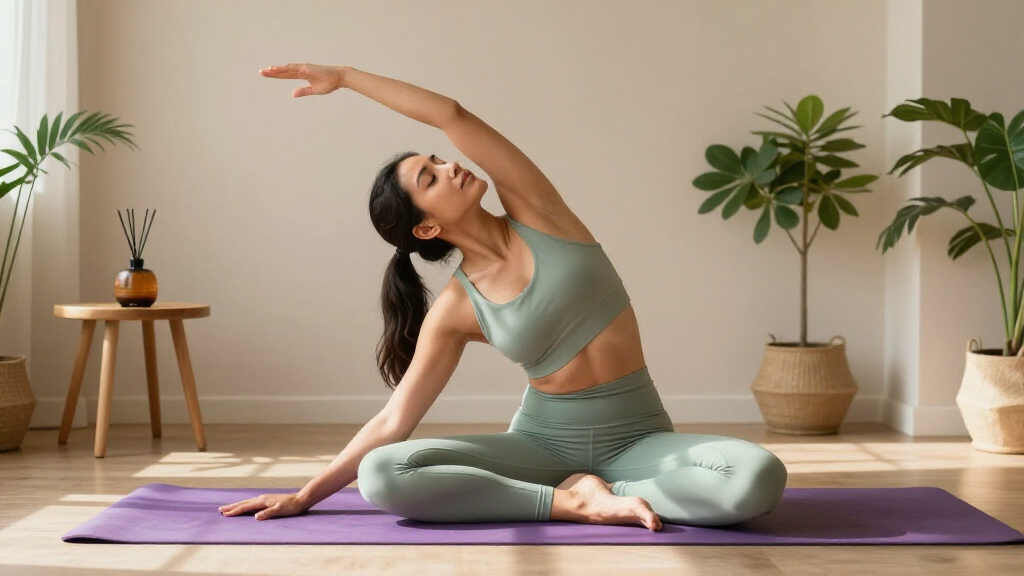
The sequence covers legs, hips, spine and shoulders through four positions: waterfall pose with the legs supported against a wall, child’s pose, a relaxed standing forward fold and a seated spinal twist. Boyett said she selected movements that address areas commonly affected by tension after exercise. The poses can also be used after a day spent sitting, according to the report.
The instructions specify brief holds rather than a demanding workout. Waterfall pose and child’s pose are each held for three to five breaths. The ragdoll forward fold is repeated for two sets of three to five breaths, while the seated twist is done for two sets of two to three breaths per side. The report does not prescribe an overall session length, although Boyett says that even 10 minutes of mindful movement and breathing can change how a person feels.
Yogalina teacher Misha Clarke demonstrates the sequence in a video accompanying the Fit&Well report. Boyett’s directions include modifications such as keeping the knees slightly bent in waterfall pose and softening them in the forward fold. She says people should not push through pain; anyone with an injury or relevant medical condition should seek appropriate professional guidance before trying the flow.
A Short Routine for Recovery Days
The report puts recovery alongside exercise as part of a regular movement routine. Its practical point is not that the four poses treat an injury or guarantee greater flexibility, but that a brief, gentle sequence can give people an accessible way to pause and move after exertion or sitting. No equipment or previous yoga experience is required, which may make the routine easier to try at home.
The guidance also emphasizes adapting rather than forcing movement. That matters for beginners, who may be unsure how far to stretch: Boyett recommends a comfortable range of motion and says pain is a reason not to continue. The article offers a routine, not individualized medical advice, and it does not report measured outcomes from participants.
Products Worth Considering

Levoit Eleva 300X HEPA Air Purifier for Home and Bedroom

Bowflex PR1000 Home Gym

Withings Body Smart Wi-Fi and Bluetooth Smart Scale
As an affiliate, we earn on qualifying purchases.
Four Poses, One Recovery Sequence
Boyett describes recovery as more than doing nothing, saying people can give the body time to slow down after training or a demanding day. The Fit&Well report frames the flow for several everyday situations: after a challenging workout, a long run or extended desk work. It does not identify a particular workout, study or clinical trial behind the sequence.
The four movements progress from a supported position on the floor to kneeling, standing and seated poses. In waterfall pose, the practitioner lies near a wall and raises the legs against it, bending the knees if needed. Child’s pose begins on hands and knees, with the hips easing toward the heels. The forward fold is done with softened knees, and the twist is gentle and repeated on both sides. Boyett’s instructions consistently favor slow breathing and ease over depth.
Benefits and Safety Limits
The report provides no clinical evidence or participant measurements showing how much the flow changes flexibility, muscle tightness or recovery. Its descriptions of possible effects, including easing tension or helping tired legs feel less heavy, are attributed to Boyett and should not be read as proven outcomes or treatment claims.
It is also unclear whether the sequence is suitable for every person or type of injury. The source gives no individualized modifications beyond options such as bending the knees, and it does not define a target intensity or a required frequency. Boyett advises people with injuries or relevant medical conditions to seek professional guidance and not to continue through pain.
How to Try the Flow
Readers can follow the demonstration video and pose instructions in Fit&Well’s report, taking each position slowly and keeping the movements comfortable. The sequence calls for a few breaths in each pose, with the seated twist repeated on both sides. There is no stated progression plan or requirement to complete all four poses.
The source does not announce further research, a scheduled follow-up or a formal program from Boyett. For anyone who chooses to try the routine, the immediate next step is to adjust or stop a movement if it causes pain and to consult an appropriate health professional where an injury or medical condition is relevant.
Key Questions
What poses are in the beginner yoga flow?
The four movements are waterfall pose, child’s pose, a ragdoll forward fold and a seated spinal twist. The instructions include brief holds measured in breaths.
Do I need equipment or yoga experience?
Boyett describes the sequence as requiring no equipment or previous yoga experience. A wall is used to support the legs in waterfall pose.
How long does the sequence take?
The report does not give a fixed total duration. It lists holds of three to five breaths for the first two poses, two sets of three to five breaths for the forward fold, and two to three breaths per side for the seated twist.
Is the flow intended to treat pain or an injury?
No. The report presents it as a gentle recovery routine, not a treatment. Boyett says not to push through pain and recommends professional guidance for people with an injury or relevant medical condition.
Source: fitandwell.com