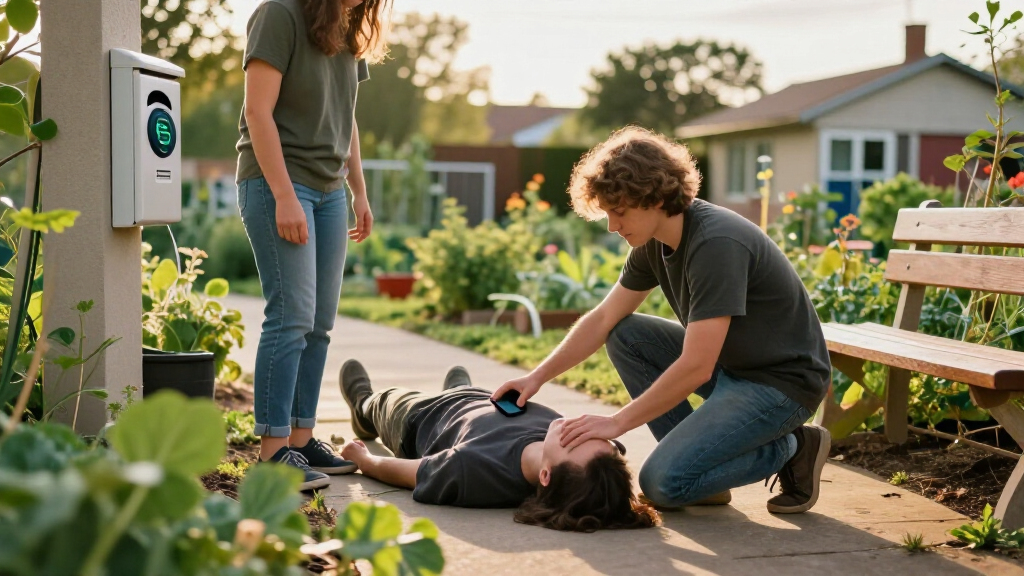

TL;DR

Get oils, diffusers and self-care delivered free with Prime
- Fast, free delivery on millions of items
- Prime Video, Amazon Music and more included
- Member-only deals all year
A post on bookofjoe2.blogspot.com recommends raising the legs of someone who has collapsed and claims it improves circulation. The post does not provide supporting evidence, and its claims that the maneuver equals a blood transfusion and cannot cause harm are unverified; it should not replace calling emergency services or following a dispatcher’s instructions.
A post published by bookofjoe2.blogspot.com in October 2026 advises readers to raise the legs of a collapsed person, claiming the maneuver can increase blood returning to the heart and lungs. The post supplies no cited research or clinical guidance for that advice, and does not establish that leg elevation can replace CPR, emergency services or other immediate care.
The post describes bending down, lifting the person’s legs and holding them at about waist height. Its author says the maneuver moves blood from the limbs toward the body’s central circulation and could help restore a spontaneous heartbeat. Those are claims made by the post, not findings substantiated with studies or expert sources in the material provided.
The author also compares the effect to a transfusion of two units of blood, which the post equates to 40% of an average adult’s circulating blood volume. No calculation, evidence or medical source is cited for that comparison. The post’s assertion that the maneuver “can’t do any harm” is also unsupported in the material.
The article frames leg elevation as a response for people who do not know CPR and says the author gives the instruction at Code Blue scenes. It does not identify the author’s medical qualifications, specify what condition the maneuver is intended for, or explain how readers should distinguish a circulatory emergency from other causes of collapse.
Why Emergency Guidance Matters
Advice shared as a simple way to help someone in crisis may shape what a bystander does in the first moments of an emergency. The post presents a specific physical maneuver as beneficial and harmless, but offers readers no substantiation with which to judge those claims. Treating it as a proven intervention could create false confidence or distract from seeking urgent professional help.
The distinction matters especially because “collapsed” can describe different situations, and the post does not establish that leg elevation is appropriate for all of them. Readers should not infer that the maneuver is a substitute for calling emergency services, CPR or using an automated external defibrillator when directed by emergency professionals. If someone is unresponsive or seriously unwell, contact local emergency services and follow the dispatcher’s instructions rather than relying on an unsupported online tip.
Products Worth Considering

Withings BPM Connect Wi-Fi and Bluetooth Blood Pressure Monitor

Hyperice Hypervolt Go 3 Portable Percussion Massage Gun with Carry Case

Coway Mighty AP-1512HH(W) Air Purifier, White
As an affiliate, we earn on qualifying purchases.
What the Post Actually Says
The source is a blog post titled “How to save a life without knowing CPR,” published on bookofjoe2.blogspot.com in October 2026. It proposes leg elevation as a way for an untrained, frightened bystander to help someone during what it calls a circulatory crisis. The source material does not link to research, name a medical organization endorsing the technique, or provide a date for any clinical recommendation.
CPR and emergency response guidance are distinct from the blog’s proposed maneuver. The post acknowledges CPR but does not explain when it is needed or give instructions for performing it. Nor does it provide a complete emergency-response protocol. Its narrow recommendation should therefore be read as the author’s advice, not as a verified alternative to established emergency care.
“Bend down, pick up their feet, and hold their legs in the air waist-high.”
— The bookofjoe2.blogspot.com post
Evidence and Safety Remain Unclear
The source material does not establish whether leg elevation improves outcomes for a person who has collapsed, what conditions the advice applies to, or whether it is safe in different circumstances. It gives no studies or expert guidance supporting the claimed comparison with a two-unit blood transfusion. The author’s qualifications and the circumstances of the cited Code Blue scenes are also not specified.
There is no information in the source confirming that a medical organization has reviewed or endorsed the recommendation. Until reliable clinical guidance is available, the post’s claims about effectiveness and lack of harm should be treated as unverified, not as instructions for managing a life-threatening emergency.
Follow Emergency Dispatchers
The source provides no follow-up evidence, expert response or planned update. Readers facing an emergency should call their local emergency number and follow the dispatcher’s directions. The post’s recommendation should not delay professional help or be presented as a proven substitute for CPR or other emergency care. Whether the author will add citations or clarify the advice is unknown.
Key Questions
What does the blog post recommend?
It recommends raising a collapsed person’s legs to about waist height. That is the post’s advice, not a clinically verified instruction in the source material.
Does the source prove leg elevation is equivalent to a blood transfusion?
No. The post makes that comparison but cites no supporting research, calculation or medical guidance.
Can raising someone’s legs replace CPR or an emergency call?
The post does not establish that it can. Do not treat it as a substitute for calling emergency services or following a dispatcher’s instructions.
What should I do if someone collapses?
Contact your local emergency services and follow the dispatcher’s guidance. The blog post does not provide a complete emergency-response protocol.
Source: hn