
TL;DR
A Fit&Well report describes heel lift during a squat as a possible sign of limited ankle movement, but says hip mobility or strength may also play a role. It outlines three squat variations—using suspension straps, a chair and supported heel elevation—as gradual ways to practice the movement.
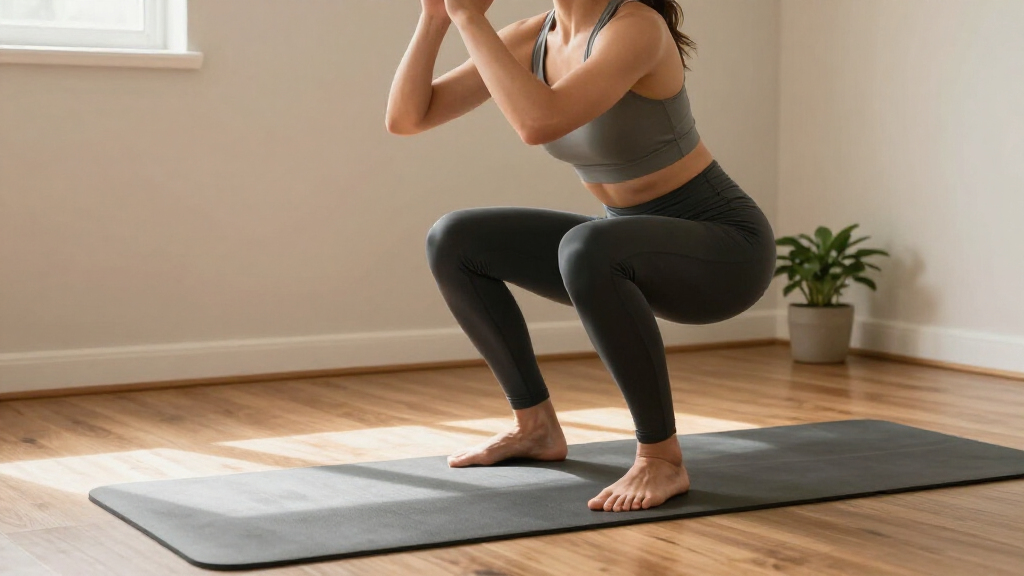
Fit&Well has published a guide to why a person’s heels may lift during a squat and describes three scaled squat exercises for practicing mobility, strength and control. The report says limited ankle movement is one possible reason, but hip mobility or weakness may also contribute; it does not present the exercises as a diagnosis or a guaranteed fix.

Get oils, diffusers and self-care delivered free with Prime
- Fast, free delivery on millions of items
- Prime Video, Amazon Music and more included
- Member-only deals all year
The report says heel lift is often linked to limited ankle dorsiflexion—the ankle’s ability to bend so the shin can travel forward over the foot. Calf tightness or restrictions around the ankle joint may limit that movement during a deep squat. It also notes that the cause can vary between people, and that ankle and calf stretching alone may not address every case.
Its first suggested variation is a suspension-trainer squat. Holding the straps can reduce the balance challenge while a person bends the knees and lowers into a squat, pausing briefly at a comfortable depth before standing. Fit&Well recommends relying less on the straps as strength and mobility improve.
The second is a slow sit-to-stand from a sturdy chair, with feet around hip-width apart. The report advises standing without pushing off with the hands and controlling the descent back to the seat. The third is a supported deep-squat hold with the heels raised on thin plates or wedges. The report suggests gradually reducing the heel support over time, rather than forcing the heels flat before the position feels manageable.
Building Control Before Squat Depth
The guidance matters to people who find that their heels rise as they squat because it cautions against assuming that one restriction explains every case. If ankle movement is not the only factor, repeatedly stretching the calves may not address the person’s particular limitation. The report instead presents modified versions of the squat as ways to practice the movement while adjusting the support and depth.
That approach also offers a practical alternative to forcing a deep squat. The suspension straps and chair reduce some of the balance or depth demands, while heel support changes the position a person can reach. These are exercise suggestions, not a clinical assessment: the source does not establish how effective they are for all people, or provide evidence that they prevent injury.
For readers, the main takeaway is to progress gradually and pay attention to form. Fit&Well advises practicing each variation without worrying initially about repetition counts. Once the movements feel controlled, it suggests three sets of each exercise, working for one minute and resting for one minute. That is the report’s proposed routine, not a requirement that will suit everyone.
Products Worth Considering

Bowflex SelectTech 840 Adjustable Kettlebell

BowFlex Results Series SelectTech Adjustable Dumbbells, Pair

BowFlex Results Series 552 SelectTech Adjustable Dumbbells, Pair
As an affiliate, we earn on qualifying purchases.
Why Ankles and Hips Both Matter
In a squat, the knees bend and move forward as the hips lower. The Fit&Well report explains that limited ankle dorsiflexion can restrict how far the shin travels toward the toes, potentially making it harder to descend while keeping the heels down. That makes the ankles and calves common areas people focus on when their heels lift.
But the report also raises hip mobility and strength as possible contributors. It describes heel lifting for some people as a possible protective response when the hips are weak or tight. This is the report’s explanation, not a determination of what is happening for any particular reader. Its three variations aim to let a person explore the squat at a more manageable level and develop strength through the movement.
Fit&Well recommends regular practice over a few weeks and gradual progression, but the source material does not cite a study, provide a measured outcome, or specify a schedule that has been tested across different groups. Its advice should be read as general exercise guidance.
““ankle and calf stretches alone won’t resolve the issue” for some people.”
— Fit&Well report
The Cause Varies by Person
The source does not identify a single cause for heel lift or provide a way for readers to determine whether their own limitation comes from the ankles, calves, hips, balance, or another factor. The explanation involving weak or tight hips is presented as a possibility for some people, not a diagnosis. It is also unclear from the material how often each cause occurs or how reliably the three exercises change squat mechanics.
The report does not give clinical guidance for people experiencing pain, a recent injury, or other health concerns. Its suggested progression—over a few weeks, with a one-minute work period and one-minute rest for three sets once technique is comfortable—is general advice rather than an individualized plan. Readers should not force a position that causes pain or feels unsafe, and can seek advice from a qualified health or fitness professional if they are unsure.
Progress Only as Control Improves
Fit&Well’s suggested next step is to practice the variations at a comfortable depth, then reduce assistance as control improves: use the suspension trainer less, slow the chair descent, or lower the heel support gradually. The report proposes working toward heels-flat squats without support, but does not promise that everyone will reach that position or give a fixed deadline.
No follow-up study, expert assessment or additional testing is included in the source material. For now, the advice remains a general exercise guide; people with persistent difficulty, pain or uncertainty can ask a qualified professional to assess their movement and suggest an appropriate progression.
Key Questions
What can it mean if my heels lift during a squat?
Fit&Well says limited ankle dorsiflexion, including tight calves or ankle-joint restrictions, is one possible reason. It also says hip mobility or strength may contribute for some people. The article does not diagnose an individual cause.
Will stretching my calves fix the problem?
Not necessarily. The report says ankle and calf stretching alone may not address heel lift when hip mobility or strength is also involved. It does not assess which factor applies to any particular reader.
Which three exercises does the report recommend?
It describes a suspension-trainer squat, a slow sit-to-stand from a chair, and a deep-squat hold with supported, elevated heels. Each variation changes the support or range of motion while practicing the squat.
How should I progress the exercises?
The report advises starting with practice rather than a target number of repetitions. As technique and strength improve, it suggests using less suspension support, controlling the chair descent more slowly, and reducing the height under the heels. Do not force a movement that causes pain or feels unsafe.
Source: fitandwell.com