TL;DR

Get oils, diffusers and self-care delivered free with Prime
- Fast, free delivery on millions of items
- Prime Video, Amazon Music and more included
- Member-only deals all year
Fit&Well published an equipment-free barre routine that instructor Lotty Campbell Bird says can challenge strength using bodyweight resistance. The six exercises are designed to take 15 to 20 minutes when completed once; the source does not provide research comparing barre with other strength workouts.
Fit&Well has published a six-move barre routine that instructor and Collective Fitness founder Lotty Campbell Bird says can challenge strength using bodyweight alone. The workout is presented as a 15-to-20-minute session for people who want to exercise without dumbbells, resistance bands or specialist equipment.
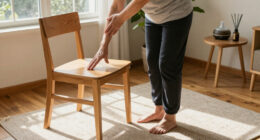
Campbell Bird describes barre as a way to use bodyweight for resistance, with controlled movements rather than momentum. The routine draws on positions associated with ballet, but the report says barre practice can also resemble Pilates. Despite the name, a ballet barre is not required: a sturdy chair, kitchen worktop or wall can provide balance support at home.
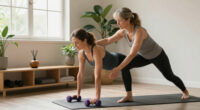
The sequence includes curtsy lunges for eight to 10 repetitions per side, wide second pliés for 12 to 15 repetitions followed by 10 small pulses, and all-fours leg lifts. For the latter, the instructions call for 10 straight-leg lifts and 10 bent-knee lifts on each side. It then moves to slow mountain climbers, tabletop toe taps and alternating leg extensions, with short holds included in some movements.
Fit&Well says to complete the routine once for a 15-to-20-minute workout, or repeat it two or three times for a longer session. Campbell Bird’s coaching notes emphasize keeping the torso stable, aligning knees with toes during pliés, and moving slowly. In the leg-extension exercise, the report advises extending only as far as a person can while keeping the lower back in contact with the floor.
A Strength Session Without Weights
The routine offers a low-equipment option for people who want a structured workout at home. Because it uses bodyweight and ordinary household support for balance, it does not depend on access to a gym or dedicated exercise gear. That can make it easier to try, though the instructions still require enough floor space and the ability to perform the movements comfortably.
The report’s main point is that a workout does not have to involve external weights to feel challenging: tempo, range of motion and repeated effort can make bodyweight movements demanding. That is an instructor’s description, not evidence in the supplied report that barre is superior to weight training or suitable for every fitness goal. People seeking a specific strength or muscle-building outcome may need a broader plan and guidance suited to their experience.
Products Worth Considering

Levoit Eleva 300X HEPA Air Purifier for Home and Bedroom

Bowflex PR1000 Home Gym

Garmin Venu 3 Fitness Smartwatch, 45 mm, Black
As an affiliate, we earn on qualifying purchases.
How the Routine Is Structured
Barre takes inspiration from ballet positions, but the exercises in this sequence extend beyond standing leg work. The first four movements target the legs, glutes and core through lunges, pliés, floor-based leg lifts and plank variations. The final two are performed lying on the back and focus on maintaining trunk control while moving the legs.
The report’s instructions build in options to adjust duration: do one round for the stated short session, or repeat the circuit two or three times. Some movements include extra pulses or holds, while the trainer tips repeatedly stress controlled movement and stable alignment rather than speed. No publication date or independent evaluation of the workout’s results is given in the supplied material.
“Barre is one of my favourite ways to build strength because it uses your own bodyweight for resistance.”
— Lotty Campbell Bird, instructor and founder of Collective Fitness
Evidence and Individual Suitability
The supplied report does not cite a study testing this specific workout, quantify strength gains or compare barre with weight training. Its characterization as one of the best workouts is presented through the instructor’s view; the material provided does not establish a ranking or a measured outcome.
It is also unclear how the routine should be modified for people with injuries, limited mobility or other health considerations. The article gives exercise instructions but no formal screening guidance, progression plan or detailed alternatives for every movement. Anyone who experiences pain or has a health condition should seek appropriate professional advice before beginning or changing an exercise routine.
Trying the Routine Safely
The next step for readers is to use the published sequence as a starting point, choosing a pace and range of motion they can control. A stable chair, counter or wall may help with balance during standing exercises. On the floor, the stated cues—keeping hips level in plank and leg-lift variations and maintaining lower-back contact during extensions—are intended to support controlled technique.
The source does not announce a follow-up study or report on participants’ results. Readers who want to judge whether barre fits their goals will need to consider how it feels over time and, where relevant, get guidance from a qualified fitness professional. The report’s suggested format remains one round for 15 to 20 minutes, with additional rounds offered as an option rather than a requirement.
Key Questions
Do you need a ballet barre to do this workout?
No. Campbell Bird says a sturdy chair, kitchen worktop or wall can provide support for balance at home. The six exercises also include floor-based movements.
How long does the barre routine take?
Fit&Well describes one round as a 15-to-20-minute workout. The report suggests repeating it two or three times for a longer session.
Which areas does the routine work?
The sequence includes lunges, pliés, leg lifts, mountain climbers, toe taps and leg extensions. The instructions emphasize the legs, glutes and core, though the source provides no measured assessment of muscle activation or results.
Does the report show barre is better than lifting weights?
No. Campbell Bird recommends barre as a bodyweight strength option, but the supplied report cites no direct comparison or study establishing that it is better than weight training.
Source: rss