Essential oils are extracted mainly through two methods: botanical distillation and solvent extraction. In botanical distillation, steam passes through plant material, releasing oils that are then condensed and collected. Solvent extraction, on the other hand, uses solvents to dissolve the oils, resulting in a more robust aroma but potentially less purity. Each method has its benefits, depending on the plant and scent you’re after. If you explore further, you’ll discover more about these fascinating processes.
Key Takeaways
- Essential oils are primarily extracted using two methods: botanical distillation and solvent extraction.
- Botanical distillation utilizes steam to release and collect volatile oils from plant materials.
- Solvent extraction involves soaking plant material in solvents to dissolve and filter out oils.
- Distillation produces pure oils with natural scents, while solvent extraction yields richer aromas but may introduce chemicals.
- The choice of extraction method depends on the type of plant and desired scent profile.
Have you ever wondered how those fragrant essential oils are extracted? You might be surprised to learn that there are several methods involved, each with its own unique process. The two most common techniques are botanical distillation and solvent extraction, and they both play an indispensable role in bringing those delightful scents into your life.
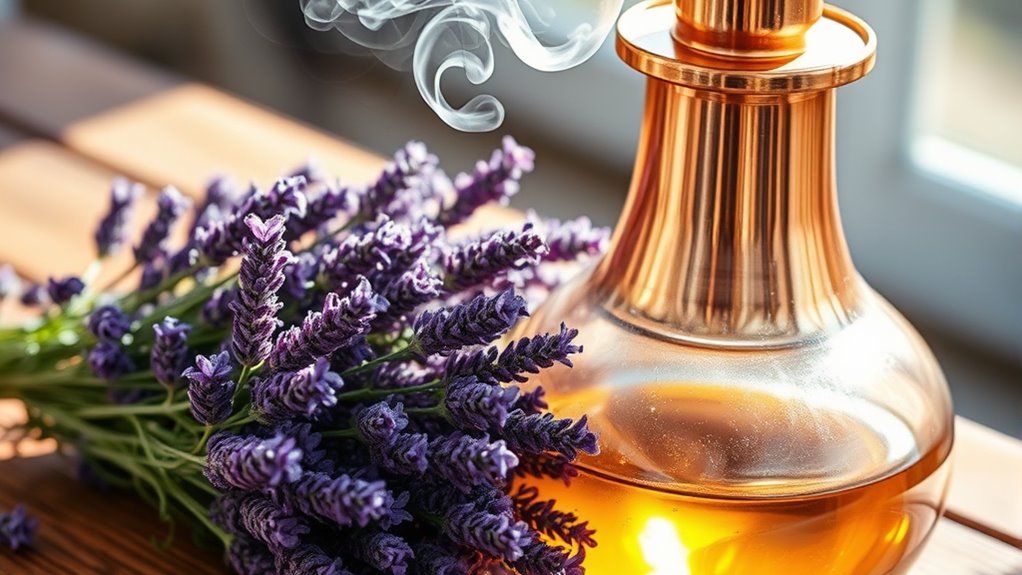
Botanical distillation is perhaps the most well-known method. It involves steaming plant materials to release essential oils. Envision this: you place fresh plant matter—like flowers, leaves, or roots—into a distillation apparatus. As steam rises through the plant, it captures the volatile oils. Once the steam cools, it condenses back into liquid form, separating the essential oils from the water. This method is highly effective, preserving the integrity of the oils and ensuring they retain their aromatic properties. You can imagine how this process not only captures the essence of the plants but also creates a delightful aroma that fills the air.
On the other hand, solvent extraction is a different approach entirely. Instead of using steam, this method employs a solvent—often a chemical like hexane or ethanol—to dissolve the essential oils from the plant material. After soaking the plant, the mixture is filtered to remove the solid parts. What remains is a fragrant liquid that contains both the essential oils and the solvent. Next, the solvent is evaporated, leaving you with a highly concentrated extract. While this technique can yield a richer aroma, it may not always be as pure as oils obtained through botanical distillation.
Both methods have their advantages and disadvantages. If you’re looking for an essential oil that’s as pure as possible, botanical distillation is the way to go. It’s often the preferred method for extracting oils from delicate flowers, where preserving the aroma is indispensable. However, if you want a more robust scent, solvent extraction might be the right choice, especially for harder plant materials like resins or seeds.
Ultimately, the choice of extraction method can depend on the type of plant and the desired aroma. Therefore, just like selecting best laundry detergents, it’s essential to consider the method when choosing your essential oils. So, next time you inhale the soothing scent of your favorite essential oil, you’ll know the fascinating journey it took—from the plant to a bottle in your hands, thanks to either botanical distillation or solvent extraction. Embrace the beauty of nature captured in those fragrant drops!
Frequently Asked Questions
Are Essential Oils Safe for Children and Pets?
Essential oils can be safe for children and pets, but caution’s key. Make sure to dilute oils properly and choose child- and pet-friendly options like lavender or chamomile. Always do a patch test first to check for any allergic reactions, and avoid using oils around their faces. It’s best to consult a pediatrician or veterinarian before introducing any new essential oils into your home to guarantee their safety and well-being.
Can Essential Oils Expire or Go Bad?
Yes, essential oils can expire or go bad. Imagine a vibrant bottle of lavender, its scent fading like a wilting flower. Most oils have a shelf life of 1-3 years, depending on the type. To keep your oils fresh, store them in a cool, dark place, away from sunlight and heat. Using tightly sealed amber or cobalt bottles helps extend their life, preserving their aromatic qualities and potency for your enjoyment.
How Do I Choose High-Quality Essential Oils?
To choose high-quality essential oils, focus on the oil extraction methods used and the plant source quality. Look for oils extracted through steam distillation or cold pressing, as these methods preserve the oil’s integrity. Check for botanical names on the label, ensuring they match the desired plant source. Additionally, opt for brands that provide third-party testing results to confirm purity and potency, ensuring you’re getting the best quality oils for your needs.
Are Synthetic Essential Oils the Same as Natural Ones?
Synthetic essential oils aren’t the same as natural ones. While they can mimic the scent of natural oils, their chemical composition differs. Natural oils come from plant sources and retain the full spectrum of compounds, offering therapeutic benefits. In contrast, synthetic oils are created in labs and may lack those properties. If you’re seeking the benefits of essential oils, choosing natural options is usually the better choice for quality and efficacy.
Can Essential Oils Be Ingested Safely?
You can ingest essential oils safely, but it’s vital to follow internal safety guidelines and dosage recommendations. Always consult a healthcare professional before trying this, as some oils can be toxic or irritating. Stick to reputable brands that provide clear dosage guidelines, and start with small amounts to assess your body’s reaction. Remember, not all essential oils are safe for ingestion, so research each one thoroughly before consuming.
Conclusion
In conclusion, understanding how essential oils are extracted opens up a world of aromatic possibilities. Did you know that over 90% of essential oils are extracted from plant materials like flowers, leaves, and roots? This impressive statistic highlights the natural richness we can tap into. By exploring various extraction methods, you can appreciate the artistry and science behind these oils, enhancing your wellness journey and bringing nature’s essence into your everyday life.