
When using essential oils for kids, always prioritize safety by properly diluting oils with carrier oils like coconut or jojoba, especially for young children. Avoid direct application and stick to gentle, child-safe options such as lavender or chamomile. Be sure to perform patch tests and consult professionals before use. Keep diffusers out of reach, and follow age-specific guidelines. If you want to learn more about safe practice and effective choices, you’ll find useful tips ahead.
Key Takeaways
- Use only child-safe essential oils like lavender and chamomile, avoiding eucalyptus and peppermint for children under six.
- Always dilute essential oils with a carrier oil (at least one drop per tablespoon) before applying to children’s skin.
- Perform patch tests and wait 24 hours to check for allergic reactions before broader use.
- Keep diffusers out of children’s reach and ensure room ventilation during aromatherapy sessions.
- Consult healthcare professionals or certified aromatherapists to confirm safe usage guidelines for children.

Are essential oils a safe and effective way to support your child’s health and well-being? While many parents turn to aromatherapy as a natural remedy, it’s vital to understand that safety precautions must come first. Essential oils are potent, and improper use can lead to adverse reactions. Before introducing any essential oil into your child’s routine, you should familiarize yourself with proper dilution guidelines. This means always diluting essential oils with a carrier oil like coconut or jojoba oil to reduce the risk of skin irritation or toxicity. For young children, a common recommendation is to dilute one drop of essential oil in at least one tablespoon of carrier oil, but age-specific guidelines vary, so it’s best to consult a healthcare professional or certified aromatherapist.
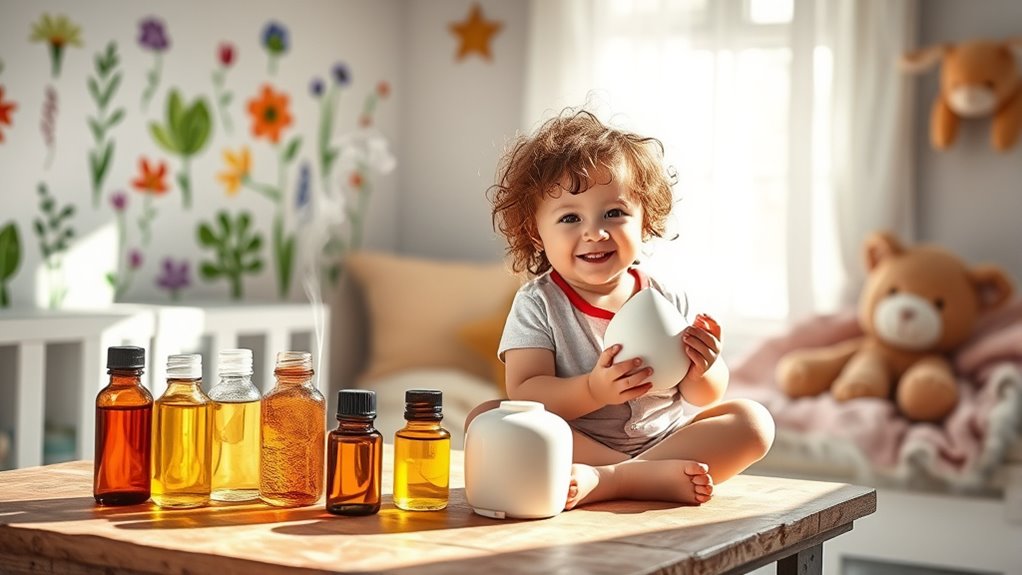
It’s tempting to use essential oils directly on your child’s skin, but doing so without proper dilution is risky. Not only can undiluted oils cause burns or allergic reactions, but some oils are considered unsafe for children altogether. Always perform a patch test by applying a small amount of diluted oil to a limited skin area and wait 24 hours to check for any adverse reactions. This simple step helps guarantee your child’s safety before more extensive use. When using essential oils in diffusers, keep the device out of your child’s reach, and make certain the room is well-ventilated to prevent overwhelming their sensitive respiratory systems.
You should also be cautious about which oils you choose. Some essential oils, like eucalyptus and peppermint, are not recommended for children under six because they can cause breathing problems or irritate their airways. Conversely, gentle oils like lavender or chamomile are often safer options and can promote relaxation or sleep. Always check reputable sources or consult a healthcare professional to confirm an oil’s safety profile for children.
Frequently Asked Questions
Are Essential Oils Safe for Infants Under One Year Old?
You should avoid using essential oils on infants under one year old because their skin sensitivity is high, and certain oils can cause irritation or adverse reactions. Additionally, ensuring essential oil diffusion safety is vital, as diffusing oils in their environment may still pose risks. Always consult a healthcare provider before using any essential oils around infants, and opt for very diluted or specially formulated products designed for sensitive skin.
How Do I Choose Child-Safe Essential Oils?
In this day and age, choosing child-safe essential oils requires careful attention. You should prioritize essential oil safety by selecting only those that are gentle and suitable for kids. Look for child-specific blends designed for their delicate skin and sensitive systems. Always verify purity, avoid harsh scents, and consult reputable sources or professionals. This way, you guarantee a safe and soothing experience for your little one, making aromatherapy both enjoyable and risk-free.
Can Essential Oils Cause Allergic Reactions in Kids?
You might wonder if essential oils can cause allergic reactions in kids. It’s possible, especially if your child has skin sensitivities or allergies. Essential oils can trigger allergic reactions like redness, itching, or swelling. To minimize risks, always dilute oils properly, do a patch test before full use, and observe your child’s reactions closely. If any adverse symptoms occur, stop use immediately and consult a healthcare professional.
What’S the Proper Dilution Ratio for Children’S Aromatherapy?
You should always follow proper dilution guidelines for safe application of essential oils on children. Generally, a safe dilution ratio is 0.5% to 1%, which means adding about 1-2 drops of essential oil per 1 ounce of carrier oil. This guarantees the oils are gentle and reduces the risk of irritation or allergic reactions. Always consult a healthcare professional before using essential oils with kids to ensure safety.
Are There Essential Oils to Avoid During Pregnancy?
Did you know that some essential oils can pose risks during pregnancy? It’s vital to prioritize pregnancy safety by avoiding certain oils like clary sage, rosemary, and cinnamon, which may stimulate contractions or cause complications. Always follow essential oil precautions and consult with a healthcare provider before use. Staying informed helps you enjoy the benefits of aromatherapy safely, ensuring both your health and your baby’s well-being.
Conclusion
As you explore the world of essential oils for your children, remember that safe use is your guiding star. Think of these oils as gentle whispers of nature, offering comfort and calm. By respecting proper dilution and choosing kid-friendly scents, you create a nurturing environment where your child’s well-being blossoms. With mindful care, aromatherapy becomes a soothing symphony, turning everyday moments into precious memories filled with health and harmony.