Start your aromatherapy journey with five versatile oils: lavender, peppermint, tea tree, lemon, and eucalyptus. These oils are beginner-friendly, offering calming, invigorating, or cleansing properties. You can diffuse them, dilute with carrier oils for topical use, or add them to baths. Keep notes on your blends and store oils in dark bottles in a cool, dry place. If you want to explore simple ways to incorporate these oils into your routine, keep going.
Key Takeaways
- Lavender, peppermint, and tea tree are ideal beginner oils due to their versatility and gentle properties.
- Use these oils in diffusers, diluted topically, or in homemade blends to experience their calming, invigorating, and cleansing effects.
- Always dilute essential oils with carrier oils like coconut or jojoba before skin application for safety.
- Store oils in dark glass bottles in a cool, dry place to preserve their potency and extend shelf life.
- Start with small test blends, keep detailed notes, and practice regularly to build confidence in creating personalized aromatherapy routines.
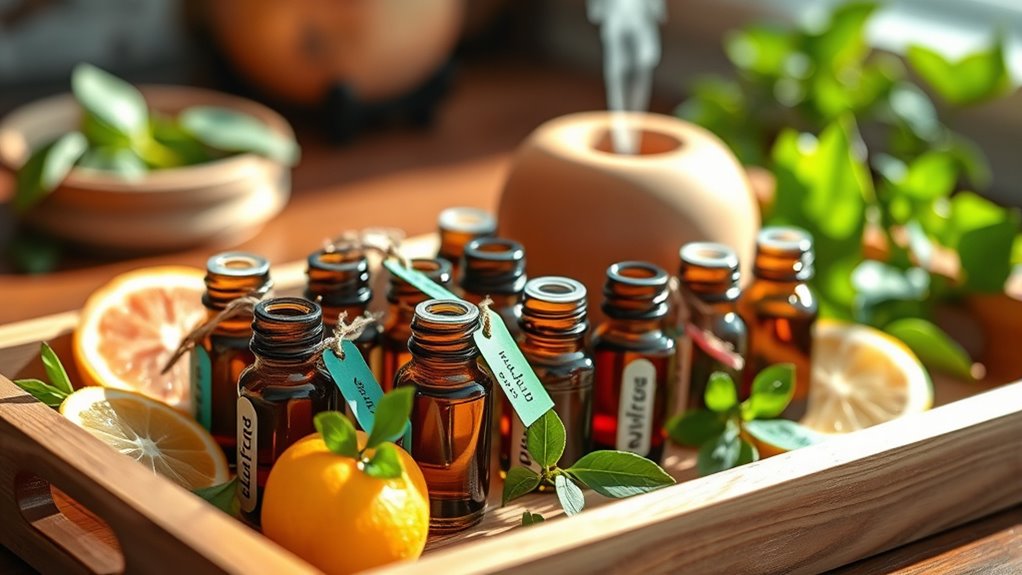
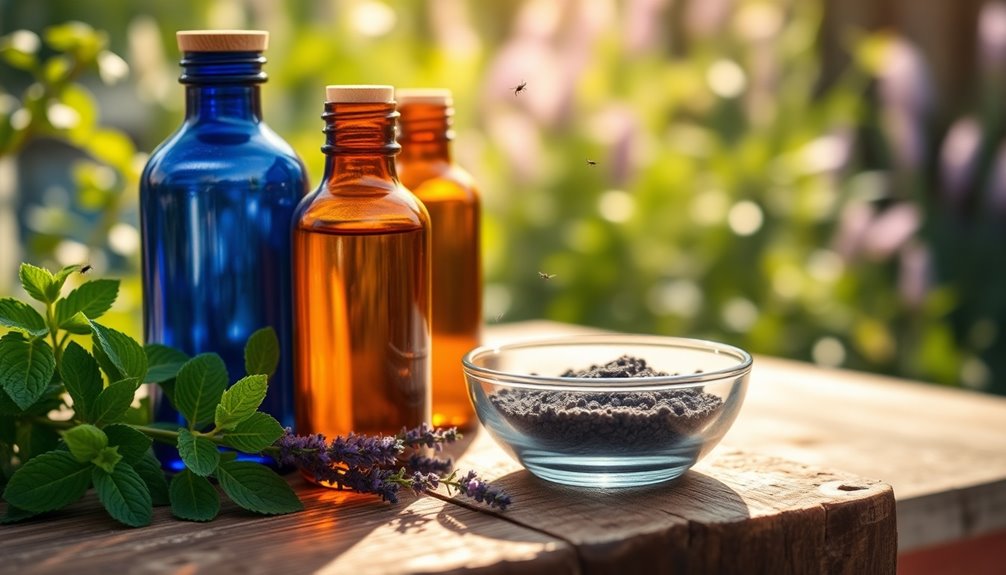
If you’re new to essential oils, it can seem overwhelming to know where to start. With so many options and uses, it’s easy to feel unsure about which oils to choose first and how to handle them properly. A good first step is to familiarize yourself with a few popular essential oils like lavender, peppermint, and tea tree. These are versatile, widely loved, and relatively gentle, making them perfect for beginners. As you experiment, you’ll want to learn blending techniques—mixing different oils to create personalized scents or therapeutic blends. Start simple: combine two or three oils, testing small amounts first. For example, blending lavender with a touch of peppermint can produce a calming, invigorating aroma. Keep notes on your ratios and results, so you can replicate or adjust your blends later. When blending, always consider the strength of each oil; some are more potent than others, and a little goes a long way. This mindful approach allows you to craft safe, effective mixtures tailored to your preferences. Additionally, exploring crochet techniques can help you create personalized accessories or decorations to enhance your aromatherapy space. Storage tips are just as vital as the oils themselves. Essential oils are sensitive to light, heat, and air, which can degrade their quality over time. To preserve their potency, store your oils in dark glass bottles—preferably amber or cobalt—kept in a cool, dry place away from direct sunlight. Label each bottle clearly with the oil name and purchase date, so you can monitor their freshness. Always close the caps tightly after use to prevent oxidation and evaporation. If you’re blending multiple oils, consider using small amber bottles for your custom mixes; this keeps everything contained and protected. Proper storage practices can significantly extend the shelf life of your oils and maintain their therapeutic properties. Moreover, understanding quality standards when purchasing essential oils can help ensure you’re getting pure and effective products. It is also helpful to be aware of potential regulatory considerations when purchasing or using essential oils, ensuring you’re sourcing from reputable suppliers. Additionally, some oils may have specific safety guidelines depending on their properties and your individual health conditions. When applying oils to your skin, dilute them with a carrier oil such as jojoba, coconut, or almond oil to avoid irritation. Keep a small, dedicated storage container or roller bottles for your blends, making it easier to access and use them consistently. Getting comfortable with essential oils involves a little trial and error, but paying attention to blending techniques and storage tips will help you get the most out of your collection. Over time, you’ll develop a better sense of which oils you enjoy and how to combine them effectively. Remember, starting with simple, high-quality oils and practicing good storage habits will set a solid foundation for your aromatherapy journey. With patience and curiosity, you’ll discover many ways essential oils can enhance your well-being and daily routine.
Frequently Asked Questions
Can I Mix Different Essential Oils Safely?
You can mix different essential oils safely if you follow proper blending safety guidelines. Always research each oil’s properties and check for possible skin sensitivities. Use small amounts and dilute with a carrier oil to prevent irritation. Store your blends in airtight containers away from sunlight to maintain quality. Remember, proper storage tips and understanding blending safety guarantee you enjoy your essential oil mixtures without any issues.
Are There Any Essential Oils Suitable for Children?
Did you know that around 80% of parents want safe options for their kids? When choosing essential oils, prioritize child safety by selecting kid-friendly blends. Oils like lavender, chamomile, and ylang-ylang are generally safe when diluted properly. Always consult a healthcare professional before use, and never apply oils directly to children’s skin. Creating gentle, safe blends guarantees you’re protecting your child’s well-being while enjoying the benefits of aromatherapy.
How Long Do Essential Oils Last?
You wonder how long essential oils last. Typically, their storage duration depends on the type of oil, but most have a shelf life of 1 to 3 years. Proper storage in a cool, dark place helps maintain their potency. Over time, oils may oxidize and lose effectiveness, so check for changes in smell or color. Using them within their recommended shelf life ensures you get the best benefits.
Can Essential Oils Replace Medication?
You might wonder if essential oils can replace medication, but it’s important to remember essential oil safety first. While some people use them as medical alternatives for relaxation or minor issues, they shouldn’t replace professional medical advice or treatment. Always consult your healthcare provider before substituting essential oils for medication, as they’re meant to complement, not replace, proper medical care. Your health and safety come first.
Are Organic Essential Oils More Effective Than Non-Organic?
You wonder if organic essential oils are more effective than non-organic ones. Organic purity often means fewer pesticides and chemicals, which can enhance essential potency and guarantee you’re getting a cleaner product. While both can offer benefits, choosing organic oils may provide higher quality and safety. Ultimately, the effectiveness depends on purity and your intended use, but organic options typically give you a more natural and potent experience.
Conclusion
So there you have it—your starter pack of essential oils, ready to turn your home into a fragrant oasis or a DIY spa. Just remember, a few drops can do wonders or cause chaos, so don’t go overboard. Embrace the aromatic adventure, experiment boldly, and enjoy the delightful chaos of your new scent-sational life. After all, who knew that a tiny bottle of oil could turn you into a wellness wizard? Happy diffusing!