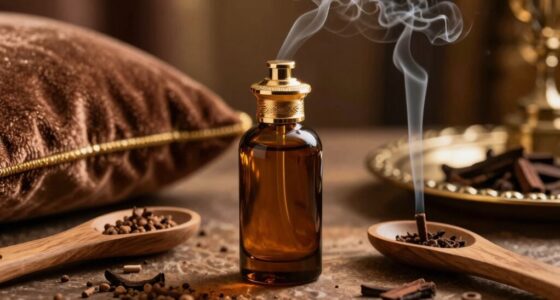
Essential oil color changes matter because they reveal important information about the oil’s freshness, stability, and quality. When the color shifts, it often indicates chemical reactions, exposure to light and air, or aging, which can reduce the oil’s effectiveness and safety. Recognizing these changes helps you determine if the oil is still good to use or if it has degraded. Keep exploring to discover more about how to properly assess and maintain your essential oils.

Get oils, diffusers and self-care delivered free with Prime
- Fast, free delivery on millions of items
- Prime Video, Amazon Music and more included
- Member-only deals all year
Key Takeaways
- Color changes indicate chemical reactions, oxidation, or degradation affecting the oil’s quality and potency.
- They reflect the botanical origin and natural aging process of the essential oil.
- Unusual color shifts signal potential deterioration or contamination, guiding safe usage.
- Proper storage minimizes color changes, preserving the oil’s chemical stability and therapeutic benefits.
- Monitoring color helps determine when an oil has degraded and needs replacement.

Essential oils can change color over time, which is often a sign of chemical reactions or exposure to light and air. This color shift isn’t just a cosmetic issue; it can reveal important information about the oil’s botanical origins and chemical stability. When you notice a change in hue, it’s a cue that the oil may have undergone some transformation, whether from natural aging or external factors. Understanding why this happens helps you determine the quality and safety of the oil you’re using.
Color changes in essential oils indicate aging, exposure, or chemical reactions that impact quality and safety.
The botanical origins of an essential oil play a major role in its initial color and how it changes over time. Different plants produce oils with unique compounds that give them their characteristic hues—think of the deep green of peppermint or the golden amber of frankincense. These natural compounds are sensitive to environmental influences, which can cause their colors to shift. For example, oils derived from citrus peels tend to be lighter and more prone to darkening with exposure to light, while darker oils like patchouli or myrrh may already exhibit rich hues that change subtly with age. Recognizing these natural variations helps you understand whether a color change is normal or a sign of degradation. Additionally, some plant-derived compounds are more prone to oxidation, which can accelerate color changes and indicate reduced potency. Environmental factors, such as temperature fluctuations, can also influence how quickly these changes occur, emphasizing the importance of proper storage conditions.
Chemical stability is another essential factor. Essential oils are complex mixtures of volatile compounds that can react with oxygen, light, or heat. When exposed to these elements, some molecules may break down or oxidize, leading to a change in color. This process signals a loss in chemical stability, which can affect the oil’s therapeutic properties and safety. For instance, an oil that initially has a vibrant color might turn darker or cloudy if it’s oxidized, indicating that it’s no longer at its best. If you’re using essential oils for health or aromatic purposes, maintaining chemical stability is fundamental. Proper storage in dark, airtight containers can slow down these reactions, preserving the oil’s original color and efficacy. Being aware of oxidation processes can help you better recognize when an oil has deteriorated.
In addition, understanding the chemical reactions involved can help you better assess when an oil has been compromised. Paying attention to color changes isn’t just about aesthetics; it’s about safeguarding the quality of your essential oils. By understanding their botanical origins and how chemical stability influences their appearance, you can better judge whether an oil remains potent and safe to use. Keep in mind that some variation is natural, but significant or unusual changes warrant closer inspection. Proper storage and awareness of environmental factors can help mitigate unnecessary color changes and preserve the oil’s integrity. Recognizing these signs can also guide you in determining when an oil should be replaced to ensure safety and potency. Ultimately, recognizing these signs helps you make informed decisions, ensuring you get the most benefit from your essential oils while avoiding potential risks.
Frequently Asked Questions
Can Essential Oil Color Change Indicate Spoilage or Contamination?
Yes, essential oil color change can indicate spoilage or contamination. If you notice a shift in color, it might be due to exposure to light or contact with synthetic additives, which can alter the oil’s natural hue. Light exposure accelerates oxidation, leading to spoilage, while synthetic additives can cause unnatural color changes. Always inspect your oils regularly and store them in dark, airtight containers to maintain their purity and efficacy.
Do Color Changes Affect the Oil’s Therapeutic Properties?
Color changes in your essential oils can impact their Aromatherapy benefits considerably. When oils darken or shift hue, it often indicates oxidation or chemical alteration, which can diminish their therapeutic potency. Different Oil extraction methods, like steam distillation versus cold pressing, influence how stable these oils are over time. So, if the color changes, it’s a sign that the oil’s ability to help you relax, energize, or heal might be compromised.
How Long Does It Typically Take for Color Changes to Occur?
Color changes in essential oils can happen within weeks or months, depending on factors like light, air, and temperature exposure. Typically, if your oil’s color shifts, it’s a sign of compromised color stability, often due to oil oxidation. This process accelerates as the oil interacts with oxygen, leading to potential loss of therapeutic benefits. To maintain quality, store oils in dark, airtight containers away from heat.
Are Certain Oils More Prone to Color Alterations Than Others?
Imagine your essential oils as moody teenagers—some change color faster than others. Yes, certain oils are more prone to color alterations, especially those with complex extraction methods or lower oil purity. Oils like citrus or floral varieties tend to shift hues more easily, revealing their inner chemistry. You can’t always control it, but understanding extraction methods and purity levels helps you predict which oils are more susceptible to these colorful surprises.
Can Storage Conditions Prevent or Delay Color Changes in Essential Oils?
Yes, proper storage techniques can help prevent or delay color changes in essential oils. To maintain color stability, keep oils in dark glass bottles away from sunlight, heat, and air exposure. Store them in a cool, dark place and tightly seal lids after use. These steps minimize oxidation and degradation, preserving the oils’ appearance and quality over time. Consistent storage practices are key to ensuring long-term color stability.
Conclusion
So, next time your essential oil suddenly turns a questionable hue, don’t just shrug it off. Remember, it’s not just a color change; it’s a fiery red flag waving for your senses. Maybe, just maybe, that vibrant shift is nature’s way of saying, “Hey, I’ve seen better days.” So, proceed with caution, or risk turning your calming diffuser into a wild, unpredictable potion. Because, really, who needs surprises in their aromatic life?
Fall Picks
fall essentials
As an affiliate, we earn on qualifying purchases.