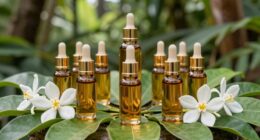
To blend like a pro, follow essential oil ratios that create a balanced scent. Start with a base of 3-4 drops, add 2 drops of middle notes, and 1 drop of top notes, maintaining a harmony that avoids overpowering scents. Keep the total between 3-10 drops per 100 ml water for safety and effectiveness. Mastering these ratios helps you craft soothing, well-rounded blends—continue exploring to reveal even more expert tips.
Key Takeaways
- Use the 60/30/10 rule as a guideline: 60% base, 30% middle, 10% top notes for balanced scent profiles.
- Limit total diffuser drops to 3-10 drops per 100 ml water to ensure proper dilution and safety.
- Start with 3-4 drops of a primary note, then add 2 drops of secondary and 1 drop of top note for harmony.
- Incorporate top, middle, and base notes thoughtfully to create a smooth, layered aroma.
- Adjust ratios based on scent interaction and personal preference, keeping detailed notes for consistency.

Creating effective essential oil blends depends on understanding proper ratios to guarantee safety and desired aroma. When you’re designing a blend for your diffuser, grasping aromatherapy principles is vital. These principles guide how different oils interact and influence your mood or well-being. Equally important is achieving a scent profile balance, which ensures your blend is harmonious and pleasing without being overwhelming. By mastering these concepts, you can craft blends that are both safe to use and delightful to smell.
Understanding proper ratios and scent balance ensures safe, harmonious, and delightful essential oil diffuser blends.
A key aspect of blending is knowing the right ratios. Typically, a good starting point is the 60/30/10 rule: 60% base or carrier oils, 30% middle notes, and 10% top notes. For diffusers, you often skip carrier oils and focus on essential oils, but the ratio concept still applies. For instance, you might use 3-4 drops of your primary essential oil (the base note), 2 drops of a secondary (middle note), and 1 drop of a top note. This hierarchy helps create complexity without overpowering scents. Remember, more isn’t always better; using too many oils or too high a concentration can lead to an overwhelming or even irritating aroma.
Understanding aromatherapy principles also means respecting safety guidelines. Some oils are potent and can cause sensitivities if used excessively. Always dilute your blends appropriately and avoid applying undiluted oils directly to your skin. When diffusing, keep the total number of drops within a safe range—usually 3-10 drops per 100 ml of water. This maintains a safe, balanced scent that won’t irritate your respiratory system or cause headaches.
Achieving scent profile balance is about layering notes thoughtfully. Top notes are the first scents you perceive—citrus or herbs—which evaporate quickly. Middle notes, like lavender or chamomile, form the heart of your blend and last longer. Base notes, such as sandalwood or patchouli, provide depth and linger after the others fade. By carefully balancing these layers, your diffuser will emit a well-rounded aroma that transitions smoothly from one scent to another, creating a calming or invigorating environment as intended.
Practice is key. Experiment with small batches, adjusting ratios to see how each oil interacts. Keep notes of what works best, and remember that scent profile balance is subjective—you might prefer a more floral or woody aroma. Ultimately, understanding aromatherapy principles and ratios empowers you to blend like a pro, producing diffuser blends that are safe, balanced, and truly enjoyable.

Dreo Humidifiers for Bedroom, 4L Top Fill for Large Room, 36H Runtime, 28 dB Quiet Supersized Cool Mist Air Humidifier for Baby Nursery, Plants, Indoor, Night Light, Easy to Clean & Fill, White
𝟰𝗟 𝗟𝗮𝗿𝗴𝗲 𝗧𝗮𝗻𝗸 𝗳𝗼𝗿 𝗖𝗼𝗻𝘁𝗶𝗻𝘂𝗼𝘂𝘀 𝗖𝗼𝗺𝗳𝗼𝗿𝘁: Enjoy quiet sleep without congestion, coughing, or dry mouth, DREO baby humidifier's...
As an affiliate, we earn on qualifying purchases.
Frequently Asked Questions
How Long Does a Diffuser Blend Typically Last?
A diffuser blend usually lasts between 3 to 6 hours, depending on the diffuser’s size and how much oil you use. To maximize diffuser longevity and scent persistence, avoid overfilling and keep the device clean. Using high-quality essential oils can also help the aroma last longer. Adjusting the oil amount allows you to control how long the scent stays, so experiment to find your perfect balance.
Can I Create My Own Essential Oil Blending Ratios?
Ever stumble upon a perfect scent and wonder if you can recreate it? Yes, you can create your own essential oil blending ratios with DIY blends. Start with basic proportions, like 2:1 or 1:1, then adjust ratios to suit your scent preferences. Experimenting with ratio adjustments lets you craft unique, balanced aromas that fill your space just the way you like. Trust your nose and enjoy the creative process!
Are There Any Safety Tips for Blending Essential Oils?
Yes, you should always prioritize safety when blending essential oils. Make sure to follow dilution safety guidelines to prevent skin irritation, especially if applying blends topically. Test a small patch first, and avoid using highly concentrated oils directly on your skin. Keep essential oils out of reach of children and pets, and always dilute properly to prevent adverse reactions. Proper safety measures guarantee you enjoy your blends without harm.
What Essential Oils Are Best for Relaxation?
Did you know that aromatherapy benefits can boost your mood and reduce stress? For relaxation, lavender, chamomile, and ylang-ylang are your best options. Using blending techniques, combine these oils in a 3:2:1 ratio to create a calming diffuser blend. These essential oils promote tranquility, ease anxiety, and improve sleep. Incorporate them into your routine for a peaceful, stress-free environment whenever you need a mental reset.
How Do I Adjust Ratios for Different Diffuser Sizes?
To adjust ratios for different diffuser sizes, start by knowing your diffuser capacity. For smaller diffusers, use fewer drops—about 3-5 drops total—while larger ones may need 8-12 drops for balanced scent intensity. Always test and tweak the amount based on how strong you want the aroma. Keep in mind, increasing oil slightly can enhance scent without overwhelming, but avoid overloading to maintain a pleasant, balanced diffuser experience.

BREEZOME 6L Humidifiers for Bedroom, Cool Mist Top Fill Humidifier with Aroma Diffuser, Humidistat, Night Light, 50H Runtime, Quiet Ultrasonic Humidifiers for Home Large Room, Baby Nursery, Plants
【Never Refill Daily】With a large 6L water capacity and convenient top-fill design, our humidifier for large room runs...
As an affiliate, we earn on qualifying purchases.
Conclusion
Now that you know the right blending ratios, you’re ready to create perfectly balanced diffuser scents. Did you know that the essential oil market is projected to reach $14 billion by 2028? With this knowledge, you can confidently craft blends that not only smell amazing but also promote relaxation and focus. Keep experimenting with ratios, and soon you’ll be a pro at designing personalized, harmonious aromas that transform your space. Happy blending!
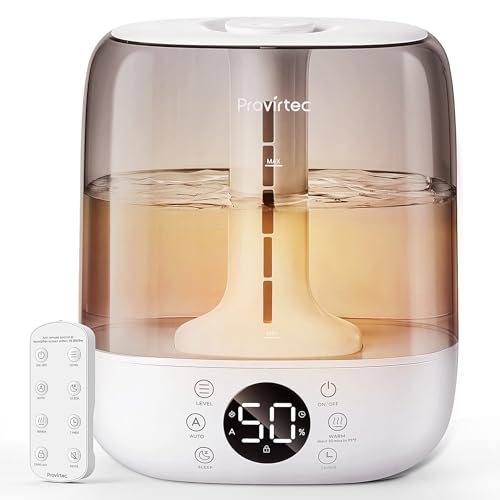
Provirtec 6L Self-Cleaning Humidifier for Large Room, CleanCare Warm & Cool Mist, No-Leak Design & Top Fill, 60 Hour Runtime, Quiet Ultrasonic Auto Mode with Remote Control for Bedroom & Home
Dual Self-Cleaning Technology for Your Family: Our advanced humidifiers for bedroom use a professional-grade water tank and constant-temperature...
As an affiliate, we earn on qualifying purchases.

DREO HM735S 11L Smart Humidifier Large Room 700 ft², 100H Cool Mist Air Humidifiers for Bedroom, Top-Fill, Clean Tank Technology, 26dB, Auto Mode, Aroma Box, RGB, Remote & APP Control, Baby, White
100-𝙝𝙤𝙪𝙧 𝙍𝙪𝙣𝙩𝙞𝙢𝙚, 𝙇𝙖𝙨𝙩𝙞𝙣𝙜 𝘾𝙤𝙢𝙛𝙤𝙧𝙩: Enjoy uninterrupted comfort with our DREO air humidifier’s impressive 4-day runtime and 2.9-gallon tank....
As an affiliate, we earn on qualifying purchases.