

To understand essential oil aroma families, start by exploring their scent characteristics, like floral, citrus, woody, or spicy notes. Identify how each group makes you feel or what mood they evoke, helping you choose oils suited for your needs. Recognizing these categories also aids in blending harmonious scents and sourcing authentic oils. By mastering aroma families, you’ll improve your aromatherapy skills—continue exploring to learn more about creating effective and personalized blends.

Get oils, diffusers and self-care delivered free with Prime
- Fast, free delivery on millions of items
- Prime Video, Amazon Music and more included
- Member-only deals all year
Key Takeaways
- Learn to identify scent characteristics and emotional effects of floral, citrus, woody, and spicy aroma families.
- Familiarize yourself with common essential oils in each family to recognize their profiles.
- Use aroma families to guide blending for specific moods, health benefits, or atmospheres.
- Verify oils’ authenticity by checking their scent profile and sourcing from reputable suppliers.
- Practice blending and scent evaluation to develop an intuitive understanding of aroma family distinctions.
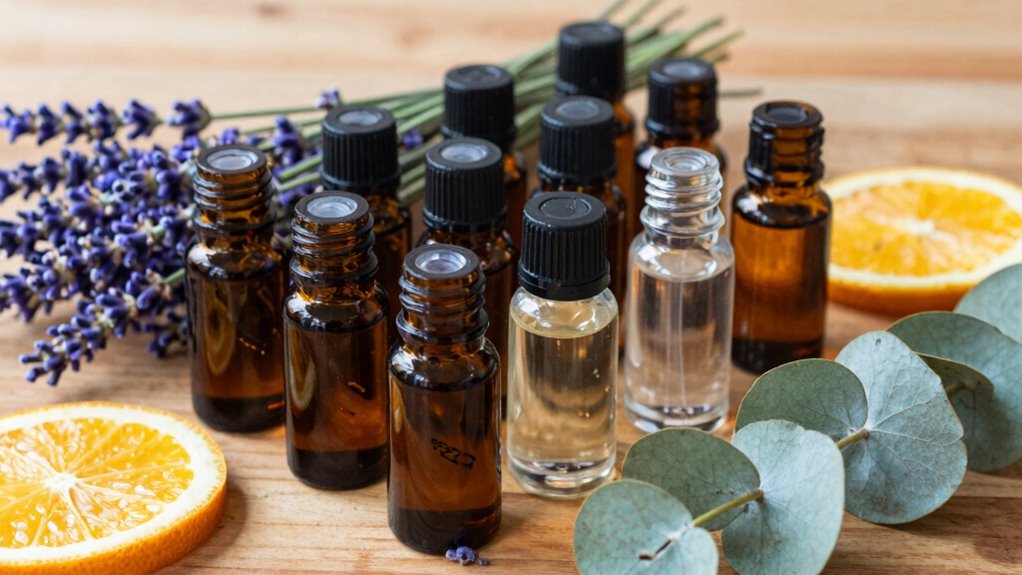
Understanding the different aroma families of essential oils can seem intimidating at first, but it’s a valuable skill that helps you select the right oils for your needs. When you grasp how these aroma categories work, you can make more informed decisions about aromatherapy blending and ensure you’re sourcing quality essential oils. Aroma families are broad groupings based on scent characteristics, which gives you a framework to organize and understand the diverse world of essential oils. For example, floral oils like rose and jasmine evoke a soft, romantic scent, while citrus oils like lemon and orange bring bright, uplifting aromas. Knowing these distinctions helps you craft blends that target your mood or health goals more effectively.
Understanding aroma families guides your essential oil choices and enhances your aromatherapy blending.
As you explore aroma families, you’ll notice that each group shares common scent notes and emotional effects. Woody oils such as cedarwood and sandalwood often have grounding, earthy qualities, making them perfect for meditation or relaxation. Conversely, aromatic spice oils like cinnamon and clove tend to be warm and invigorating, stirring energy and focus. When you’re involved in aromatherapy blending, understanding these families allows you to create harmonious mixes that balance or enhance specific effects. You can combine floral and citrus oils for an uplifting yet calming blend or pair woody and spicy scents for a cozy, grounding atmosphere.
Knowing about aroma families also guides your essential oil sourcing. You want to select oils that truly belong to their categories—not just for scent consistency but also for quality. Reputable suppliers often label their oils according to these aroma groups, so you can verify their authenticity and purity. This knowledge helps you avoid cheaply made or adulterated oils that might not deliver the desired aroma or therapeutic benefits. When sourcing, look for transparency in how oils are extracted and whether they’re rated for their scent profile, ensuring they fit into the aroma family they’re supposed to represent. Additionally, understanding the aroma profiles can assist in identifying authentic oils versus adulterated products.
Ultimately, understanding essential oil aroma families empowers you to be more intentional with your aromatherapy. Whether you’re blending for relaxation, energy, or emotional support, recognizing the scent groups helps you craft more effective and pleasing mixtures. It also enhances your ability to select high-quality oils, knowing they align with the aroma profiles you desire. Over time, this knowledge becomes second nature, making your aromatherapy practices more personalized and impactful. With a clear grasp of aroma families, you’re better equipped to enjoy the full potential of essential oils in your wellness routine.
As an affiliate, we earn on qualifying purchases.
Frequently Asked Questions
Can Aroma Families Overlap in Essential Oils?
Yes, aroma families can overlap in essential oils. Aroma family classifications aren’t always strict, and many oils share characteristics across different categories. During essential oil categorization, you might find oils with floral notes that also have citrus hints or woody undertones. This overlap helps you understand the complex scent profiles, making it easier to blend and choose oils suited for various purposes. Recognizing these overlaps enhances your appreciation of essential oil versatility.
Do Aroma Families Change With Oil Blends?
Aroma families don’t change with oil blends—irony, right? Instead, blending impacts how aroma family classification manifests in the final scent. You might mix floral and citrus oils, but the core aroma families still guide your understanding. The blend creates a new experience, yet the fundamental aroma categories remain consistent. So, while the scent evolves, the classification stays stable, helping you predict how different oils will combine.
How Do Scent Preferences Relate to Aroma Families?
Your scent preferences are closely tied to aroma family classifications and are influenced by scent preference psychology. You’re naturally drawn to certain aroma families—like floral or citrus—based on your emotional responses and personal experiences. Understanding these classifications helps you choose oils that resonate with you, enhancing your mood and well-being. Recognizing your preferences allows you to explore different aroma families intentionally, creating a more personalized and enjoyable aromatherapy experience.
Are Aroma Families Universal Across Different Cultures?
Aroma families aren’t entirely universal across cultures because cultural perceptions shape scent preferences, leading to regional variations. For example, floral scents are popular in some societies, while woody or spicy aromas dominate others. Your perception of aroma families can be influenced by these cultural differences, making it important to explore regional variations. Understanding this helps you appreciate how scent preferences evolve and vary worldwide, enriching your essential oil experiences.
Can Aroma Families Predict Therapeutic Effects?
Back in the day, people believed scent could heal like magic. Today, you’ll find that aroma family classifications can hint at therapeutic effects, but they don’t guarantee results. While certain families, like citrus for uplifting or lavender for calming, guide scent-based therapy, individual responses vary. So, aroma families offer clues, but you should still consider personal preferences and reactions for effective, tailored therapy.
Conclusion
Now that you’ve revealed the secrets of essential oil aroma families, you’re practically a scent wizard! With this knowledge, you can navigate the aromatic universe like a pro, transforming your senses into a superpower. Imagine impressing everyone with your perfume prowess or creating blends so harmonious they could make flowers jealous. Immerse yourself in the world of aromas and let your newfound understanding turn your everyday life into an aromatic adventure — because nothing is more powerful than knowing the language of scents!
Halloween Picks
halloween
As an affiliate, we earn on qualifying purchases.