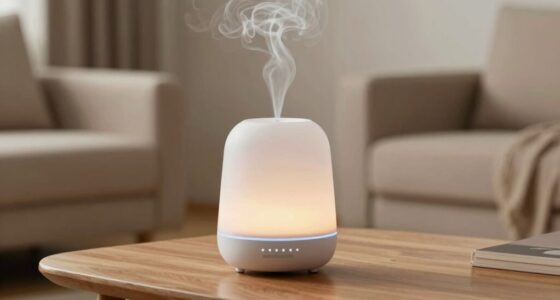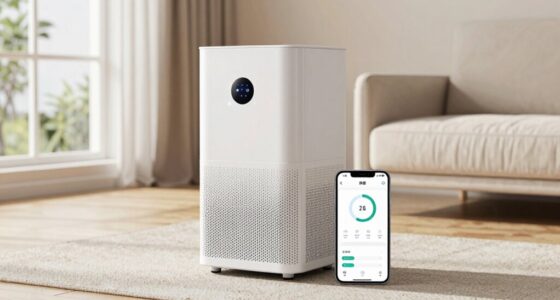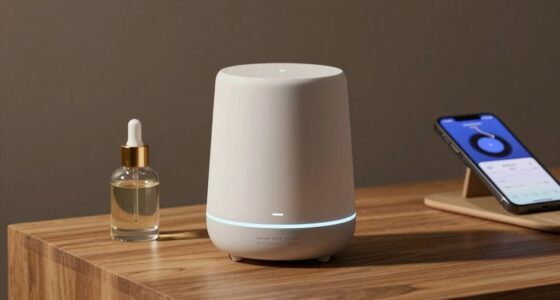
Smart diffusers often collect data on your usage patterns, preferences, and environmental changes to enhance your experience. This can include voice snippets or routine details, which raises privacy concerns about personal information being shared or stored without your full awareness. To minimize risks, review privacy policies, disable non-essential features, and secure your network. Staying informed about these practices helps protect your privacy, and if you keep exploring, you’ll learn more about safeguarding your smart diffuser.

Get oils, diffusers and self-care delivered free with Prime
- Fast, free delivery on millions of items
- Prime Video, Amazon Music and more included
- Member-only deals all year
Key Takeaways
- Smart diffusers often transmit usage data, preferences, and voice snippets to manufacturers or third parties.
- Privacy concerns include potential exposure of personal routines, conversations, and environmental details.
- Users should review privacy policies, limit data sharing, and disable unnecessary features to protect their privacy.
- Regular updates and network segmentation help mitigate risks of data breaches and unauthorized access.
- Being cautious with permissions and understanding data collection practices balances device benefits with privacy security.
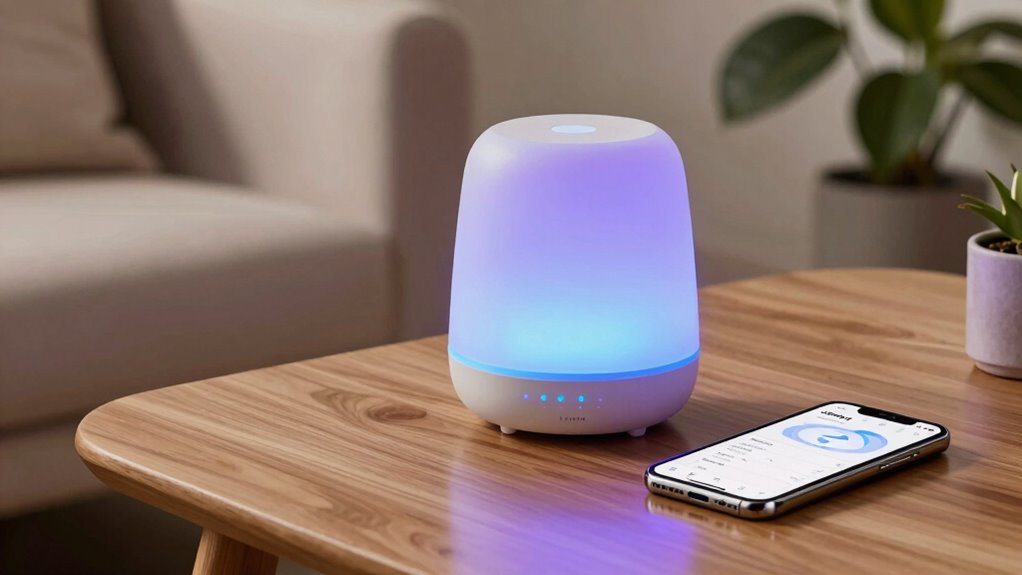
Smart diffusers have become popular for creating a calming atmosphere, but they also raise important privacy concerns. As you set up these devices in your home, you might wonder what data they collect and how that information is used. Many smart diffusers are connected to apps or cloud services, which means they can gather data about your usage patterns, preferences, and even your voice commands if they have voice control features. This data collection can seem harmless—after all, it’s just about improving your experience—but it opens the door to broader privacy concerns. You may not realize that these devices could be transmitting sensitive information to manufacturers or third parties, potentially exposing your routines, habits, or even personal conversations.
The core privacy concern with smart diffusers lies in the extent of data collection. Some devices record when and how often you use them, what scents you prefer, or how your environment changes over time. If they are integrated with voice assistants, they might also pick up snippets of your speech, which could be stored or analyzed. While many manufacturers claim this data is anonymized or used solely for improving their services, there’s always the risk of data breaches or unauthorized access. This can lead to your personal information being exploited or sold to advertisers, raising the worry that your privacy is compromised without your full understanding or consent. Understanding data collection practices is essential to making informed choices about your smart home devices.
To minimize these privacy concerns, you should carefully review the device’s privacy policy before purchasing. Understand what data they collect, how it’s stored, and whether it’s shared with third parties. When setting up your smart diffuser, opt for privacy settings that limit data sharing to only what’s necessary for the device to function properly. If the app allows, disable features like voice recording or data sharing options that aren’t essential for your use. Regularly update your device’s firmware and app to patch security vulnerabilities that could be exploited by hackers.
Additionally, consider using a separate Wi-Fi network for your smart devices or enable network segmentation to isolate the diffuser from your primary devices. This way, even if there’s a security breach, your main devices and personal data stay protected. Always be cautious about the permissions you grant and avoid linking your diffuser with other smart home devices unless you’re confident about their privacy safeguards. By taking these steps, you can enjoy the calming benefits of your smart diffuser while keeping your personal information secure and respecting your privacy.
As an affiliate, we earn on qualifying purchases.
Frequently Asked Questions
Do Smart Diffusers Record Conversations When Not in Use?
No, smart diffusers don’t typically record conversations when not in use. However, voice recording can happen if the device is activated by a voice command or a sensor. This raises privacy concerns, especially if you’re worried about accidental recordings. To minimize this, check the device settings, disable voice activation features, and review privacy policies. Always stay aware of how your smart diffuser handles your voice data.
Can Smart Diffusers Be Hacked to Access Personal Data?
Yes, smart diffusers can be hacked to access personal data if security isn’t tight. Hackers exploit weak encryption protocols and poor device authentication to gain access. To protect yourself, make sure your diffuser uses strong encryption and updates its firmware regularly. Use unique, complex passwords, and disable unnecessary features. Staying vigilant, securing your Wi-Fi, and choosing reputable brands help minimize the risk of hacking and safeguard your personal information.
What Types of Data Do Smart Diffusers Collect?
Smart diffusers often collect data like voice recognition and ambient monitoring to personalize your experience. They listen for voice commands and monitor your environment, which means they gather audio snippets, temperature, humidity, and air quality data. This info helps optimize scent dispersion and user interaction. To minimize privacy concerns, check device settings, disable unnecessary features, and stay updated on privacy policies to control what data gets shared and stored.
Are Smart Diffuser Data Collection Practices Legally Regulated?
Yes, smart diffuser data collection practices are regulated by privacy legislation and data protection laws. You must guarantee that companies follow these rules to safeguard your personal information. Laws like GDPR and CCPA require transparency, consent, and data security. To protect yourself, stay informed about your rights, read privacy policies carefully, and choose devices that prioritize data privacy. Your awareness helps enforce responsible data collection and reduces your privacy risks.
How Can I Identify if My Diffuser Is Spying on Me?
You can spot privacy concerns by checking your diffuser for device indicators like blinking lights or unusual sounds, which might signal tracking activity. Review the manufacturer’s privacy policy for data collection details. Also, monitor your network for unfamiliar connections. If you’re concerned, consider disabling features or disconnecting the device when not in use. Staying vigilant helps protect your privacy and minimizes potential spying risks.
Conclusion
So, while smart diffusers might seem like harmless gadgets filling your space with scent, they’re also quietly gathering data like enthusiastic bees collecting nectar. Think of your privacy as a delicate glass sculpture—easily shattered if you’re not careful. To keep your personal space truly private, stay informed and tweak your device settings. After all, your home should be your sanctuary, not a window into your every move. Guard your privacy before it slips through your fingers.
Columbus Day / Indigenous Peoples' Day Picks
long weekend sales
As an affiliate, we earn on qualifying purchases.