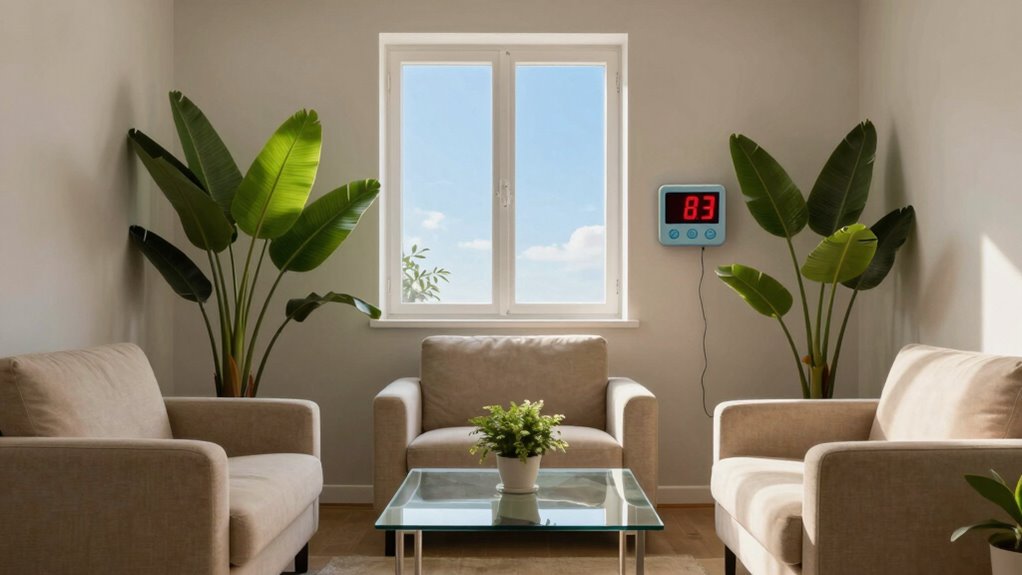

The stuffy room feeling is caused by indoor CO2 levels, which indicate how well your space is ventilated. When CO2 exceeds 1000 ppm, it signals poor air exchange, leading to stuffiness, discomfort, and potential health issues like headaches or fatigue. Good ventilation involves increasing air exchange, either by opening windows or improving mechanical systems. Understanding these basics can help you maintain a fresh, comfortable environment—you’ll discover how to optimize your ventilation setup as you explore further.
Key Takeaways
- Elevated indoor CO2 levels (above 1000 ppm) often cause the “stuffy room” feeling and discomfort.
- Monitoring CO2 levels helps identify poor ventilation and the need for improved air exchange.
- Increasing air exchange through opening windows or enhancing ventilation reduces CO2 buildup.
- Proper ventilation rates (measured in ACH) prevent rapid CO2 accumulation and maintain fresh indoor air.
- Maintaining CO2 levels within recommended ranges improves comfort, health, and indoor air quality.

Indoor CO2 levels are a key indicator of ventilation effectiveness and air quality. When you notice that stuffy feeling in a room, it’s often a sign that the air isn’t being exchanged efficiently. CO2, a natural byproduct of human respiration, builds up quickly in enclosed spaces, and high concentrations can make the environment uncomfortable and even affect your concentration and productivity. Monitoring these levels gives you a clear picture of whether your ventilation system is doing its job or if it needs adjustment. **Regularly checking CO2 levels helps you understand how well your ventilation system is functioning and whether it requires improvement.** Understanding air exchange is essential to improving indoor air quality. Air exchange refers to how often indoor air is replaced with fresh outside air. The more frequent this exchange, the lower the CO2 buildup, and the better your air quality. If you’re in a space with poor air exchange, CO2 levels rise rapidly, leading to that stale, stuffy feeling. This buildup can be an indication that your ventilation rate isn’t sufficient for the number of people occupying the space. The ventilation rate, measured in air changes per hour (ACH), tells you how many times the entire volume of air in a room is replaced within an hour. A higher ventilation rate means more fresh air circulating through the room, reducing CO2 concentrations and improving overall air quality.
When you aim for ideal ventilation, you need to adjust the ventilation rate to match the occupancy and activity level of the space. For example, a conference room with many people requires a higher ventilation rate than a seldom-used office. If the ventilation rate is too low, CO2 levels will climb quickly, leading to that familiar stuffy sensation. Conversely, increasing the air exchange rate ensures that stale air is replaced swiftly with fresh air, maintaining comfortable and healthy indoor conditions. Proper ventilation isn’t just about comfort; it’s also about health. Elevated CO2 levels can cause headaches, fatigue, and reduced cognitive function, so maintaining a proper balance is vital.
To control indoor air quality effectively, you should regularly monitor CO2 levels with a reliable sensor. If readings approach 1000 ppm or higher, it’s a clear sign that your ventilation rate needs improvement. You can enhance air exchange by opening windows, increasing mechanical ventilation, or adjusting exhaust fans. Ultimately, understanding how air exchange and ventilation rate influence indoor CO2 levels empowers you to create a more comfortable, healthier environment. By keeping an eye on these factors, you guarantee that your indoor space doesn’t just feel less stuffy but is genuinely healthier for everyone inside.
Frequently Asked Questions
How Can I Measure Indoor CO2 Levels Accurately at Home?
You can measure indoor CO2 levels accurately at home using CO2 sensors designed for air quality monitoring. These devices are easy to set up and provide real-time readings, helping you identify when ventilation is needed. Look for models with digital displays and calibration features to guarantee accuracy. By monitoring CO2 levels regularly, you’ll improve your air quality and create a healthier living environment.
What Are the Health Risks of Prolonged Exposure to High CO2 Levels?
Prolonged exposure to high CO2 levels can harm your health by causing headaches, dizziness, and fatigue, which indicates poor indoor air quality. Carbon dioxide effects include decreased concentration and potential respiratory issues over time. When indoor air quality drops, your body struggles to get enough fresh air, making it essential to improve ventilation. Keep an eye on indoor CO2 levels to protect your health and maintain a comfortable environment.
How Does Outdoor Air Quality Influence Indoor CO2 Concentrations?
Outdoor pollution considerably influences indoor CO2 levels because poor outdoor air quality can introduce pollutants that affect your indoor environment. When outdoor air quality is low, it hampers effective air exchange, causing CO2 to build up inside. To maintain fresh air, guarantee proper ventilation and consider air purification systems, especially during high outdoor pollution days. This way, you reduce indoor CO2 concentrations and improve your overall indoor air quality.
What Are Effective Ventilation Strategies for Small or Poorly Ventilated Rooms?
You can improve airflow in small or poorly ventilated rooms by increasing air exchange through strategic use of ventilation vents. Open windows when possible, and add exhaust fans to actively remove stale air. Consider installing air purifiers with HEPA filters to supplement ventilation. Regularly maintaining and cleaning vents ensures ideal airflow. These steps help reduce indoor CO2 levels, making the space more comfortable and healthier.
Can Plants Significantly Reduce Indoor CO2 Levels Naturally?
Plants can help reduce indoor CO2 levels through natural filtration, but their impact is limited. Plant absorption of CO2 occurs during photosynthesis, which helps lower indoor concentrations slightly. However, for significant reduction, you’ll need proper ventilation strategies. Keep in mind, plants alone won’t solve high CO2 levels; they’re best used alongside effective airflow to improve air quality naturally.
Conclusion
Understanding indoor CO2 levels is like opening a window to fresh air—you breathe easier and feel more alert. By ensuring proper ventilation, you prevent that stuffy room feeling and create a healthier space. Remember, high CO2 levels can sneak up just like a shadow in a dim room, so stay mindful and keep the air flowing. Your comfort and well-being depend on it. Keep ventilation in check, and breathe easy every day.