
Understanding diffuser terminology is key to maximizing your essential oil experience. You’ll come across terms like aroma diffusion, which refers to dispersing scents into the air. Different types of diffusers, like ultrasonic and nebulizing, impact how the aroma fills your space. You’ll also encounter essential oil blends, each designed for specific effects, along with notes that create balanced scents. Knowing these terms helps tailor your environment perfectly, and there’s plenty more to explore about enhancing your aromatic journey.
Key Takeaways
- Aroma diffusion disperses essential oils into the air, enhancing the ambiance of a space through various methods.
- Different types of diffusers, like ultrasonic and nebulizing, affect scent intensity and duration.
- Essential oil blends combine various oils for targeted effects, such as relaxation or energy.
- The evaporation rate of oils determines how quickly they disperse and the longevity of the scent in a room.
- Understanding notes in oil blending—top, middle, and base—helps create balanced and harmonious aromas.
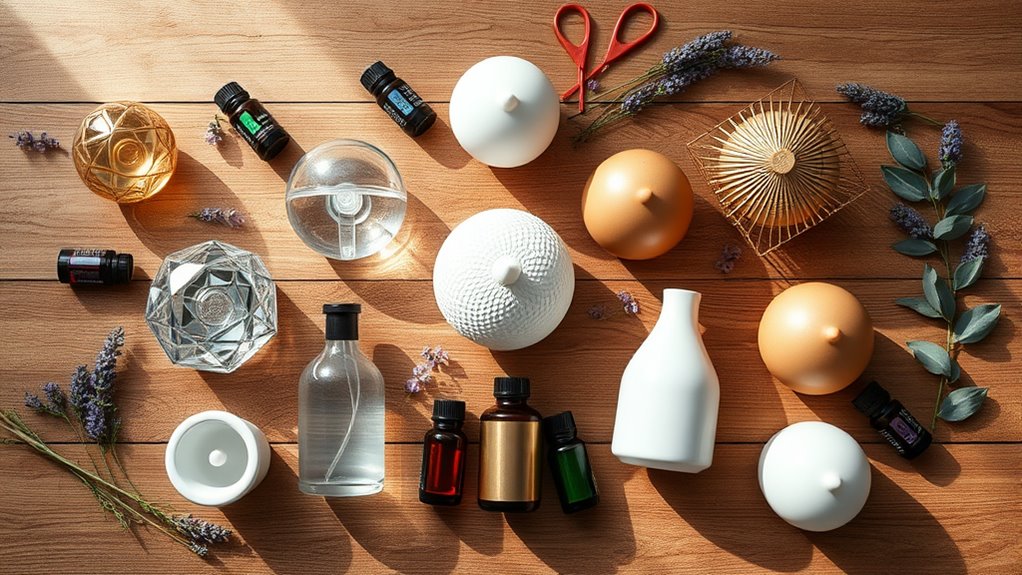
Have you ever wondered about the various terms associated with diffusers? If you’re diving into the world of essential oils, understanding some key terminology can enhance your experience and help you make informed choices. Let’s explore some of these terms, so you can feel confident in your aroma diffusion journey.
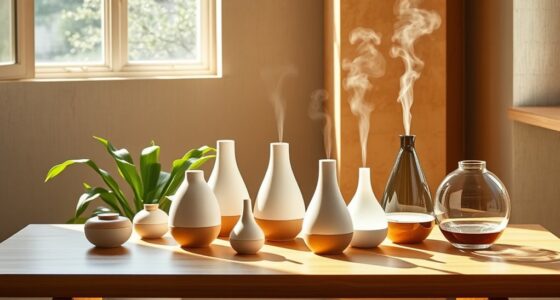
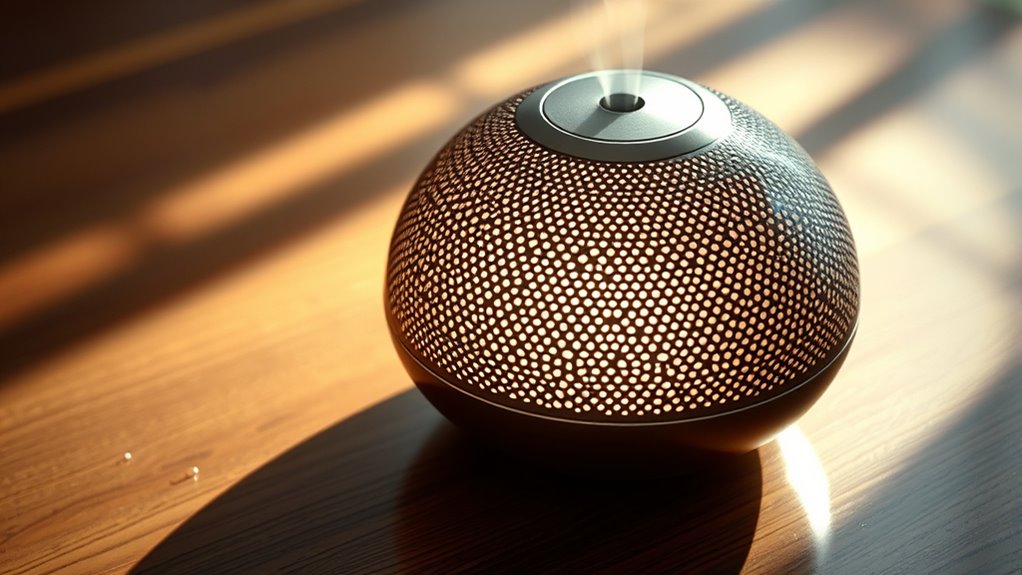
First off, you’ll often hear the term “aroma diffusion.” This refers to how essential oils are dispersed into the air, creating an aromatic atmosphere in your space. Different types of diffusers use varying methods for aroma diffusion. For instance, ultrasonic diffusers use water and ultrasonic waves to break down the oils into tiny particles, allowing them to mix with the air. Nebulizing diffusers, on the other hand, don’t use water; they create a fine mist of pure essential oil, providing an intense aroma experience. Knowing these differences can help you choose the right diffuser for your needs.
Aroma diffusion is essential oils’ journey into the air, enhancing your space with delightful scents through various diffuser methods.
When you start experimenting with essential oils, you’ll likely come across “essential oil blends.” These are combinations of different oils designed to create specific scents or therapeutic effects. For example, a calming blend might include lavender and chamomile, while an energizing blend could combine citrus oils like lemon and orange. Blending oils can be a fun way to customize your aroma diffusion experience, allowing you to create the perfect atmosphere for relaxation, focus, or even upliftment.
Another important term to know is “evaporation rate.” This refers to how quickly essential oils disperse into the air once diffused. Different oils have different rates; for example, lighter oils like citrus tend to evaporate faster than heavier oils like patchouli. Understanding this concept can guide you in choosing oils that stay in the air longer, depending on the ambiance you want to create.
Don’t forget about “top notes,” “middle notes,” and “base notes” when blending oils. Top notes are the first scents you’ll notice, often fresh and uplifting, while middle notes provide balance and depth. Base notes, being richer and heavier, linger the longest in the air. Knowing how these layers work together can help you craft essential oil blends that are harmonious and pleasing. Additionally, being aware of dilution guidelines is crucial for safe and effective topical application of essential oils.

BREEZOME 6L Humidifiers for Bedroom, Cool Mist Top Fill Humidifier with Aroma Diffuser, Humidistat, Night Light, 50H Runtime, Quiet Ultrasonic Humidifiers for Home Large Room, Baby Nursery, Plants
【Never Refill Daily】With a large 6L water capacity and convenient top-fill design, our humidifier for large room runs...
As an affiliate, we earn on qualifying purchases.
Frequently Asked Questions
What Types of Essential Oils Can Be Used in Diffusers?
You can use various essential oils in diffusers, including lavender, eucalyptus, and peppermint. Many people enjoy experimenting with essential oil blends to create unique aromas. Make sure to contemplate the diffuser materials, as some oils can degrade certain plastics or metals. For a pleasant experience, choose high-quality, pure essential oils, and always follow the manufacturer’s guidelines to ensure your diffuser operates effectively while maximizing the benefits of your chosen scents.
How Do I Clean My Diffuser Properly?
To clean your diffuser properly, start by unplugging it and emptying any remaining water and oils. Use a soft cloth or cotton swab with a mixture of water and white vinegar to wipe the inside and the ultrasonic plate. Rinse with clean water and let it dry thoroughly. For ideal diffuser maintenance, establish a cleaning schedule every few uses to prevent buildup and guarantee your diffuser works efficiently.
Can I Use a Diffuser While Sleeping?
Yes, you can use a diffuser while sleeping, but it’s essential to prioritize sleep safety. Place the diffuser on a stable surface, away from your bedding, to prevent any accidents. Make sure it’s in a well-ventilated area, allowing the essential oils to disperse without overwhelming the space. Consider using a timer to avoid running it all night, ensuring you enjoy the benefits without any disruptions to your sleep.
Are Diffusers Safe for Pets?
Yes, diffusers can be safe for pets, but you need to take some precautions. Not all essential oils are pet-friendly, so it’s important to choose oils that are safe for your furry friends. Keeping the diffuser in a well-ventilated area and monitoring your pet’s reaction helps guarantee their safety. If you notice any signs of discomfort, it’s best to stop using the diffuser. Always prioritize your pet’s well-being when using these devices.
How Long Should I Run My Diffuser?
You should run your diffuser for about 30 to 60 minutes for ideal run time. This diffuser duration allows you to enjoy the benefits of essential oils without overwhelming your space. If you’re using it in a larger area or for relaxation, you might extend the time. Just remember to keep an eye on how you and your environment respond, adjusting as needed to maintain a comfortable atmosphere.

DREO HM735S 11L Smart Humidifier Large Room 700 ft², 100H Cool Mist Air Humidifiers for Bedroom, Top-Fill, Clean Tank Technology, 26dB, Auto Mode, Aroma Box, RGB, Remote & APP Control, Baby, White
100-𝙝𝙤𝙪𝙧 𝙍𝙪𝙣𝙩𝙞𝙢𝙚, 𝙇𝙖𝙨𝙩𝙞𝙣𝙜 𝘾𝙤𝙢𝙛𝙤𝙧𝙩: Enjoy uninterrupted comfort with our DREO air humidifier’s impressive 4-day runtime and 2.9-gallon tank....
As an affiliate, we earn on qualifying purchases.
Conclusion
In summary, understanding diffuser terminology can really enhance your experience. With the right knowledge, you can choose the perfect diffuser for your needs and enjoy the benefits it brings to your space. As the saying goes, “Knowledge is power,” and being well-versed in this terminology empowers you to create a more inviting and calming atmosphere. So, delve deeper, keep exploring, and let your newfound insights elevate your relaxation and wellness journey!

Dreo Humidifiers for Bedroom, 4L Top Fill for Large Room, 36H Runtime, 28 dB Quiet Supersized Cool Mist Air Humidifier for Baby Nursery, Plants, Indoor, Night Light, Easy to Clean & Fill, White
𝟰𝗟 𝗟𝗮𝗿𝗴𝗲 𝗧𝗮𝗻𝗸 𝗳𝗼𝗿 𝗖𝗼𝗻𝘁𝗶𝗻𝘂𝗼𝘂𝘀 𝗖𝗼𝗺𝗳𝗼𝗿𝘁: Enjoy quiet sleep without congestion, coughing, or dry mouth, DREO baby humidifier's...
As an affiliate, we earn on qualifying purchases.

Dreo Smart Humidifiers for Bedroom, Top Fill 4L Supersized Humidifier Large Room with 28 dB, 36H Runtime, Touch/APP/Voice Control, Nightlight, Cool Mist Humidifiers for Baby, Plants, Indoor, Black
𝐏𝐫𝐞𝐜𝐢𝐬𝐞 𝐀𝐮𝐭𝐨 𝐇𝐮𝐦𝐢𝐝𝐢𝐭𝐲, 𝐕𝐨𝐢𝐜𝐞 & 𝐀𝐩𝐩 𝐂𝐨𝐦𝐦𝐚𝐧𝐝: Stop guessing the right humidity. With enhanced sensing precision for more...
As an affiliate, we earn on qualifying purchases.