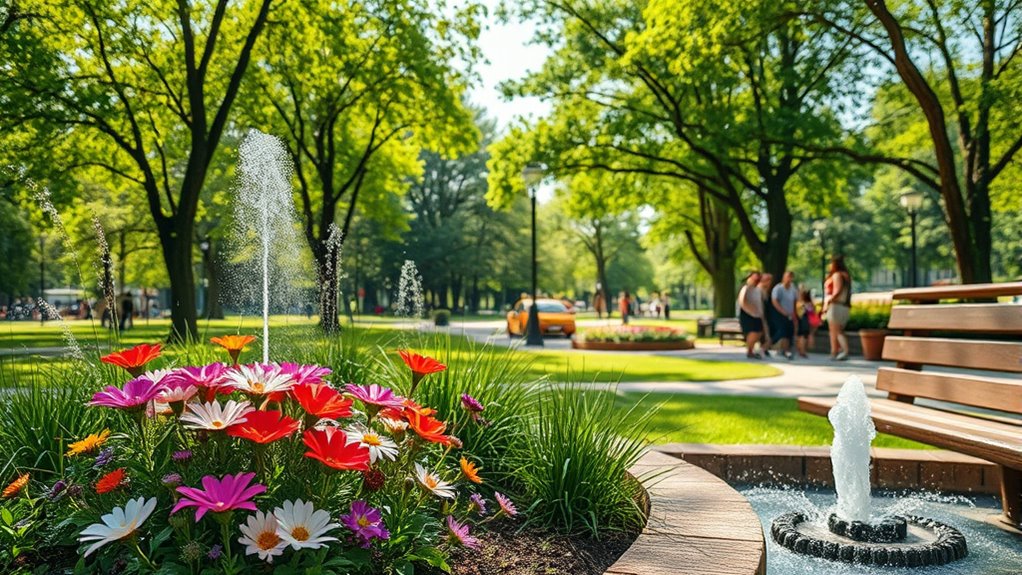

Scent zoning in open spaces uses aroma mapping to enhance your emotional experience in shared environments. By strategically placing fragrant plants, designers create specific olfactory zones that provoke feelings like joy or calm. You’ll notice how different scents guide your journey through areas meant for recreation or tranquility. This thoughtful approach not only enriches your connection to nature but also transforms spaces into immersive sensory environments. Explore how scent can further elevate your outdoor experiences.
Key Takeaways
- Scent zoning involves creating specific olfactory environments to enhance visitor experiences in open spaces through curated aromas.
- Strategic placement of fragrant plants near pathways influences mood and encourages visitors to linger in designated areas.
- Fragrance barriers, such as hedges and flower beds, prevent scent mixing and maintain distinct atmospheres across different park zones.
- Aroma mapping guides visitor movement and evokes emotional responses, enriching the overall experience in public spaces.
- Thoughtful scent design deepens the emotional connection to nature, transforming parks into immersive, multi-sensory environments.
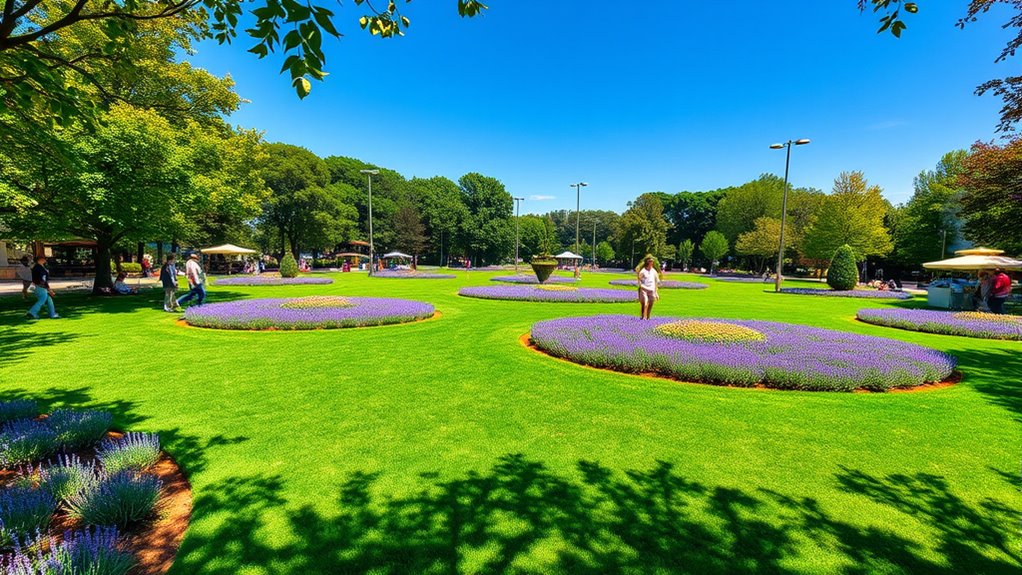
As you stroll through a park or public garden, you might not realize that the scents around you are carefully curated to enhance your experience. This practice, known as scent zoning, uses aroma mapping to create specific olfactory environments that can influence your mood and perception. Each area of the park is designed to evoke particular feelings, whether it’s calm, joy, or even nostalgia.
Imagine walking past a cluster of blooming flowers; the sweet aroma wafts through the air, inviting you to linger a moment longer. This is intentional. Designers often select fragrant plants strategically, placing them in proximity to paths where people spend time. By mapping out the aromas of different plants, landscape architects can guide your emotional journey through the space. You may find invigorating scents near recreational areas, while soothing fragrances greet you in quiet corners, fostering relaxation.
The strategic placement of fragrant plants transforms parks into immersive sensory experiences, guiding your emotions as you explore.
Fragrance barriers play a vital role in this sensory experience. These barriers can be natural, like hedges or flower beds, or artificial, like walls that separate distinct areas within the park. They prevent certain scents from mixing, ensuring that each zone maintains its intended atmosphere. For instance, you wouldn’t want the energizing scent of citrus trees to clash with the calming aroma of lavender. By controlling these fragrance barriers, designers effectively create mini-environments, each with its own unique appeal.
As you walk along the designated paths, you’re not just taking in the sights; you’re engaging with a carefully orchestrated sensory experience. Aroma mapping helps guide your journey, influencing how you feel as you move from one area to another. The smell of fresh grass might ignite a sense of nostalgia, while the fragrance of pine can evoke memories of childhood explorations. Understanding these Law of Attraction principles can deepen your appreciation for how scent influences your emotional state and connection to the environment.
Understanding scent zoning can deepen your appreciation for these spaces. It’s fascinating to consider how the placement of scents can impact your experience and enhance your connection to nature. Next time you find yourself in a park, take a moment to pause and breathe deeply. Notice the layers of aromas that surround you and how they change as you navigate through different areas. You’ll start to see parks not just as green spaces, but as thoughtful designs that engage all your senses, making your visit not just a walk, but a curated experience.
Frequently Asked Questions
How Does Scent Zoning Affect Wildlife in Urban Areas?
Scent zoning can profoundly impact wildlife in urban areas. When you create specific scent zones, it influences scent dispersion, which affects how animals navigate and find food. By attracting certain species or deterring others, you’re shaping the urban ecology. This can either enhance biodiversity or disrupt existing habitats. You’ll notice that wildlife adapts to these changes, adjusting their behaviors and patterns in response to the scents present in their environment.
Can Scent Zoning Reduce Air Pollution Levels?
Yes, scent zoning can help reduce air pollution levels. By strategically placing aromatic plants, you enhance scent dispersion, which can mask unpleasant odors and improve air quality. These plants often absorb pollutants and release oxygen, creating a more pleasant environment. When you implement scent zoning, you not only enjoy a fragrant space but also contribute to better air quality, making urban areas more livable. It’s a simple yet effective way to combat pollution.
What Are the Costs Associated With Implementing Scent Zoning?
Implementing scent zoning can come with significant cost implications. You’ll face expenses related to research, planning, and installation of scent diffusers or natural elements. Additionally, ongoing maintenance and monitoring can add to the budget. Implementation challenges, like ensuring community acceptance and regulatory compliance, may also arise, potentially increasing costs further. It’s essential to weigh these financial factors against the potential benefits when considering such a project.
How Can Communities Get Involved in Scent Zoning Initiatives?
You can get involved in scent zoning initiatives by joining local community groups focused on environmental policies. Attend meetings to discuss community involvement and share your ideas. Collaborate with local leaders to help shape policy development, ensuring it reflects your community’s needs. Participate in workshops or events that raise awareness about the benefits of scent zoning. Your voice matters, and by taking action, you can help create a more pleasant environment for everyone.
Are There Any Studies on Scent Zoning Effectiveness?
Yes, there are studies showing scent zoning effectiveness. Researchers have explored various zoning strategies and their impact on scent dispersal in different environments. For instance, studies indicate that targeted scent dispersal can enhance user experience in public spaces, promoting relaxation or alertness. You’ll find that effective zoning strategies can considerably influence how people perceive and interact with their surroundings, leading to a more enjoyable and engaging atmosphere.
Conclusion
Incorporating scent zoning in open spaces not only enhances your experience but can also improve mood and well-being. Did you know that studies show pleasant scents can increase relaxation by up to 30%? By thoughtfully designing these aromatic zones, you create inviting environments that encourage exploration and connection. So, next time you visit a park or plaza, pay attention to the scents around you—they might just elevate your outing to a whole new level!