
You can create a soothing atmosphere without essential oils by using natural methods like herbal infusions, which fill your space with calming scents, or lighting scented candles made from beeswax or soy infused with herbs like lavender or rosemary. Dried herbs in sachets or bowls also release gentle fragrances over time. These options improve your environment naturally and healthily. Keep exploring to discover more simple, chemical-free ways to bring scent into your life.
Key Takeaways
- Use herbal infusions like chamomile, lavender, or mint to naturally scent rooms and baths without essential oils.
- Incorporate dried herbs into sachets, bowls, or reed diffusers for gentle, chemical-free fragrance release.
- Create scented candles from beeswax or soy infused with herbs like rosemary or citrus peels for a natural aroma.
- Simmer herbal infusions on the stove to fill spaces with authentic, calming scents without synthetic fragrances.
- Combine herbal infusions with natural candles or diffusers to enhance mood and promote relaxation safely.
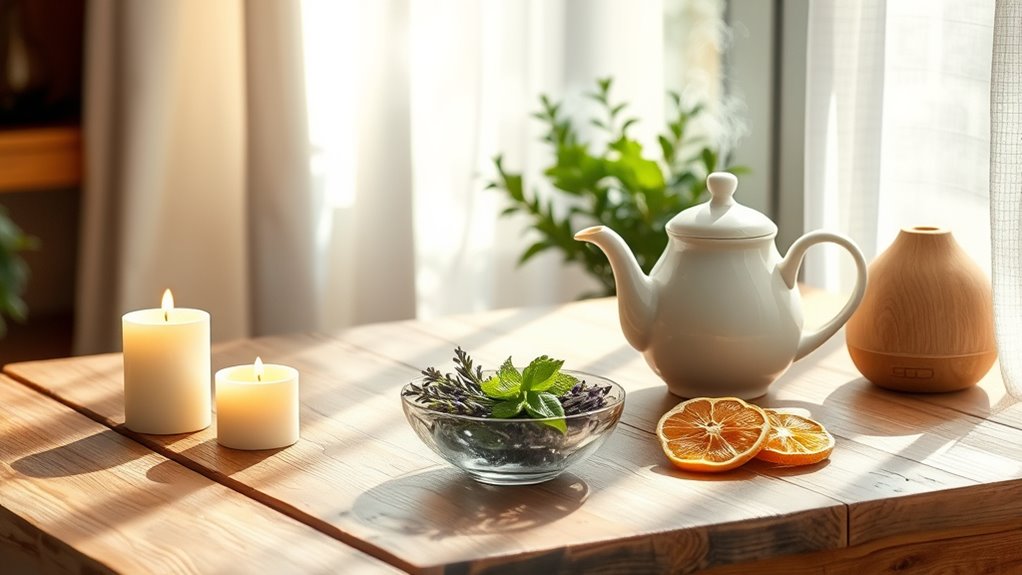
Have you ever wondered if you can enjoy the benefits of aromatherapy without using essential oils? The good news is, you absolutely can. There are natural alternatives that can create a calming, uplifting, or soothing atmosphere without the need for concentrated oils. One effective method is through herbal infusions. You can prepare herbal infusions by steeping herbs like chamomile, lavender, or mint in hot water. Once brewed, these infusions release aromatic compounds that fill your space with gentle, natural scents. You might use these herbal teas not only for drinking but also as room sprays or added to bathwater to create a relaxing environment. Their subtle fragrances can evoke feelings of tranquility and help reduce stress, all without the use of essential oils.
Enjoy natural aromatherapy with herbal infusions, candles, and dried herbs—no essential oils needed for a calming atmosphere.
Another simple way to scent your surroundings naturally is by lighting scented candles. Candles made from beeswax, soy, or other natural waxes often incorporate botanical extracts or herbs that release fragrant vapors when burned. These candles can be infused with dried herbs like rosemary or thyme, which enhance their aroma and provide therapeutic benefits. As the candle’s flame flickers, it disperses a pleasant, natural scent into the air, creating a cozy, inviting atmosphere. Unlike synthetic air fresheners or heavily scented commercial candles, these options tend to have cleaner, more authentic fragrances that promote relaxation and well-being. Additionally, using natural materials in candle-making ensures that the scents remain pure and free from synthetic additives, enhancing their therapeutic qualities.
You can also combine herbal infusions with scented candles to create a layered sensory experience. For example, burning a soy candle infused with dried lavender or citrus peels can amplify the calming or energizing effects. You might also simmer a pot of herbal infusions on your stove, filling your home with a fresh, natural aroma that’s free from artificial fragrances. These methods allow you to customize your scent environment based on your preferences, whether you’re seeking serenity after a long day or a revitalizing boost in the morning. Incorporating natural scenting techniques like these can also reduce exposure to synthetic chemicals often found in commercial air fresheners. Moreover, using herbal infusions not only enhances your environment but also provides additional health benefits through their natural properties.
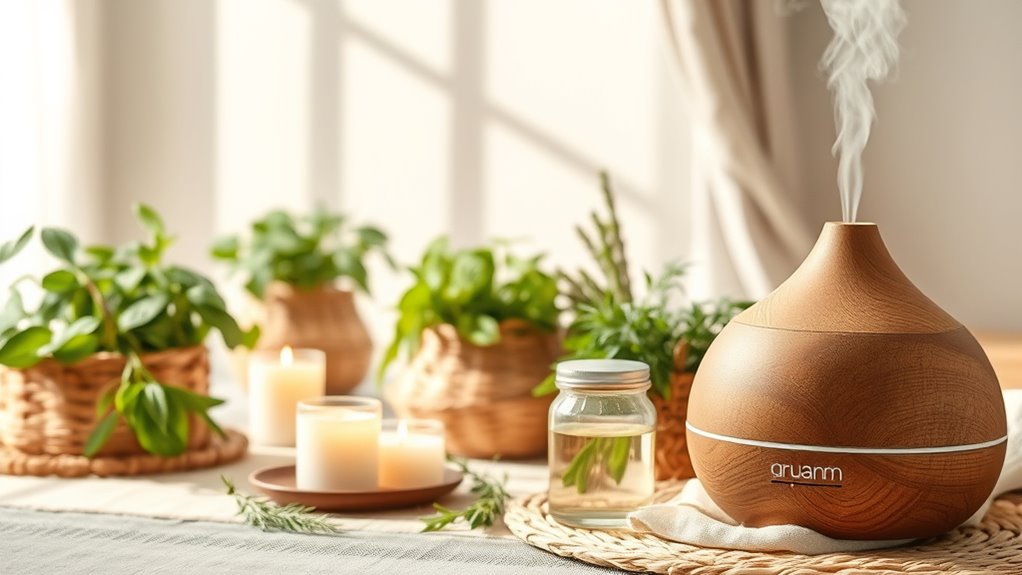
In addition to herbal infusions and scented candles, other natural options include using dried herbs in sachets or decorative bowls, which release their fragrance gradually. These simple, chemical-free approaches not only enhance your space’s ambiance but also reconnect you with nature’s pure scents. Interestingly, some people also use vetted natural scenting devices like reed diffusers or aroma stones that disperse fragrances without chemicals. These simple, chemical-free approaches not only enhance your space’s ambiance but also reconnect you with nature’s pure scents. You don’t need to rely solely on essential oils to experience the benefits of aromatherapy. By exploring herbal infusions, scented candles, and other natural scenting techniques, you can create a peaceful, fragrant environment that supports your mood and well-being effortlessly.
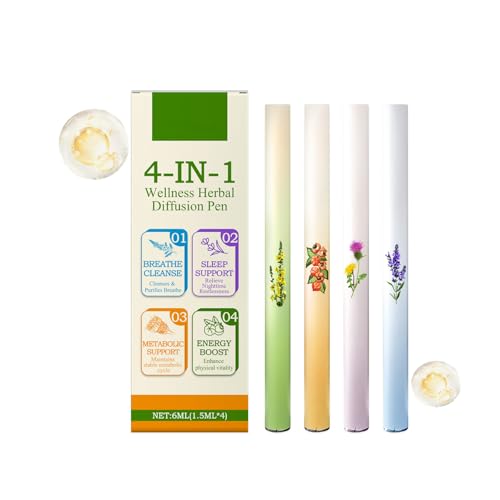
Mullein Herbal Diffuser Pen, Natural Aromatherapy Air Inhaler Stick with Mullein Thyme Mint, Four Aroma Variety Set,Air Freshening, Relaxed Feelings, Portable Pocket Size (4 Pack)
- Herbal Aromatherapy Set: Four botanical diffuser pens with long-lasting scent
- Natural Herbal Fragrance: Infused with mullein, thyme, and peppermint extracts
- Chemical-Free Formula: Provides a calming herbal aroma for wellness
As an affiliate, we earn on qualifying purchases.
As an affiliate, we earn on qualifying purchases.
Frequently Asked Questions
Can Natural Scents Improve Mental Clarity Without Oils?
Yes, natural scents can boost mental clarity through scent stimulation. When you expose yourself to fresh herbs, citrus peels, or fragrant flowers, you activate your olfactory system, helping clear your mind and improve focus. You don’t need essential oils—simply breathing in these natural aromas can energize your brain and enhance mental clarity, making your environment more stimulating and conducive to concentration.
Are There Eco-Friendly Alternatives to Traditional Aromatherapy Methods?
Ever thought eco-friendly alternatives to traditional aromatherapy are just as trendy as plastic bottles? Well, you’re in luck. You can embrace plant-based packaging and biodegradable diffusers that scent your space naturally. These options let you enjoy fresh aromas without harming the planet. So, while you breathe in those delightful scents, know you’re also supporting sustainable practices—because why settle for less when eco-conscious choices smell so much better?
How Can I Make Homemade Natural Air Fresheners?
You can make homemade natural air fresheners by creating DIY sprays with water, a splash of witch hazel, and your favorite herbs or dried flowers. Shake well and spritz around your space. Herbal infusers are also easy—you just place herbs like rosemary or lavender in a jar with water, then let it sit to release their scent naturally. Both methods are eco-friendly ways to keep your home smelling fresh without synthetic chemicals.
Do Natural Scent Methods Have Any Health Risks?
Imagine your home as a garden—natural scents are like gentle breezes, but even breezes can carry pollen that irritates allergies. While natural fragrance risks are usually minimal, some people with chemical sensitivities might still react to certain botanicals or homemade solutions. Always test new methods carefully, and remember that even natural ingredients can cause sensitivities, so stay alert to how your body responds and choose scents wisely.
Can Scenting Techniques Help With Allergy Sensitivities?
You might find scenting techniques helpful for allergy sensitivities by practicing hypoallergenic scenting and scent sensitivity management. Using natural, non-irritating methods like simmering herbs or using unscented candles can minimize exposure to allergens. These approaches help you enjoy pleasant aromas without triggering allergy symptoms, making scenting a safe, calming part of your routine. Always choose gentle options tailored to your sensitivities to ensure comfort and health.
Conclusion
Think of your life as a garden, where every scent is a blossom you nurture with intention. Even without essential oils, you hold the keys to this fragrant paradise—through mindful breathing, natural herbs, and everyday rituals. As a gardener tends to each plant, you can cultivate a vibrant, soothing atmosphere. Embrace these simple, natural ways to scent your life, and watch your personal garden flourish with calm and clarity, no oils required.