
Aromatherapy is an easy, natural way to boost your mood and well-being by using essential oils. To get started, choose calming scents like lavender or energizing ones like citrus, and use a diffuser with water and a few drops of oil. Experiment with different blends and techniques to find what works best for you. Regular cleaning and mindful use help guarantee a safe and enjoyable experience—if you want to learn more, keep exploring how to incorporate scents into your daily routine.
Key Takeaways
- Start with beginner-friendly essential oils like lavender, peppermint, or citrus for easy, effective aromatherapy.
- Use ultrasonic diffusers: fill with water, add 3-5 drops of oil, and turn on for immediate scent benefits.
- Experiment with blending oils to customize mood and energy levels, such as lavender with peppermint for relaxation and focus.
- Keep diffusers clean regularly to maintain scent quality and diffuser performance.
- Prioritize safety: use quality oils, dilute appropriately, and be mindful of individual sensitivities and allergies.
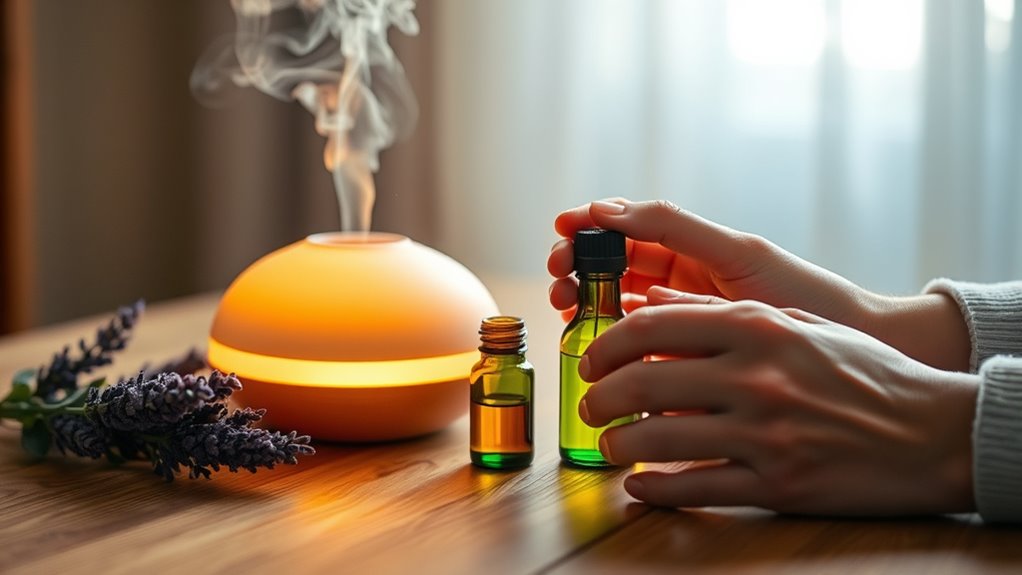
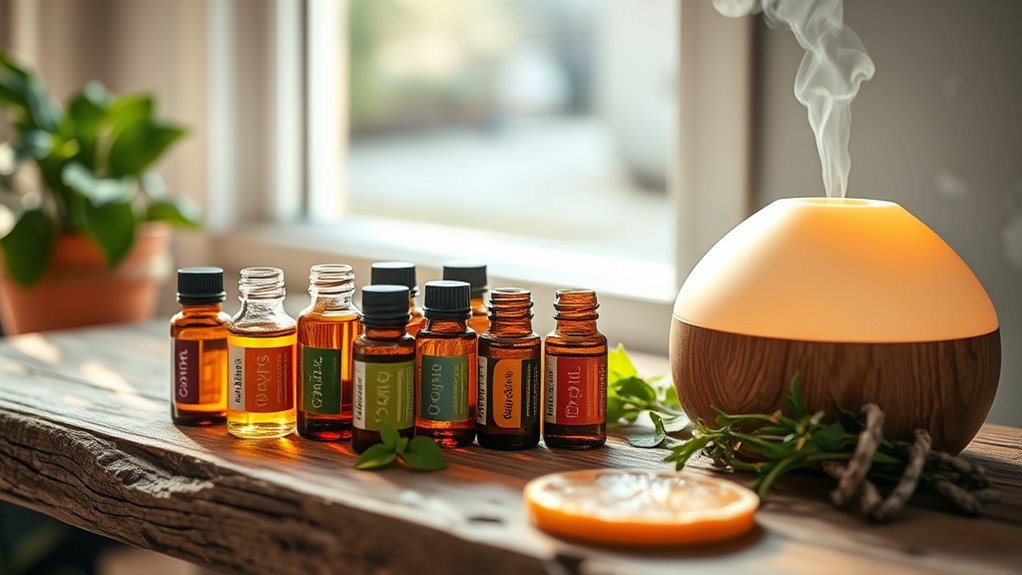
Have you ever wondered how certain scents can influence your mood and well-being? Aromatherapy taps into this power by using essential oils to create a calming, energizing, or restorative environment. If you’re new to this practice, understanding how to use essential oils effectively is key. One of the simplest ways to start is by exploring diffuser techniques. Diffusers disperse essential oils into the air, allowing you to enjoy their benefits throughout your space. There are different types of diffusers—ultrasonic, nebulizing, heat, and evaporative—but ultrasonic diffusers are popular for beginners because they’re easy to use and maintain. To get started, fill your diffuser with clean water, add a few drops of your chosen essential oil, and turn it on. The mist will carry the scent into the air, creating an immediate calming or invigorating atmosphere depending on the oils you select. The use of diffuser techniques can also help you customize your experience and optimize benefits. Incorporating aromatherapy benefits into your routine can also support your overall well-being and mood enhancement. Additionally, understanding how essential oils are produced can deepen your appreciation for their quality and efficacy. Choosing the right essential oils is vital. For relaxation, lavender, chamomile, and bergamot are excellent options. If you want to boost your energy, try citrus oils like orange, lemon, or grapefruit. For focus and clarity, peppermint and eucalyptus can work wonders. When using diffuser techniques, start with just a few drops—usually 3-5—so the scent isn’t overwhelming. You can adjust the amount based on your preference and the size of your space. Keep in mind that some oils are more potent than others, so a little goes a long way. Regularly cleaning your diffuser guarantees it functions properly and prevents buildup that could affect the scent quality. As the popularity of aromatherapy grows, more research is emerging on essential oil safety and its proper use. Experimenting with different blends can also enhance your experience; for example, combining lavender with peppermint can create a relaxing yet revitalizing environment.
Using air purification techniques in your space can also help improve the overall air quality, making your aromatherapy practices even more effective.
In addition to diffuser techniques, you can incorporate essential oils in other ways, like adding a few drops to a warm bath or using them in massage oils. But for beginners, diffuser use offers the easiest and most straightforward method to introduce aromatherapy into your daily routine. As you become more familiar with the scents that resonate with you, you’ll start noticing how different aromas influence your mood and energy levels. Remember, the key is to start simple—select your oils thoughtfully, use your diffuser properly, and pay attention to how each scent makes you feel. With time, these small adjustments can greatly enhance your overall well-being, making aromatherapy a natural and enjoyable part of your life.
Frequently Asked Questions
Can Aromatherapy Replace Traditional Medical Treatments?
You shouldn’t rely solely on aromatherapy to replace traditional medical treatments, as it’s mainly considered an alternative therapy that complements holistic healing practices. While scents and oils can help reduce stress or improve mood, they don’t address serious health issues. Always consult a healthcare professional for medical concerns and see aromatherapy as a supportive tool within a broader treatment plan, rather than a replacement.
Are There Any Essential Oils Safe for Children or Pets?
Imagine a parent using lavender, a common child safe oil, to help their little one relax at bedtime. You should know that some essential oils, like lavender and chamomile, are generally considered pet friendly scents and safe for children when used properly. Always dilute oils, avoid direct contact, and consult a healthcare provider or veterinarian first. Being cautious guarantees your loved ones enjoy the benefits safely.
How Long Do Homemade Aromatherapy Blends Typically Last?
Homemade aromatherapy blends usually last about 1 to 6 months, depending on ingredients. To maximize shelf life, store your blends in airtight, dark glass bottles away from sunlight and heat. Proper storage tips include keeping them in a cool, dry place and shaking gently before each use. Using fresh oils and avoiding contamination also helps guarantee your blends stay potent and safe for as long as possible.
What Are the Best Storage Practices for Essential Oils?
They say “a stitch in time saves nine,” and that’s true for essential oils too. To maximize essential oil longevity, store them in dark glass containers, like amber or cobalt bottles, which protect against light and temperature fluctuations. Keep the caps tightly sealed and store oils in a cool, dry, and dark place. Proper storage prevents evaporation and degradation, ensuring your oils stay potent and effective for longer.
Are There Any Known Allergies or Sensitivities to Specific Scents?
You should be aware of fragrance sensitivities and potential allergies to certain scents. Before using new essential oils, it’s wise to conduct allergy testing by applying a small amount to your skin and waiting 24 hours to see if any reactions occur. If you notice any irritation or allergy symptoms, avoid that scent. Knowing your sensitivities helps prevent adverse reactions and guarantees a safe, enjoyable aromatherapy experience.
Conclusion
Now that you’ve dipped your toes into aromatherapy, you’re ready to explore its calming powers. Remember, patience is key—think of it as a potion from an old apothecary, revealing its magic over time. Keep experimenting with scents and oils, and soon, you’ll find your personal sanctuary of serenity. So, light that candle, breathe deeply, and embrace the journey—because, like a good story, the best scents unfold slowly and beautifully.