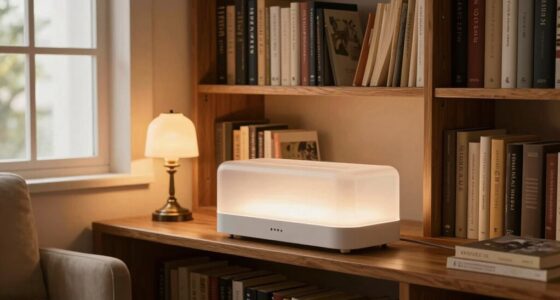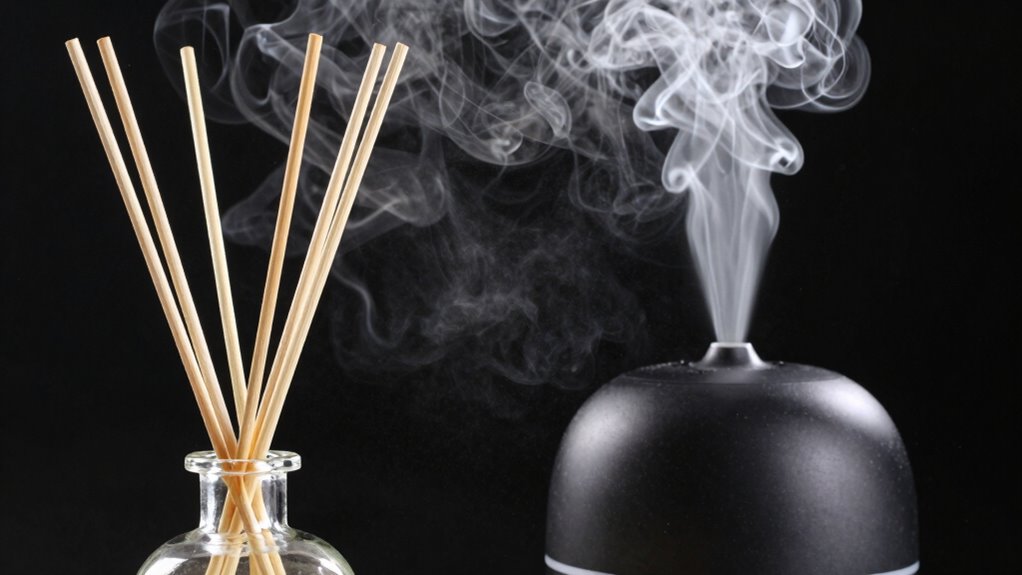

Reed diffusers behave differently from mist diffusers because they rely on passive scent dispersal through reeds soaking up fragrance oil, offering steady, subtle aromas without needing power. Mist diffusers use ultrasonic or heat technology to actively spread scent quickly and intensely, but they require electricity and regular cleaning. This difference affects their maintenance, lifespan, and how they respond to environmental factors. To understand how these differences impact your space, keep exploring the details below.

Get oils, diffusers and self-care delivered free with Prime
- Fast, free delivery on millions of items
- Prime Video, Amazon Music and more included
- Member-only deals all year
Key Takeaways
- Reed diffusers release scent passively through reeds, providing a steady, subtle aroma, while mist diffusers actively disperse scent via ultrasonic technology or heat.
- Reed diffusers are low-maintenance and unaffected by airflow, ensuring consistent scent, whereas mist diffusers’ performance varies with room conditions.
- Reed diffusers operate without electrical power, making them more durable and less prone to malfunction compared to electrically powered mist diffusers.
- Mist diffusers can produce more immediate and intense scents but require regular cleaning and refilling, unlike reed diffusers’ minimal upkeep.
- Environmental factors like airflow and humidity impact mist diffuser dispersal, while reed diffusers maintain consistent scent regardless of environmental changes.

Are reed diffusers or mist diffusers better suited for your home? It all depends on what you’re looking for in regards to fragrance dispersal and maintenance. Reed diffusers work by naturally releasing scent through the reeds, which absorb the fragrance oil and slowly diffuse it into the air. This method provides a steady, subtle aroma that can last for weeks without needing any power source. The simplicity of reed diffusers makes them low-maintenance: you just flip the reeds occasionally to refresh the scent. Their passive operation means you don’t have to worry about batteries, cords, or refilling frequently, making them ideal for those who want a consistent but unobtrusive fragrance. Additionally, their passive operation means they are less influenced by environmental factors like airflow or humidity, ensuring a more consistent scent experience over time. This stability is especially beneficial in spaces with unpredictable air circulation, enhancing their appeal for long-term use. Furthermore, since they do not rely on electrical components, reed diffusers tend to have a longer lifespan compared to mist diffusers, which require regular replacement of parts. The lack of electrical parts also reduces the risk of malfunction, making them a more durable choice over time.
On the other hand, mist diffusers use ultrasonic technology or heat to disperse fragrance into the air, creating a fine, cool mist. This method offers a different kind of fragrance dispersal—more immediate and often more intense than reed diffusers. Because mist diffusers actively release scent, you can usually adjust the intensity or set timers, allowing for more control over the scent experience. However, this means they require regular maintenance, such as cleaning the water tank and refilling with water and essential oils. They also need a power source, which limits placement options and adds to ongoing maintenance requirements. Despite the extra effort, mist diffusers tend to fill large spaces more quickly and evenly, making them suitable for larger rooms or spaces where you want a more noticeable fragrance. Their active dispersal can be influenced by room conditions, making them less consistent in certain environments, but they can deliver a more immediate scent impact.
The behavior of these diffusers stems from their core design. Reed diffusers depend on capillary action within the reeds, leading to a slow, continuous fragrance release that’s less affected by environmental factors like airflow or humidity. Conversely, mist diffusers produce a more dynamic dispersal, influenced by room conditions and the frequency of use. They can produce a more uniform scent distribution, but because they rely on water and electrical components, they demand regular cleaning to prevent mold or bacterial buildup. This difference in fragrance dispersal behavior directly impacts maintenance requirements. Reed diffusers are more hands-off, requiring minimal upkeep, while mist diffusers need consistent attention to stay clean and functioning properly. Proper cleaning and maintenance of mist diffusers are essential to prevent bacterial growth, which can impact air quality and diffuser performance. Additionally, using appropriate cleaning solutions can help extend the lifespan of mist diffusers and maintain optimal performance.
As an affiliate, we earn on qualifying purchases.
Frequently Asked Questions
How Long Do Reed Diffusers Typically Last?
Reed diffusers typically last around 1 to 3 months, depending on factors like oil longevity and scent duration. You’ll notice the scent gradually weakens as the oil evaporates through the reeds. To extend their life, flip the reeds weekly and keep the diffuser away from direct sunlight or drafts. Properly maintained, your reed diffuser will continue to provide a pleasant aroma for several weeks to months.
Are Mist Diffusers Safe for Pets and Children?
Mist diffusers can be safe for pets and children if you choose products with non-toxic, pet-friendly ingredients. However, many contain essential oils or chemicals that may cause harm if ingested or inhaled in large amounts. Always read labels carefully, keep diffusers out of reach, and supervise use around kids and pets. For added safety, opt for natural or specifically labeled pet-safe mist diffusers to guarantee everyone’s well-being.
Can Reed Diffusers Be Used With Essential Oils?
Imagine a delicate feather catching the breeze—reeds gently releasing scent. Yes, you can use essential oils with reed diffusers, but only if they’re compatible and specifically designed for that purpose. Reed diffuser safety depends on choosing the right oils; some may damage the reeds or pose health risks. Always check the label for essential oil compatibility to guarantee a safe, aromatic experience without compromising your diffuser’s integrity.
Do Mist Diffusers Require Regular Cleaning?
Yes, mist diffusers require regular cleaning to maintain ideal performance and scent longevity. You should clean the device every one to two weeks, depending on usage, to prevent buildup of residue or mold. This maintenance routine ensures your diffuser functions properly, dispersing consistent scents. Regular cleaning also prevents potential odors and keeps the mist quality high, ultimately extending the lifespan of your diffuser and enhancing your overall experience.
Which Diffuser Type Is More Energy-Efficient?
Reed diffusers are generally more energy-efficient because they rely on passive air circulation to disperse scent, without needing electricity. Mist diffusers, on the other hand, use ultrasonic or nebulizing technology, which consumes power constantly. If you want steady scent consistency with minimal energy use, reed diffusers are your best bet. They operate silently and continuously, making them ideal for maintaining a pleasant aroma without increasing your energy bill.
Conclusion
So, next time you notice your reed diffuser’s gentle, steady scent or your mist diffuser’s quick, invigorating burst, remember it’s no accident. It’s a dance of design and purpose, a coincidence of chemistry and craftsmanship. Each diffuser behaves differently because they’re built to serve different needs—quiet ambiance or lively refreshment. Embrace the rhythm they bring, and enjoy the unique charm each one offers, perfectly in sync with your mood and space.
Halloween Picks
halloween
As an affiliate, we earn on qualifying purchases.