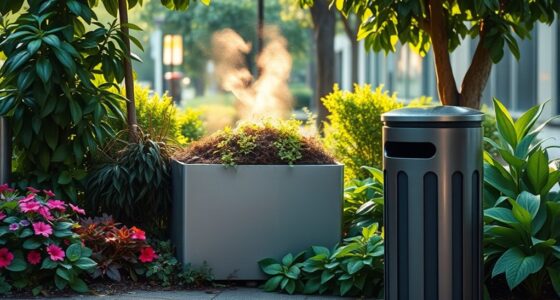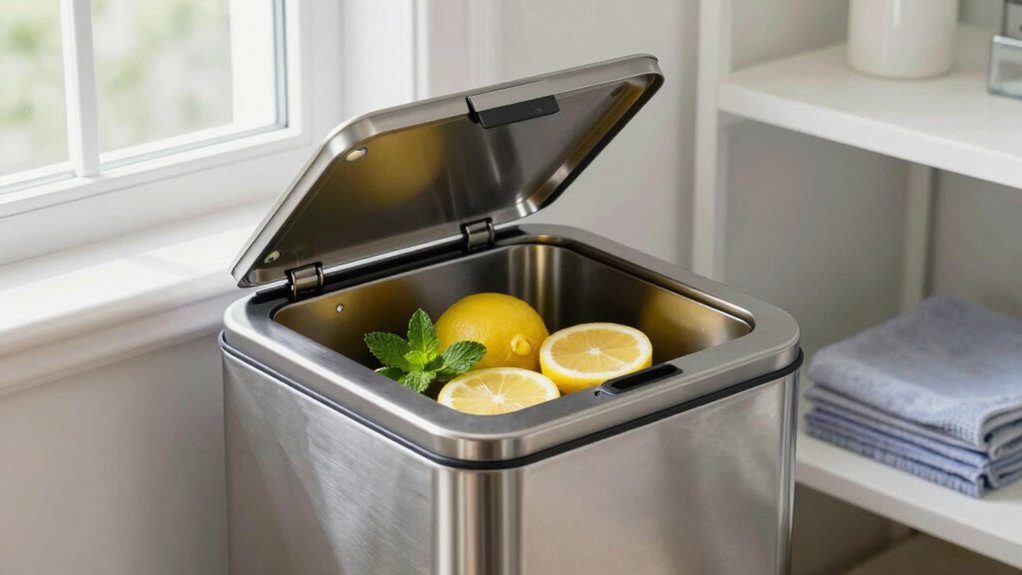

To freshen trash and utility areas without overperfuming, focus on removing the odor source first. Regularly clean trash cans with warm water and a gentle detergent or vinegar, paying attention to corners and sticky spots. Use natural odor absorbers like baking soda or activated charcoal, which quietly neutralize smells without overwhelming scents. Improve ventilation by opening windows or running exhaust fans to prevent stale air buildup. For more tips, you’ll discover simple ways to keep your space smelling fresh.

Get oils, diffusers and self-care delivered free with Prime
- Fast, free delivery on millions of items
- Prime Video, Amazon Music and more included
- Member-only deals all year
Key Takeaways
- Regularly clean trash cans with warm water and vinegar or mild detergent to remove odor-causing residues.
- Use natural odor absorbers like baking soda or activated charcoal inside or near trash areas for ongoing odor control.
- Improve ventilation by opening windows or using exhaust fans to dilute and remove stale air and odors.
- Focus on thoroughly cleaning spills, grime, and corners where odors originate, rather than masking scents.
- Maintain consistent cleaning routines combined with natural absorption methods to prevent odors from building up over time.
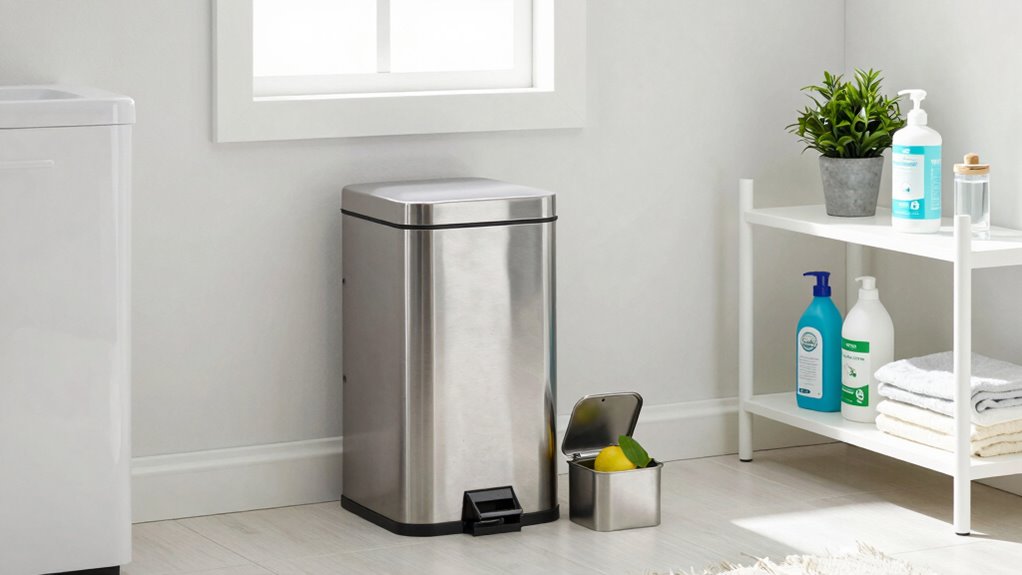
Ever wonder how to keep your trash and utility areas smelling fresh and looking clean? The trick isn’t just about spritzing air fresheners or tossing in a quick deodorizer. Instead, it’s about using effective cleaning techniques combined with odor absorption methods that target odors at their source. When you focus on these strategies, you create a more lasting freshness without overperfuming, which can sometimes be overwhelming or even counterproductive.
Start by establishing a solid cleaning routine. Regularly empty your trash cans, especially if they’re in high-traffic utility areas. Rinse out the cans with warm water and a mild detergent or a vinegar solution to remove residue that might foster bacteria and bad smells. Wiping down surfaces with a disinfectant also helps prevent mold or bacteria buildup, which often causes lingering odors. The goal is to eliminate the smell at its root, not just mask it temporarily. Incorporate cleaning techniques that focus on removing the source of odors, rather than simply covering them up. For example, use a scrub brush or sponge to reach into corners and crevices where grime can accumulate. Pay attention to any spills or sticky spots, and clean them thoroughly. This proactive approach ensures that odors don’t have a chance to develop and stick around. Regular maintenance of surfaces and areas where odors originate is key to long-term freshness. Additionally, proper cleaning techniques can significantly reduce odor-causing bacteria and grime buildup. Employing odor absorption methods like baking soda or activated charcoal is particularly effective because these natural options work quietly in the background, absorbing unwanted odors without overperfuming. Using routine cleaning to address potential odor sources regularly can prevent buildup before it becomes problematic.
Establish a cleaning routine, focus on removing odor sources, and scrub corners and spills thoroughly for lasting freshness.
Finally, consider good ventilation. Opening windows or running exhaust fans helps remove stale air and brings in fresh air, reducing the concentration of odors. Proper ventilation methods are crucial for maintaining a fresh environment and preventing odors from lingering. Incorporating air exchange techniques can further enhance airflow and odor removal. Combining proper cleaning techniques with odor absorption creates a balanced approach that keeps your trash and utility areas smelling clean, fresh, and inviting—without the need for overwhelming artificial fragrances. With consistency, you’ll notice your spaces remain more pleasant, and you won’t have to worry about overpowering scents or strong chemical smells.
natural odor absorber for trash cans
As an affiliate, we earn on qualifying purchases.
As an affiliate, we earn on qualifying purchases.
Frequently Asked Questions
Can Natural Remedies Effectively Replace Commercial Fresheners?
Yes, natural remedies can effectively replace commercial fresheners when you use DIY solutions and scent layering. You can create pleasant aromas with ingredients like baking soda, lemon, or essential oils, which neutralize odors without overpowering. By layering scents—such as placing lemon slices in the trash or using a few drops of essential oil on a cloth—you achieve a fresh environment that’s both effective and subtle, avoiding the artificial scent overload.
How Often Should I Refresh My Trash Area’s Scent?
You should refresh your trash area’s scent every few days to keep odors at bay. Imagine the subtle layers of scent, like a gentle breeze brushing away stale smells. Regularly replacing odor absorbers or cleaning with natural remedies helps with odor absorption and scent layering. This routine prevents a buildup of bad smells, ensuring your space stays fresh and inviting without overwhelming fragrances, maintaining a balanced, clean environment.
Are There Eco-Friendly Options for Deodorizing?
Yes, there are eco-friendly deodorizing options. You can use natural ingredients like baking soda or charcoal, which absorb odors without harmful chemicals. Incorporate recycling tips by rinsing recyclables before disposal, reducing odor buildup. Composting methods also help manage waste naturally, minimizing trash scent. Regularly empty and clean your trash area, and consider biodegradable deodorizers to keep your space fresh without harming the environment.
Will Certain Scents Attract Pests?
Certain scents can attract pests, so it’s smart to choose odor-neutralizing options carefully. Strong floral or sweet fragrances might lure insects or rodents, increasing pest attraction. Instead, opt for scent masking techniques that neutralize odors without creating enticing smells. Using natural, unscented or mildly scented products helps prevent pest attraction while keeping your trash and utility areas fresh. Being mindful of scent choices can substantially reduce the risk of pests invading your space.
How Do I Prevent Mold and Mildew Odors?
Did you know mold and mildew odors are responsible for about 80% of indoor mustiness? To prevent these, focus on odor absorption and air circulation. Regularly clean and dry the area, especially damp spots. Use moisture absorbers like silica gel or baking soda, and guarantee good ventilation by opening windows or running fans. Proper airflow helps keep humidity levels low, reducing the risk of mold and mildew odors developing over time.
Conclusion
Now, with a simple spray and a gentle touch, you’ll turn your trash and utility areas from dull to revitalized. Imagine a breeze drifting through a clean space, where the scent is crisp and inviting—nothing overpowering, just a subtle hint of cleanliness. It’s like opening a window to a bright morning, transforming an often-overlooked corner into a gust of fresh air. Keep it simple, and enjoy a space that feels as good as it looks.
Columbus Day / Indigenous Peoples' Day Picks
long weekend sales
As an affiliate, we earn on qualifying purchases.