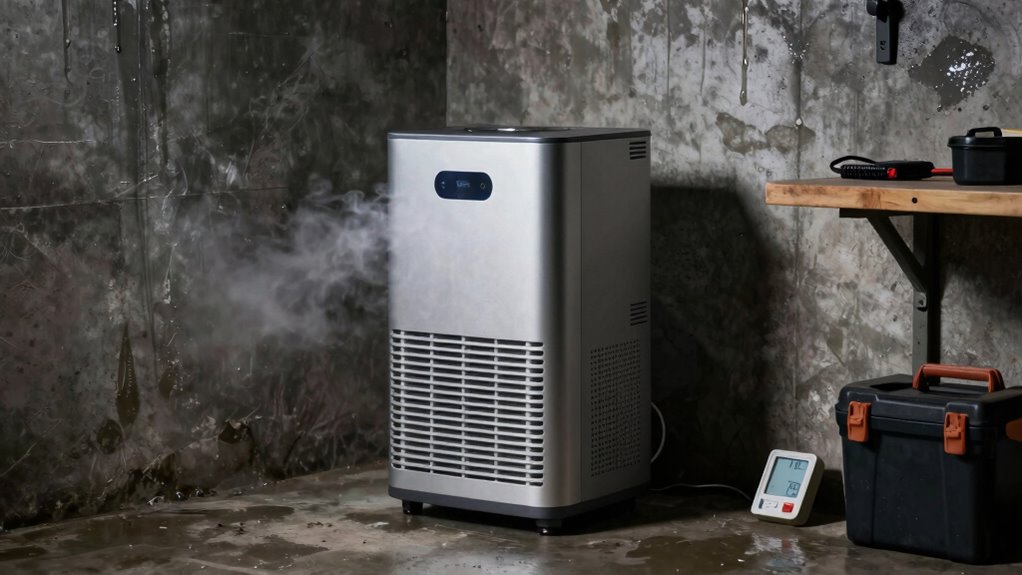

When choosing a dehumidifier for your basement, you want one that matches your space’s size and humidity needs. Look for features like continuous drainage and built-in humidity controls to keep moisture levels between 30-50%. Position it where air can circulate freely for better efficiency. Proper airflow, combined with the right-capacity unit, helps prevent mold and dampness. Keep in mind, understanding these basics will help you select the best option for a healthier, dryer basement environment.
Key Takeaways
- Match dehumidifier capacity to your basement size for effective moisture removal.
- Choose units with continuous drainage and humidity controls for easier maintenance.
- Place the dehumidifier in a central, open area to ensure proper airflow and efficiency.
- Maintain humidity levels between 30% and 50% to prevent mold growth.
- Regularly clean filters and inspect for leaks to keep the dehumidifier functioning optimally.
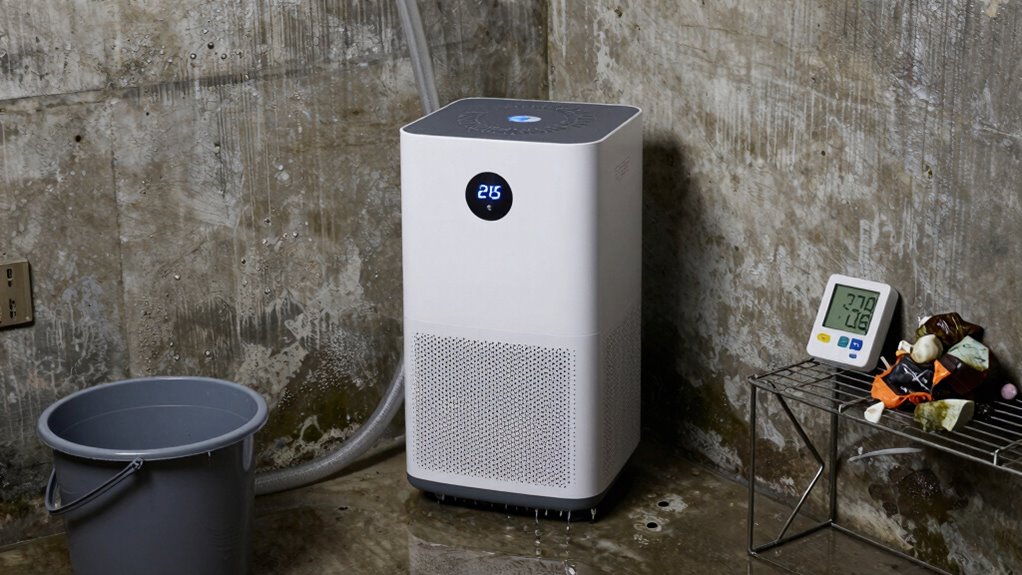
Have you ever wondered why the basement tends to stay damp or develop mold? The answer often lies in how moisture accumulates and how air moves through the space. Without proper air circulation, humidity levels can rise, creating an environment where mold thrives. A dehumidifier becomes an essential tool in controlling that moisture, but choosing the right one requires understanding how it influences air circulation and mold prevention.
Proper air circulation and the right dehumidifier are key to preventing basement mold and dampness.
When you select a dehumidifier, think about its capacity to remove moisture efficiently. Larger basements require units with higher pint-per-day ratings, ensuring they can handle the volume of humid air. Proper air circulation is vital because stagnant air allows moisture to settle, fostering mold growth. A dehumidifier that circulates air effectively helps dry out the space uniformly, preventing damp spots that typically lead to mold. Effective airflow is essential for comprehensive moisture control. Additionally, increasing air exchange can help remove stale, humid air more efficiently.
Keep in mind that a dehumidifier alone isn’t enough. You should also consider how it interacts with your existing ventilation. Good airflow helps distribute dry air evenly, reducing the chances of pockets of high humidity. If your basement lacks natural ventilation, supplementing with fans or installing vents can promote better air circulation. This way, your dehumidifier works more efficiently, pulling moisture from all corners rather than just a localized area.
Mold prevention hinges on maintaining a consistent, low humidity level—ideally between 30% and 50%. When you pick a dehumidifier, check its features for continuous drainage options. This makes it easier to run the unit regularly without the hassle of manually emptying water tanks, ensuring your basement stays dry around the clock. Also, select a model with a built-in hygrometer or humidity control. Precise humidity monitoring helps you adjust the dehumidifier to ideal levels, preventing excess dryness or dampness that could encourage mold.
In addition, think about the placement of your dehumidifier. Position it where air can circulate freely, avoiding corners or behind bulky furniture. Combining your dehumidifier with routine maintenance—like cleaning filters and inspecting for leaks—further supports mold prevention efforts. By actively managing air circulation and moisture levels, you create an environment where mold has a hard time taking hold, and your basement remains dry and healthy. Remember, controlling moisture is an ongoing process, but with the right dehumidifier and good airflow, you’re well on your way to a safer, mold-free basement. Understanding how air circulation impacts moisture management is key to achieving a dry, mold-resistant space.

KNKA 2500 Ft² Max 34 Pints Dehumidifier for Basement with Drain Hose, White
- Coverage Area: 2500 sq. ft.
- Moisture Removal: Up to 34 pints/day
- Quiet, High-Performance Compressor: Reduces noise and enhances efficiency
As an affiliate, we earn on qualifying purchases.
As an affiliate, we earn on qualifying purchases.
Frequently Asked Questions
How Often Should I Empty the Dehumidifier’s Water Tank?
You should empty your dehumidifier’s water tank when it’s full, which depends on its capacity and how damp your basement is. Check the water tank regularly—at least once a day during high humidity periods—to prevent overflow. Proper water tank maintenance ensures your dehumidifier works efficiently. If your unit has a larger capacity, you might need to empty it less often, but regular checks are still essential for maximum performance.
Can I Use a Standard Room Dehumidifier in My Basement?
Think of a standard room dehumidifier as a small boat in a vast, flooded basement. While it might handle minor dampness, it’s not built to navigate the high humidity levels of a basement with poor insulation. For mold prevention and effective basement insulation, you need a heavy-duty dehumidifier designed for larger spaces. Otherwise, moisture persists, risking mold growth and damage. Choose equipment that’s up to the task to keep your basement dry and healthy.
What Is the Ideal Humidity Level for Basement Comfort?
You should aim for a humidity level between 50-60% to guarantee basement comfort and prevent issues like basement mold. Maintaining this range helps with humidity control, reducing the risk of mold growth and dampness. Keep an eye on your dehumidifier’s settings, and adjust as needed to stay within this ideal range. Proper humidity control keeps your basement healthier, more comfortable, and free of the musty odors caused by excess moisture.
Are There Energy-Efficient Dehumidifier Options for Basements?
Yes, you can find energy-efficient dehumidifiers for your basement. Look for models with eco-friendly technology like energy-saving compressors and low power consumption. Smart humidity control features allow you to set ideal moisture levels, reducing energy waste. These dehumidifiers automatically adjust their operation based on humidity levels, helping you save money while maintaining a healthy, dry basement environment. Choose a reputable brand to guarantee efficiency and durability.
How Loud Are Basement Dehumidifiers During Operation?
Imagine a gentle hum, barely audible, as your basement dehumidifier quietly works. Noise levels vary, but most models operate at a soft, consistent sound that won’t disturb your space. Sound insulation in your basement helps muffle any residual noise, making it even less noticeable. You’ll find many dehumidifiers designed with quiet operation in mind, so you can enjoy a dry basement without the distraction of loud, intrusive sounds.
Conclusion
Choosing the right dehumidifier can seem overwhelming, but don’t let that stop you from tackling basement moisture. With the right unit, you’ll prevent mold, improve air quality, and protect your home’s foundation—without breaking the bank. Some worry about ongoing costs or noise, but many models are energy-efficient and quiet. Invest in a dehumidifier today, and enjoy a healthier, more comfortable basement—it’s easier than you think to keep moisture at bay.